
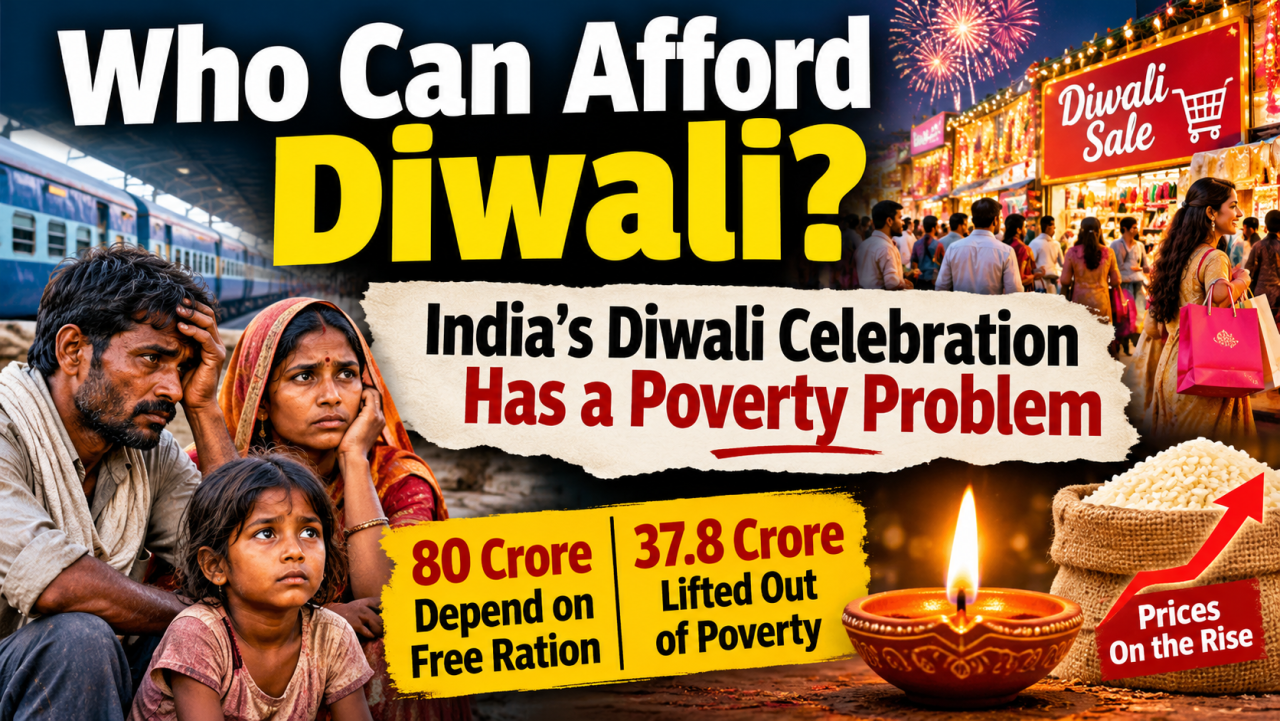
India's festive markets celebrate record spending, but millions still struggle to afford a journey home, basic food and a dignified Diwali.
Every Diwali, India transforms itself into a giant marketplace of celebration. Television commercials show beautifully decorated homes, families exchanging expensive gifts, children playing with new toys and shoppers filling malls with shopping bags. Online platforms announce record sales, brands compete for consumer attention and businesses celebrate the festive season as the biggest opportunity of the year.
But there is another India that rarely appears in these advertisements.
It is the India of migrant workers waiting for a confirmed railway ticket, daily-wage earners calculating the cost of travelling home, families cutting down their food expenses and parents wondering whether they can afford even a modest celebration for their children.
For millions of Indians, Diwali is no longer simply a festival of lights. It is becoming an expensive exercise in managing expectations.
The uncomfortable question is this: Who can actually afford to celebrate the way India's booming festive market expects them to?
The 80 Crore Question
The government's food security programme provides one of the most revealing indicators of India's economic reality.
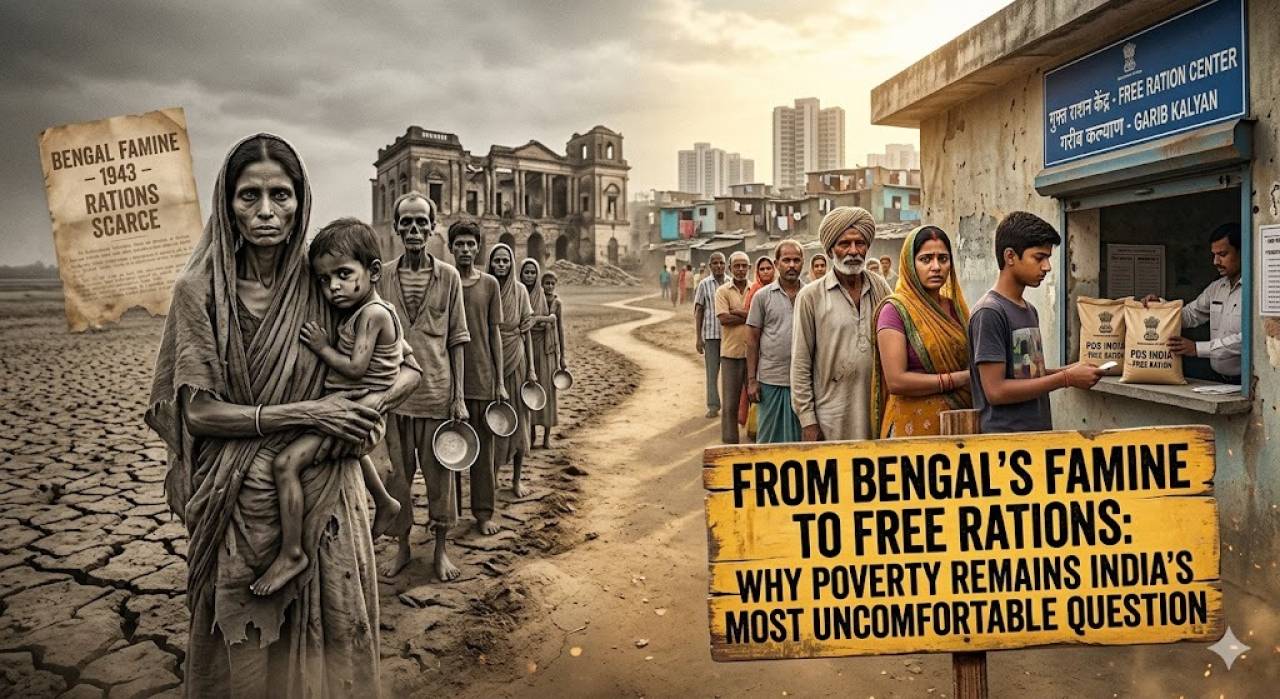
According to the Department of Food and Public Distribution, approximately 80 crore people currently receive free food grains under the Pradhan Mantri Garib Kalyan Anna Yojana. The scheme has an intended coverage of 81.35 crore beneficiaries and was extended for five years from January 2024.
This is a significant social protection programme. It also raises an important question about household purchasing power.
If such a large section of the population continues to depend on government-provided food grains to meet basic nutritional needs, how much money remains available for festival shopping, gifts, travel, sweets, new clothes and household decoration?
Free ration does not automatically mean that every beneficiary is poor by every international definition. Nor does it mean that all 80 crore people live under identical economic conditions. But it does reveal the scale of dependence on public food support.
For a family already struggling to manage rent, electricity, education, healthcare and daily expenses, Diwali shopping is not an uncomplicated expression of happiness. It is another financial decision.
The Poverty Reduction Numbers Tell Only Part of the Story
India has made measurable progress in poverty reduction. The World Bank's 2025 poverty assessment reported that 17.1 crore people moved above the extreme-poverty threshold of $2.15 per day between 2011-12 and 2022-23.
The broader picture is even more striking. Using the lower-middle-income poverty threshold of $3.65 per day, the number of people living below the poverty line declined by approximately 37.8 crore over the same period.
These are important achievements and deserve recognition.
However, moving above an international poverty threshold does not automatically mean entering a life of financial security. There is a considerable distance between escaping extreme poverty and having enough disposable income to participate comfortably in India's increasingly expensive consumer economy.
A household can be above an international poverty line and still struggle to afford a train journey, a medical emergency or a festival purchase.
This is where the celebration narrative needs closer examination. Poverty reduction is important, but the ability to live with dignity, save money and spend without borrowing is equally important.
The Price of Going Home
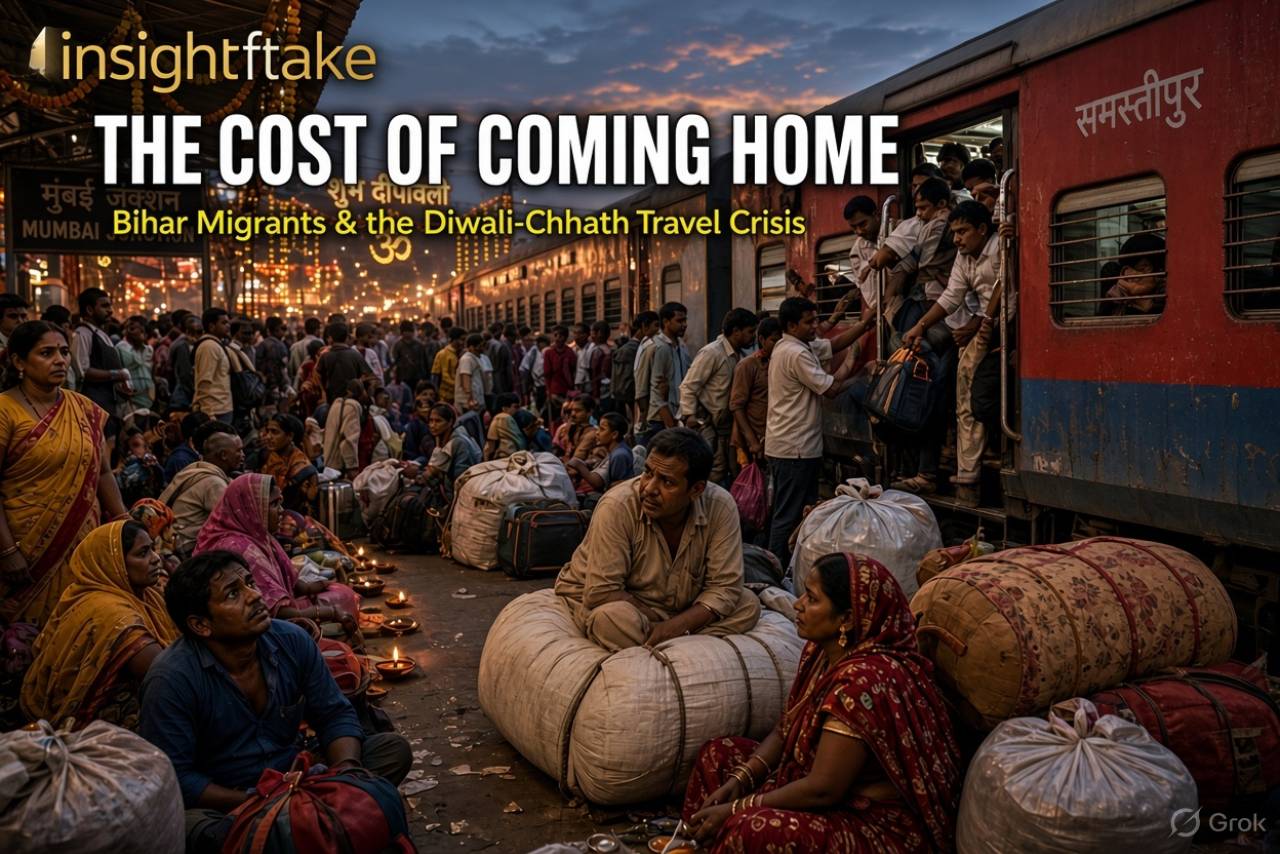
For migrant workers, Diwali and Chhath are often about returning to their villages, meeting parents, spending time with children and reconnecting with their roots.
Yet the journey home increasingly comes with its own financial burden.
Railway reservations become difficult to secure during peak festival periods. Special trains offer additional capacity, but demand remains enormous on popular routes. Those unable to obtain confirmed tickets may have to reconsider their travel plans or explore more expensive alternatives.
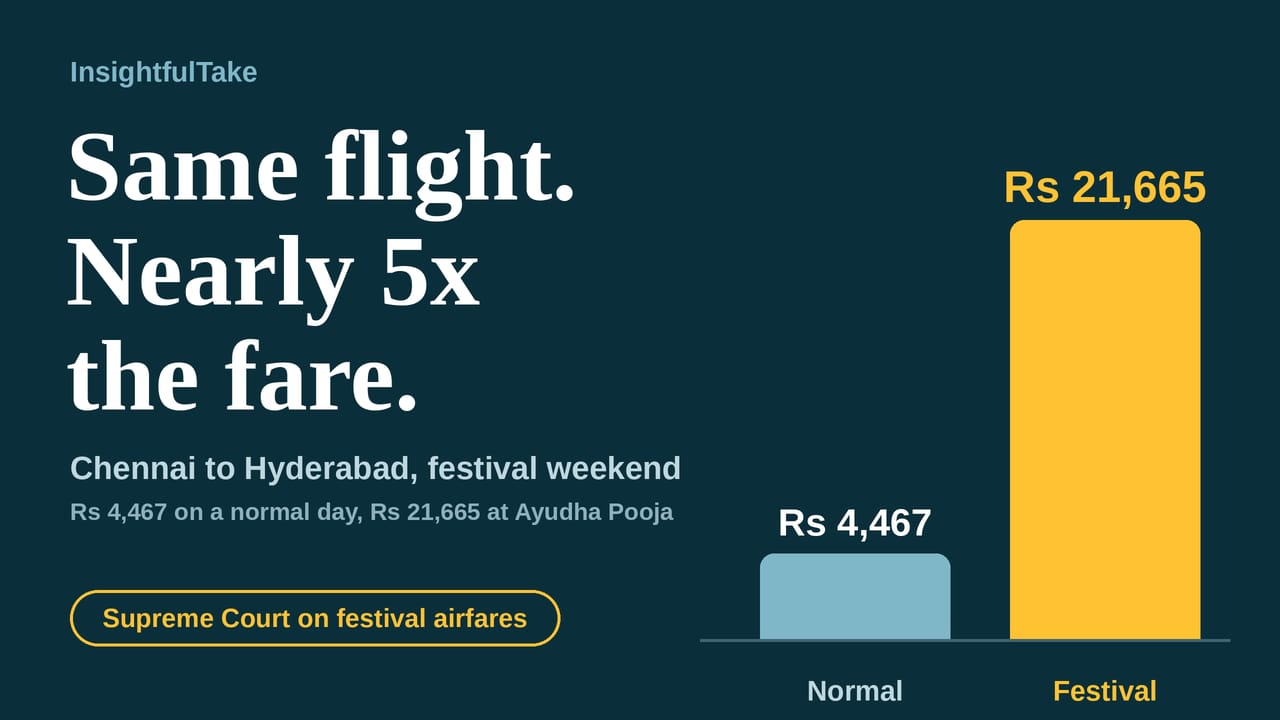
Air travel is beyond the reach of most low-income migrant households. Even middle-income families increasingly calculate whether travelling home is worth the expense.
The problem is not simply the price of a ticket. A family travelling together must pay for multiple passengers, local transport, food during the journey and expenses after reaching home.
For a worker earning a modest monthly wage, these costs can consume a substantial part of savings.
The tragedy is that the people who build cities, work in factories, deliver goods, clean offices and run restaurants often find it hardest to afford the journey back to the families they left behind.
When Celebration Becomes a Marketing Campaign
The Indian market has mastered the business of selling festivals.
Advertisements create the impression that a proper Diwali requires new clothes, expensive electronics, premium sweets, home makeovers, jewellery, gifts and elaborate decorations.
Shopping platforms announce discounts, financial institutions promote easy credit and retailers encourage customers to buy now rather than miss the festive opportunity.
There is nothing inherently wrong with businesses earning money during festivals. Retailers, artisans, small manufacturers and local traders depend on festive demand. For many of them, this is an important period for annual earnings.
The problem begins when consumption is presented as an essential part of celebration.
A family that cannot afford a new television or expensive gifts may feel that it is somehow celebrating less. A father who cannot bring his children home may experience guilt. A mother who cannot afford the sweets and clothes shown in advertisements may quietly adjust the household budget.
The market does not sell products alone. It also sells an image of happiness that millions cannot afford.
And when people borrow to maintain that image, the celebration can leave behind financial stress long after the lights have gone out.
Who Pays for India's Grand Celebration?
India's festive economy generates business for retailers, e-commerce companies, airlines, transport operators, manufacturers, advertisers and financial institutions.
But the benefits and burdens are not distributed equally.
A wealthy household can absorb higher prices, book travel months in advance and enjoy festival discounts without worrying about the next month's grocery budget. A low-income household has very little room to absorb sudden expenses.
Food inflation makes this imbalance worse. India's Consumer Food Price Index recorded annual food inflation of 7.74 per cent in September 2026, according to government data.
For a family spending most of its income on essential items, even a modest increase in food prices can reduce the money available for everything else.
The poor therefore pay a double price. They face rising costs in essential consumption while remaining largely excluded from the more expensive side of the festival economy.
Meanwhile, businesses with pricing power, access to credit and the ability to capture festive demand are better positioned to benefit.
It would be unfair to suggest that every business profits at the expense of the poor. Small traders and artisans also struggle with rising costs and competition. But the larger consumer economy has considerably more power to shape what people are expected to buy than ordinary households have to decide what they can afford.
A Festival Should Not Become a Measure of Wealth
Diwali is traditionally associated with light, hope, family, generosity and the triumph of good over evil. None of these values requires an expensive shopping bill.
Yet India's commercial celebration increasingly places purchasing power at the centre of the festival experience.
A country cannot measure its prosperity only through record sales, online shopping figures, luxury consumption or the growth of its festive market. It must also examine whether ordinary citizens can afford to travel home, feed their families, meet basic expenses and celebrate without borrowing money.
The World Bank's poverty reduction figures deserve acknowledgement. So does the government's food security programme. But neither should become an excuse to overlook the financial insecurity that remains in millions of households.
The real test of India's economic progress is not how many people can afford the latest smartphone during Diwali sales. It is how many can celebrate without sacrificing their next month's food budget.
A festival that fills shopping malls but leaves millions calculating the cost of going home cannot be called an inclusive celebration. India's Diwali needs more light in ordinary households, not just more glitter in the marketplace.


















Leave a Comment