
Some changes do not arrive with force. They arrive with time.
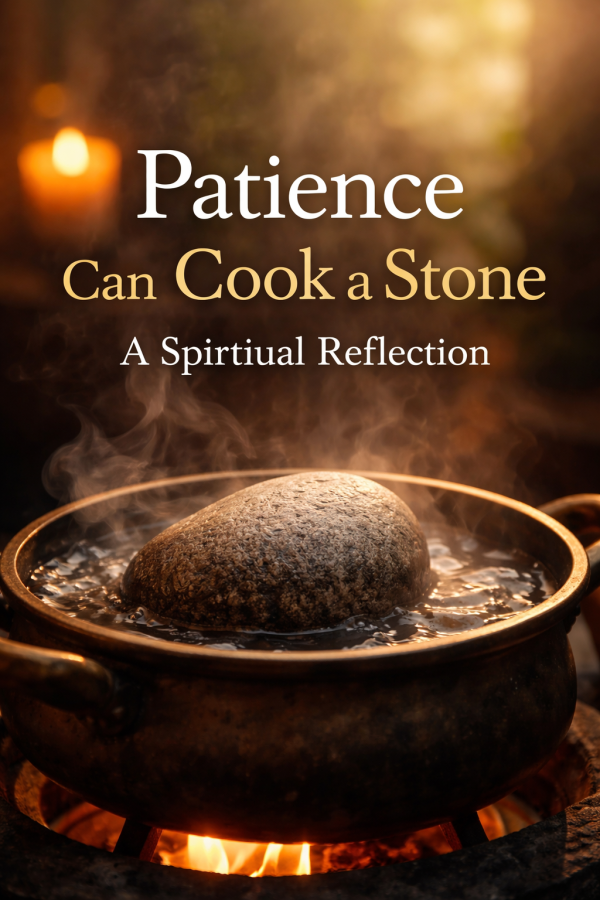
There is an African proverb that travels softly yet carries weight: Patience can cook a stone. It does not explain itself. It does not argue. It simply waits for the listener to slow down enough to understand it.
At first hearing, the image feels impossible. Stones do not soften. Fire does not persuade them. Time seems wasted on such an effort. And yet, the proverb has survived centuries, passed from mouth to mouth, because it speaks to a truth deeper than logic. It speaks to faith—not the loud kind that demands certainty, but the quiet kind that trusts process.
In spiritual life, this kind of patience is often the hardest discipline.
When Waiting Becomes a Form of Belief
Faith is usually described as belief in something unseen. But faith also has another face: the willingness to stay present when nothing appears to be happening. In prayer, meditation, or inner searching, there are long stretches where effort produces no visible reward. The mind wanders. Doubt appears. Silence answers questions.
This is where many turn away. They expect transformation to arrive quickly, like a solution or a sign. When it doesn’t, they assume absence. But ancient wisdom suggests something else: that change is already at work, just beyond immediate perception.
Patience, in this sense, is not delay. It is participation in time.
The Spiritual Cost of Hurry
Modern life trains us to hurry even in matters of the soul. We want clarity now, healing now, purpose now. Spiritual practices are often approached like tasks—something to complete, measure, or master.
But inner life does not follow schedules. It deepens slowly, like roots growing underground. When rushed, it resists. When forced, it closes.
Many spiritual traditions speak of this indirectly. Mystics describe seasons of dryness. Saints write about long years of doubt. Sufi poets speak of waiting at the door long after knocking has stopped making sense.
The stone is not indifferent. It simply works on a different clock.
Stillness as a Sacred Act
In faith and mysticism, patience is closely tied to stillness. Not the stillness of inactivity, but the stillness of attention. To remain with a question without demanding an answer. To sit with pain without rushing to name it. To allow joy to pass without clinging.
This kind of stillness feels uncomfortable because it removes distraction. It exposes restlessness. It asks us to stop performing progress and start inhabiting experience.
Many discover that when they stop pushing for insight, insight begins to surface on its own.
Transformation Without Announcement
Spiritual change rarely announces itself. There is no moment when a bell rings and declares growth complete. Instead, something subtle shifts. A reaction softens. A fear loosens its grip. A familiar wound hurts less when touched.
Only later do we realize that patience has been working quietly, like heat applied steadily to stone.
This is why many traditions warn against constant self-measurement. The soul does not bloom under inspection. It opens when it feels safe to take its time.
Faith Beyond Results
One of the deepest teachings hidden in the proverb is this: patience does not depend on guaranteed outcomes. The one who cooks the stone does not do so because success is assured. They do so because the act itself holds meaning.
In faith, this looks like prayer without certainty of response, goodness without promise of reward, devotion without visible return. It is not naïve optimism. It is commitment without bargaining.
Mystics often say that the real work is not in changing circumstances, but in remaining faithful to the process even when circumstances resist change.
The Stone Within
The stone is not always external. Often, it is within us. Old fears. Hardened beliefs. Grief that has settled into identity. Parts of the self that feel unreachable.
We try force first. We analyze, confront, and correct. Sometimes that works. Often it does not.
Patience offers another way. Staying present with what feels immovable. Applying attention gently, repeatedly. Not abandoning the effort just because nothing seems to soften.
Over time, what once felt solid begins to shift—not dramatically, but enough to breathe again.
A Different Measure of Time
Mystical traditions speak of time differently. There is the clock’s time, and then there is inner time. The first demands speed. The second allows unfolding.
When people speak of “losing faith,” often what they have lost is patience with this second kind of time. They wanted resolution when the moment called for endurance.
The proverb reminds us that time itself can be an ally, not an obstacle.
A Quiet Invitation
Patience can cook a stone is not a command. It is an invitation. To trust slow work. To stay when leaving would be easier. To believe that unseen change is still change.
In a world obsessed with immediacy, patience becomes a spiritual act. It resists despair. It honors mystery. It allows faith to breathe.
And sometimes, long after we have stopped checking the fire, we discover that the stone is no longer what it once was—and neither are we.
There is an African proverb that travels softly yet carries weight: Patience can cook a stone. It does not explain itself. It does not argue. It simply waits for the listener to slow down enough to understand it.
At first hearing, the image feels impossible. Stones do not soften. Fire does not persuade them. Time seems wasted on such an effort. And yet, the proverb has survived centuries, passed from mouth to mouth, because it speaks to a truth deeper than logic. It speaks to faith—not the loud kind that demands certainty, but the quiet kind that trusts process.
In spiritual life, this kind of patience is often the hardest discipline.
When Waiting Becomes a Form of Belief
Faith is usually described as belief in something unseen. But faith also has another face: the willingness to stay present when nothing appears to be happening. In prayer, meditation, or inner searching, there are long stretches where effort produces no visible reward. The mind wanders. Doubt appears. Silence answers questions.
This is where many turn away. They expect transformation to arrive quickly, like a solution or a sign. When it doesn’t, they assume absence. But ancient wisdom suggests something else: that change is already at work, just beyond immediate perception.
Patience, in this sense, is not delay. It is participation in time.
The Spiritual Cost of Hurry
Modern life trains us to hurry even in matters of the soul. We want clarity now, healing now, purpose now. Spiritual practices are often approached like tasks—something to complete, measure, or master.
But inner life does not follow schedules. It deepens slowly, like roots growing underground. When rushed, it resists. When forced, it closes.
Many spiritual traditions speak of this indirectly. Mystics describe seasons of dryness. Saints write about long years of doubt. Sufi poets speak of waiting at the door long after knocking has stopped making sense.
The stone is not indifferent. It simply works on a different clock.
Stillness as a Sacred Act
In faith and mysticism, patience is closely tied to stillness. Not the stillness of inactivity, but the stillness of attention. To remain with a question without demanding an answer. To sit with pain without rushing to name it. To allow joy to pass without clinging.
This kind of stillness feels uncomfortable because it removes distraction. It exposes restlessness. It asks us to stop performing progress and start inhabiting experience.
Many discover that when they stop pushing for insight, insight begins to surface on its own.
Transformation Without Announcement
Spiritual change rarely announces itself. There is no moment when a bell rings and declares growth complete. Instead, something subtle shifts. A reaction softens. A fear loosens its grip. A familiar wound hurts less when touched.
Only later do we realize that patience has been working quietly, like heat applied steadily to stone.
This is why many traditions warn against constant self-measurement. The soul does not bloom under inspection. It opens when it feels safe to take its time.
Faith Beyond Results
One of the deepest teachings hidden in the proverb is this: patience does not depend on guaranteed outcomes. The one who cooks the stone does not do so because success is assured. They do so because the act itself holds meaning.
In faith, this looks like prayer without certainty of response, goodness without promise of reward, devotion without visible return. It is not naïve optimism. It is commitment without bargaining.
Mystics often say that the real work is not in changing circumstances, but in remaining faithful to the process even when circumstances resist change.
The Stone Within
The stone is not always external. Often, it is within us. Old fears. Hardened beliefs. Grief that has settled into identity. Parts of the self that feel unreachable.
We try force first. We analyze, confront, and correct. Sometimes that works. Often it does not.
Patience offers another way. Staying present with what feels immovable. Applying attention gently, repeatedly. Not abandoning the effort just because nothing seems to soften.
Over time, what once felt solid begins to shift—not dramatically, but enough to breathe again.
A Different Measure of Time
Mystical traditions speak of time differently. There is the clock’s time, and then there is inner time. The first demands speed. The second allows unfolding.
When people speak of “losing faith,” often what they have lost is patience with this second kind of time. They wanted resolution when the moment called for endurance.
The proverb reminds us that time itself can be an ally, not an obstacle.
A Quiet Invitation
Patience can cook a stone is not a command. It is an invitation. To trust slow work. To stay when leaving would be easier. To believe that unseen change is still change.
In a world obsessed with immediacy, patience becomes a spiritual act. It resists despair. It honors mystery. It allows faith to breathe.
And sometimes, long after we have stopped checking the fire, we discover that the stone is no longer what it once was—and neither are we.
























Leave a Comment