
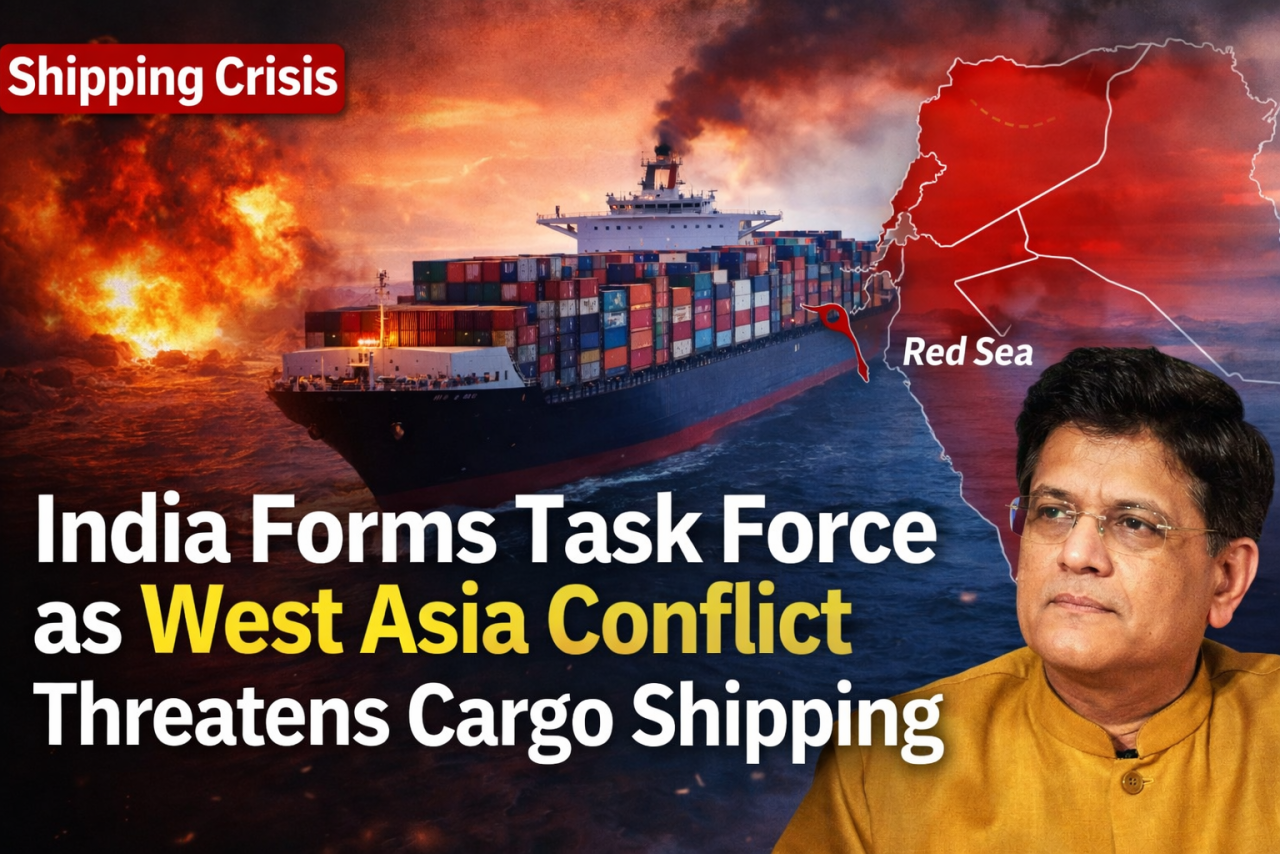
A growing conflict in West Asia is threatening some of the world’s busiest shipping lanes, prompting India to form a high-level task force to ensure that its cargo shipments and trade routes remain secure.
Rising tensions in West Asia have begun to affect global shipping routes, prompting the government of India to take precautionary steps to safeguard the country’s trade and logistics network. In response to the growing risks to cargo movement, the government has constituted a high-level task force to monitor developments and ensure that Indian exports and imports are not severely disrupted.
The move comes as geopolitical tensions in the region threaten shipping routes that are crucial for international trade. A large share of India’s trade with Europe, the Middle East, and parts of Africa depends on maritime routes passing through sensitive areas, including the Red Sea and nearby waterways. Any disruption in these corridors could increase freight costs, delay shipments, and affect supply chains that connect Indian manufacturers with global markets.
According to officials, the government has formed an inter-ministerial group to monitor the evolving situation and coordinate responses across different departments. The group includes representatives from key ministries and agencies connected with trade, shipping, petroleum, logistics, and finance. Its primary objective is to ensure that India’s cargo movement remains stable despite external challenges.
Union Commerce and Industry Minister Piyush Goyal has been closely involved in reviewing the situation. Government officials said that the ministry has been holding consultations with exporters, shipping companies, and logistics operators to understand the possible impact of the conflict on trade flows. These discussions aim to identify emerging risks early and create mechanisms to respond quickly if disruptions occur.
Officials said that the government is particularly focused on maintaining predictable cargo movement and minimizing uncertainty for exporters and importers. Many Indian industries depend on timely delivery of raw materials and components from overseas. Delays in shipping can increase production costs and disrupt manufacturing schedules, especially in sectors that rely on just-in-time supply chains.
The government has also initiated coordination with customs authorities and port operators to ensure smooth clearance procedures. Faster documentation and clearance processes could help offset delays that may arise from longer shipping routes or increased inspection requirements. Officials indicated that reducing bureaucratic hurdles is an important step in protecting trade flows during periods of global uncertainty.
Another area of concern is the rising cost of freight and insurance. Conflicts in strategic maritime zones often push up shipping insurance premiums and freight charges as vessels face higher risks. Exporters have already begun reporting concerns about possible increases in transportation costs if shipping companies decide to reroute vessels to avoid sensitive areas.
The task force is expected to track these developments closely and assess the impact on Indian exporters. The government may consider policy support measures if costs rise sharply or if exporters face serious logistical difficulties. Such support could include facilitation measures aimed at easing documentation requirements, ensuring container availability, and improving coordination between shipping lines and port authorities.
Officials also said that communication with industry stakeholders will remain a key element of the government’s response strategy. Export promotion councils, logistics firms, and shipping operators are being encouraged to share real-time information about shipping delays, container shortages, or sudden cost increases. This information will help policymakers understand the ground situation and respond more effectively.
The ministry has emphasized that the goal is to maintain supply chain resilience while global uncertainties persist. India’s trade sector has experienced significant growth in recent years, and policymakers are keen to ensure that geopolitical tensions do not slow this momentum. Maintaining smooth cargo movement is considered essential for protecting export competitiveness and supporting economic stability.
While the situation in West Asia remains fluid, officials said India is prepared to respond with coordinated action if disruptions intensify. The newly formed task force will continue monitoring maritime developments and assessing risks to trade routes. Through cooperation between government agencies and industry stakeholders, authorities hope to minimize the impact of global tensions on India’s cargo shipments and broader trade activity.


















Leave a Comment