
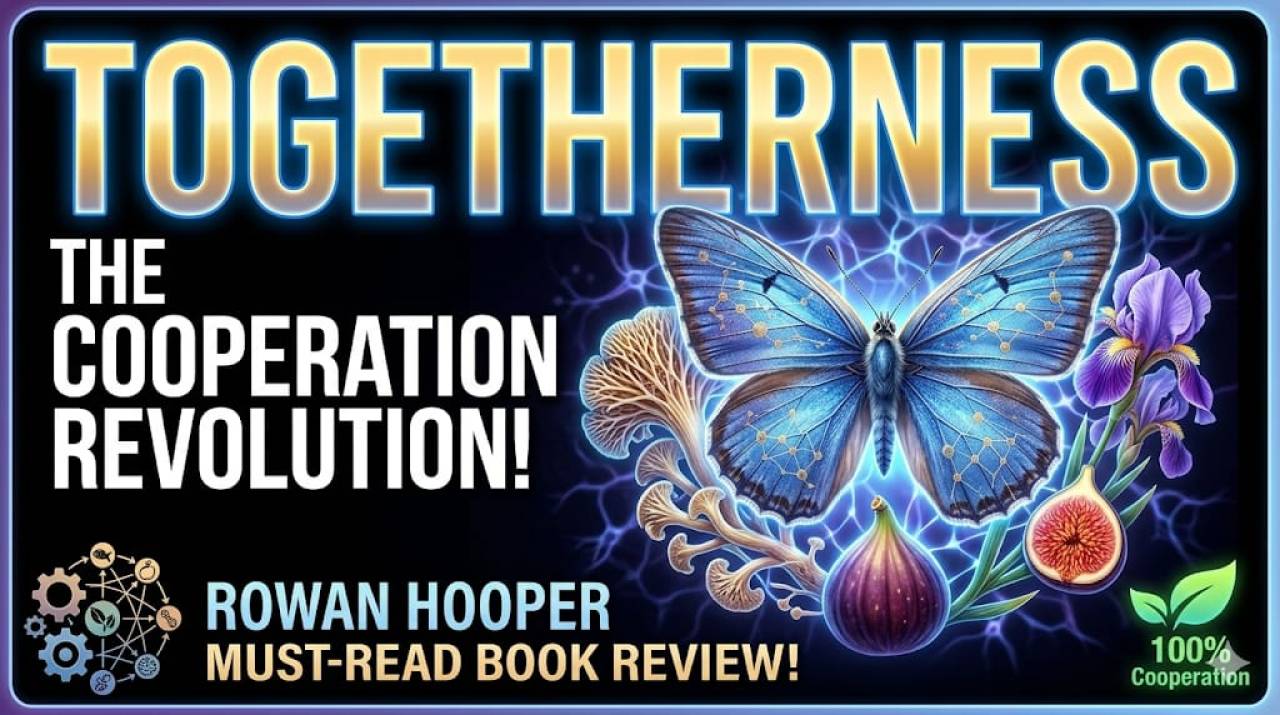
For generations, survival has been associated with strength and competition. In Togetherness, Rowan Hooper shows that nature’s greatest achievements are rooted in cooperation—a lesson that may hold the key to humanity’s future.
We live in an era defined by fragmentation. From geopolitical polarization and widening economic inequality to the growing threat of ecological collapse, the dominant story of the modern world has long been one of competition. For centuries, many societies, particularly in the West, have interpreted both nature and human progress through a hyper-individualistic lens, often reducing existence to a simplistic version of Charles Darwin’s idea of “survival of the fittest.”
But what if that story is incomplete? What if the true engine of life, evolution, and long-term survival is not competition, but cooperation?
In Togetherness: Symbiosis and the Hidden Story of Life’s Greatest Collaborations, evolutionary biologist and science journalist Rowan Hooper offers a compelling challenge to one of modern society’s most deeply held assumptions. Through the science of symbiosis, Hooper argues that life on Earth has flourished not because organisms constantly compete, but because they repeatedly find ways to work together.
The Architecture of Cooperation
As a senior editor at New Scientist, Hooper combines scientific rigor with engaging storytelling. His book explores the extraordinary partnerships that sustain life across the planet, revealing that collaboration is not an exception in nature—it is one of its most fundamental principles.
The Macro World
One of the book’s most striking examples is the relationship between fig trees and fig wasps. The female wasp can reproduce only inside a fig, while the fig relies on the wasp for pollination. Neither species can survive without the other. Their evolutionary journey demonstrates how deeply cooperation can shape life itself.
The Marine World
Hooper also examines coral reefs and their partnership with microscopic algae. The algae live within coral tissues and provide energy through photosynthesis, allowing reefs to thrive and support vast underwater ecosystems. This relationship is among the most important examples of mutual dependence in the natural world.
The Internal World
The story of cooperation extends even into our own bodies. Hooper explores the human microbiome, showing how trillions of microbes in our digestive systems influence immunity, metabolism, and even mental health. Far from being isolated individuals, humans are living ecosystems sustained by countless invisible partners.
Taken together, these examples challenge the idea that life is simply a struggle of all against all. Nature’s success stories are often stories of collaboration.
Why Togetherness Matters Now
The book’s greatest strength lies in its relevance to the challenges facing humanity today.
For decades, economic and political systems have often been shaped by the belief that relentless competition is both natural and desirable. Self-interest has been treated as the primary driver of progress. Hooper questions this assumption by pointing to the overwhelming evidence that nature’s most resilient systems are built on mutual benefit rather than endless rivalry.
If cooperation is the foundation of biological success, then many of today’s crises from climate change to biodiversity loss and social fragmentation can be understood as the consequences of ignoring that lesson.
In this sense, humanity resembles a species that has forgotten its dependence on the larger systems that sustain it.
“A clarion call for cooperation at a time when competition, chaos and cruelty seem to rule the day... This is a joyful book, of hope and wonder, which celebrates community as the true key to success in nature.”
— Steve Brusatte
The climate crisis offers a powerful example. When rising ocean temperatures force algae to abandon coral reefs, the coral often dies. The collapse of one partnership leads to the collapse of an entire ecosystem. Hooper uses such examples to illustrate a broader truth: when symbiotic relationships break down, survival itself becomes uncertain.
A New Framework for the Future
Rather than offering another bleak account of environmental decline, Togetherness presents a constructive alternative.
Hooper argues that humanity’s future depends on replacing a mindset of domination with one of collaboration. The lessons of symbiosis suggest that resilience emerges when systems are designed around mutual benefit rather than extraction.
Competition-Driven Thinking
Symbiosis-Driven Thinking
Exploitation of natural resources
Stewardship of ecosystems
Hyper-individualism and isolation
Community resilience and mutual support
Zero-sum political rivalries
International cooperation on shared challenges
Short-term gains
Long-term sustainability
Applying these principles would require reimagining how we design cities, grow food, produce energy, and organize economies. It would mean recognizing that human prosperity is inseparable from the health of the natural systems around us.
Final Take: An Essential Read
Togetherness is more than a science book. It is a powerful reflection on how humanity understands itself and its place in the world.
Supported by endorsements from leading writers and scientists—including Bill Bryson, who described it as “absolutely enthralling”—Hooper’s work successfully bridges evolutionary biology, environmental science, and social philosophy.
At a time when division often dominates public discourse, Togetherness offers a refreshing and evidence-based reminder that cooperation has always been one of nature’s greatest strengths. The book invites readers to see themselves not as isolated individuals living on a passive planet, but as participants in a vast network of relationships that make life possible.
In a world searching for solutions, Hooper’s message is both simple and profound: the future belongs not to those who stand alone, but to those who learn how to thrive together.
We live in an era defined by fragmentation. From geopolitical polarization and widening economic inequality to the growing threat of ecological collapse, the dominant story of the modern world has long been one of competition. For centuries, many societies, particularly in the West, have interpreted both nature and human progress through a hyper-individualistic lens, often reducing existence to a simplistic version of Charles Darwin’s idea of “survival of the fittest.”
But what if that story is incomplete? What if the true engine of life, evolution, and long-term survival is not competition, but cooperation?
In Togetherness: Symbiosis and the Hidden Story of Life’s Greatest Collaborations, evolutionary biologist and science journalist Rowan Hooper offers a compelling challenge to one of modern society’s most deeply held assumptions. Through the science of symbiosis, Hooper argues that life on Earth has flourished not because organisms constantly compete, but because they repeatedly find ways to work together.
The Architecture of Cooperation
As a senior editor at New Scientist, Hooper combines scientific rigor with engaging storytelling. His book explores the extraordinary partnerships that sustain life across the planet, revealing that collaboration is not an exception in nature—it is one of its most fundamental principles.
The Macro World
One of the book’s most striking examples is the relationship between fig trees and fig wasps. The female wasp can reproduce only inside a fig, while the fig relies on the wasp for pollination. Neither species can survive without the other. Their evolutionary journey demonstrates how deeply cooperation can shape life itself.
The Marine World
Hooper also examines coral reefs and their partnership with microscopic algae. The algae live within coral tissues and provide energy through photosynthesis, allowing reefs to thrive and support vast underwater ecosystems. This relationship is among the most important examples of mutual dependence in the natural world.
The Internal World
The story of cooperation extends even into our own bodies. Hooper explores the human microbiome, showing how trillions of microbes in our digestive systems influence immunity, metabolism, and even mental health. Far from being isolated individuals, humans are living ecosystems sustained by countless invisible partners.
Taken together, these examples challenge the idea that life is simply a struggle of all against all. Nature’s success stories are often stories of collaboration.
Why Togetherness Matters Now
The book’s greatest strength lies in its relevance to the challenges facing humanity today.
For decades, economic and political systems have often been shaped by the belief that relentless competition is both natural and desirable. Self-interest has been treated as the primary driver of progress. Hooper questions this assumption by pointing to the overwhelming evidence that nature’s most resilient systems are built on mutual benefit rather than endless rivalry.
If cooperation is the foundation of biological success, then many of today’s crises from climate change to biodiversity loss and social fragmentation can be understood as the consequences of ignoring that lesson.
In this sense, humanity resembles a species that has forgotten its dependence on the larger systems that sustain it.
“A clarion call for cooperation at a time when competition, chaos and cruelty seem to rule the day... This is a joyful book, of hope and wonder, which celebrates community as the true key to success in nature.”
— Steve Brusatte
The climate crisis offers a powerful example. When rising ocean temperatures force algae to abandon coral reefs, the coral often dies. The collapse of one partnership leads to the collapse of an entire ecosystem. Hooper uses such examples to illustrate a broader truth: when symbiotic relationships break down, survival itself becomes uncertain.
A New Framework for the Future
Rather than offering another bleak account of environmental decline, Togetherness presents a constructive alternative.
Hooper argues that humanity’s future depends on replacing a mindset of domination with one of collaboration. The lessons of symbiosis suggest that resilience emerges when systems are designed around mutual benefit rather than extraction.
|
Competition-Driven Thinking |
Symbiosis-Driven Thinking |
|
Exploitation of natural resources |
Stewardship of ecosystems |
|
Hyper-individualism and isolation |
Community resilience and mutual support |
|
Zero-sum political rivalries |
International cooperation on shared challenges |
|
Short-term gains |
Long-term sustainability |
Applying these principles would require reimagining how we design cities, grow food, produce energy, and organize economies. It would mean recognizing that human prosperity is inseparable from the health of the natural systems around us.
Final Take: An Essential Read
Togetherness is more than a science book. It is a powerful reflection on how humanity understands itself and its place in the world.
Supported by endorsements from leading writers and scientists—including Bill Bryson, who described it as “absolutely enthralling”—Hooper’s work successfully bridges evolutionary biology, environmental science, and social philosophy.
At a time when division often dominates public discourse, Togetherness offers a refreshing and evidence-based reminder that cooperation has always been one of nature’s greatest strengths. The book invites readers to see themselves not as isolated individuals living on a passive planet, but as participants in a vast network of relationships that make life possible.
In a world searching for solutions, Hooper’s message is both simple and profound: the future belongs not to those who stand alone, but to those who learn how to thrive together.




























Leave a Comment