
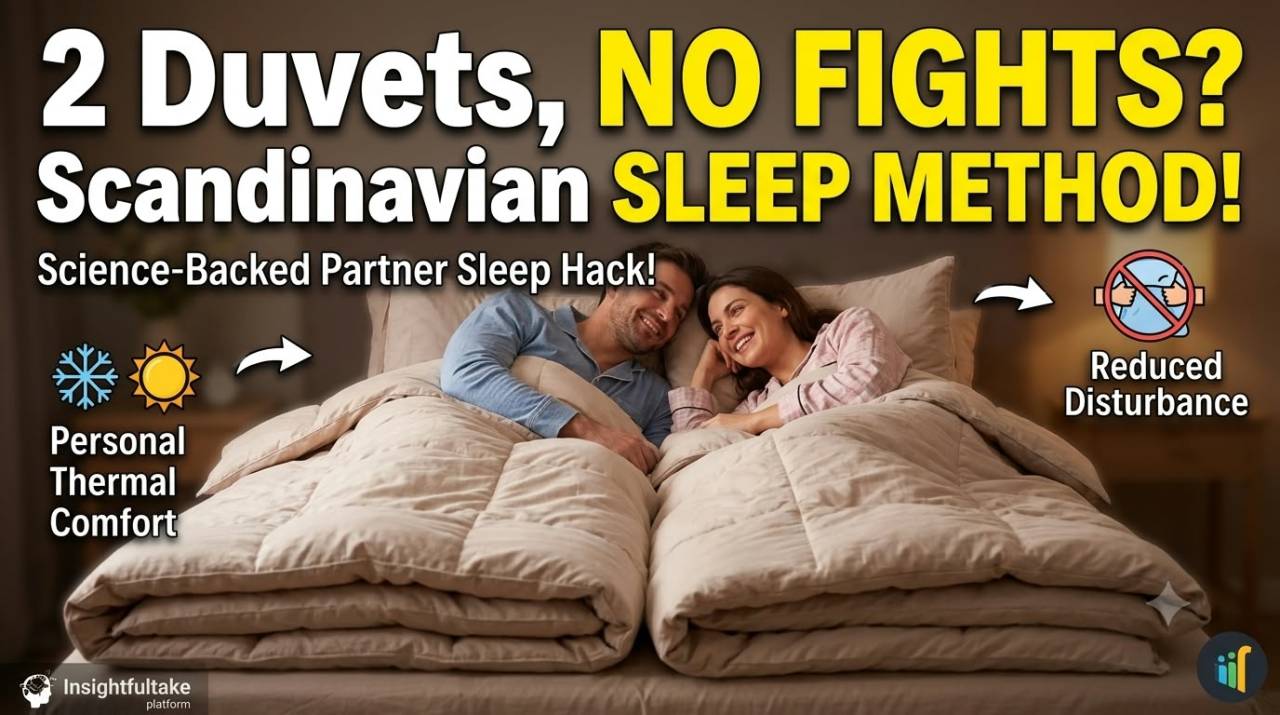
Can two duvets solve the age-old bedtime battle over the blanket? The Scandinavian sleep method says they just might.
Sharing a bed with a partner often comes with an unspoken nighttime tug-of-war over control of the blanket.
While co-sleeping remains common across the world, a viral trend known as the Scandinavian sleep method offers a remarkably simple solution to one of the most common sources of shared sleep disruption.
The idea is straightforward. Couples continue to sleep on the same bed but use two separate duvets instead of sharing one.
It may sound like a small change, but for couples with different sleeping preferences, it could make bedtime considerably more comfortable.
What Is the Scandinavian Sleep Method?
Originating in Nordic countries, the Scandinavian sleep method involves sharing the same mattress and fitted sheet while using two individual duvets or blankets.
Instead of fighting over a single covering, each person gets their own.
This arrangement allows partners to adjust their bedding according to their individual preferences, particularly when it comes to warmth and weight, without disturbing the other sleeper.
The concept has gained significant attention across social media platforms, with lifestyle creators on TikTok and Instagram showcasing beds arranged with two single-sized duvets placed neatly side by side.
The result is visually tidy while giving each sleeper greater control over their personal sleeping environment.
The Practicality Behind the Trend
Although the Scandinavian sleep method is attracting considerable attention online, medical experts generally view it as a practical bedroom strategy rather than a clinically established sleep treatment.
According to Dr. Mohit Bhardwaj, Consultant Pulmonologist at PB Health, Gurugram, there is limited direct scientific research demonstrating that separate duvets, by themselves, improve sleep quality. The method is better understood as a practical approach to reducing common sources of nighttime disturbance.
However, basic sleep physiology helps explain why the arrangement may work well for some couples.
Thermal Regulation
People can have very different temperature preferences while sleeping.
One partner may feel comfortable under a heavy duvet, while the other may prefer a light blanket or sheet. Dr. Prashant Chhajed, Director of the Department of Pulmonary Medicine at Hiranandani Hospital, notes that temperature discomfort and feelings of physical restriction can interfere with restful sleep.
Separate coverings allow each person to create a more comfortable personal sleeping environment.
Less Movement-Related Disturbance
Tossing and turning is normal during sleep. The problem begins when one person's movements disturb the other.
With a shared duvet, pulling, rolling or accidentally taking most of the blanket can disturb a sleeping partner.
Two separate duvets reduce this interaction, allowing each sleeper to move without dragging the other's covering along with them.
Particularly Useful in Warm Climates
The arrangement can also make sense in warmer climates such as India.
Air conditioning may make the room feel cold, while body heat can make a thick duvet uncomfortable. With separate bedding, one partner can use a heavier covering while the other opts for something lighter.
The Emotional and Psychological Impact
The benefits of better sleep extend beyond physical energy.
Repeated sleep disruption can affect mood, concentration and emotional regulation. When poor sleep becomes a regular occurrence, even small nighttime annoyances can contribute to daytime irritability and relationship tension.
Chetna Luthra, Clinical Psychologist at Marengo Asia Hospitals, points out that separate duvets can preserve physical proximity while giving each partner greater autonomy over their immediate sleeping comfort.
That distinction can matter.
Something as trivial as repeatedly losing the blanket may seem insignificant on one night. But when the same irritation occurs night after night, it can become another source of frustration between partners.
Relationship coach Sidhharrth S Kumaar similarly emphasizes that seemingly minor nighttime annoyances can accumulate into broader relationship friction.
Removing one recurring source of irritation may therefore have a benefit that extends beyond the bedroom.
Does Separate Bedding Reduce Intimacy?
For some couples, the idea of separate duvets may initially sound like emotional separation.
But sleeping under separate blankets does not necessarily mean becoming emotionally distant.
Intimacy depends on communication, affection, shared experiences and mutual consideration, rather than on whether two people use the same piece of bedding.
Couples can remain physically close before falling asleep and simply switch to their individual duvets when it is time to rest.
In fact, better sleep may contribute to a healthier relationship by helping both partners wake up feeling more rested, patient and emotionally balanced.
The goal is not to create distance. It is to remove an unnecessary source of conflict.
How to Try the Scandinavian Sleep Method
Trying the method does not require replacing your bed or investing in expensive equipment.
1. Keep Your Existing Mattress
Continue using your current shared mattress and fitted sheet.
2. Get Two Separate Duvets
Choose two single or twin-sized duvets or blankets that can be used independently.
3. Match the Bedding to Individual Needs
The two duvets do not have to be identical.
One person may prefer a heavier filling or warmer material, while the other may prefer a lightweight option.
4. Arrange the Bed Neatly
Place the two duvets side by side across the mattress.
During the day, they can be folded or arranged neatly. A decorative throw can also be placed across the bed to create a unified appearance.
A Small Change That Could Make a Big Difference
The Scandinavian sleep method is hardly a revolutionary medical discovery. There is limited direct evidence that simply switching to two duvets will improve sleep for everyone.
Its appeal lies in its simplicity.
Two people can share the same bedroom, the same mattress and the same bedtime routine while maintaining control over one small but important aspect of their sleeping environment.
For couples who regularly wake each other by stealing blankets, overheating or fighting over bedding, that small change may be enough to make nights more peaceful.
Sometimes, protecting a relationship begins with something as ordinary as letting each person keep their own blanket.
Sharing a bed with a partner often comes with an unspoken nighttime tug-of-war over control of the blanket.
While co-sleeping remains common across the world, a viral trend known as the Scandinavian sleep method offers a remarkably simple solution to one of the most common sources of shared sleep disruption.
The idea is straightforward. Couples continue to sleep on the same bed but use two separate duvets instead of sharing one.
It may sound like a small change, but for couples with different sleeping preferences, it could make bedtime considerably more comfortable.
What Is the Scandinavian Sleep Method?
Originating in Nordic countries, the Scandinavian sleep method involves sharing the same mattress and fitted sheet while using two individual duvets or blankets.
Instead of fighting over a single covering, each person gets their own.
This arrangement allows partners to adjust their bedding according to their individual preferences, particularly when it comes to warmth and weight, without disturbing the other sleeper.
The concept has gained significant attention across social media platforms, with lifestyle creators on TikTok and Instagram showcasing beds arranged with two single-sized duvets placed neatly side by side.
The result is visually tidy while giving each sleeper greater control over their personal sleeping environment.
The Practicality Behind the Trend
Although the Scandinavian sleep method is attracting considerable attention online, medical experts generally view it as a practical bedroom strategy rather than a clinically established sleep treatment.
According to Dr. Mohit Bhardwaj, Consultant Pulmonologist at PB Health, Gurugram, there is limited direct scientific research demonstrating that separate duvets, by themselves, improve sleep quality. The method is better understood as a practical approach to reducing common sources of nighttime disturbance.
However, basic sleep physiology helps explain why the arrangement may work well for some couples.
Thermal Regulation
People can have very different temperature preferences while sleeping.
One partner may feel comfortable under a heavy duvet, while the other may prefer a light blanket or sheet. Dr. Prashant Chhajed, Director of the Department of Pulmonary Medicine at Hiranandani Hospital, notes that temperature discomfort and feelings of physical restriction can interfere with restful sleep.
Separate coverings allow each person to create a more comfortable personal sleeping environment.
Less Movement-Related Disturbance
Tossing and turning is normal during sleep. The problem begins when one person's movements disturb the other.
With a shared duvet, pulling, rolling or accidentally taking most of the blanket can disturb a sleeping partner.
Two separate duvets reduce this interaction, allowing each sleeper to move without dragging the other's covering along with them.
Particularly Useful in Warm Climates
The arrangement can also make sense in warmer climates such as India.
Air conditioning may make the room feel cold, while body heat can make a thick duvet uncomfortable. With separate bedding, one partner can use a heavier covering while the other opts for something lighter.
The Emotional and Psychological Impact
The benefits of better sleep extend beyond physical energy.
Repeated sleep disruption can affect mood, concentration and emotional regulation. When poor sleep becomes a regular occurrence, even small nighttime annoyances can contribute to daytime irritability and relationship tension.
Chetna Luthra, Clinical Psychologist at Marengo Asia Hospitals, points out that separate duvets can preserve physical proximity while giving each partner greater autonomy over their immediate sleeping comfort.
That distinction can matter.
Something as trivial as repeatedly losing the blanket may seem insignificant on one night. But when the same irritation occurs night after night, it can become another source of frustration between partners.
Relationship coach Sidhharrth S Kumaar similarly emphasizes that seemingly minor nighttime annoyances can accumulate into broader relationship friction.
Removing one recurring source of irritation may therefore have a benefit that extends beyond the bedroom.
Does Separate Bedding Reduce Intimacy?
For some couples, the idea of separate duvets may initially sound like emotional separation.
But sleeping under separate blankets does not necessarily mean becoming emotionally distant.
Intimacy depends on communication, affection, shared experiences and mutual consideration, rather than on whether two people use the same piece of bedding.
Couples can remain physically close before falling asleep and simply switch to their individual duvets when it is time to rest.
In fact, better sleep may contribute to a healthier relationship by helping both partners wake up feeling more rested, patient and emotionally balanced.
The goal is not to create distance. It is to remove an unnecessary source of conflict.
How to Try the Scandinavian Sleep Method
Trying the method does not require replacing your bed or investing in expensive equipment.
1. Keep Your Existing Mattress
Continue using your current shared mattress and fitted sheet.
2. Get Two Separate Duvets
Choose two single or twin-sized duvets or blankets that can be used independently.
3. Match the Bedding to Individual Needs
The two duvets do not have to be identical.
One person may prefer a heavier filling or warmer material, while the other may prefer a lightweight option.
4. Arrange the Bed Neatly
Place the two duvets side by side across the mattress.
During the day, they can be folded or arranged neatly. A decorative throw can also be placed across the bed to create a unified appearance.
A Small Change That Could Make a Big Difference
The Scandinavian sleep method is hardly a revolutionary medical discovery. There is limited direct evidence that simply switching to two duvets will improve sleep for everyone.
Its appeal lies in its simplicity.
Two people can share the same bedroom, the same mattress and the same bedtime routine while maintaining control over one small but important aspect of their sleeping environment.
For couples who regularly wake each other by stealing blankets, overheating or fighting over bedding, that small change may be enough to make nights more peaceful.
Sometimes, protecting a relationship begins with something as ordinary as letting each person keep their own blanket.
























Leave a Comment