
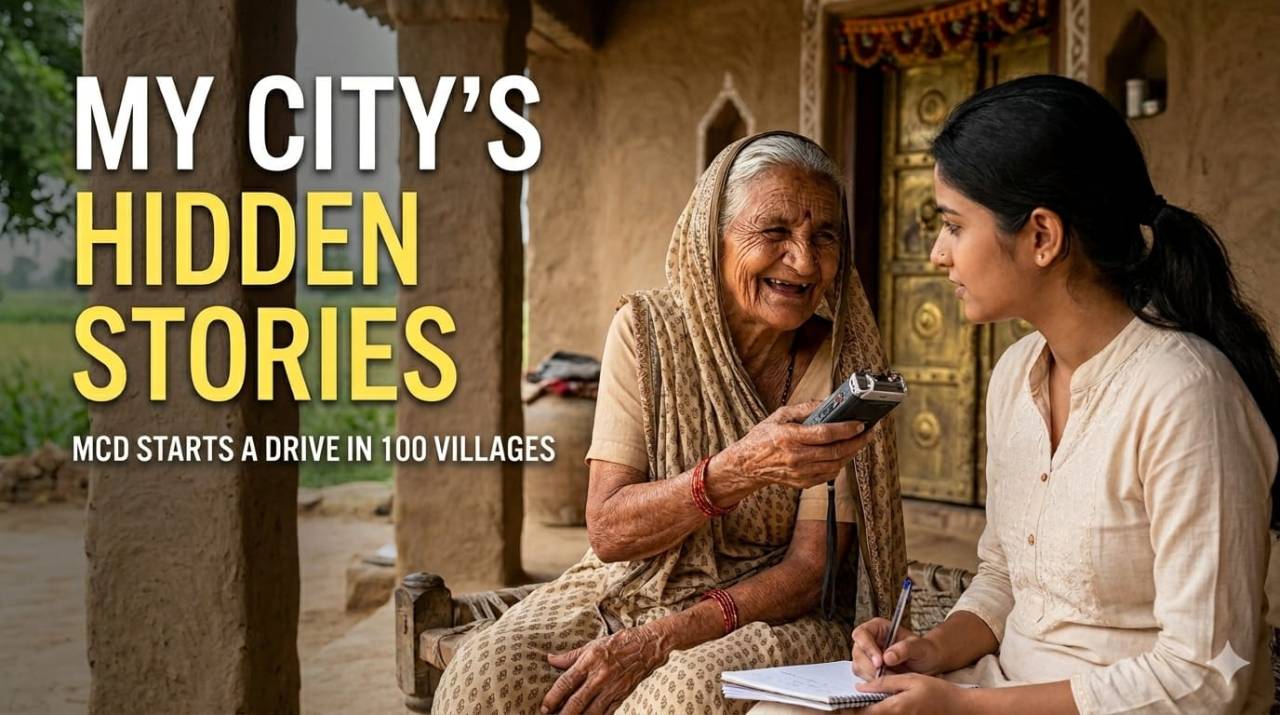
In the shadows of a modern metropolis, a timeless Delhi still whispers—its villages holding stories that refuse to be forgotten.
Delhi is often seen as a city of bright lights, massive malls, and crowded metro stations. However, tucked away between these modern structures are hundreds of urban villages. These places hold the true soul of the city. Recently, the Municipal Corporation of Delhi (MCD) took a wonderful step to honor these areas. They launched a special project to record the oral histories of 100 villages. This initiative is a race against time to save stories that have never been written in history books.
Why Oral History Matters
For centuries, the traditions of these villages moved from one generation to the next through word of mouth. Elders told stories to their children and grandchildren. These stories include unique wedding customs, local legends about brave ancestors, and the history of ancient temples. As the city grows and modernizes, these traditions are slowly fading away.
The MCD has formed a dedicated five-member team for this task. These researchers are visiting villages to talk to the elderly residents. These seniors are the living libraries of our culture. By recording their voices, the city is ensuring that their wisdom is not lost forever.
The Process of Discovery
The team does not just take quick notes. They spend hours with the villagers. They use a detailed questionnaire to cover every part of life. They ask about:
- Birth and marriage rituals
- The origins of local festivals and fairs
- The history of land and ancient monuments
- Folklore and community songs (bhajans)
So far, the team has visited several locations like Mehrauli, Isapur, and Jharoda. In these places, they found fascinating details. For example, some villages are named after influential women from the past. Others have specific customs that are not found anywhere else in India. The team uses audio and video recorders to capture the exact way people speak and tell their tales.
Breaking the "Red Line"
One of the most important goals of this project is to change how we look at Delhi. For a long time, there has been a mental and physical boundary called the "Red Line" around these villages. People often viewed them as isolated pockets separate from the "modern" city.
This project aims to break that boundary. It shows that the history of Delhi is incomplete without its villages. By documenting these stories, the MCD is helping citizens feel a sense of pride. It reminds us that our urban surroundings are built on the foundations of these ancient communities.
A Museum for the People
The work will not just sit in a government file. The MCD plans to compile all these stories, photos, and videos into a "municipal museum" project. This will be a place where students, tourists, and residents can learn about the real Delhi.
Imagine walking into a space and hearing a 90-year-old grandmother describe how her village looked before the high-rise buildings arrived. You could listen to traditional bhajans that have been sung for three hundred years. This makes history feel alive and personal.
Why This News is Good for Us
This initiative is a call to action for all of us. It reminds us to talk to our own elders. Every family has a story that deserves to be heard. The MCD’s project is a great start to creating a more connected and aware society.
We should support such efforts to preserve our intangible heritage. When we know where we came from, we can better understand where we are going. This project is a beautiful tribute to the people who kept Delhi’s culture alive for centuries. It ensures that the "city of villages" will always remember its heart.























Leave a Comment