
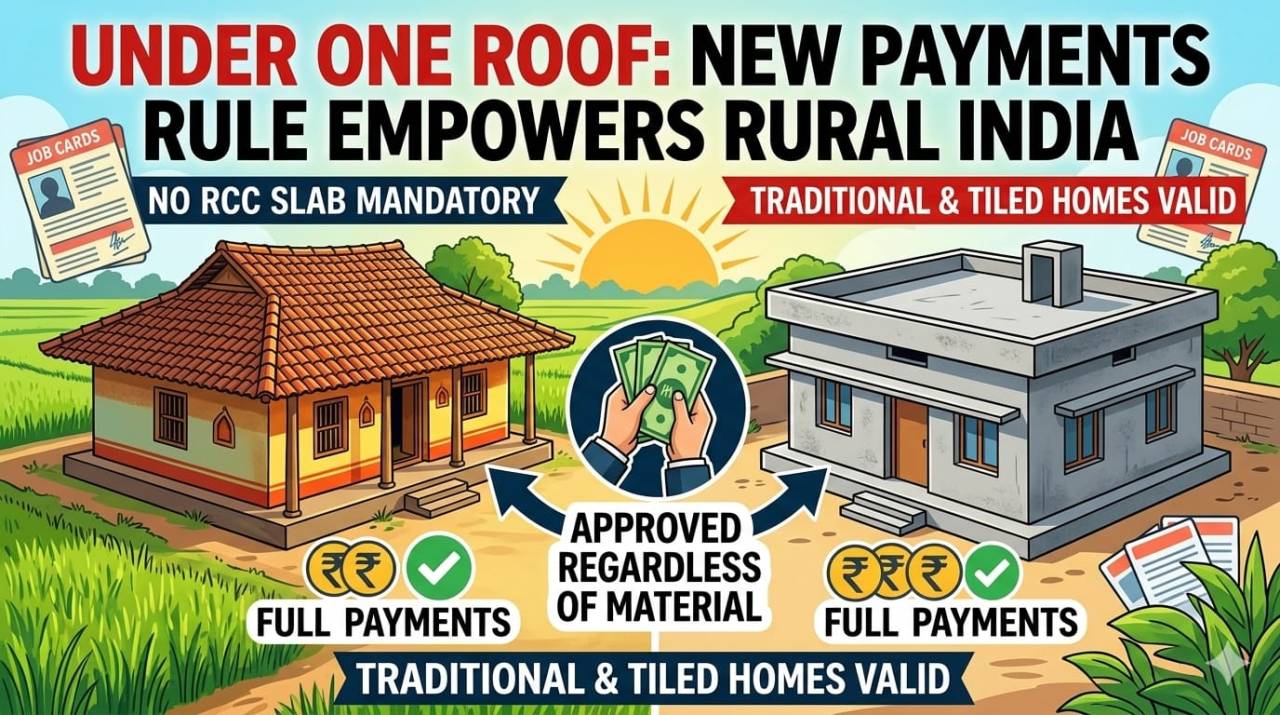
India’s rural housing policy takes a decisive turn as PMAY-G moves away from rigid concrete mandates and begins recognizing traditional, climate-adapted roofing systems as valid and dignified forms of rural housing.
For years, building a dream home under the central government’s flagship rural housing scheme, Pradhan Mantri Awas Yojana-Gramin (PMAY-G), came with a rigid condition: the house needed a reinforced cement concrete (RCC) roof to qualify for the scheme’s full financial assistance. Designed to promote durability and permanent housing, the rule reflected an urban vision of what a “proper” home should look like.
But across rural India, that vision often clashed with reality.
From the humid coastal belts of eastern India to the scorching plains of central and western states, millions of families have traditionally relied on climate-friendly tiled roofs, tin sheets, and locally sourced pucca materials that are often cheaper, cooler, and better suited to local environments than concrete slabs. Yet under the earlier PMAY-G framework, choosing such roofing meant risking the loss of the final installment of government assistance.
Now, in a significant policy shift, the Union Ministry of Rural Development (MoRD) has amended PMAY-G guidelines to recognize traditional and regionally suitable roofing materials as valid forms of pucca housing. Beneficiaries will no longer be compelled to construct RCC roofs to access full housing benefits.
The change may appear administrative on paper, but its social and economic implications are far deeper. It marks a transition from centralized standardization to a more flexible model of rural development—one that acknowledges India’s climatic diversity, local architecture, and lived realities.
Breaking the Concrete Mandate
Under the previous system, PMAY-G assistance was released in phases linked to construction milestones such as foundation work, lintel completion, and finally, the roof slab. The last and often most critical installment depended heavily on the construction of an RCC roof.
For poor rural households, that requirement frequently became a financial burden. Concrete roofing is significantly more expensive than traditional alternatives and often requires additional materials, transportation, and skilled labor. Families unable or unwilling to build RCC roofs found themselves excluded from the final payment despite completing structurally sound homes.
The consequences extended beyond housing assistance alone. Since PMAY-G housing construction is linked with rural employment schemes that provide wage support for labor, beneficiaries who could not complete RCC roofing also risked losing access to employment-linked payments tied to house construction.
The revised policy removes this barrier. A home constructed with durable clay tiles, corrugated sheets, or other locally approved pucca materials will now receive the same financial recognition as one topped with concrete. In effect, the government has widened the definition of dignity in housing.
Climate, Culture, and Common Sense
The demand for this reform emerged from states where traditional housing patterns remain deeply tied to climate and geography. Leaders and administrators from tribal and rural regions repeatedly argued that flat concrete roofs were often unsuitable for local conditions.
In high-rainfall regions, poorly constructed RCC roofs are prone to leakage and moisture retention. In extremely hot areas, concrete absorbs and traps heat, making homes unbearably warm during summer months. By contrast, clay tiles and ventilated roofing systems help maintain cooler indoor temperatures naturally.
The policy change therefore reflects more than cultural accommodation—it also aligns with environmental practicality.
Madhya Pradesh Panchayat and Rural Development Minister Prahlad Patel had highlighted how many economically weaker families preferred traditional roofs not out of backwardness, but because such structures were better suited to their way of life and surroundings. Forcing a uniform concrete model, critics argued, ignored both affordability and ecological wisdom.
By accepting regional variations in construction, the government has effectively acknowledged that rural housing cannot be designed through a single national template.
A Transition in Rural Employment
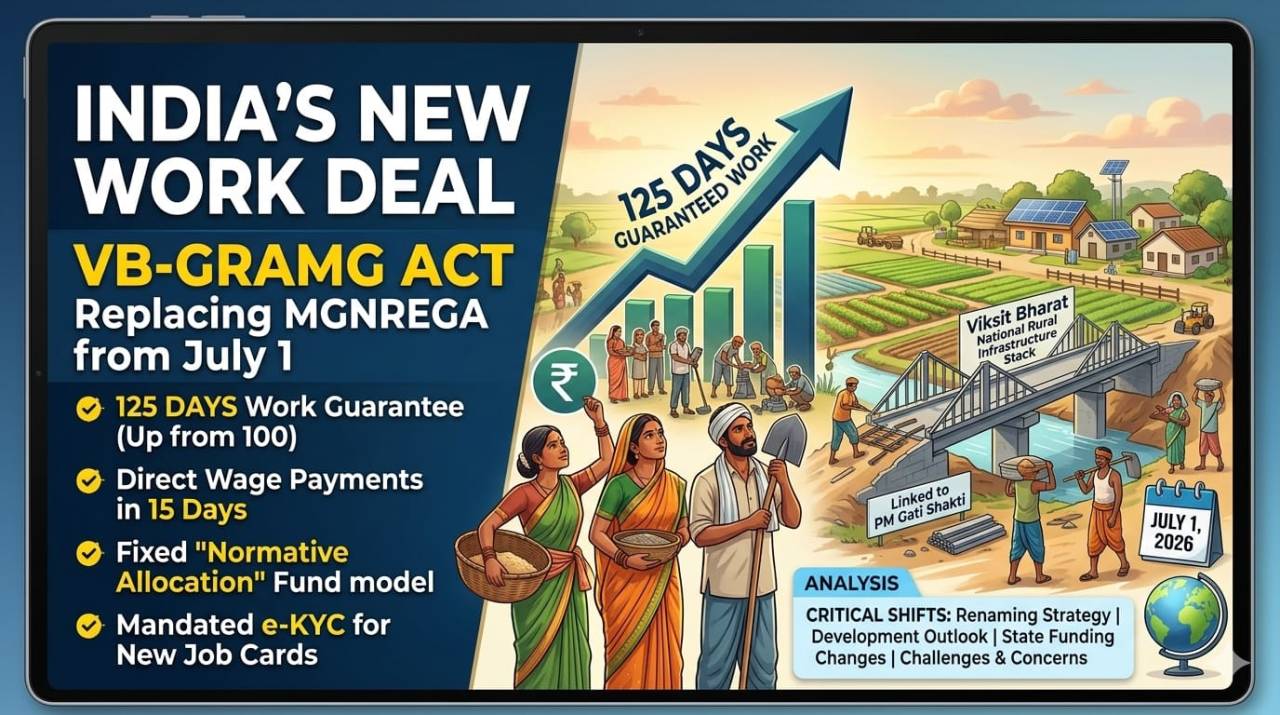
The housing reform also arrives during a major restructuring of India’s rural employment architecture. On July 1, 2026, the Mahatma Gandhi National Rural Employment Guarantee Scheme (MGNREGS) is set to transition into a new statutory framework known as the Viksit Bharat – Guarantee for Rozgar and Ajeevika Mission (Gramin) Act, or VB-G RAM G.
Under this new system, employment-linked support connected to rural housing construction will continue through revised convergence mechanisms. Existing MGNREGS job cards are expected to remain valid during the transition period until new Gramin Rozgar Guarantee Cards are issued.
The timing of the roofing amendment is therefore particularly important. Families opting for eco-friendly and locally suitable non-RCC structures are now expected to benefit from broader inclusion within the upcoming rural livelihood framework rather than being penalized for avoiding costly concrete construction.
Toward a More Flexible Rural Policy
At its core, the PMAY-G roofing reform represents a subtle but meaningful shift in governance philosophy. Instead of imposing a uniform architectural standard from above, the policy now gives rural communities greater freedom to decide what kind of home works best for them.
It recognizes that permanence does not always require concrete, and that sustainability often lies in adapting to local conditions rather than replacing them.
In a country as geographically and culturally diverse as India, such flexibility may ultimately prove more durable than rigid standardization itself.
By allowing rural families to build homes that reflect their climate, economy, and traditions, the government is not merely changing roofing rules—it is reshaping the relationship between development and local reality, one home at a time.
For years, building a dream home under the central government’s flagship rural housing scheme, Pradhan Mantri Awas Yojana-Gramin (PMAY-G), came with a rigid condition: the house needed a reinforced cement concrete (RCC) roof to qualify for the scheme’s full financial assistance. Designed to promote durability and permanent housing, the rule reflected an urban vision of what a “proper” home should look like.
But across rural India, that vision often clashed with reality.
From the humid coastal belts of eastern India to the scorching plains of central and western states, millions of families have traditionally relied on climate-friendly tiled roofs, tin sheets, and locally sourced pucca materials that are often cheaper, cooler, and better suited to local environments than concrete slabs. Yet under the earlier PMAY-G framework, choosing such roofing meant risking the loss of the final installment of government assistance.
Now, in a significant policy shift, the Union Ministry of Rural Development (MoRD) has amended PMAY-G guidelines to recognize traditional and regionally suitable roofing materials as valid forms of pucca housing. Beneficiaries will no longer be compelled to construct RCC roofs to access full housing benefits.
The change may appear administrative on paper, but its social and economic implications are far deeper. It marks a transition from centralized standardization to a more flexible model of rural development—one that acknowledges India’s climatic diversity, local architecture, and lived realities.
Breaking the Concrete Mandate
Under the previous system, PMAY-G assistance was released in phases linked to construction milestones such as foundation work, lintel completion, and finally, the roof slab. The last and often most critical installment depended heavily on the construction of an RCC roof.
For poor rural households, that requirement frequently became a financial burden. Concrete roofing is significantly more expensive than traditional alternatives and often requires additional materials, transportation, and skilled labor. Families unable or unwilling to build RCC roofs found themselves excluded from the final payment despite completing structurally sound homes.
The consequences extended beyond housing assistance alone. Since PMAY-G housing construction is linked with rural employment schemes that provide wage support for labor, beneficiaries who could not complete RCC roofing also risked losing access to employment-linked payments tied to house construction.
The revised policy removes this barrier. A home constructed with durable clay tiles, corrugated sheets, or other locally approved pucca materials will now receive the same financial recognition as one topped with concrete. In effect, the government has widened the definition of dignity in housing.
Climate, Culture, and Common Sense
The demand for this reform emerged from states where traditional housing patterns remain deeply tied to climate and geography. Leaders and administrators from tribal and rural regions repeatedly argued that flat concrete roofs were often unsuitable for local conditions.
In high-rainfall regions, poorly constructed RCC roofs are prone to leakage and moisture retention. In extremely hot areas, concrete absorbs and traps heat, making homes unbearably warm during summer months. By contrast, clay tiles and ventilated roofing systems help maintain cooler indoor temperatures naturally.
The policy change therefore reflects more than cultural accommodation—it also aligns with environmental practicality.
Madhya Pradesh Panchayat and Rural Development Minister Prahlad Patel had highlighted how many economically weaker families preferred traditional roofs not out of backwardness, but because such structures were better suited to their way of life and surroundings. Forcing a uniform concrete model, critics argued, ignored both affordability and ecological wisdom.
By accepting regional variations in construction, the government has effectively acknowledged that rural housing cannot be designed through a single national template.
A Transition in Rural Employment
The housing reform also arrives during a major restructuring of India’s rural employment architecture. On July 1, 2026, the Mahatma Gandhi National Rural Employment Guarantee Scheme (MGNREGS) is set to transition into a new statutory framework known as the Viksit Bharat – Guarantee for Rozgar and Ajeevika Mission (Gramin) Act, or VB-G RAM G.
Under this new system, employment-linked support connected to rural housing construction will continue through revised convergence mechanisms. Existing MGNREGS job cards are expected to remain valid during the transition period until new Gramin Rozgar Guarantee Cards are issued.
The timing of the roofing amendment is therefore particularly important. Families opting for eco-friendly and locally suitable non-RCC structures are now expected to benefit from broader inclusion within the upcoming rural livelihood framework rather than being penalized for avoiding costly concrete construction.
Toward a More Flexible Rural Policy
At its core, the PMAY-G roofing reform represents a subtle but meaningful shift in governance philosophy. Instead of imposing a uniform architectural standard from above, the policy now gives rural communities greater freedom to decide what kind of home works best for them.
It recognizes that permanence does not always require concrete, and that sustainability often lies in adapting to local conditions rather than replacing them.
In a country as geographically and culturally diverse as India, such flexibility may ultimately prove more durable than rigid standardization itself.
By allowing rural families to build homes that reflect their climate, economy, and traditions, the government is not merely changing roofing rules—it is reshaping the relationship between development and local reality, one home at a time.






















Leave a Comment