
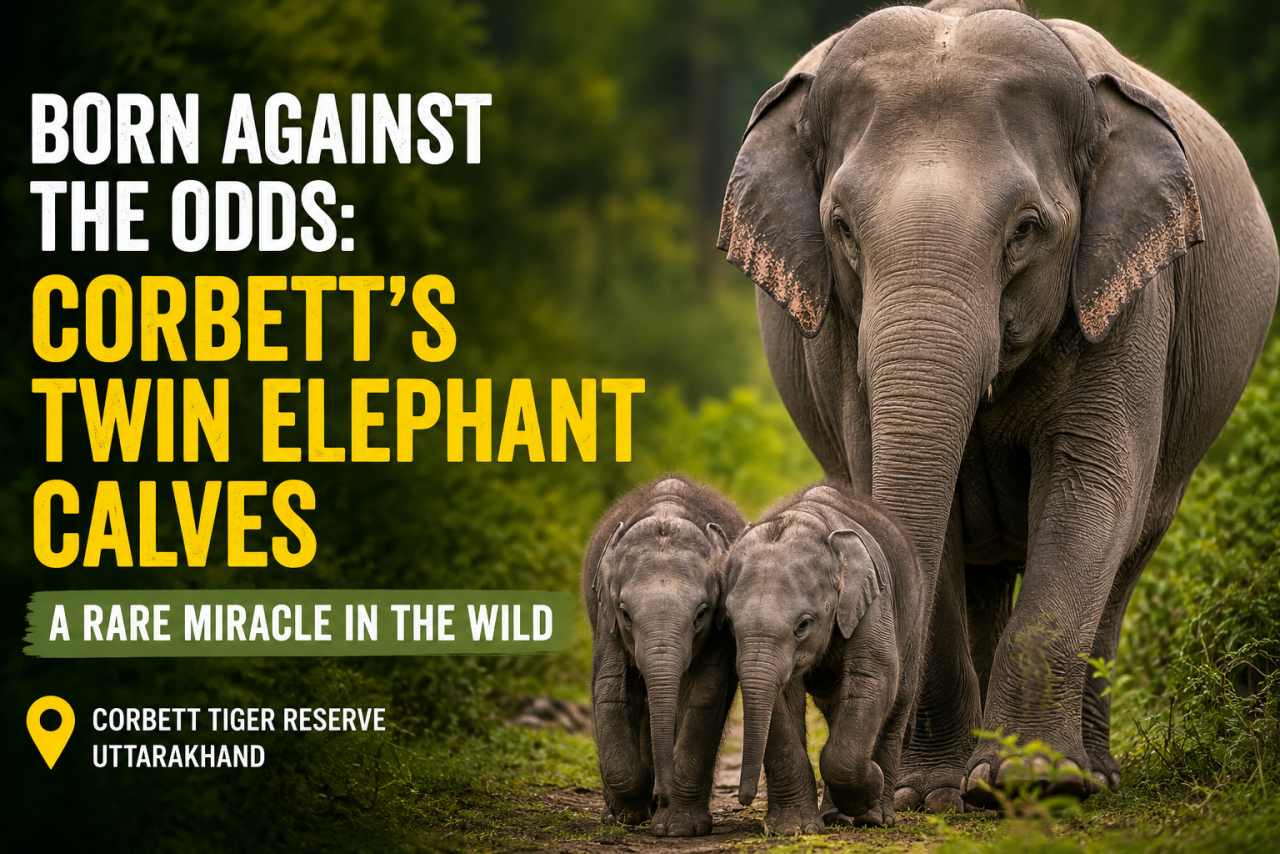
In the forests of Corbett, a mother elephant has done something nature rarely allows — giving birth to twin calves in the wild. Beyond the wonder lies a deeper story about survival, conservation, and the future of India’s forests.
In the dense forests of Uttarakhand’s Corbett Tiger Reserve, a rare and remarkable event has captured the attention of wildlife experts and conservationists alike. A female elephant in the Bijrani range has reportedly given birth to twin calves — an occurrence so unusual in the wild that it is being described as exceptional even by seasoned forest officials.
At first glance, the story feels like a moment of joy from nature: two fragile calves walking beside their mother through the grasslands of Corbett. But beneath the emotional appeal lies a much deeper ecological story — one about survival, habitat health, and the future of India’s elephants in a rapidly changing environment.
Twin births among elephants are extraordinarily rare. Female elephants endure a gestation period of nearly 22 months, the longest among land mammals. Carrying even one calf places enormous physical strain on the mother. Supporting two fetuses simultaneously is biologically difficult, which is why twin pregnancies in elephants are uncommon across both Asian and African species.
The story gains importance not because twins were born, but because both calves appear to have crossed the fragile first stage of survival in the wild. That early survival hints at something larger: a habitat capable of supporting one of nature’s most demanding animals. For a mother elephant to sustain two newborns, the surrounding ecosystem must provide sufficient food, water, security, and space for movement.
That matters greatly in modern India.
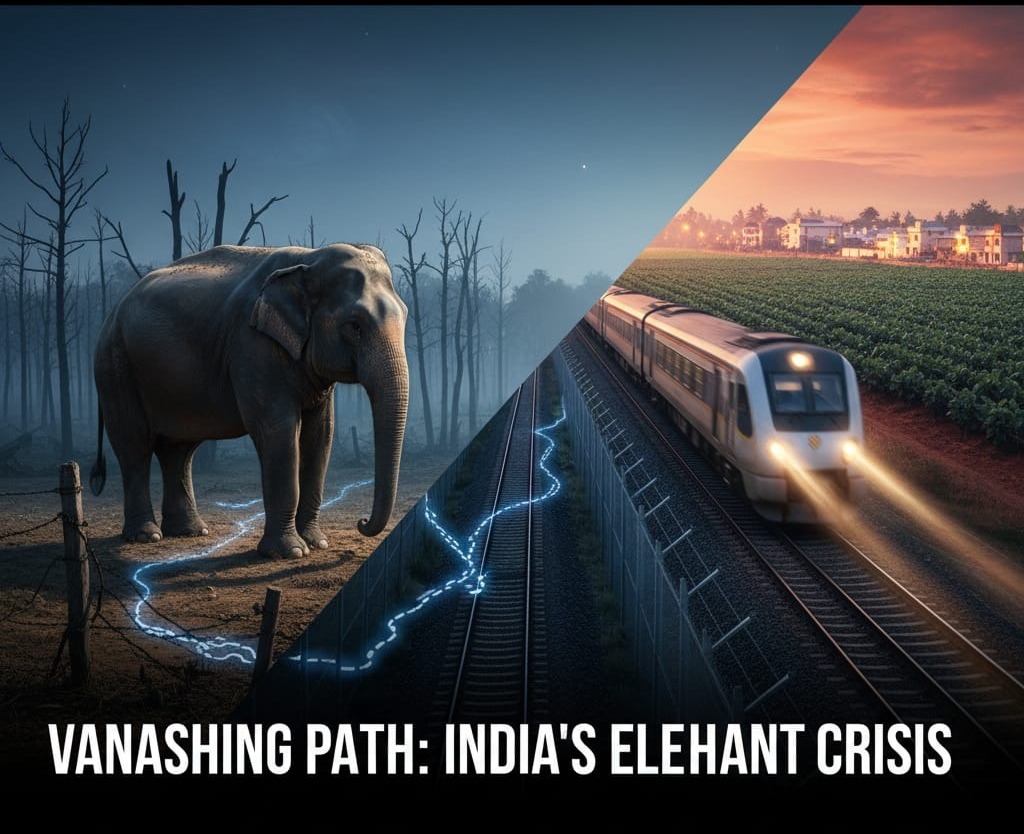
Asian elephants today face increasing pressure from shrinking forests, expanding infrastructure, railway collisions, mining activity, and rising human-animal conflict. Elephant corridors across India have been fragmented by roads and settlements, disrupting ancient migratory paths that herds have followed for generations. These disruptions do not merely change movement patterns — they alter breeding conditions, stress levels, and long-term population stability.
Against this backdrop, the twin birth becomes more than a wildlife anecdote. It may serve as a quiet indicator of ecological resilience within parts of the Corbett landscape. A mother elephant carrying and nursing twins requires access to abundant vegetation, reliable water sources, and relative freedom from disturbance.
Elephants are deeply social animals. Female elephants live in matriarchal groups where caregiving is often shared. Other females in the herd help protect and guide newborn calves, particularly during vulnerable early months. In the case of twins, such cooperative behavior may become essential. Raising two calves demands far greater energy and attention, and the survival chances of both young elephants could depend heavily on the strength and stability of the herd itself.
The story also highlights a broader imbalance in India’s conservation narrative. Corbett Tiger Reserve is internationally associated with tigers, often overshadowing the equally critical role of elephants in maintaining forest ecosystems. Yet elephants are among nature’s most important ecological engineers. They disperse seeds across vast distances, create pathways through dense forests, and influence vegetation patterns that affect countless other species.
In many ways, healthy elephant populations signal healthy forests.
That is why the birth of these twin calves carries symbolic importance beyond its rarity. It reminds us that conservation is not measured only by tiger counts or tourism numbers. It is also reflected in quieter indicators: breeding success, herd stability, and the ability of ecosystems to support vulnerable life.
Still, experts would caution against treating the event as a fairy-tale ending. Twin calves face significant survival challenges in the wild. Competition for milk, predation risks, disease, and environmental pressures remain real threats. Their journey ahead will likely be difficult.
Yet for now, the sight of two tiny calves walking beneath their mother through the forests of Corbett offers something increasingly rare in the modern world — evidence that nature, when protected, can still produce moments of wonder.
And perhaps that is the deeper lesson hidden within this story that the conservation succeeds not only when animals survive, but when ecosystems remain strong enough for life to exceed expectations.
In the dense forests of Uttarakhand’s Corbett Tiger Reserve, a rare and remarkable event has captured the attention of wildlife experts and conservationists alike. A female elephant in the Bijrani range has reportedly given birth to twin calves — an occurrence so unusual in the wild that it is being described as exceptional even by seasoned forest officials.
At first glance, the story feels like a moment of joy from nature: two fragile calves walking beside their mother through the grasslands of Corbett. But beneath the emotional appeal lies a much deeper ecological story — one about survival, habitat health, and the future of India’s elephants in a rapidly changing environment.
Twin births among elephants are extraordinarily rare. Female elephants endure a gestation period of nearly 22 months, the longest among land mammals. Carrying even one calf places enormous physical strain on the mother. Supporting two fetuses simultaneously is biologically difficult, which is why twin pregnancies in elephants are uncommon across both Asian and African species.
The story gains importance not because twins were born, but because both calves appear to have crossed the fragile first stage of survival in the wild. That early survival hints at something larger: a habitat capable of supporting one of nature’s most demanding animals. For a mother elephant to sustain two newborns, the surrounding ecosystem must provide sufficient food, water, security, and space for movement.
That matters greatly in modern India.
Asian elephants today face increasing pressure from shrinking forests, expanding infrastructure, railway collisions, mining activity, and rising human-animal conflict. Elephant corridors across India have been fragmented by roads and settlements, disrupting ancient migratory paths that herds have followed for generations. These disruptions do not merely change movement patterns — they alter breeding conditions, stress levels, and long-term population stability.
Against this backdrop, the twin birth becomes more than a wildlife anecdote. It may serve as a quiet indicator of ecological resilience within parts of the Corbett landscape. A mother elephant carrying and nursing twins requires access to abundant vegetation, reliable water sources, and relative freedom from disturbance.
Elephants are deeply social animals. Female elephants live in matriarchal groups where caregiving is often shared. Other females in the herd help protect and guide newborn calves, particularly during vulnerable early months. In the case of twins, such cooperative behavior may become essential. Raising two calves demands far greater energy and attention, and the survival chances of both young elephants could depend heavily on the strength and stability of the herd itself.
The story also highlights a broader imbalance in India’s conservation narrative. Corbett Tiger Reserve is internationally associated with tigers, often overshadowing the equally critical role of elephants in maintaining forest ecosystems. Yet elephants are among nature’s most important ecological engineers. They disperse seeds across vast distances, create pathways through dense forests, and influence vegetation patterns that affect countless other species.
In many ways, healthy elephant populations signal healthy forests.
That is why the birth of these twin calves carries symbolic importance beyond its rarity. It reminds us that conservation is not measured only by tiger counts or tourism numbers. It is also reflected in quieter indicators: breeding success, herd stability, and the ability of ecosystems to support vulnerable life.
Still, experts would caution against treating the event as a fairy-tale ending. Twin calves face significant survival challenges in the wild. Competition for milk, predation risks, disease, and environmental pressures remain real threats. Their journey ahead will likely be difficult.
Yet for now, the sight of two tiny calves walking beneath their mother through the forests of Corbett offers something increasingly rare in the modern world — evidence that nature, when protected, can still produce moments of wonder.
And perhaps that is the deeper lesson hidden within this story that the conservation succeeds not only when animals survive, but when ecosystems remain strong enough for life to exceed expectations.

























Leave a Comment