
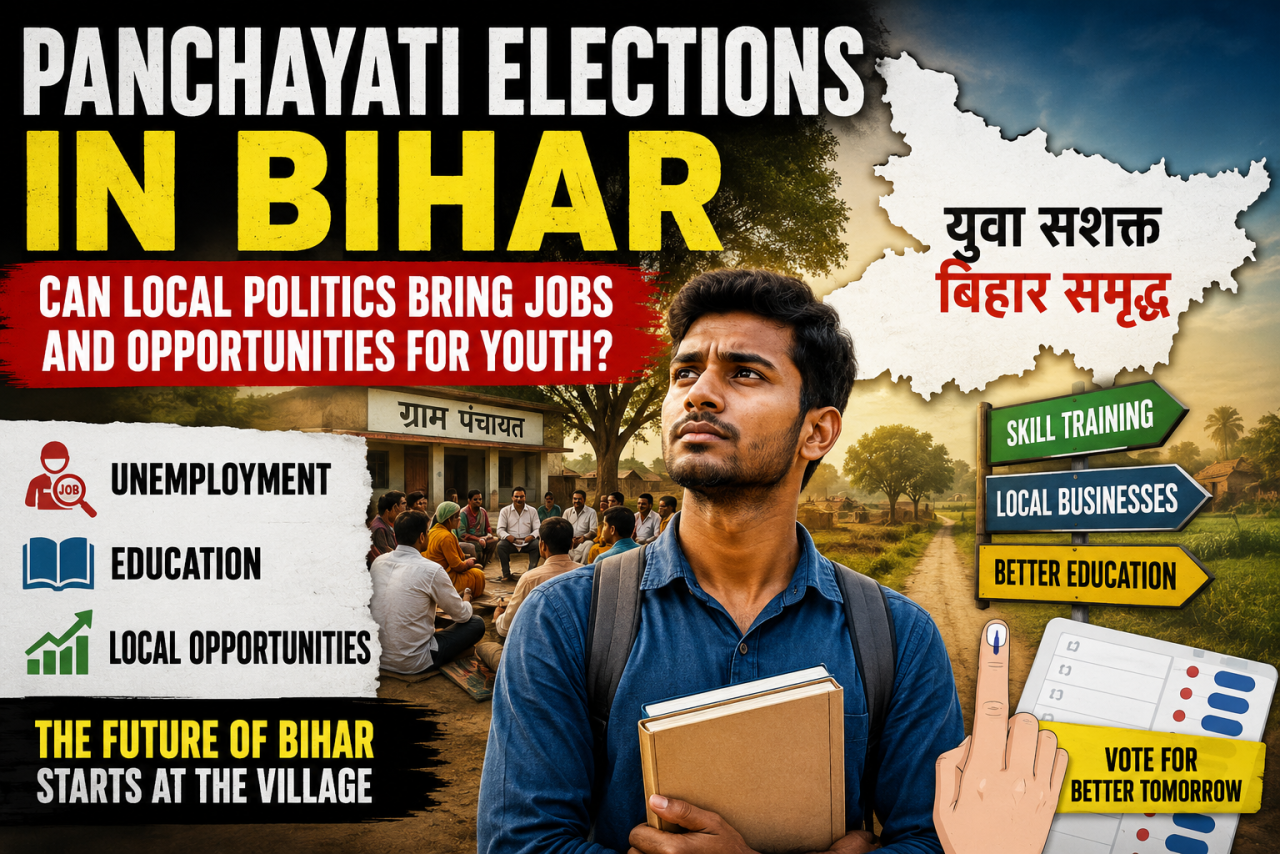
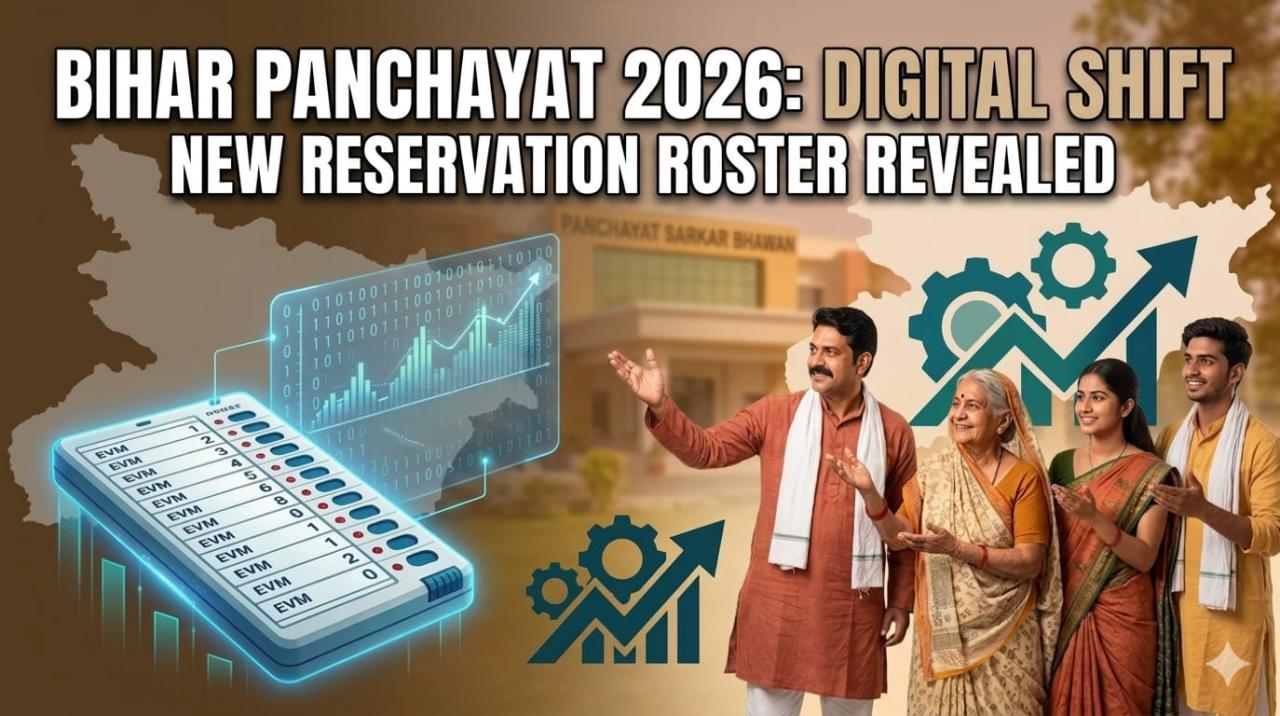
Can Bihar’s villages become job creators instead of job exporters? The answer may lie in the upcoming Panchayati elections.
The upcoming Panchayati Raj elections in Bihar are once again bringing attention to a question that has remained central to the state’s politics for decades—can local governance reduce unemployment and improve education outcomes, especially for the youth who continue to leave the state in search of work?
Bihar remains one of India’s most economically challenged states, with persistent poverty, low per capita income, and limited industrial development. According to recent assessments, the state continues to rank among the lowest on multiple development indicators, including education quality and access to decent work opportunities. In such a scenario, Panchayati Raj Institutions (PRIs) are often seen as the closest bridge between policy and people.
Youth unemployment shaping political expectations
Unemployment, particularly among educated youth, remains the most pressing issue in rural Bihar. Recent labour data indicates that while overall unemployment has shown some improvement in recent years, educated joblessness remains significantly higher than among the uneducated population. Graduates face unemployment rates of over 14%, highlighting a mismatch between education and job opportunities.
In rural districts, this gap is more visible. Young people with degrees often find themselves either preparing endlessly for competitive exams or migrating to cities like Delhi, Surat, and Mumbai for informal work. Migration has become a structural feature of Bihar’s economy rather than an exception.
Election campaigns in recent years have consistently placed jobs at the centre of political promises. However, analysts point out that while employment dominates voter concerns, it does not always translate into decisive electoral change at the local level.
Education system: progress with deep structural gaps
Education is widely seen as the foundation of any employment strategy, but Bihar’s education system continues to struggle with quality and infrastructure challenges.
While school enrollment has improved, learning outcomes remain uneven. Rural areas, in particular, face shortages of trained teachers, inadequate facilities, and weak accountability systems. A large section of students completes schooling without acquiring employable skills.
Studies show that limited access to quality education is a key reason for persistent poverty and unemployment cycles in the state. Rural literacy and skill levels remain significantly lower compared to urban areas, reinforcing the gap between aspiration and opportunity.
For Panchayati Raj Institutions, this presents both a challenge and an opportunity. Panchayats are directly involved in monitoring schools, ensuring teacher attendance, and overseeing mid-day meal schemes. However, in many regions, these responsibilities are not fully utilised for systemic improvement.
Migration: the silent outcome of joblessness
One of the most visible consequences of unemployment in Bihar is large-scale migration. A significant share of working-age men from rural households migrate to other states for employment. Historical data shows that over half of male migrants from Bihar move for work-related reasons—far higher than the national average.
This migration is not only economic but also social. Villages often experience labour shortages, disrupted family structures, and reduced local consumption, which further slows rural development.
Experts argue that if Panchayats are strengthened with better planning capacity and youth participation, they could play a role in reversing this trend by creating local employment ecosystems.
Local governance as a potential economic driver
The Panchayati Raj system is designed to decentralise power and bring governance closer to villages. In practice, it controls local infrastructure development, welfare distribution, and implementation of rural employment schemes.
Recent policy discussions in Bihar have also focused on employment generation through local initiatives, including skill development centres, rural entrepreneurship programs, and small-scale industrial clusters. Government planning documents have emphasized job creation as a key objective of state economic strategy.
If effectively implemented at the Panchayat level, such initiatives could help connect education with employment by:
- Supporting local skill training centres
- Promoting agro-based and food-processing units
- Encouraging digital literacy and freelancing hubs
- Linking youth with government employment schemes
However, success depends heavily on leadership quality at the Panchayat level.
The missing link: educated youth in local politics
A recurring criticism of Panchayati politics in Bihar is the limited participation of educated youth. Local governance structures are often influenced by traditional power networks, where experience and social capital outweigh formal education.
Experts believe that greater participation of educated young leaders could improve transparency, planning, and execution at the village level. It could also help introduce data-driven decision-making in areas like school monitoring, job creation, and welfare delivery.
There is growing recognition that governance quality at the grassroots level directly affects outcomes in education and employment. Even small improvements in Panchayat efficiency can have a multiplier effect on rural development.
Final Take: a turning point or another missed opportunity?
The Panchayati elections in Bihar come at a time when the state is grappling with deep structural challenges—persistent unemployment, weak education outcomes, and continuous migration.
Whether local politics can become a vehicle for change depends on one key factor: whether Panchayats evolve beyond administrative bodies into engines of development. If educated youth are given space in decision-making, Panchayats could play a transformative role in building local economies and reducing migration.
But if traditional patterns continue unchanged, Bihar risks extending the same cycle it has faced for decades—education without employment, and youth without opportunity.
The upcoming Panchayati Raj elections in Bihar are once again bringing attention to a question that has remained central to the state’s politics for decades—can local governance reduce unemployment and improve education outcomes, especially for the youth who continue to leave the state in search of work?
Bihar remains one of India’s most economically challenged states, with persistent poverty, low per capita income, and limited industrial development. According to recent assessments, the state continues to rank among the lowest on multiple development indicators, including education quality and access to decent work opportunities. In such a scenario, Panchayati Raj Institutions (PRIs) are often seen as the closest bridge between policy and people.
Youth unemployment shaping political expectations
Unemployment, particularly among educated youth, remains the most pressing issue in rural Bihar. Recent labour data indicates that while overall unemployment has shown some improvement in recent years, educated joblessness remains significantly higher than among the uneducated population. Graduates face unemployment rates of over 14%, highlighting a mismatch between education and job opportunities.
In rural districts, this gap is more visible. Young people with degrees often find themselves either preparing endlessly for competitive exams or migrating to cities like Delhi, Surat, and Mumbai for informal work. Migration has become a structural feature of Bihar’s economy rather than an exception.
Election campaigns in recent years have consistently placed jobs at the centre of political promises. However, analysts point out that while employment dominates voter concerns, it does not always translate into decisive electoral change at the local level.
Education system: progress with deep structural gaps
Education is widely seen as the foundation of any employment strategy, but Bihar’s education system continues to struggle with quality and infrastructure challenges.
While school enrollment has improved, learning outcomes remain uneven. Rural areas, in particular, face shortages of trained teachers, inadequate facilities, and weak accountability systems. A large section of students completes schooling without acquiring employable skills.
Studies show that limited access to quality education is a key reason for persistent poverty and unemployment cycles in the state. Rural literacy and skill levels remain significantly lower compared to urban areas, reinforcing the gap between aspiration and opportunity.
For Panchayati Raj Institutions, this presents both a challenge and an opportunity. Panchayats are directly involved in monitoring schools, ensuring teacher attendance, and overseeing mid-day meal schemes. However, in many regions, these responsibilities are not fully utilised for systemic improvement.
Migration: the silent outcome of joblessness
One of the most visible consequences of unemployment in Bihar is large-scale migration. A significant share of working-age men from rural households migrate to other states for employment. Historical data shows that over half of male migrants from Bihar move for work-related reasons—far higher than the national average.
This migration is not only economic but also social. Villages often experience labour shortages, disrupted family structures, and reduced local consumption, which further slows rural development.
Experts argue that if Panchayats are strengthened with better planning capacity and youth participation, they could play a role in reversing this trend by creating local employment ecosystems.
Local governance as a potential economic driver
The Panchayati Raj system is designed to decentralise power and bring governance closer to villages. In practice, it controls local infrastructure development, welfare distribution, and implementation of rural employment schemes.
Recent policy discussions in Bihar have also focused on employment generation through local initiatives, including skill development centres, rural entrepreneurship programs, and small-scale industrial clusters. Government planning documents have emphasized job creation as a key objective of state economic strategy.
If effectively implemented at the Panchayat level, such initiatives could help connect education with employment by:
- Supporting local skill training centres
- Promoting agro-based and food-processing units
- Encouraging digital literacy and freelancing hubs
- Linking youth with government employment schemes
However, success depends heavily on leadership quality at the Panchayat level.
The missing link: educated youth in local politics
A recurring criticism of Panchayati politics in Bihar is the limited participation of educated youth. Local governance structures are often influenced by traditional power networks, where experience and social capital outweigh formal education.
Experts believe that greater participation of educated young leaders could improve transparency, planning, and execution at the village level. It could also help introduce data-driven decision-making in areas like school monitoring, job creation, and welfare delivery.
There is growing recognition that governance quality at the grassroots level directly affects outcomes in education and employment. Even small improvements in Panchayat efficiency can have a multiplier effect on rural development.
Final Take: a turning point or another missed opportunity?
The Panchayati elections in Bihar come at a time when the state is grappling with deep structural challenges—persistent unemployment, weak education outcomes, and continuous migration.
Whether local politics can become a vehicle for change depends on one key factor: whether Panchayats evolve beyond administrative bodies into engines of development. If educated youth are given space in decision-making, Panchayats could play a transformative role in building local economies and reducing migration.
But if traditional patterns continue unchanged, Bihar risks extending the same cycle it has faced for decades—education without employment, and youth without opportunity.























Leave a Comment