
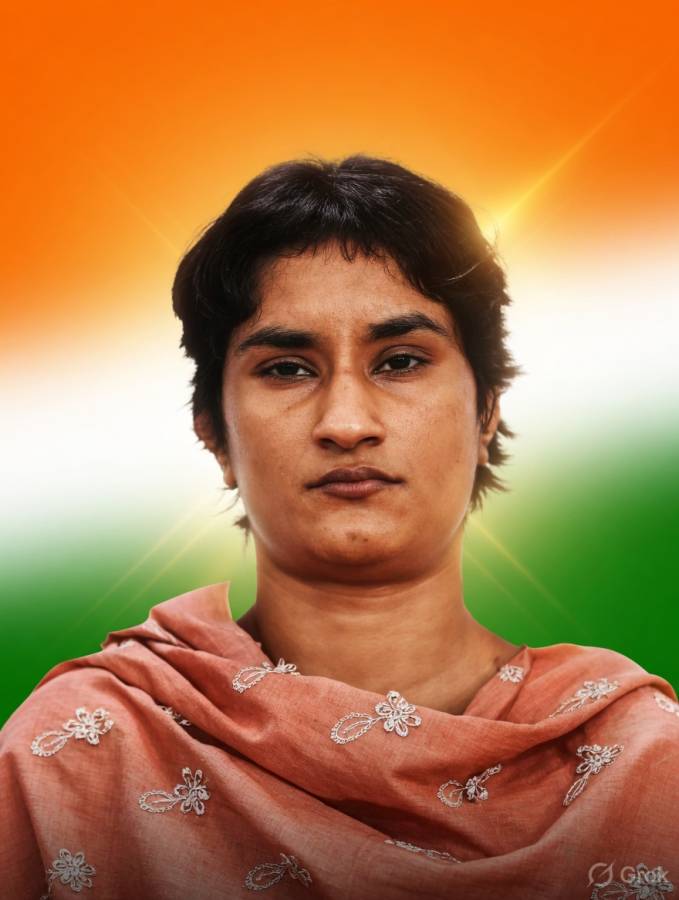
A champion who has carried India’s hopes on the world stage now finds herself locked out not by defeat on the mat, but by the fine print of the system meant to support her return.
For the Indian sports fan, the wrestling mat has long been a theatre of grit, redemption, and national pride. But the latest legal setback involving Vinesh Phogat has turned that familiar stage into something far more uncomfortable—a reminder that in Indian sport, excellence does not always guarantee opportunity.
A recent decision by the Delhi High Court to deny interim relief has effectively closed the immediate path for Vinesh Phogat to participate in the upcoming Asian Games selection trials. What should have been a straightforward sporting comeback has instead become a collision between legal procedure, federation rules, and the lived realities of an elite athlete returning from a long break.
From a fan’s perspective, this is not merely a governance issue. It feels like a structural failure—one that raises a deeper question: are India’s sporting systems designed to build champions, or simply to regulate them out of contention?
The Anatomy of Exclusion
At the heart of the controversy lies the selection framework set by the Wrestling Federation of India (WFI), which has become the central gatekeeper of eligibility.
The first barrier is procedural rigidity. The WFI policy reportedly restricts Asian Games trial entry to athletes who have secured medals in specific domestic competitions held in 2025 and 2026. This effectively sidelines established international performers who, due to injury, maternity, or other breaks, are not part of the immediate competitive cycle. For an athlete of Vinesh Phogat’s calibre, past achievements carry little weight under this structure.
Then comes a more sensitive gap: the absence of a maternity-return framework. Vinesh Phogat’s break from competition was not a decline in form but a medically and personally necessary pause. Globally, many sporting bodies have begun to introduce protective ranking freezes or return pathways for athletes returning after pregnancy. The WFI framework, however, appears to offer no such flexibility, leaving a structural blind spot that disproportionately affects women athletes.
The third layer of exclusion emerged in Gonda, where Vinesh attempted to re-enter the qualification process through the National Open Ranking tournament. Instead of a clean competitive return, she was served a detailed show-cause notice and ultimately barred from participation. The federation cited compliance with anti-doping and retirement-related regulations under United World Wrestling (UWW) guidelines, arguing that a mandatory notice period made her ineligible in the immediate term.
The result is a tightly interlocked system of rules that, intentionally or not, converges to produce a single outcome: exclusion.
The Fan’s Dilemma: Law vs Sporting Logic
Legally, the High Court’s decision to refuse interim relief was procedural. Courts are generally cautious about intervening in sports administration without hearing all parties in detail. But from a sporting perspective, the timing is decisive in a way that feels irreversible.
The selection trials are imminent. By the time the next hearing is scheduled, the Asian Games squad will likely already be finalized. Any subsequent legal remedy may exist only on paper, long after the opportunity has passed.
This disconnect between legal timelines and sporting calendars is at the heart of the frustration among fans.
There is also an emotional undertone that cannot be ignored. During her dramatic and controversial disqualification at the Paris Olympics—when she missed a medal by a margin of 100 grams on the weigh-in scale—Vinesh Phogat became a symbol of both heartbreak and resilience. The WFI’s characterization of that episode as a “national embarrassment” in official communication has only deepened the sense of estrangement between athlete and institution in the eyes of supporters.
For many fans, that language felt less like governance and more like judgment.
A System Under Scrutiny
The backdrop to this dispute is also politically and institutionally charged. The federation has been at the centre of deep unrest in recent years, particularly following the 2023 protests at Jantar Mantar, where wrestlers, including Vinesh Phogat, raised allegations of misconduct and demanded structural reforms in sports administration.
Against this history, even procedural decisions are being interpreted through a wider lens of trust deficit. The Gonda venue, where her comeback attempt was blocked, adds another layer of perceived symbolism, given its association with former WFI leadership under Brij Bhushan Sharan Singh.
While such interpretations may not be legally relevant, they shape public perception in a sport where governance credibility is already fragile.
The Cost of Rigid Systems
From an administrative standpoint, rules exist to ensure fairness, consistency, and compliance with international standards. But when those rules are applied without contextual flexibility, they risk producing outcomes that feel disconnected from sporting merit.
The central concern is not whether the WFI has the authority to enforce eligibility criteria—it clearly does. The question is whether the framework allows space for exceptional circumstances: maternity return, elite athlete rehabilitation, or reintegration after long absences.
Globally, sports governance has increasingly recognised that athletic careers are nonlinear. Injuries, pregnancy, and recovery are part of elite sport, not deviations from it.
A Missed Opportunity Beyond One Athlete
As things stand, Vinesh Phogat’s immediate path to the Asian Games trials appears blocked. The legal process continues, but the sporting window is closing fast.
For Indian sports fans, this is larger than one athlete’s absence. It is a reflection of a system still struggling to balance rule enforcement with sporting empathy. When administrative frameworks fail to accommodate one of India’s most decorated wrestlers returning from maternity and recovery, the concern extends beyond individual careers.
It becomes a question of national sporting ambition itself.
Vinesh Phogat’s journey has never been linear. But if Indian sport cannot find room for its champions when they return, it risks turning excellence into something that is celebrated only in retrospect, not supported in real time.
For the Indian sports fan, the wrestling mat has long been a theatre of grit, redemption, and national pride. But the latest legal setback involving Vinesh Phogat has turned that familiar stage into something far more uncomfortable—a reminder that in Indian sport, excellence does not always guarantee opportunity.
A recent decision by the Delhi High Court to deny interim relief has effectively closed the immediate path for Vinesh Phogat to participate in the upcoming Asian Games selection trials. What should have been a straightforward sporting comeback has instead become a collision between legal procedure, federation rules, and the lived realities of an elite athlete returning from a long break.
From a fan’s perspective, this is not merely a governance issue. It feels like a structural failure—one that raises a deeper question: are India’s sporting systems designed to build champions, or simply to regulate them out of contention?
The Anatomy of Exclusion
At the heart of the controversy lies the selection framework set by the Wrestling Federation of India (WFI), which has become the central gatekeeper of eligibility.
The first barrier is procedural rigidity. The WFI policy reportedly restricts Asian Games trial entry to athletes who have secured medals in specific domestic competitions held in 2025 and 2026. This effectively sidelines established international performers who, due to injury, maternity, or other breaks, are not part of the immediate competitive cycle. For an athlete of Vinesh Phogat’s calibre, past achievements carry little weight under this structure.
Then comes a more sensitive gap: the absence of a maternity-return framework. Vinesh Phogat’s break from competition was not a decline in form but a medically and personally necessary pause. Globally, many sporting bodies have begun to introduce protective ranking freezes or return pathways for athletes returning after pregnancy. The WFI framework, however, appears to offer no such flexibility, leaving a structural blind spot that disproportionately affects women athletes.
The third layer of exclusion emerged in Gonda, where Vinesh attempted to re-enter the qualification process through the National Open Ranking tournament. Instead of a clean competitive return, she was served a detailed show-cause notice and ultimately barred from participation. The federation cited compliance with anti-doping and retirement-related regulations under United World Wrestling (UWW) guidelines, arguing that a mandatory notice period made her ineligible in the immediate term.
The result is a tightly interlocked system of rules that, intentionally or not, converges to produce a single outcome: exclusion.
The Fan’s Dilemma: Law vs Sporting Logic
Legally, the High Court’s decision to refuse interim relief was procedural. Courts are generally cautious about intervening in sports administration without hearing all parties in detail. But from a sporting perspective, the timing is decisive in a way that feels irreversible.
The selection trials are imminent. By the time the next hearing is scheduled, the Asian Games squad will likely already be finalized. Any subsequent legal remedy may exist only on paper, long after the opportunity has passed.
This disconnect between legal timelines and sporting calendars is at the heart of the frustration among fans.
There is also an emotional undertone that cannot be ignored. During her dramatic and controversial disqualification at the Paris Olympics—when she missed a medal by a margin of 100 grams on the weigh-in scale—Vinesh Phogat became a symbol of both heartbreak and resilience. The WFI’s characterization of that episode as a “national embarrassment” in official communication has only deepened the sense of estrangement between athlete and institution in the eyes of supporters.
For many fans, that language felt less like governance and more like judgment.
A System Under Scrutiny
The backdrop to this dispute is also politically and institutionally charged. The federation has been at the centre of deep unrest in recent years, particularly following the 2023 protests at Jantar Mantar, where wrestlers, including Vinesh Phogat, raised allegations of misconduct and demanded structural reforms in sports administration.
Against this history, even procedural decisions are being interpreted through a wider lens of trust deficit. The Gonda venue, where her comeback attempt was blocked, adds another layer of perceived symbolism, given its association with former WFI leadership under Brij Bhushan Sharan Singh.
While such interpretations may not be legally relevant, they shape public perception in a sport where governance credibility is already fragile.
The Cost of Rigid Systems
From an administrative standpoint, rules exist to ensure fairness, consistency, and compliance with international standards. But when those rules are applied without contextual flexibility, they risk producing outcomes that feel disconnected from sporting merit.
The central concern is not whether the WFI has the authority to enforce eligibility criteria—it clearly does. The question is whether the framework allows space for exceptional circumstances: maternity return, elite athlete rehabilitation, or reintegration after long absences.
Globally, sports governance has increasingly recognised that athletic careers are nonlinear. Injuries, pregnancy, and recovery are part of elite sport, not deviations from it.
A Missed Opportunity Beyond One Athlete
As things stand, Vinesh Phogat’s immediate path to the Asian Games trials appears blocked. The legal process continues, but the sporting window is closing fast.
For Indian sports fans, this is larger than one athlete’s absence. It is a reflection of a system still struggling to balance rule enforcement with sporting empathy. When administrative frameworks fail to accommodate one of India’s most decorated wrestlers returning from maternity and recovery, the concern extends beyond individual careers.
It becomes a question of national sporting ambition itself.
Vinesh Phogat’s journey has never been linear. But if Indian sport cannot find room for its champions when they return, it risks turning excellence into something that is celebrated only in retrospect, not supported in real time.













Leave a Comment