
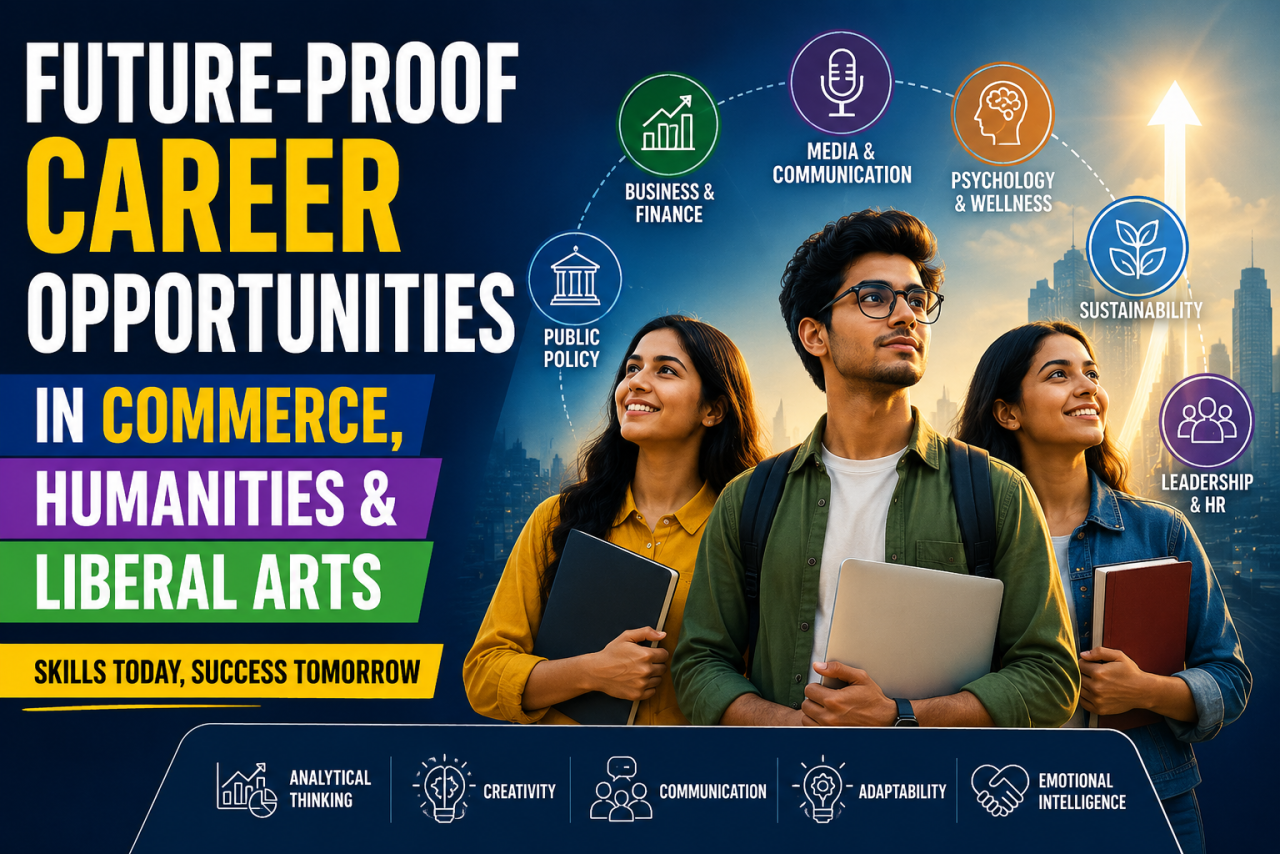
In an age of AI, automation, and rapid digital transformation, the future belongs not only to coders and engineers but also to critical thinkers, communicators, creators, and problem-solvers.
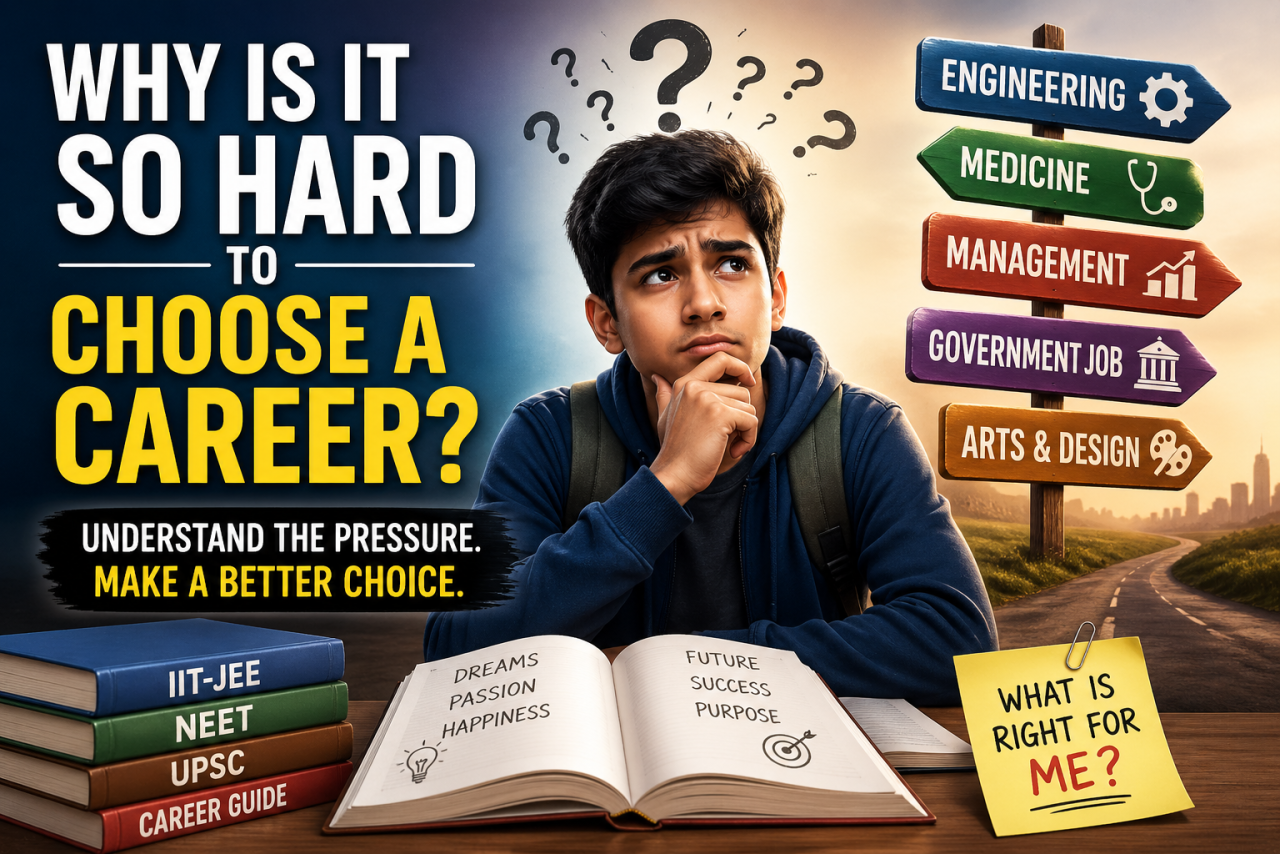
For decades, career success in India was often associated with a narrow set of professional choices—engineering, medicine, or government services. Students from Commerce, Humanities, and Liberal Arts streams were frequently seen as having “alternative” or “secondary” career paths. However, the global economy of the 21st century is rapidly changing this perception.
Artificial intelligence, automation, climate change, digital media, and globalization are transforming the nature of work faster than ever before. Many traditional jobs are becoming automated, while entirely new professions are emerging across industries. In this evolving landscape, employers are increasingly searching for individuals who can think critically, communicate effectively, solve complex problems, and understand human behavior. These are precisely the strengths that Commerce, Humanities, and Liberal Arts students often develop during their academic journey.
The future job market is no longer driven only by technical knowledge. It is increasingly shaped by adaptability, creativity, emotional intelligence, and interdisciplinary thinking.
The Changing Nature of Employment
The modern workplace values more than routine technical expertise. Machines and algorithms can process information quickly, but they cannot fully replicate empathy, ethical judgment, cultural understanding, negotiation, leadership, or creativity.
As industries become more technology-driven, the demand for professionals who can connect human needs with technological systems is growing rapidly. Businesses now require experts who understand communication, consumer psychology, public policy, finance, social behavior, and organizational management.
This shift is creating major opportunities for students outside traditional STEM fields.
Emerging Career Opportunities in Commerce
Commerce is no longer limited to bookkeeping or conventional accounting roles. The digital economy has significantly expanded career possibilities for students with financial and business knowledge.
Financial Analysis and Wealth Management
India’s growing middle class and expanding investment culture have increased the demand for financial advisors, investment analysts, and wealth managers. Stock markets, mutual funds, digital banking, and fintech platforms are creating a wide range of employment opportunities.
Professionals who understand economics, financial planning, taxation, and market behavior are expected to remain highly relevant in the coming decades.
Digital Marketing and Brand Strategy
The rise of e-commerce and online businesses has transformed advertising and consumer engagement. Today, companies depend heavily on digital visibility to survive in competitive markets.
This has opened opportunities in social media management, digital advertising, content strategy, influencer marketing, search engine optimization (SEO), and brand communication. Commerce students with creative and analytical skills can build strong careers in this rapidly growing sector.
Business Analytics and Market Research
Modern companies rely heavily on data-driven decision-making. Commerce students who combine business understanding with analytical tools can work in business intelligence, market research, and strategic consulting.
Even basic knowledge of data interpretation, spreadsheets, AI tools, and business software can significantly improve employability in today’s corporate environment.
Entrepreneurship and Startups
India’s startup ecosystem has become one of the largest in the world. Young entrepreneurs are creating ventures in fintech, education, healthcare, media, sustainability, and digital services.
Commerce students with innovative ideas and management skills increasingly have the option of building their own businesses rather than depending entirely on traditional employment structures.
Expanding Opportunities in Humanities
Humanities education develops analytical thinking, communication abilities, and social awareness—qualities that are becoming increasingly valuable in a world shaped by information and policy challenges.
Public Policy and Governance
Governments, NGOs, research organizations, and international institutions require professionals who understand society, politics, economics, and law.
Public policy has emerged as a major career field for students interested in governance, development, social reform, and administration. As countries face challenges related to urbanization, climate change, employment, and digital regulation, policy experts will play an increasingly important role.
Journalism and Digital Media
The media industry has undergone a massive transformation in the digital age. Traditional journalism has expanded into podcasting, video storytelling, independent media platforms, and online content creation.
Writers, editors, researchers, documentary creators, and media analysts are increasingly needed in the information economy. The demand for credible storytelling and factual reporting remains strong despite technological disruption.
Psychology and Mental Health Services
Mental health awareness is growing rapidly across the world, particularly after the social and emotional challenges experienced during recent global crises.
This has created increasing demand for counselors, psychologists, behavioral researchers, and mental health professionals. Careers related to emotional well-being, therapy, and workplace mental health are expected to grow substantially in the future.
International Relations and Global Studies
Globalization has increased the importance of diplomacy, international trade, foreign policy, and geopolitical analysis.
Students interested in international affairs can pursue careers in embassies, think tanks, global organizations, policy research institutions, and multinational companies dealing with international markets.
The Rise of Liberal Arts Careers
Liberal Arts education encourages interdisciplinary learning, creativity, and intellectual flexibility. These qualities are especially valuable in uncertain and rapidly changing environments.
User Experience (UX) and Design Thinking
Technology companies increasingly focus on user-centered design. Products and applications must not only function well but also understand human behavior and psychology.
Liberal Arts graduates with creative thinking and research skills are finding opportunities in UX research, product design, and customer experience strategy.
Sustainability and Environmental Communication
Climate change and sustainable development are shaping business models and government policies worldwide.
As industries shift toward greener practices, careers related to sustainability consulting, environmental communication, climate advocacy, and social impact research are expected to expand significantly.
Education and Skill Development
The education sector is undergoing major transformation through online learning, hybrid classrooms, and skill-based training programs.
Teachers, curriculum developers, educational consultants, and learning designers will continue to play a crucial role in preparing future generations for a changing economy.
Human Resources and Corporate Communication
Modern organizations increasingly recognize the importance of workplace culture, employee well-being, and effective communication.
Professionals who can manage teams, resolve conflicts, build organizational identity, and improve workplace engagement remain essential for long-term institutional growth.
Skills Will Matter More Than Degrees
One of the biggest shifts in the future economy is that employers are increasingly valuing practical skills over academic labels alone.
Students from Commerce, Humanities, and Liberal Arts backgrounds can significantly improve their career prospects by developing additional abilities such as:
- Communication and public speaking
- Research and analytical thinking
- Data literacy and digital tools
- Creativity and problem-solving
- Leadership and teamwork
- Emotional intelligence and adaptability
Internships, freelancing, certifications, online courses, and project-based learning are becoming as important as formal classroom education.
Final Take
The future job market will not belong exclusively to coders or engineers. As automation handles repetitive tasks, human-centered skills will become even more valuable. Commerce, Humanities, and Liberal Arts students possess many of the qualities that modern economies increasingly require—critical thinking, creativity, communication, ethical understanding, and adaptability.
Instead of following outdated stereotypes, students must focus on identifying their strengths and continuously upgrading their skills. The most successful individuals in the coming decades may not necessarily be those with the most technical expertise, but those who can learn continuously, think independently, and understand people in an increasingly complex world.
For decades, career success in India was often associated with a narrow set of professional choices—engineering, medicine, or government services. Students from Commerce, Humanities, and Liberal Arts streams were frequently seen as having “alternative” or “secondary” career paths. However, the global economy of the 21st century is rapidly changing this perception.
Artificial intelligence, automation, climate change, digital media, and globalization are transforming the nature of work faster than ever before. Many traditional jobs are becoming automated, while entirely new professions are emerging across industries. In this evolving landscape, employers are increasingly searching for individuals who can think critically, communicate effectively, solve complex problems, and understand human behavior. These are precisely the strengths that Commerce, Humanities, and Liberal Arts students often develop during their academic journey.
The future job market is no longer driven only by technical knowledge. It is increasingly shaped by adaptability, creativity, emotional intelligence, and interdisciplinary thinking.
The Changing Nature of Employment
The modern workplace values more than routine technical expertise. Machines and algorithms can process information quickly, but they cannot fully replicate empathy, ethical judgment, cultural understanding, negotiation, leadership, or creativity.
As industries become more technology-driven, the demand for professionals who can connect human needs with technological systems is growing rapidly. Businesses now require experts who understand communication, consumer psychology, public policy, finance, social behavior, and organizational management.
This shift is creating major opportunities for students outside traditional STEM fields.
Emerging Career Opportunities in Commerce
Commerce is no longer limited to bookkeeping or conventional accounting roles. The digital economy has significantly expanded career possibilities for students with financial and business knowledge.
Financial Analysis and Wealth Management
India’s growing middle class and expanding investment culture have increased the demand for financial advisors, investment analysts, and wealth managers. Stock markets, mutual funds, digital banking, and fintech platforms are creating a wide range of employment opportunities.
Professionals who understand economics, financial planning, taxation, and market behavior are expected to remain highly relevant in the coming decades.
Digital Marketing and Brand Strategy
The rise of e-commerce and online businesses has transformed advertising and consumer engagement. Today, companies depend heavily on digital visibility to survive in competitive markets.
This has opened opportunities in social media management, digital advertising, content strategy, influencer marketing, search engine optimization (SEO), and brand communication. Commerce students with creative and analytical skills can build strong careers in this rapidly growing sector.
Business Analytics and Market Research
Modern companies rely heavily on data-driven decision-making. Commerce students who combine business understanding with analytical tools can work in business intelligence, market research, and strategic consulting.
Even basic knowledge of data interpretation, spreadsheets, AI tools, and business software can significantly improve employability in today’s corporate environment.
Entrepreneurship and Startups
India’s startup ecosystem has become one of the largest in the world. Young entrepreneurs are creating ventures in fintech, education, healthcare, media, sustainability, and digital services.
Commerce students with innovative ideas and management skills increasingly have the option of building their own businesses rather than depending entirely on traditional employment structures.
Expanding Opportunities in Humanities
Humanities education develops analytical thinking, communication abilities, and social awareness—qualities that are becoming increasingly valuable in a world shaped by information and policy challenges.
Public Policy and Governance
Governments, NGOs, research organizations, and international institutions require professionals who understand society, politics, economics, and law.
Public policy has emerged as a major career field for students interested in governance, development, social reform, and administration. As countries face challenges related to urbanization, climate change, employment, and digital regulation, policy experts will play an increasingly important role.
Journalism and Digital Media
The media industry has undergone a massive transformation in the digital age. Traditional journalism has expanded into podcasting, video storytelling, independent media platforms, and online content creation.
Writers, editors, researchers, documentary creators, and media analysts are increasingly needed in the information economy. The demand for credible storytelling and factual reporting remains strong despite technological disruption.
Psychology and Mental Health Services
Mental health awareness is growing rapidly across the world, particularly after the social and emotional challenges experienced during recent global crises.
This has created increasing demand for counselors, psychologists, behavioral researchers, and mental health professionals. Careers related to emotional well-being, therapy, and workplace mental health are expected to grow substantially in the future.
International Relations and Global Studies
Globalization has increased the importance of diplomacy, international trade, foreign policy, and geopolitical analysis.
Students interested in international affairs can pursue careers in embassies, think tanks, global organizations, policy research institutions, and multinational companies dealing with international markets.
The Rise of Liberal Arts Careers
Liberal Arts education encourages interdisciplinary learning, creativity, and intellectual flexibility. These qualities are especially valuable in uncertain and rapidly changing environments.
User Experience (UX) and Design Thinking
Technology companies increasingly focus on user-centered design. Products and applications must not only function well but also understand human behavior and psychology.
Liberal Arts graduates with creative thinking and research skills are finding opportunities in UX research, product design, and customer experience strategy.
Sustainability and Environmental Communication
Climate change and sustainable development are shaping business models and government policies worldwide.
As industries shift toward greener practices, careers related to sustainability consulting, environmental communication, climate advocacy, and social impact research are expected to expand significantly.
Education and Skill Development
The education sector is undergoing major transformation through online learning, hybrid classrooms, and skill-based training programs.
Teachers, curriculum developers, educational consultants, and learning designers will continue to play a crucial role in preparing future generations for a changing economy.
Human Resources and Corporate Communication
Modern organizations increasingly recognize the importance of workplace culture, employee well-being, and effective communication.
Professionals who can manage teams, resolve conflicts, build organizational identity, and improve workplace engagement remain essential for long-term institutional growth.
Skills Will Matter More Than Degrees
One of the biggest shifts in the future economy is that employers are increasingly valuing practical skills over academic labels alone.
Students from Commerce, Humanities, and Liberal Arts backgrounds can significantly improve their career prospects by developing additional abilities such as:
- Communication and public speaking
- Research and analytical thinking
- Data literacy and digital tools
- Creativity and problem-solving
- Leadership and teamwork
- Emotional intelligence and adaptability
Internships, freelancing, certifications, online courses, and project-based learning are becoming as important as formal classroom education.
Final Take
The future job market will not belong exclusively to coders or engineers. As automation handles repetitive tasks, human-centered skills will become even more valuable. Commerce, Humanities, and Liberal Arts students possess many of the qualities that modern economies increasingly require—critical thinking, creativity, communication, ethical understanding, and adaptability.
Instead of following outdated stereotypes, students must focus on identifying their strengths and continuously upgrading their skills. The most successful individuals in the coming decades may not necessarily be those with the most technical expertise, but those who can learn continuously, think independently, and understand people in an increasingly complex world.




















Leave a Comment