
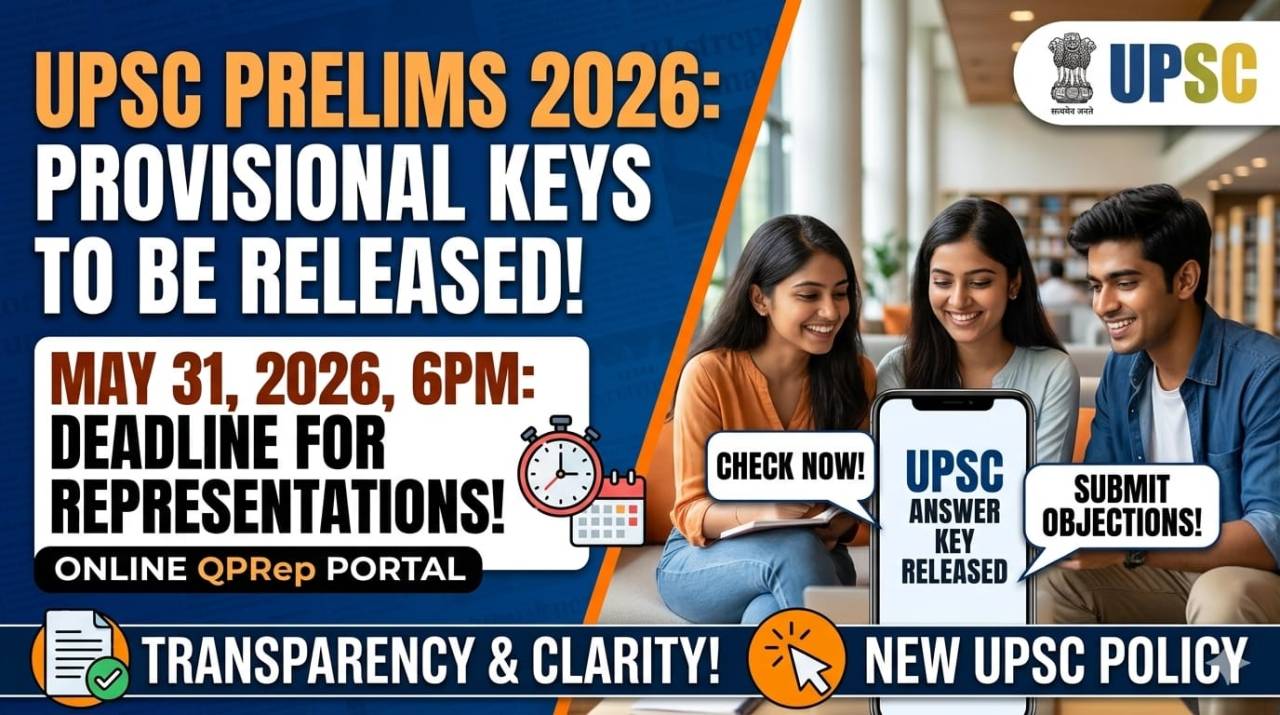
For decades, UPSC aspirants waited months for official answers. From 2026, that silence is finally ending.
In a landmark move poised to transform India’s most competitive examination ecosystem, the Union Public Service Commission (UPSC) has announced that it will release the Provisional Answer Key for the Civil Services Preliminary Examination 2026 shortly after the exam is conducted.
The decision marks one of the most significant transparency reforms in the history of the Civil Services Examination (CSE), long regarded as the gateway to India’s administrative elite. For lakhs of aspirants who spend years preparing for the examination, the move promises greater clarity, reduced uncertainty, and a more participative evaluation process.
A Break from UPSC’s Traditional Approach
For decades, UPSC followed a highly confidential evaluation system. Official answer keys for the Preliminary Examination were generally released only after the entire examination cycle—including the Mains Examination and Personality Test—had concluded. In many cases, aspirants had to wait nearly a year to see the official answers.
This prolonged silence often pushed candidates toward unofficial answer keys published by coaching institutes, many of which differed significantly in interpretation and accuracy. The absence of an official reference created confusion, anxiety, and endless speculation about cutoff marks and selection chances.
The newly announced policy fundamentally changes that equation.
By publishing provisional answer keys soon after the Preliminary Examination, UPSC is opening a direct channel of communication with candidates while preserving the integrity of the examination process.
UPSC Chairman Ajay Kumar described the reform as part of a broader effort to strengthen transparency, responsiveness, and timely communication within the Commission’s functioning. According to the Commission, the initiative is designed to make the examination process more candidate-centric without compromising merit or institutional credibility.
Significantly, UPSC has also indicated that this model may gradually be extended to other examinations conducted by the Commission.
Candidates Can Now Challenge Answers
Perhaps the most notable feature of the reform is the introduction of a formal objection mechanism.
Candidates who disagree with any answer in the provisional key will now be able to submit representations through an official digital platform. This shifts aspirants from being passive recipients of results to active participants in the evaluation process.
For the Civil Services Preliminary Examination 2026, candidates can submit objections until May 31, 2026, at 6:00 PM through the Online Question Paper Representation Portal (QPRep) available on the UPSC website.
However, the process is designed to discourage frivolous claims. Aspirants will not merely be allowed to declare an answer incorrect; they must also provide:
- The alternative answer they believe is correct
- A brief explanation supporting their claim
- Documentary evidence from three authentic sources
This structured system ensures that objections remain evidence-based and academically credible.
Expert Review Before Finalization
After the representation window closes, UPSC will place all objections before dedicated panels of subject experts for detailed scrutiny.
Only after reviewing all legitimate representations will the Commission finalize the official answer key. This additional layer of expert assessment is expected to enhance both accuracy and public trust in the process.
The move also aligns UPSC with evolving practices seen in several national-level examinations, where provisional answer keys and objection windows have become standard mechanisms for ensuring accountability.
What This Means for Aspirants
The implications of this reform extend far beyond transparency alone.
For years, uncertainty after the Preliminary Examination has been one of the most emotionally draining aspects of the UPSC journey. Candidates often spent weeks trapped in speculation, unsure whether to continue intensive preparation for the Mains Examination or pause their efforts.
The early release of provisional answer keys changes this dynamic dramatically.
Faster Performance Assessment
Candidates will now be able to evaluate their probable scores with much greater confidence shortly after the exam. This reduces dependence on unofficial coaching institute analyses and minimizes confusion over disputed questions.
Better Strategic Planning
The reform also allows aspirants to make faster and more informed decisions. Those likely to qualify can immediately begin focused preparation for the Mains Examination without losing precious weeks. Candidates who narrowly miss the cutoff can recalibrate their preparation strategy for the next attempt much earlier.
Reduced Psychological Stress
The emotional burden of uncertainty has long been an unspoken challenge in the Civil Services ecosystem. By introducing clarity earlier in the process, UPSC may significantly reduce the anxiety associated with waiting for results and unofficial assessments.
A Defining Administrative Reform
The Civil Services Examination is not merely a test; for millions of Indians, it represents aspiration, social mobility, and public service. Any reform within this system carries enormous symbolic and practical significance.
By choosing greater openness and candidate engagement, UPSC has taken a decisive step toward modernizing one of India’s most prestigious institutions. The introduction of provisional answer keys and a formal representation mechanism signals a shift from opacity toward institutional accountability.
For aspirants, the message is clear: the examination process is becoming more transparent, more responsive, and more aligned with contemporary expectations of fairness.
As the 2026 examination cycle approaches, candidates will not only prepare for one of the toughest exams in the country—they will also enter a system that is beginning to place greater trust in the very people it evaluates.
In a landmark move poised to transform India’s most competitive examination ecosystem, the Union Public Service Commission (UPSC) has announced that it will release the Provisional Answer Key for the Civil Services Preliminary Examination 2026 shortly after the exam is conducted.
The decision marks one of the most significant transparency reforms in the history of the Civil Services Examination (CSE), long regarded as the gateway to India’s administrative elite. For lakhs of aspirants who spend years preparing for the examination, the move promises greater clarity, reduced uncertainty, and a more participative evaluation process.
A Break from UPSC’s Traditional Approach
For decades, UPSC followed a highly confidential evaluation system. Official answer keys for the Preliminary Examination were generally released only after the entire examination cycle—including the Mains Examination and Personality Test—had concluded. In many cases, aspirants had to wait nearly a year to see the official answers.
This prolonged silence often pushed candidates toward unofficial answer keys published by coaching institutes, many of which differed significantly in interpretation and accuracy. The absence of an official reference created confusion, anxiety, and endless speculation about cutoff marks and selection chances.
The newly announced policy fundamentally changes that equation.
By publishing provisional answer keys soon after the Preliminary Examination, UPSC is opening a direct channel of communication with candidates while preserving the integrity of the examination process.
UPSC Chairman Ajay Kumar described the reform as part of a broader effort to strengthen transparency, responsiveness, and timely communication within the Commission’s functioning. According to the Commission, the initiative is designed to make the examination process more candidate-centric without compromising merit or institutional credibility.
Significantly, UPSC has also indicated that this model may gradually be extended to other examinations conducted by the Commission.
Candidates Can Now Challenge Answers
Perhaps the most notable feature of the reform is the introduction of a formal objection mechanism.
Candidates who disagree with any answer in the provisional key will now be able to submit representations through an official digital platform. This shifts aspirants from being passive recipients of results to active participants in the evaluation process.
For the Civil Services Preliminary Examination 2026, candidates can submit objections until May 31, 2026, at 6:00 PM through the Online Question Paper Representation Portal (QPRep) available on the UPSC website.
However, the process is designed to discourage frivolous claims. Aspirants will not merely be allowed to declare an answer incorrect; they must also provide:
- The alternative answer they believe is correct
- A brief explanation supporting their claim
- Documentary evidence from three authentic sources
This structured system ensures that objections remain evidence-based and academically credible.
Expert Review Before Finalization
After the representation window closes, UPSC will place all objections before dedicated panels of subject experts for detailed scrutiny.
Only after reviewing all legitimate representations will the Commission finalize the official answer key. This additional layer of expert assessment is expected to enhance both accuracy and public trust in the process.
The move also aligns UPSC with evolving practices seen in several national-level examinations, where provisional answer keys and objection windows have become standard mechanisms for ensuring accountability.
What This Means for Aspirants
The implications of this reform extend far beyond transparency alone.
For years, uncertainty after the Preliminary Examination has been one of the most emotionally draining aspects of the UPSC journey. Candidates often spent weeks trapped in speculation, unsure whether to continue intensive preparation for the Mains Examination or pause their efforts.
The early release of provisional answer keys changes this dynamic dramatically.
Faster Performance Assessment
Candidates will now be able to evaluate their probable scores with much greater confidence shortly after the exam. This reduces dependence on unofficial coaching institute analyses and minimizes confusion over disputed questions.
Better Strategic Planning
The reform also allows aspirants to make faster and more informed decisions. Those likely to qualify can immediately begin focused preparation for the Mains Examination without losing precious weeks. Candidates who narrowly miss the cutoff can recalibrate their preparation strategy for the next attempt much earlier.
Reduced Psychological Stress
The emotional burden of uncertainty has long been an unspoken challenge in the Civil Services ecosystem. By introducing clarity earlier in the process, UPSC may significantly reduce the anxiety associated with waiting for results and unofficial assessments.
A Defining Administrative Reform
The Civil Services Examination is not merely a test; for millions of Indians, it represents aspiration, social mobility, and public service. Any reform within this system carries enormous symbolic and practical significance.
By choosing greater openness and candidate engagement, UPSC has taken a decisive step toward modernizing one of India’s most prestigious institutions. The introduction of provisional answer keys and a formal representation mechanism signals a shift from opacity toward institutional accountability.
For aspirants, the message is clear: the examination process is becoming more transparent, more responsive, and more aligned with contemporary expectations of fairness.
As the 2026 examination cycle approaches, candidates will not only prepare for one of the toughest exams in the country—they will also enter a system that is beginning to place greater trust in the very people it evaluates.




















Leave a Comment