
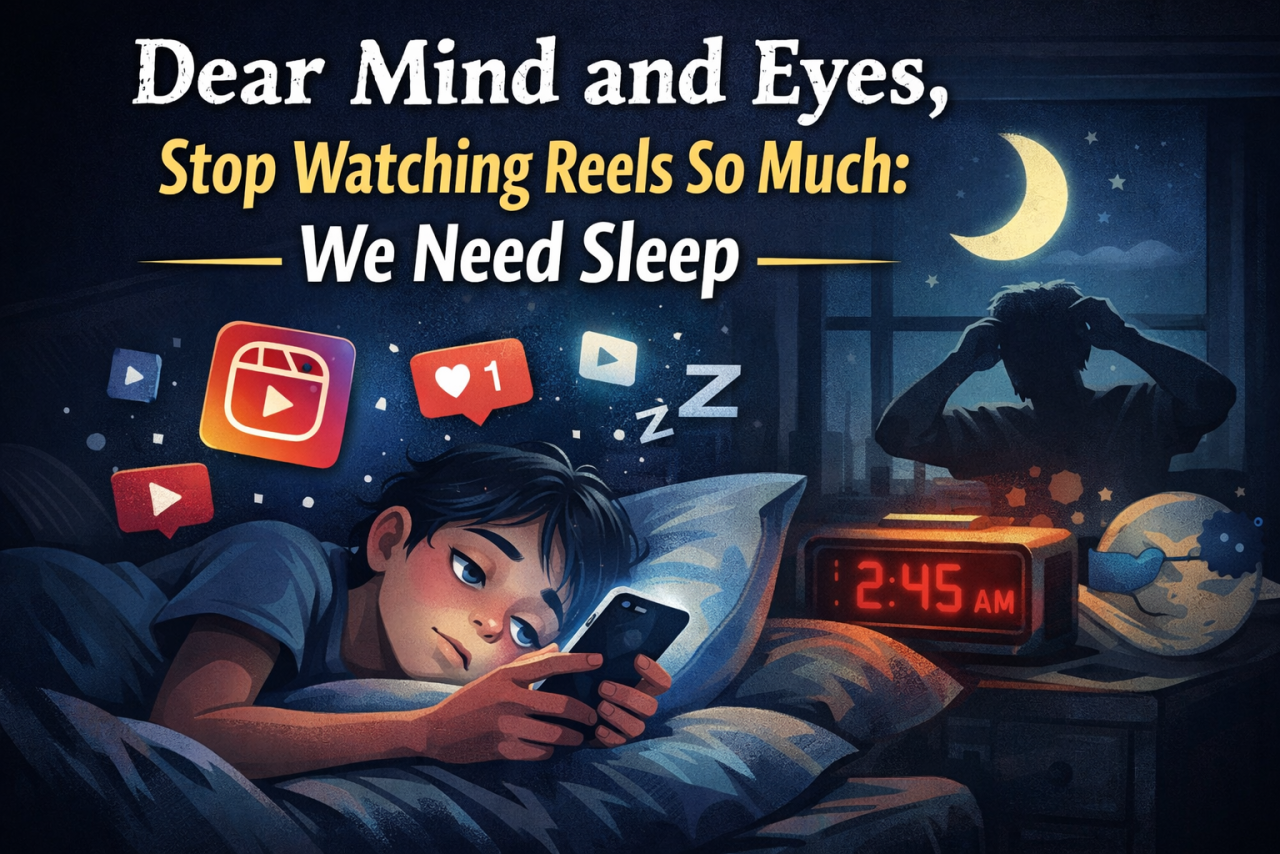
Dear mind and eyes, please slow down. The day is over, the lights are dim, and the body is tired. Yet the fingers keep scrolling, the eyes keep staring, and sleep keeps waiting. This has become a familiar night routine for millions of people today. Short videos, commonly called reels, have quietly entered our lives and slowly taken control of our free time, our focus, and most importantly, our sleep.
Reels were created for quick entertainment. A few seconds of humour, information, dance, or motivation seemed harmless at first. But over time, what was meant to be a short break has turned into endless crawling and scrawling on screens whenever we get a free moment. While waiting for food, before sleeping, during travel, and even after waking up at night, reels fill the gaps of our lives.
The biggest cost of this habit is sleep. Many people go to bed on time but do not sleep on time. One reel becomes ten, ten become fifty, and suddenly the clock shows 1 or 2 a.m. The mind remains active, the eyes feel heavy, and the body feels restless. Sleep is delayed, disturbed, or completely sacrificed, often without realising the damage being done.
Sleep is not a luxury. It is a basic need, just like food and water. Proper sleep repairs the body, refreshes the brain, balances emotions, and strengthens immunity. When sleep is reduced regularly due to late-night scrolling, the effects slowly begin to show. People feel tired even after waking up, concentration drops, mood swings increase, and stress becomes a constant companion. Over time, lack of sleep can contribute to anxiety, poor memory, weight gain, and lifestyle-related health problems.
Reels are designed to be addictive. Algorithms study our behaviour closely. They notice what we like, how long we watch, and what makes us stop scrolling. Based on this, the next video is shown, then another, and another. This continuous flow creates a false sense of reward in the brain. The brain releases dopamine, the chemical linked to pleasure, and starts craving more. This is why stopping feels difficult, even when the body is begging for rest.
Another reason reels affect sleep is mental overstimulation. Short videos bombard the brain with rapid images, loud sounds, bright colours, and quick emotions. Just before bedtime, the mind needs calmness, not excitement. When the brain is flooded with content, it remains alert and restless. Even after putting the phone down, thoughts keep replaying, making it harder to fall asleep.
The habit of scrolling reels whenever we get time has also reduced our ability to be alone with our thoughts. Silence now feels uncomfortable. Many people reach for their phones not because they want to watch something, but because they want to escape boredom, stress, or loneliness. This emotional dependence on screens silently grows and starts controlling daily routines.
Breaking this habit does not mean rejecting technology completely. Reels are not the enemy. The problem begins when control shifts from the user to the screen. Small changes can make a big difference. Setting a fixed time to stop using the phone at night is a good start. Keeping the phone away from the bed reduces temptation. Using night mode or app timers can help limit usage. Replacing scrolling with calming activities like reading, light stretching, or listening to soft music prepares the body for sleep.
Training the mind to rest is equally important. Deep breathing, dim lighting, and a consistent sleep schedule help signal the brain that it is time to slow down. At first, the urge to scroll will feel strong, but with regular practice, the mind gradually adapts.
Good sleep improves everything. Focus becomes sharper, energy levels rise, and emotions feel more balanced. Days feel longer and more productive. Life outside the screen begins to feel richer and more real.
Reels may offer quick entertainment, but they cannot replace real rest. The mind and eyes need darkness, silence, and stillness to heal. The next time the finger reaches for the screen at bedtime, pause and listen to what the body is asking for.
Dear mind and eyes, you deserve rest. Put the phone down. Let sleep take over.
















Leave a Comment