
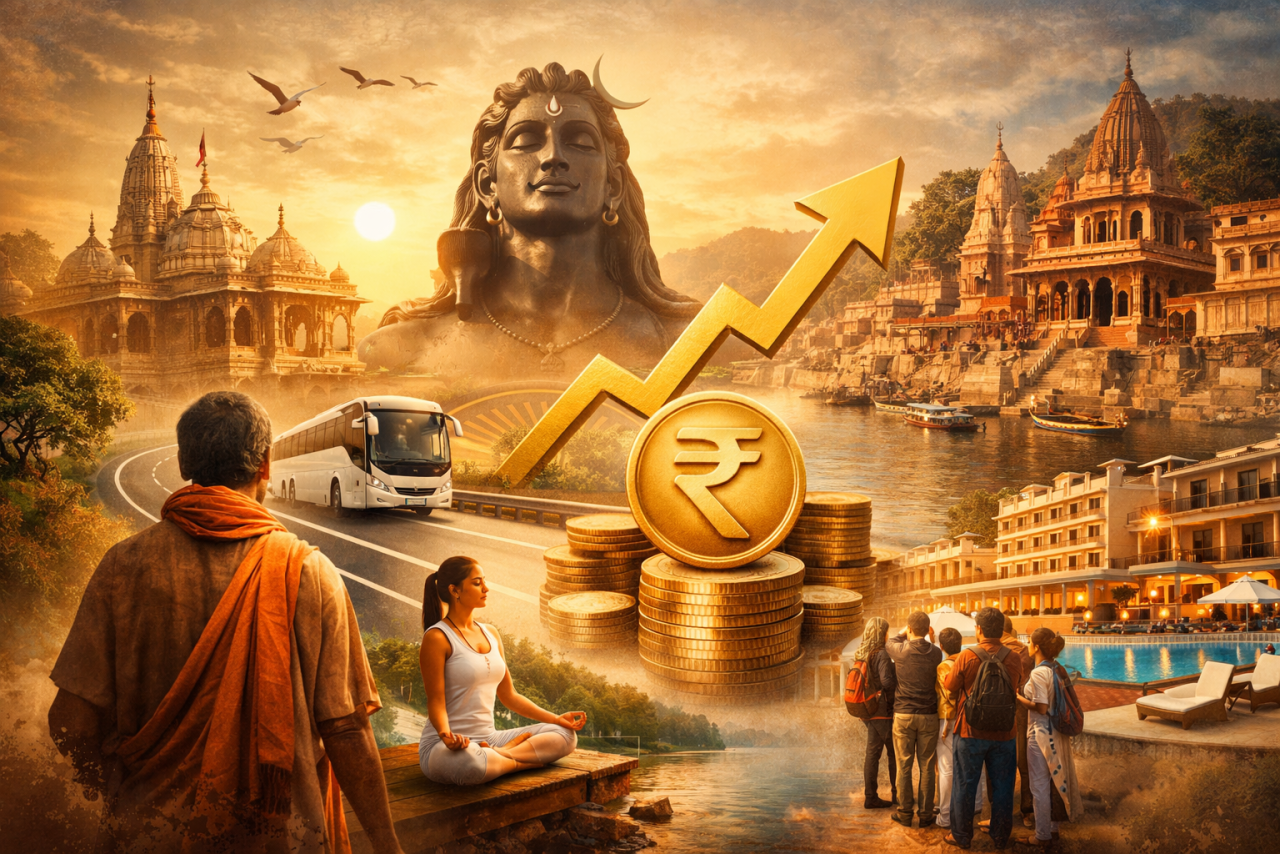
India’s temple towns are no longer just places of prayer. They are fast becoming the new engines of economic growth, where faith meets highways, hotels, and billion-dollar investments.
For centuries, India’s pilgrimage routes were mostly visited by deeply religious devotees and elderly seekers who travelled with simple means and strong faith. Today, those very routes are being transformed. High-speed expressways are replacing dusty roads, and luxury hotels are coming up near major temples and spiritual centres.
Ron Pohl, who leads international operations at BWH Hotels, recently said that religious tourism is no longer a small or niche segment of the travel industry. It has now become a top priority, encouraging major global hotel brands to expand rapidly into India’s Tier-2 and Tier-3 cities.
This change shows a larger shift in how India looks at its spiritual heritage. What was once seen mainly as a personal and sacred journey of faith has now evolved into a powerful, multi-billion-dollar driver of economic growth.
From Pilgrimage to Premium Experience
The modern “spiritual traveler” is a far cry from the pilgrim of yesteryear. Today’s travelers seek a blend of spirituality, comfort, and convenience. This evolution is driving a surge in branded hospitality. Companies like BWH Hotels are aggressively expanding into destinations like Vrindavan, Katra, Ayodhya, and Mathura. The goal is to provide a consistent, high-quality experience for a demographic that now includes young professionals, NRIs, and multi-generational families.
This shift is reflected in the numbers. As of early 2026, religious tourism accounts for nearly 60 percent of all domestic travel in India. Destinations like Ayodhya and Varanasi are no longer just transit zones where devotees spend a few hours; they have become staycation hubs. In 2024 alone, Ayodhya recorded a staggering 164.4 million visitors, while Varanasi saw over 110 million.
The Infrastructure Catalyst
What has turned this spiritual spark into a wildfire? Infrastructure. The government’s proactive stance, through schemes like PRASHAD and Swadesh Darshan 2.0, has modernized once-congested temple towns.
Connectivity: New corridors like the Delhi-Mumbai Expressway and improved rail connectivity under the Bharatmala program have made remote shrines significantly more accessible.
Regional Growth: The multiplier effect of this tourism is profound. In cities like Ujjain and Haridwar, real estate prices have surged by five to ten times, and local economies are thriving through a 22 percent growth in transport and handicraft sectors.
Beyond the Temple: The Rise of Spiritual Wellness
An intriguing trend in 2026 is the convergence of faith and wellness. Travelers are no longer content with just a darshan, the viewing of the deity; they are looking for transformational travel. This has led to the rise of glamping sites, heritage stays, and wellness retreats situated along religious circuits.
Younger tourists, in particular, are driving demand for spiritual wellness hubs where yoga and Ayurveda intersect with ancient temple rituals. This off-season demand ensures that religious destinations, which historically saw peaks during festivals, now enjoy consistent, year-round occupancy.
A Sustainable Future
As the sector eyes a projected revenue of 28.9 billion dollars by 2030, the focus is shifting toward sustainability. Global players are leading the charge. BWH Hotels, for instance, has committed to 100 percent sustainability certification for its global portfolio by the end of 2026. For India, the challenge lies in balancing the massive influx of devotees with the preservation of the sanctity and ecology of these sacred sites.
Final Take
Religious tourism in India has outgrown its traditional boundaries. It is now a sophisticated ecosystem that blends the ancient with the contemporary. As infrastructure continues to bridge the gap between faith and luxury, India’s spiritual heartlands are set to become some of the most resilient and dynamic drivers of the national economy.
In the words of Ron Pohl, the demand is sustained and year-round. For the hospitality industry and the Indian economy at large, the Divine Shift is not just a trend. It is a permanent relocation of the industry’s center of gravity.
























Leave a Comment