
India’s religious stampedes are not accidents. They follow a pattern of overcrowding, weak crowd control, and repeated failure to act.
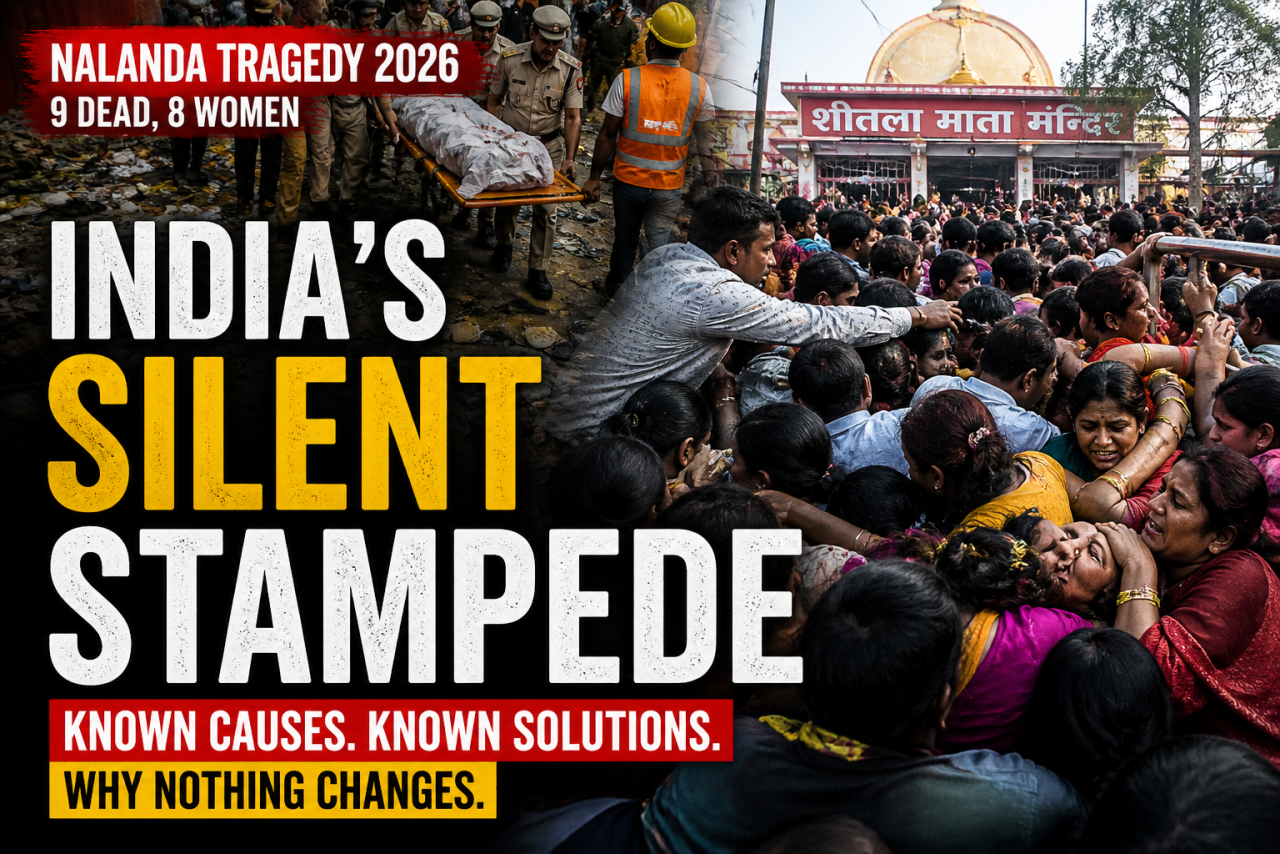
On March 31, 2026, nine people died at the Sheetla Mata temple in Bihar’s Nalanda district. Eight of them were women. A large crowd had gathered for routine worship on a Tuesday in the month of Chaitra. Such gatherings are predictable and frequent across India. The situation turned deadly due to severe overcrowding. People were caught in a crush. Rescue operations began soon after.
Within hours, officials expressed condolences. An inquiry was announced. Assurances were given.
This pattern defines the religious stampede in India. The response is quick. The memory is short. The cycle repeats.
Religious Stampede in India: A Persistent and Underreported Crisis
Stampedes are not isolated incidents. They are part of a recurring national pattern. Official data shows that more than 3,000 people died in stampedes between 2001 and 2022. Researchers believe the real number is higher. Many cases go unreported, especially in rural and religious settings.
Recent incidents highlight the scale of the crisis:
- 121 deaths at the Hathras satsang in 2024
- At least 82 deaths during the Maha Kumbh in 2025
- 18 deaths at New Delhi Railway Station during a pilgrimage rush in 2025
- Multiple smaller incidents across temples and shrines
A clear trend emerges. A large share of stampede deaths in India occurs during religious gatherings.
What Causes a Religious Stampede in India
A common belief is that stampedes happen due to sudden panic. This is not accurate. Most incidents are caused by crowd density and poor management.
1. Overcrowding Beyond Capacity
Event limits are often ignored. Attendance exceeds permitted numbers. There is usually no real system to regulate entry. This creates dangerous pressure within the crowd.
2. Poor Infrastructure at Religious Sites
Many temples have narrow entry and exit points. Pathways are not designed for large volumes. Barricades are inadequate. Emergency exits are missing or blocked.
3. Crowd Behaviour During Rituals
Devotees often move in surges to get darshan. This creates sudden pressure points. Even a small disruption can trigger a deadly crush.
4. Weak Crowd Management Systems
Large gatherings require trained planning. Many local authorities rely only on basic policing. There is limited use of crowd science or real time monitoring.
Why Women and Elderly Are Most Affected
A significant number of victims in a religious stampede in India are women, children, and elderly people. This pattern appeared in the Nalanda incident. It was also visible in the Hathras tragedy.
These groups are more vulnerable in dense crowds. They are more likely to lose balance. They find it harder to escape during a surge.
Crowd Management Failures in India: A Governance Issue
India has guidelines for managing large gatherings. Courts and expert bodies have issued recommendations after past disasters. These include:
- Crowd density limits
- Planned entry and exit routes
- Use of surveillance systems
- Deployment of trained personnel
However, implementation remains inconsistent.
The problem lies in governance:
- Responsibility is divided between temple trusts, police, and district authorities
- Coordination is often weak
- Political and social pressure discourages strict crowd control
- High turnout is often prioritised over safety
This creates a gap between known solutions and actual practice.
Why Religious Stampedes in India Go Unnoticed
Despite frequent deaths, these incidents rarely stay in public memory.
Several reasons explain this:
- Many victims come from economically weaker backgrounds
- Media coverage is short-lived
- There is no single point of accountability
- Religious activities resume quickly after incidents
As a result, the religious stampede in India remains a silent crisis.
Solutions to Prevent Religious Stampedes in India
Experts agree that most stampedes are preventable. The solutions are practical and already tested in some large events.
1. Controlled Entry Systems
Digital tokens and pre-registration can limit crowd size.
2. Time Slot-Based Darshan
Staggered entry reduces peak congestion.
3. One-Way Movement Routes
This prevents counter-flow and sudden pressure.
4. Real-Time Crowd Monitoring
CCTV and drones can track density levels.
5. Public Communication Systems
Announcements can guide crowd behaviour during critical moments.
6. Better Infrastructure
Wider pathways, multiple exits, and clear signage reduce risk.
Why Implementation Still Fails
The challenge is not lack of knowledge. It is lack of consistent enforcement.
Authorities often act after a tragedy. Preventive measures are not applied uniformly. Smaller towns and local temples receive less attention. Risk assessment is not standard practice.
Religious sensitivity also plays a role. Restricting entry can be seen as interference. This makes strict enforcement difficult.
A Preventable Crisis That Continues
A religious stampede in India is not an unpredictable disaster. It follows a known pattern. The causes are clear. The solutions are available.
The Nalanda incident is not an exception. It is part of a continuing cycle.
Each tragedy brings temporary attention. Then the system resets without major change.
Preventing stampedes requires consistent planning, strict enforcement, and accountability. Without this, similar incidents will continue to occur.
The real issue is not the absence of solutions. The real issue is the failure to apply them.
On March 31, 2026, nine people died at the Sheetla Mata temple in Bihar’s Nalanda district. Eight of them were women. A large crowd had gathered for routine worship on a Tuesday in the month of Chaitra. Such gatherings are predictable and frequent across India. The situation turned deadly due to severe overcrowding. People were caught in a crush. Rescue operations began soon after.
Within hours, officials expressed condolences. An inquiry was announced. Assurances were given.
This pattern defines the religious stampede in India. The response is quick. The memory is short. The cycle repeats.
Religious Stampede in India: A Persistent and Underreported Crisis
Stampedes are not isolated incidents. They are part of a recurring national pattern. Official data shows that more than 3,000 people died in stampedes between 2001 and 2022. Researchers believe the real number is higher. Many cases go unreported, especially in rural and religious settings.
Recent incidents highlight the scale of the crisis:
- 121 deaths at the Hathras satsang in 2024
- At least 82 deaths during the Maha Kumbh in 2025
- 18 deaths at New Delhi Railway Station during a pilgrimage rush in 2025
- Multiple smaller incidents across temples and shrines
A clear trend emerges. A large share of stampede deaths in India occurs during religious gatherings.
What Causes a Religious Stampede in India
A common belief is that stampedes happen due to sudden panic. This is not accurate. Most incidents are caused by crowd density and poor management.
1. Overcrowding Beyond Capacity
Event limits are often ignored. Attendance exceeds permitted numbers. There is usually no real system to regulate entry. This creates dangerous pressure within the crowd.
2. Poor Infrastructure at Religious Sites
Many temples have narrow entry and exit points. Pathways are not designed for large volumes. Barricades are inadequate. Emergency exits are missing or blocked.
3. Crowd Behaviour During Rituals
Devotees often move in surges to get darshan. This creates sudden pressure points. Even a small disruption can trigger a deadly crush.
4. Weak Crowd Management Systems
Large gatherings require trained planning. Many local authorities rely only on basic policing. There is limited use of crowd science or real time monitoring.
Why Women and Elderly Are Most Affected
A significant number of victims in a religious stampede in India are women, children, and elderly people. This pattern appeared in the Nalanda incident. It was also visible in the Hathras tragedy.
These groups are more vulnerable in dense crowds. They are more likely to lose balance. They find it harder to escape during a surge.
Crowd Management Failures in India: A Governance Issue
India has guidelines for managing large gatherings. Courts and expert bodies have issued recommendations after past disasters. These include:
- Crowd density limits
- Planned entry and exit routes
- Use of surveillance systems
- Deployment of trained personnel
However, implementation remains inconsistent.
The problem lies in governance:
- Responsibility is divided between temple trusts, police, and district authorities
- Coordination is often weak
- Political and social pressure discourages strict crowd control
- High turnout is often prioritised over safety
This creates a gap between known solutions and actual practice.
Why Religious Stampedes in India Go Unnoticed
Despite frequent deaths, these incidents rarely stay in public memory.
Several reasons explain this:
- Many victims come from economically weaker backgrounds
- Media coverage is short-lived
- There is no single point of accountability
- Religious activities resume quickly after incidents
As a result, the religious stampede in India remains a silent crisis.
Solutions to Prevent Religious Stampedes in India
Experts agree that most stampedes are preventable. The solutions are practical and already tested in some large events.
1. Controlled Entry Systems
Digital tokens and pre-registration can limit crowd size.
2. Time Slot-Based Darshan
Staggered entry reduces peak congestion.
3. One-Way Movement Routes
This prevents counter-flow and sudden pressure.
4. Real-Time Crowd Monitoring
CCTV and drones can track density levels.
5. Public Communication Systems
Announcements can guide crowd behaviour during critical moments.
6. Better Infrastructure
Wider pathways, multiple exits, and clear signage reduce risk.
Why Implementation Still Fails
The challenge is not lack of knowledge. It is lack of consistent enforcement.
Authorities often act after a tragedy. Preventive measures are not applied uniformly. Smaller towns and local temples receive less attention. Risk assessment is not standard practice.
Religious sensitivity also plays a role. Restricting entry can be seen as interference. This makes strict enforcement difficult.
A Preventable Crisis That Continues
A religious stampede in India is not an unpredictable disaster. It follows a known pattern. The causes are clear. The solutions are available.
The Nalanda incident is not an exception. It is part of a continuing cycle.
Each tragedy brings temporary attention. Then the system resets without major change.
Preventing stampedes requires consistent planning, strict enforcement, and accountability. Without this, similar incidents will continue to occur.
The real issue is not the absence of solutions. The real issue is the failure to apply them.


















Leave a Comment