
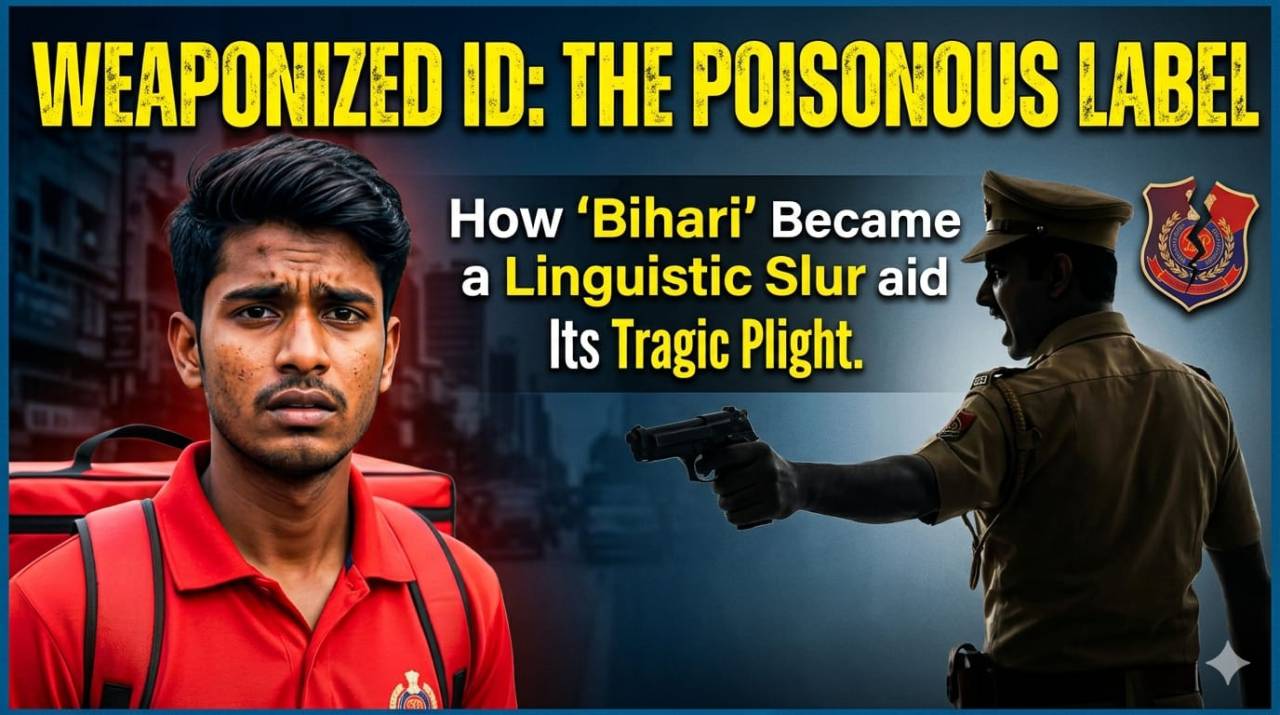
What happens when a name stops identifying a place and starts defining prejudice? In India’s urban imagination, “Bihari” has crossed that line—from identity to insult.
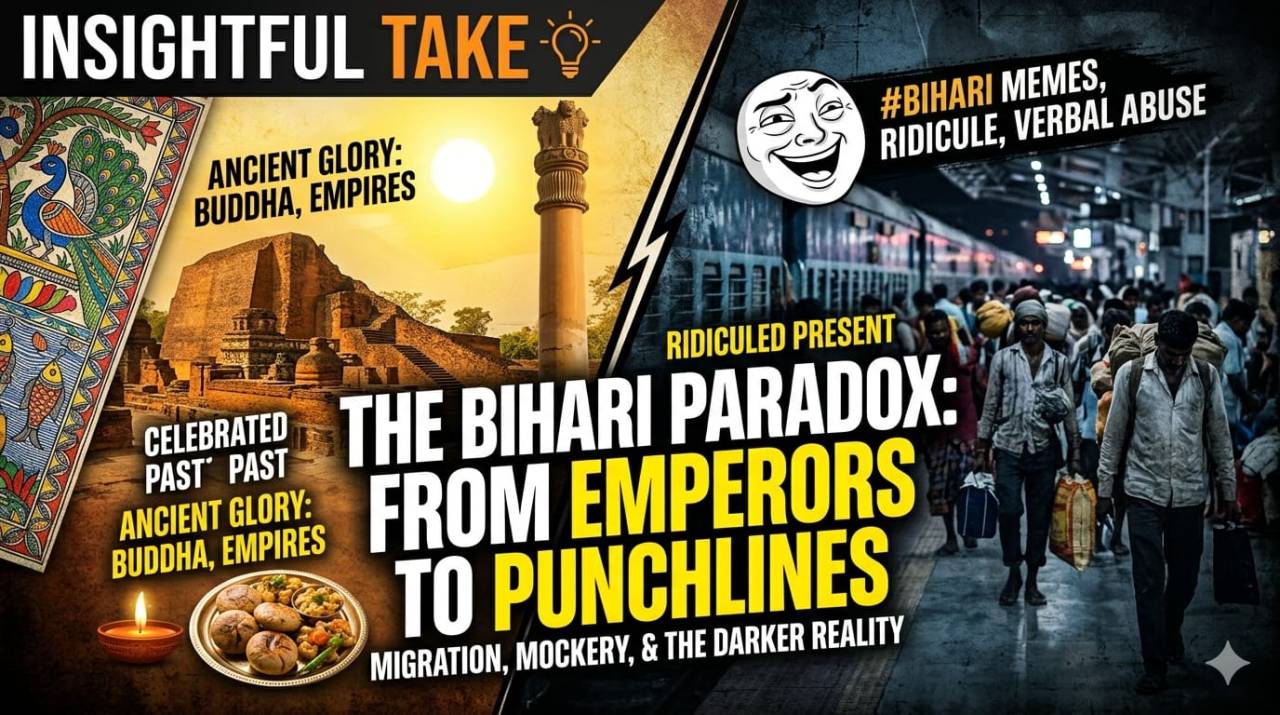
The word “Bihari” was once a badge of historical pride, invoking the legacy of the Magadha Empire, the philosophical awakening of Buddha, and the administrative foundations of one of the world’s earliest republican traditions. Over time, however, this geographic and cultural identity has undergone a troubling transformation in contemporary India. In several urban spaces, it is increasingly used not as a neutral marker of origin, but as a loaded and often derogatory label associated with backwardness, lack of civic sense, or intellectual inferiority.
From Identity to Insult: The Weaponization of a Word
In cities such as Delhi, Mumbai, and Bengaluru, “Bihari” is frequently deployed less as an identifier and more as an indictment. It has, in many everyday contexts, become shorthand for stereotypes about being uncultured, unskilled, or suitable only for low-wage labour. This linguistic shift is not merely semantic—it carries real social consequences.
For migrant workers from districts like Khagaria or Muzaffarpur, the label can precede exclusion: rejection from rental housing, discriminatory wage offers, or even social humiliation. What begins as casual prejudice often translates into structural disadvantage.
Recent incidents have further exposed the severity of this stigma. The killing of 21-year-old delivery agent Pandav Kumar in Delhi, allegedly by a police officer who mocked his regional identity, reflects how deeply such prejudice can embed itself in institutions meant to ensure safety and equality. When identity becomes a trigger for aggression, language itself turns into a tool of violence.
The Invisible Backbone: Bihar’s Migrant Workforce
Bihar’s migrant workers form an essential, though often invisible, part of India’s economic engine. They construct infrastructure in metropolitan cities, sustain agricultural economies in northern states, and keep supply chains functioning across the country.
Yet, this contribution exists alongside persistent vulnerability.
Many workers operate in the informal sector, where labour protections are weak or absent. They are frequently underpaid, overworked, and excluded from formal welfare systems. In cities, large sections of this population live in precarious settlements with limited access to sanitation, clean water, or healthcare.
At the same time, they are often blamed for urban stressors such as overcrowding or crime—despite being among the most economically marginalised groups in those same environments.
A Stigma Rooted in Stereotype
The negative perception of Bihar has been shaped by a mix of historical, political, and media narratives. The state’s past periods of political instability have contributed to the persistence of labels such as “lawless” or “backward,” even as its social and economic realities have evolved significantly.
This stereotype continues to influence how people from Bihar are perceived across India, reducing a diverse population to a single flattened identity. In doing so, it obscures both regional progress and individual achievement.
The Psychological Cost of Belonging
Beyond material discrimination, the stigma attached to the word “Bihari” produces a quieter but equally damaging psychological burden.
Many students and professionals from Bihar report consciously altering their speech, suppressing their accents, or avoiding disclosure of their origins in order to escape ridicule or bias. This constant negotiation of identity fosters a sense of cultural invisibility and internal conflict.
The result is a form of social pressure that forces individuals to distance themselves from their own roots in order to be accepted in mainstream urban spaces. It raises a deeper question about belonging in a society that often celebrates diversity in principle but struggles with it in practice.
Structural Roots of Migration and Inequality
The migration patterns from Bihar cannot be separated from broader structural issues. Economic underdevelopment, limited industrial expansion, and historical policy disadvantages have contributed to sustained outward migration in search of employment.
Over decades, this movement has created a labour dependency between Bihar and India’s industrial and urban centres. Yet, while the economy relies on this workforce, social attitudes have not evolved in parallel, leaving a contradiction at the heart of India’s growth story.
Final Take: Towards a Cultural Reassessment
If India is to meaningfully embrace its identity as a unified and inclusive nation, it must confront the everyday prejudices embedded in language and social perception. The transformation of “Bihari” from an identity into a slur reflects not just regional bias, but a broader failure to acknowledge the dignity of labour and migration.
Reclaiming the term requires more than political acknowledgement; it demands a cultural shift. The contributions of migrant workers must be recognised not as peripheral, but as foundational to the nation’s development.
Until a person can identify as Bihari without fear of mockery or discrimination, the work of building an equitable society remains incomplete.
The word “Bihari” was once a badge of historical pride, invoking the legacy of the Magadha Empire, the philosophical awakening of Buddha, and the administrative foundations of one of the world’s earliest republican traditions. Over time, however, this geographic and cultural identity has undergone a troubling transformation in contemporary India. In several urban spaces, it is increasingly used not as a neutral marker of origin, but as a loaded and often derogatory label associated with backwardness, lack of civic sense, or intellectual inferiority.
From Identity to Insult: The Weaponization of a Word
In cities such as Delhi, Mumbai, and Bengaluru, “Bihari” is frequently deployed less as an identifier and more as an indictment. It has, in many everyday contexts, become shorthand for stereotypes about being uncultured, unskilled, or suitable only for low-wage labour. This linguistic shift is not merely semantic—it carries real social consequences.
For migrant workers from districts like Khagaria or Muzaffarpur, the label can precede exclusion: rejection from rental housing, discriminatory wage offers, or even social humiliation. What begins as casual prejudice often translates into structural disadvantage.
Recent incidents have further exposed the severity of this stigma. The killing of 21-year-old delivery agent Pandav Kumar in Delhi, allegedly by a police officer who mocked his regional identity, reflects how deeply such prejudice can embed itself in institutions meant to ensure safety and equality. When identity becomes a trigger for aggression, language itself turns into a tool of violence.
The Invisible Backbone: Bihar’s Migrant Workforce
Bihar’s migrant workers form an essential, though often invisible, part of India’s economic engine. They construct infrastructure in metropolitan cities, sustain agricultural economies in northern states, and keep supply chains functioning across the country.
Yet, this contribution exists alongside persistent vulnerability.
Many workers operate in the informal sector, where labour protections are weak or absent. They are frequently underpaid, overworked, and excluded from formal welfare systems. In cities, large sections of this population live in precarious settlements with limited access to sanitation, clean water, or healthcare.
At the same time, they are often blamed for urban stressors such as overcrowding or crime—despite being among the most economically marginalised groups in those same environments.
A Stigma Rooted in Stereotype
The negative perception of Bihar has been shaped by a mix of historical, political, and media narratives. The state’s past periods of political instability have contributed to the persistence of labels such as “lawless” or “backward,” even as its social and economic realities have evolved significantly.
This stereotype continues to influence how people from Bihar are perceived across India, reducing a diverse population to a single flattened identity. In doing so, it obscures both regional progress and individual achievement.
The Psychological Cost of Belonging
Beyond material discrimination, the stigma attached to the word “Bihari” produces a quieter but equally damaging psychological burden.
Many students and professionals from Bihar report consciously altering their speech, suppressing their accents, or avoiding disclosure of their origins in order to escape ridicule or bias. This constant negotiation of identity fosters a sense of cultural invisibility and internal conflict.
The result is a form of social pressure that forces individuals to distance themselves from their own roots in order to be accepted in mainstream urban spaces. It raises a deeper question about belonging in a society that often celebrates diversity in principle but struggles with it in practice.
Structural Roots of Migration and Inequality
The migration patterns from Bihar cannot be separated from broader structural issues. Economic underdevelopment, limited industrial expansion, and historical policy disadvantages have contributed to sustained outward migration in search of employment.
Over decades, this movement has created a labour dependency between Bihar and India’s industrial and urban centres. Yet, while the economy relies on this workforce, social attitudes have not evolved in parallel, leaving a contradiction at the heart of India’s growth story.
Final Take: Towards a Cultural Reassessment
If India is to meaningfully embrace its identity as a unified and inclusive nation, it must confront the everyday prejudices embedded in language and social perception. The transformation of “Bihari” from an identity into a slur reflects not just regional bias, but a broader failure to acknowledge the dignity of labour and migration.
Reclaiming the term requires more than political acknowledgement; it demands a cultural shift. The contributions of migrant workers must be recognised not as peripheral, but as foundational to the nation’s development.
Until a person can identify as Bihari without fear of mockery or discrimination, the work of building an equitable society remains incomplete.





















Leave a Comment