
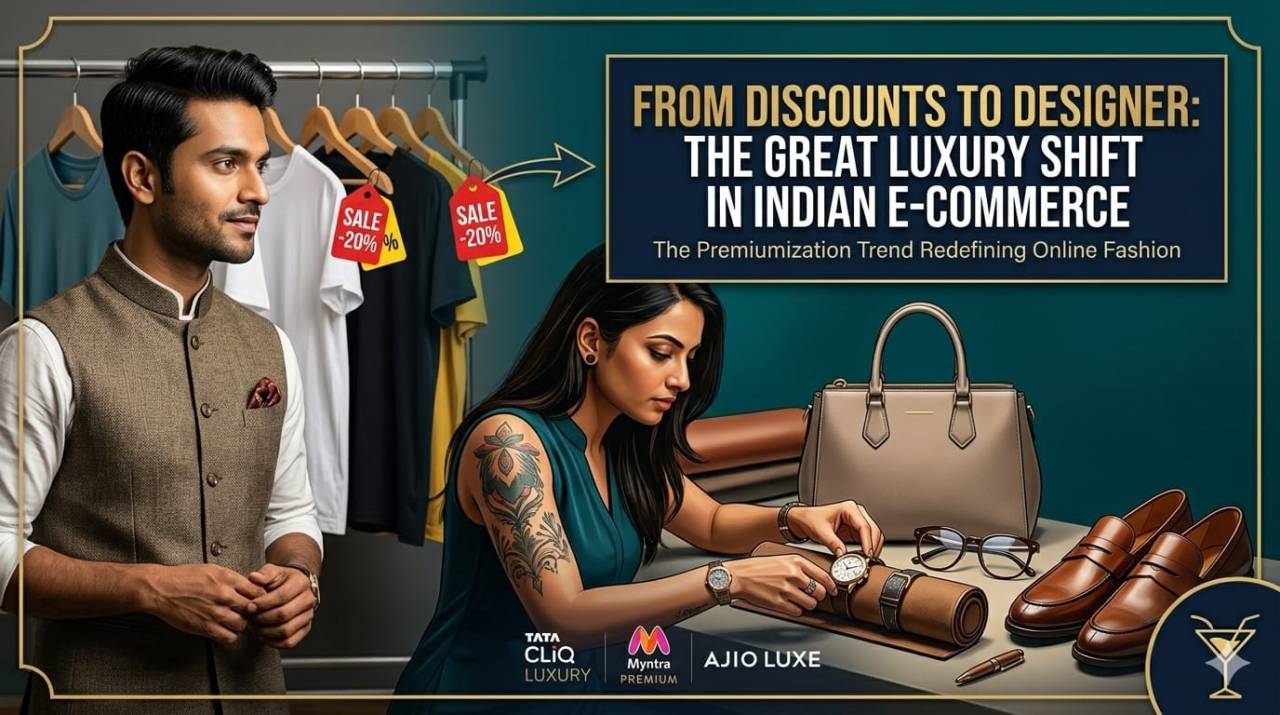
Open any fashion app today and the contrast is hard to miss. A ₹4.9 lakh designer dress appears in the same scroll as a pair of sneakers marked down by 60 percent. It feels odd at first, but it isn’t accidental. Platforms such as Myntra, Tata Cliq and Ajio are quietly redrawing their playbook. For years, they trained shoppers to hunt for deals. Now, they are trying to teach them to browse for desire.
The shift has less to do with aesthetics and more to do with economics. India’s online fashion and beauty market is expected to touch around $210 billion by 2028. But the old growth model—endless discounts, festival sales, and cashbacks—has started to look unsustainable. Margins are thin, customer loyalty is fickle, and the cost of keeping shoppers hooked keeps rising. Selling more at lower prices is no longer enough.
So the platforms are nudging their customers upward. Not dramatically, but step by step. The industry calls it “premiumization,” though in practice it’s simply about encouraging shoppers to buy better instead of just buying more. It’s why you’ll now find curated luxury sections, limited-edition drops, and global labels placed more prominently than before.
Each company is approaching this transition in its own way. Tata Cliq Luxury has taken the slower, more controlled route. Its interface feels less crowded, almost like a digital showroom. Partnerships with retailers such as Darveys are meant to signal credibility as much as inventory.
Myntra, on the other hand, is scaling quickly. In just the first quarter of 2026, it added dozens of international brands, including Charles & Keith and e.l.f. Beauty. The idea is simple: give shoppers more reasons to stay within the app as their tastes evolve.
Meanwhile, Ajio and Nykaa are building a middle ground—the so-called “masstige” segment—where premium branding meets relatively accessible pricing. It’s a softer entry point for consumers who aren’t ready to jump straight into high luxury.
The financial logic behind all this is straightforward. A single premium purchase can bring in the same margin as multiple low-cost transactions. On platforms like Tata Cliq Luxury, average order values are already significantly higher than their mass-market counterparts. Categories like luxury watches are seeing strong demand, growing at roughly 26 percent annually. For many buyers, these aren’t impulse purchases—they’re markers of taste, sometimes even investments.
But changing what people buy also means changing how they think. Indian online shoppers have spent over a decade being conditioned to wait for a sale. The expectation of a discount is almost instinctive now. Breaking that habit will take more than just listing expensive products on a page.
That’s why the platforms are reworking the experience itself. Product pages now lean heavily on high-quality imagery, brand storytelling, and cleaner layouts. Customer service is getting more attentive. Packaging, delivery, even return policies are being rethought. The idea is to make the purchase feel considered rather than transactional.
What’s particularly interesting is where this demand is coming from. It’s no longer limited to metros like Delhi or Mumbai. Smaller cities are contributing a growing share of premium consumption. Exposure through social media, rising incomes, and easier access to global brands have reshaped aspirations well beyond urban centres.
None of this means discounts are disappearing anytime soon. They remain central to how these platforms operate and attract traffic. But there is a clear recalibration underway. The focus is slowly shifting from volume to value, from transactions to experience.
In that sense, India’s fashion apps are trying to build a different kind of shopper. Whether that shift fully sticks will depend on how willing consumers are to let go of the thrill of a bargain and embrace the idea of paying for something that feels worth it. For now, both worlds continue to coexist—side by side on the same screen.

.jpeg)






















Leave a Comment