
Use power at the right time, not just less—Bihar’s new ToD tariff can cut your bill or quietly increase it.
Bihar has entered a new phase in electricity consumption with the rollout of a Time of Day (ToD) tariff system from April 1, 2026. Approved by the Bihar Electricity Regulatory Commission (BERC), the reform replaces the traditional flat-rate billing model with a dynamic structure where electricity prices vary depending on the time of use.
The shift is aimed at improving efficiency in power distribution and encouraging consumers to adopt smarter usage habits. It affects over 8.7 million users, especially those with smart prepaid meters and consumers with a connected load above 10 kW. With smart metering expanding rapidly across the state, this move signals a clear push toward a more data-driven and responsive electricity system.
Understanding the Three-Tier Pricing Model
Under the new system, the day is divided into three time slots, each with a different tariff. This structure reflects how electricity demand fluctuates across the day.
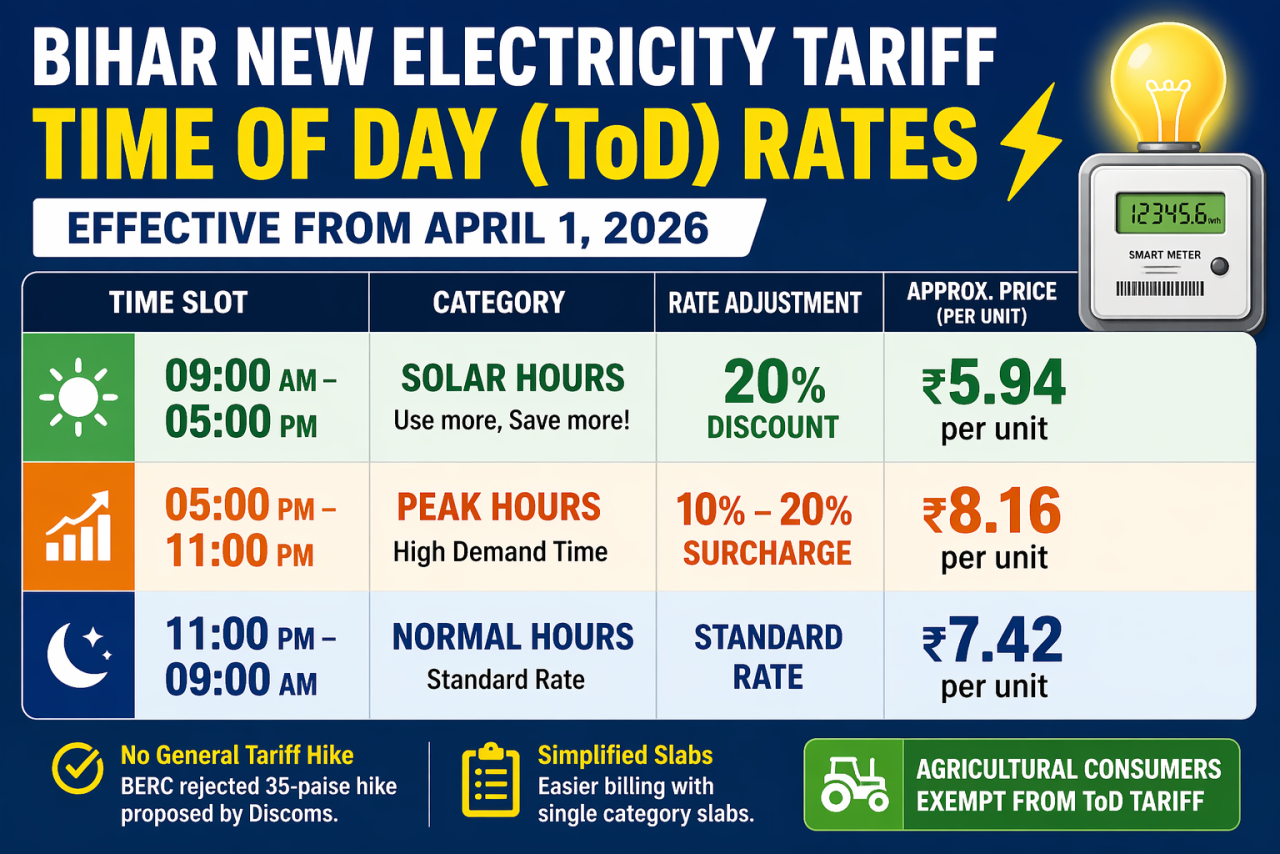
Between 09:00 AM and 05:00 PM, categorized as Solar Hours, electricity is the cheapest. Consumers receive a 20% discount, bringing the cost to approximately ₹5.94 per unit. This window aligns with peak solar power generation and is designed to promote daytime usage.
From 05:00 PM to 11:00 PM, known as Peak Hours, demand rises sharply as households and businesses increase consumption. During this period, a 10–20% surcharge is applied, pushing the cost up to around ₹8.16 per unit.
The remaining time, from 11:00 PM to 09:00 AM, falls under Normal Hours, where the standard rate of about ₹7.42 per unit applies.
Key Highlights of the Reform
One of the most notable aspects of this policy is that there is no overall tariff hike. Power distribution companies had proposed an increase, but BERC opted instead for a structural change that rewards efficient usage rather than imposing a blanket cost burden.
The reform also simplifies billing by reducing multiple consumption slabs into clearer categories. This makes it easier for consumers to understand how their usage patterns affect their bills.
Another important feature is the focus on renewable energy alignment. By lowering daytime tariffs, the system encourages consumption when solar energy is abundant, helping reduce dependence on costly non-renewable sources during peak demand hours.
Why Bihar Is Making This Change
The need for this shift comes from a persistent challenge. During evening hours, the state’s power distributors—North Bihar Power Distribution Company Limited and South Bihar Power Distribution Company Limited—often have to purchase expensive short-term electricity from the national grid to meet high demand.
According to BERC Chairman Amir Subhani, this practice increases operational costs and puts pressure on the grid. The ToD system is intended to spread electricity usage more evenly throughout the day, reducing the need for costly peak-hour purchases.
In effect, the reform attempts to solve supply challenges by influencing consumer behavior.
What It Means for Consumers
For consumers, the new system introduces both opportunity and responsibility. Those who adjust their routines can see meaningful savings. Running appliances such as washing machines, water pumps, air conditioners, or industrial machinery during Solar Hours can reduce electricity bills by up to 20%.
However, continued heavy usage during Peak Hours may result in higher monthly costs. This is especially relevant for users of prepaid smart meters, where spending patterns become immediately visible.
Electricity consumption is no longer just about quantity. Timing now plays a crucial role in determining overall expenses.
Exemptions and Safeguards
Agricultural consumers are currently exempt from the ToD tariff system. This ensures that farmers are not affected by fluctuating hourly rates, preserving stability in a sector that depends heavily on consistent and affordable power supply.
A New Way to Think About Power
Bihar’s Time of Day tariff represents more than a technical change. It marks a shift toward a system where consumers actively participate in managing energy demand. The success of this reform will depend on how quickly people adapt to the new pricing structure.
In this evolving model, electricity is no longer just a utility—it becomes a matter of timing, planning, and awareness. Whether it proves beneficial or burdensome will depend on one simple adjustment: using power when it costs less.
Bihar has entered a new phase in electricity consumption with the rollout of a Time of Day (ToD) tariff system from April 1, 2026. Approved by the Bihar Electricity Regulatory Commission (BERC), the reform replaces the traditional flat-rate billing model with a dynamic structure where electricity prices vary depending on the time of use.
The shift is aimed at improving efficiency in power distribution and encouraging consumers to adopt smarter usage habits. It affects over 8.7 million users, especially those with smart prepaid meters and consumers with a connected load above 10 kW. With smart metering expanding rapidly across the state, this move signals a clear push toward a more data-driven and responsive electricity system.
Understanding the Three-Tier Pricing Model
Under the new system, the day is divided into three time slots, each with a different tariff. This structure reflects how electricity demand fluctuates across the day.
Between 09:00 AM and 05:00 PM, categorized as Solar Hours, electricity is the cheapest. Consumers receive a 20% discount, bringing the cost to approximately ₹5.94 per unit. This window aligns with peak solar power generation and is designed to promote daytime usage.
From 05:00 PM to 11:00 PM, known as Peak Hours, demand rises sharply as households and businesses increase consumption. During this period, a 10–20% surcharge is applied, pushing the cost up to around ₹8.16 per unit.
The remaining time, from 11:00 PM to 09:00 AM, falls under Normal Hours, where the standard rate of about ₹7.42 per unit applies.
Key Highlights of the Reform
One of the most notable aspects of this policy is that there is no overall tariff hike. Power distribution companies had proposed an increase, but BERC opted instead for a structural change that rewards efficient usage rather than imposing a blanket cost burden.
The reform also simplifies billing by reducing multiple consumption slabs into clearer categories. This makes it easier for consumers to understand how their usage patterns affect their bills.
Another important feature is the focus on renewable energy alignment. By lowering daytime tariffs, the system encourages consumption when solar energy is abundant, helping reduce dependence on costly non-renewable sources during peak demand hours.
Why Bihar Is Making This Change
The need for this shift comes from a persistent challenge. During evening hours, the state’s power distributors—North Bihar Power Distribution Company Limited and South Bihar Power Distribution Company Limited—often have to purchase expensive short-term electricity from the national grid to meet high demand.
According to BERC Chairman Amir Subhani, this practice increases operational costs and puts pressure on the grid. The ToD system is intended to spread electricity usage more evenly throughout the day, reducing the need for costly peak-hour purchases.
In effect, the reform attempts to solve supply challenges by influencing consumer behavior.
What It Means for Consumers
For consumers, the new system introduces both opportunity and responsibility. Those who adjust their routines can see meaningful savings. Running appliances such as washing machines, water pumps, air conditioners, or industrial machinery during Solar Hours can reduce electricity bills by up to 20%.
However, continued heavy usage during Peak Hours may result in higher monthly costs. This is especially relevant for users of prepaid smart meters, where spending patterns become immediately visible.
Electricity consumption is no longer just about quantity. Timing now plays a crucial role in determining overall expenses.
Exemptions and Safeguards
Agricultural consumers are currently exempt from the ToD tariff system. This ensures that farmers are not affected by fluctuating hourly rates, preserving stability in a sector that depends heavily on consistent and affordable power supply.
A New Way to Think About Power
Bihar’s Time of Day tariff represents more than a technical change. It marks a shift toward a system where consumers actively participate in managing energy demand. The success of this reform will depend on how quickly people adapt to the new pricing structure.
In this evolving model, electricity is no longer just a utility—it becomes a matter of timing, planning, and awareness. Whether it proves beneficial or burdensome will depend on one simple adjustment: using power when it costs less.




























Leave a Comment