
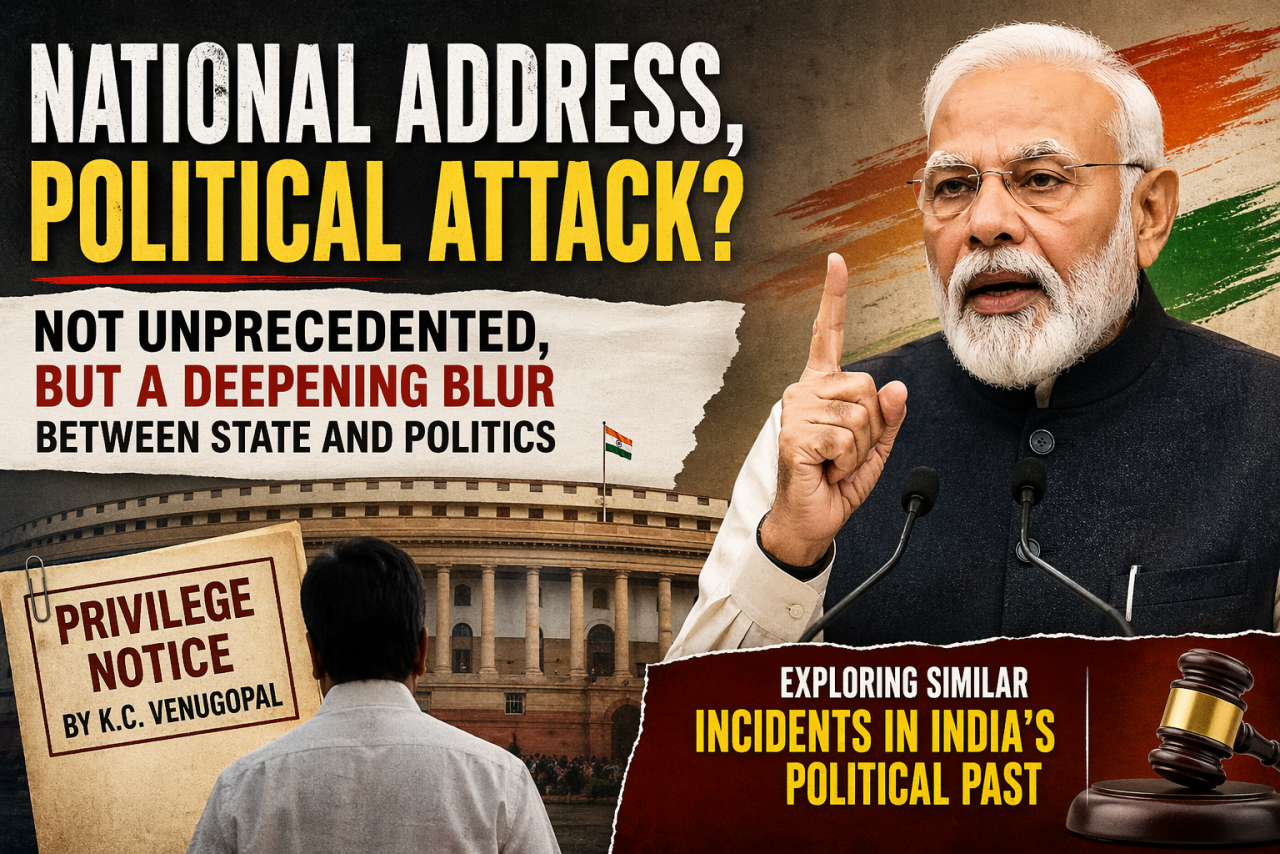
When leaders speak to the nation, are they informing citizens—or shaping political narratives? India’s past offers revealing answers.
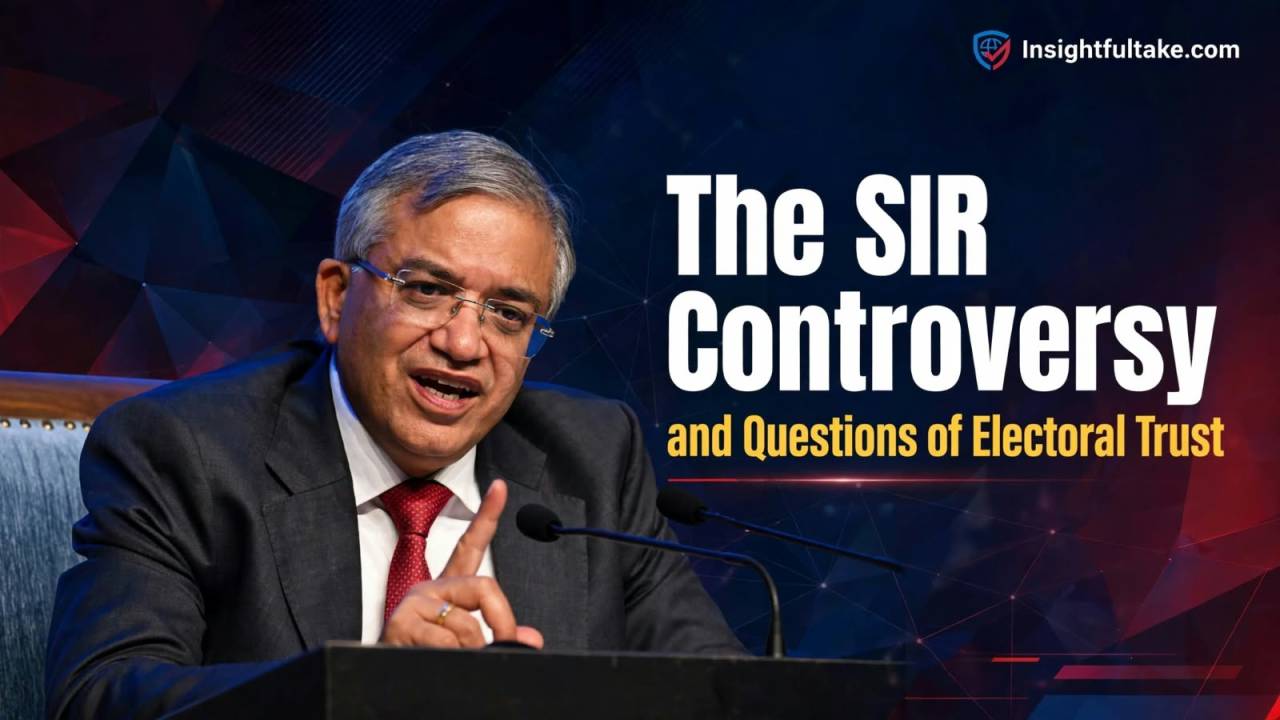
The privilege notice moved by K. C. Venugopal against Prime Minister Narendra Modi has opened up a familiar fault line in Indian democracy: where does governance communication end and political messaging begin? The immediate controversy stems from the Prime Minister’s address to the nation following the government’s failure to pass a constitutional amendment bill in the Lok Sabha, in which he criticised the opposition’s voting behaviour in sharp and morally charged terms.
Venugopal’s objection is rooted in institutional reasoning rather than mere political disagreement. He argues that a Prime Minister’s address to the nation is a rare and significant exercise, traditionally reserved for moments of national crisis or collective importance. Using such a platform to criticise opposition parties, attribute motives to Members of Parliament, and frame their legislative stance in emotive language, he contends, constitutes a breach of privilege and undermines the dignity of Parliament.
At first glance, the charge that such an act is “unprecedented” appears compelling. However, a closer look at India’s political history suggests that while the tone and context may differ, the broader pattern of using state-backed communication to shape political narratives is not new.
During the tenure of Indira Gandhi, particularly in the period surrounding the The Emergency (India), the use of official communication channels to reinforce the government’s political position became highly visible. Radio broadcasts and state messaging often framed dissent as obstructionist or destabilising. While these addresses were not always framed as direct critiques of specific opposition members, they contributed to a political environment where the executive voice dominated the public narrative, leaving limited room for institutional balance.
A decade later, Rajiv Gandhi faced intense scrutiny during the Bofors scandal. In responding to the allegations, the government relied heavily on televised communication to present its version of events. These messages frequently included criticism of the opposition, which was accused of politicising the issue. The line between a government clarifying its position and a political leadership countering its rivals became increasingly indistinct, particularly given the authority associated with state-backed platforms like Doordarshan.
Even leaders often associated with restraint were not entirely removed from this overlap. Atal Bihari Vajpayee, widely regarded for his respect for parliamentary norms, used public addresses during politically sensitive moments such as confidence votes and the aftermath of the Kargil War to reinforce his government’s legitimacy. While his tone remained measured, these communications often drew implicit contrasts with the opposition’s stance, signalling that public messaging could serve both governance and political purposes.
What distinguishes the present controversy is not the existence of political messaging within official communication, but its context and intensity. A legislative defeat—particularly one involving a constitutional amendment—falls squarely within the domain of parliamentary democracy. It reflects political negotiation, numbers, and dissent. Choosing to respond to such a setback through a national address, rather than within Parliament or through conventional political channels, shifts the arena of contestation from the legislature to the public sphere.
This shift reflects a broader transformation in Indian politics. Over the years, the executive has increasingly relied on direct communication with citizens, bypassing traditional institutional filters. Platforms such as televised addresses, radio programmes, and digital media have enabled leaders to frame issues in real time, often with minimal mediation. While this has expanded the reach of governance communication, it has also blurred the distinction between speaking as the head of government and speaking as a political leader.
In such a context, the content and tone of communication assume greater significance. Venugopal’s criticism is not only about the fact that the opposition was criticised, but about how that criticism was framed. Drawing comparisons between legislative opposition and deeply sensitive social issues elevates political disagreement into moral confrontation, altering the nature of democratic debate.
This raises a broader institutional question: should certain platforms—particularly those that invoke the authority of the entire nation—be held to a higher standard of neutrality? Or is it inevitable that in a competitive political environment, even the most formal channels of communication will carry partisan undertones?
Indian democracy has historically tolerated, and at times normalised, a degree of overlap between state and party messaging. What has changed in recent years is the scale and immediacy with which such messaging reaches the public. A national address today is not a one-way broadcast; it is instantly dissected, amplified, and contested across multiple platforms, turning a single speech into an extended political narrative.
The current controversy, therefore, is less about breaking entirely new ground and more about pushing an existing boundary further. It highlights the ongoing tension between institutional norms and political strategy—between the expectation that the executive represents the whole nation and the reality that it operates within a deeply competitive political framework.
Whether this tension leads to clearer conventions or becomes further entrenched in political practice remains uncertain. What is evident, however, is that the debate triggered by this episode is not merely about one speech or one leader. It is about the evolving character of political communication in India, and the delicate balance between authority, accountability, and the democratic space in which both must coexist.
The privilege notice moved by K. C. Venugopal against Prime Minister Narendra Modi has opened up a familiar fault line in Indian democracy: where does governance communication end and political messaging begin? The immediate controversy stems from the Prime Minister’s address to the nation following the government’s failure to pass a constitutional amendment bill in the Lok Sabha, in which he criticised the opposition’s voting behaviour in sharp and morally charged terms.
Venugopal’s objection is rooted in institutional reasoning rather than mere political disagreement. He argues that a Prime Minister’s address to the nation is a rare and significant exercise, traditionally reserved for moments of national crisis or collective importance. Using such a platform to criticise opposition parties, attribute motives to Members of Parliament, and frame their legislative stance in emotive language, he contends, constitutes a breach of privilege and undermines the dignity of Parliament.
At first glance, the charge that such an act is “unprecedented” appears compelling. However, a closer look at India’s political history suggests that while the tone and context may differ, the broader pattern of using state-backed communication to shape political narratives is not new.
During the tenure of Indira Gandhi, particularly in the period surrounding the The Emergency (India), the use of official communication channels to reinforce the government’s political position became highly visible. Radio broadcasts and state messaging often framed dissent as obstructionist or destabilising. While these addresses were not always framed as direct critiques of specific opposition members, they contributed to a political environment where the executive voice dominated the public narrative, leaving limited room for institutional balance.
A decade later, Rajiv Gandhi faced intense scrutiny during the Bofors scandal. In responding to the allegations, the government relied heavily on televised communication to present its version of events. These messages frequently included criticism of the opposition, which was accused of politicising the issue. The line between a government clarifying its position and a political leadership countering its rivals became increasingly indistinct, particularly given the authority associated with state-backed platforms like Doordarshan.
Even leaders often associated with restraint were not entirely removed from this overlap. Atal Bihari Vajpayee, widely regarded for his respect for parliamentary norms, used public addresses during politically sensitive moments such as confidence votes and the aftermath of the Kargil War to reinforce his government’s legitimacy. While his tone remained measured, these communications often drew implicit contrasts with the opposition’s stance, signalling that public messaging could serve both governance and political purposes.
What distinguishes the present controversy is not the existence of political messaging within official communication, but its context and intensity. A legislative defeat—particularly one involving a constitutional amendment—falls squarely within the domain of parliamentary democracy. It reflects political negotiation, numbers, and dissent. Choosing to respond to such a setback through a national address, rather than within Parliament or through conventional political channels, shifts the arena of contestation from the legislature to the public sphere.
This shift reflects a broader transformation in Indian politics. Over the years, the executive has increasingly relied on direct communication with citizens, bypassing traditional institutional filters. Platforms such as televised addresses, radio programmes, and digital media have enabled leaders to frame issues in real time, often with minimal mediation. While this has expanded the reach of governance communication, it has also blurred the distinction between speaking as the head of government and speaking as a political leader.
In such a context, the content and tone of communication assume greater significance. Venugopal’s criticism is not only about the fact that the opposition was criticised, but about how that criticism was framed. Drawing comparisons between legislative opposition and deeply sensitive social issues elevates political disagreement into moral confrontation, altering the nature of democratic debate.
This raises a broader institutional question: should certain platforms—particularly those that invoke the authority of the entire nation—be held to a higher standard of neutrality? Or is it inevitable that in a competitive political environment, even the most formal channels of communication will carry partisan undertones?
Indian democracy has historically tolerated, and at times normalised, a degree of overlap between state and party messaging. What has changed in recent years is the scale and immediacy with which such messaging reaches the public. A national address today is not a one-way broadcast; it is instantly dissected, amplified, and contested across multiple platforms, turning a single speech into an extended political narrative.
The current controversy, therefore, is less about breaking entirely new ground and more about pushing an existing boundary further. It highlights the ongoing tension between institutional norms and political strategy—between the expectation that the executive represents the whole nation and the reality that it operates within a deeply competitive political framework.
Whether this tension leads to clearer conventions or becomes further entrenched in political practice remains uncertain. What is evident, however, is that the debate triggered by this episode is not merely about one speech or one leader. It is about the evolving character of political communication in India, and the delicate balance between authority, accountability, and the democratic space in which both must coexist.
















Leave a Comment