
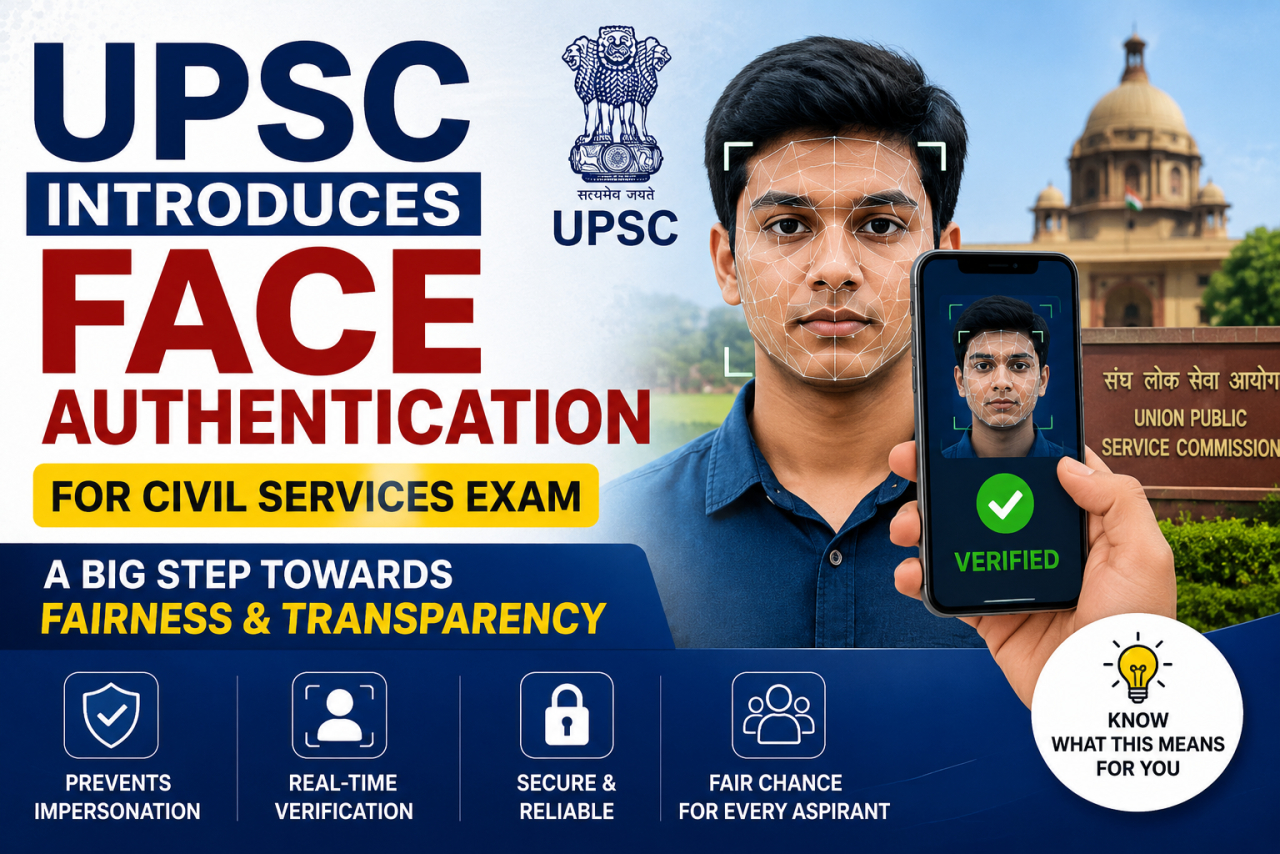
In a major step toward making India's most prestigious examination more secure and transparent, UPSC has introduced real-time face authentication for Civil Services aspirants.
For millions of young Indians, the Civil Services Examination conducted by the Union Public Service Commission (UPSC) represents much more than a competitive test. It is a gateway to serving the nation as an IAS, IPS, IFS, or other prestigious civil servant. Given the immense significance of this examination, maintaining its integrity is of paramount importance. In this context, UPSC’s recent implementation of real-time face authentication during the Civil Services Preliminary Examination marks a major step toward ensuring transparency and fairness.
According to reports, UPSC introduced face authentication across all examination centers during the Civil Services and Indian Forest Service (Preliminary) Examination held on May 24, 2026. The initiative was designed to prevent impersonation and strengthen the credibility of the examination process.
Why This Development Matters
Every year, lakhs of candidates invest years of hard work, discipline, and sacrifice in preparing for the UPSC examination. Any instance of unfair practices, such as impersonation or identity fraud, undermines the efforts of genuine aspirants. Even a small number of fraudulent cases can damage public trust in one of India’s most respected recruitment systems.
The newly introduced face authentication system directly addresses this concern. It verifies whether the person appearing at the examination center is the same individual who uploaded their photograph during the application process. This significantly reduces the possibility of someone else taking the examination on behalf of a candidate.
For serious aspirants, this is reassuring news. It means the competition becomes fairer and merit-based, rewarding genuine preparation rather than dishonest shortcuts.
How the System Works
The authentication process compares a candidate’s live photograph at the examination venue with the image submitted during the registration process. According to UPSC, the verification was conducted using a mobile-phone-based application operated by invigilators.
The technology reportedly authenticated candidates within a few seconds, allowing examination centers to process large numbers of candidates efficiently without causing significant delays. By integrating technology into the entry process, UPSC aims to make identity verification faster, more accurate, and more reliable than traditional manual checks.
A Massive Technological Exercise
What makes this initiative particularly noteworthy is its scale. The Civil Services Examination is among the largest and most complex recruitment examinations in the country. Conducting real-time verification for hundreds of thousands of candidates across thousands of examination venues is a significant logistical achievement.
The successful deployment demonstrates how digital governance tools can be used to strengthen public institutions. It also reflects the growing role of technology in examination management, where fairness and security are becoming increasingly important.
What Students Should Know
Candidates should understand that face authentication is not intended to create additional hurdles. Instead, it is designed to protect honest aspirants and ensure that every candidate competes on equal terms.
Students should therefore:
- Upload clear and accurate photographs during the application process.
- Ensure that their appearance at the examination center reasonably matches the submitted photograph.
- Follow all examination guidelines carefully.
- Carry the required documents and admit card as instructed by UPSC.
Aspirants should also avoid misinformation and rumors regarding new technologies. The purpose of such measures is to strengthen examination security, not to disadvantage genuine candidates.
The Road Ahead
UPSC’s adoption of face authentication may signal a broader shift in how competitive examinations are conducted in India. As technology becomes more advanced, examination authorities are likely to use digital tools to combat fraud, improve efficiency, and enhance transparency.
For students, the success in competitive examinations will increasingly depend on knowledge, preparation, and integrity rather than loopholes or unfair means.
Final Take
The introduction of face authentication in the UPSC Preliminary Examination is a welcome reform that reinforces the principles of fairness and meritocracy. For aspirants who spend years preparing for one of the toughest examinations in the world, such measures help ensure that their hard work is protected.
As India continues to modernize its examination systems, students should view this development not as a challenge but as a positive step toward creating a more transparent, secure, and trustworthy recruitment process. In the long run, a fair examination system benefits everyone—especially the deserving candidates who earn success through dedication and perseverance.
For millions of young Indians, the Civil Services Examination conducted by the Union Public Service Commission (UPSC) represents much more than a competitive test. It is a gateway to serving the nation as an IAS, IPS, IFS, or other prestigious civil servant. Given the immense significance of this examination, maintaining its integrity is of paramount importance. In this context, UPSC’s recent implementation of real-time face authentication during the Civil Services Preliminary Examination marks a major step toward ensuring transparency and fairness.
According to reports, UPSC introduced face authentication across all examination centers during the Civil Services and Indian Forest Service (Preliminary) Examination held on May 24, 2026. The initiative was designed to prevent impersonation and strengthen the credibility of the examination process.
Why This Development Matters
Every year, lakhs of candidates invest years of hard work, discipline, and sacrifice in preparing for the UPSC examination. Any instance of unfair practices, such as impersonation or identity fraud, undermines the efforts of genuine aspirants. Even a small number of fraudulent cases can damage public trust in one of India’s most respected recruitment systems.
The newly introduced face authentication system directly addresses this concern. It verifies whether the person appearing at the examination center is the same individual who uploaded their photograph during the application process. This significantly reduces the possibility of someone else taking the examination on behalf of a candidate.
For serious aspirants, this is reassuring news. It means the competition becomes fairer and merit-based, rewarding genuine preparation rather than dishonest shortcuts.
How the System Works
The authentication process compares a candidate’s live photograph at the examination venue with the image submitted during the registration process. According to UPSC, the verification was conducted using a mobile-phone-based application operated by invigilators.
The technology reportedly authenticated candidates within a few seconds, allowing examination centers to process large numbers of candidates efficiently without causing significant delays. By integrating technology into the entry process, UPSC aims to make identity verification faster, more accurate, and more reliable than traditional manual checks.
A Massive Technological Exercise
What makes this initiative particularly noteworthy is its scale. The Civil Services Examination is among the largest and most complex recruitment examinations in the country. Conducting real-time verification for hundreds of thousands of candidates across thousands of examination venues is a significant logistical achievement.
The successful deployment demonstrates how digital governance tools can be used to strengthen public institutions. It also reflects the growing role of technology in examination management, where fairness and security are becoming increasingly important.
What Students Should Know
Candidates should understand that face authentication is not intended to create additional hurdles. Instead, it is designed to protect honest aspirants and ensure that every candidate competes on equal terms.
Students should therefore:
- Upload clear and accurate photographs during the application process.
- Ensure that their appearance at the examination center reasonably matches the submitted photograph.
- Follow all examination guidelines carefully.
- Carry the required documents and admit card as instructed by UPSC.
Aspirants should also avoid misinformation and rumors regarding new technologies. The purpose of such measures is to strengthen examination security, not to disadvantage genuine candidates.
The Road Ahead
UPSC’s adoption of face authentication may signal a broader shift in how competitive examinations are conducted in India. As technology becomes more advanced, examination authorities are likely to use digital tools to combat fraud, improve efficiency, and enhance transparency.
For students, the success in competitive examinations will increasingly depend on knowledge, preparation, and integrity rather than loopholes or unfair means.
Final Take
The introduction of face authentication in the UPSC Preliminary Examination is a welcome reform that reinforces the principles of fairness and meritocracy. For aspirants who spend years preparing for one of the toughest examinations in the world, such measures help ensure that their hard work is protected.
As India continues to modernize its examination systems, students should view this development not as a challenge but as a positive step toward creating a more transparent, secure, and trustworthy recruitment process. In the long run, a fair examination system benefits everyone—especially the deserving candidates who earn success through dedication and perseverance.




















Leave a Comment