
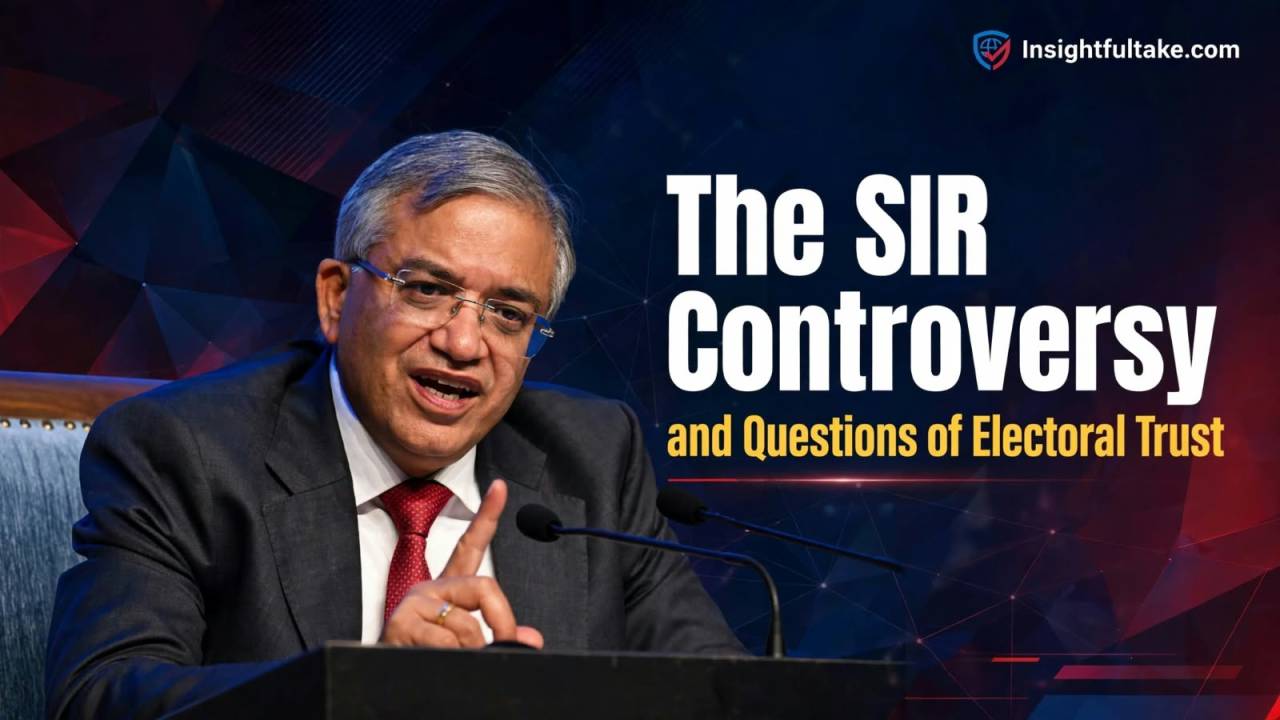
Millions of names removed, questions unanswered. India's electoral roll controversy demands transparency, credible evidence and protection of every eligible voter's right to vote.
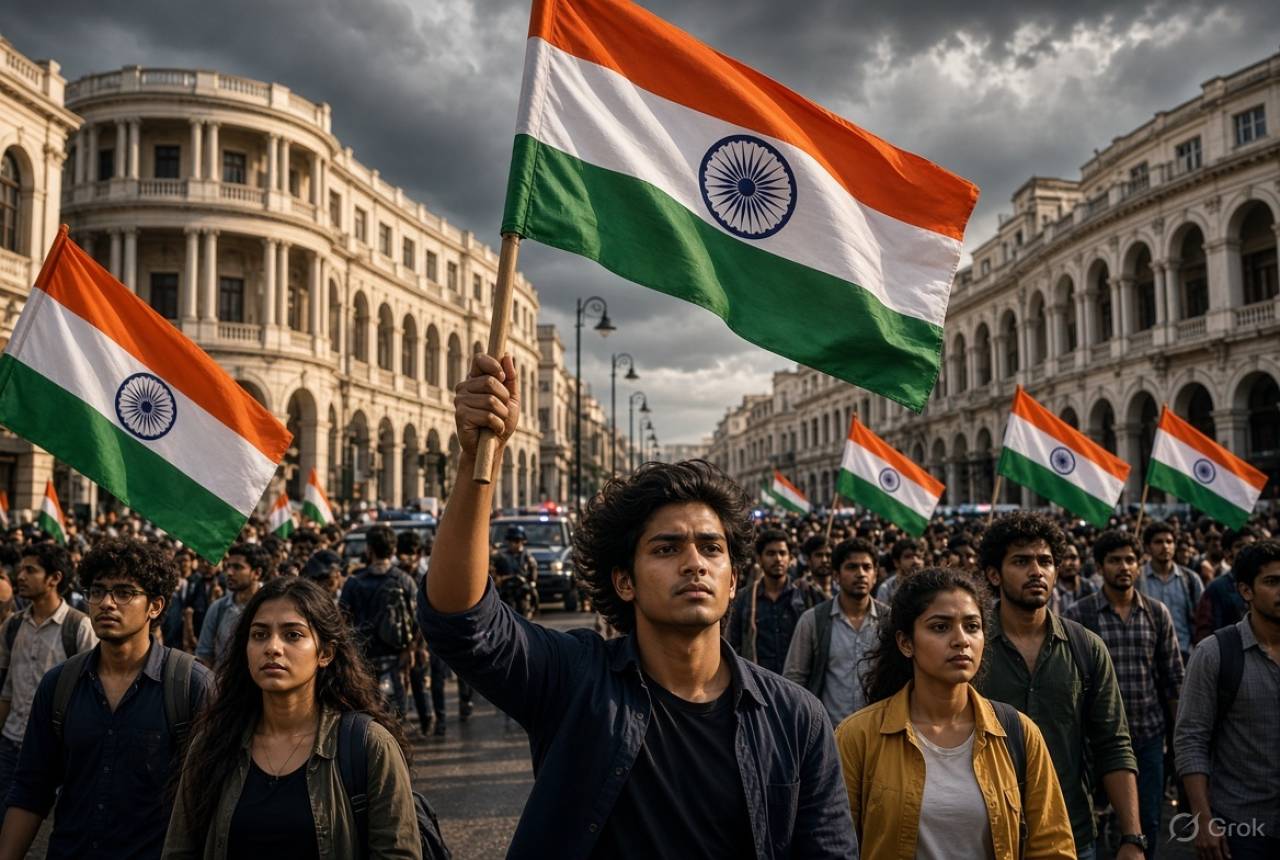
Over the past two weeks, Delhi has witnessed one of its most charged political standoffs in years. More than 2,000 people were detained on October 10 alone. The demands have grown with each rally: the Chief Election Commissioner’s resignation within 48 hours, a freeze on the Special Intensive Revision (SIR) of electoral rolls, a return to the January 2025 electoral rolls, and a shift back to paper ballots.
The anger is real, and so is the right to express it. But a protest of this scale deserves a harder question than “Who is right?” It deserves a more fundamental one: “What exactly are we protesting?”
The Number Everyone Is Shouting About
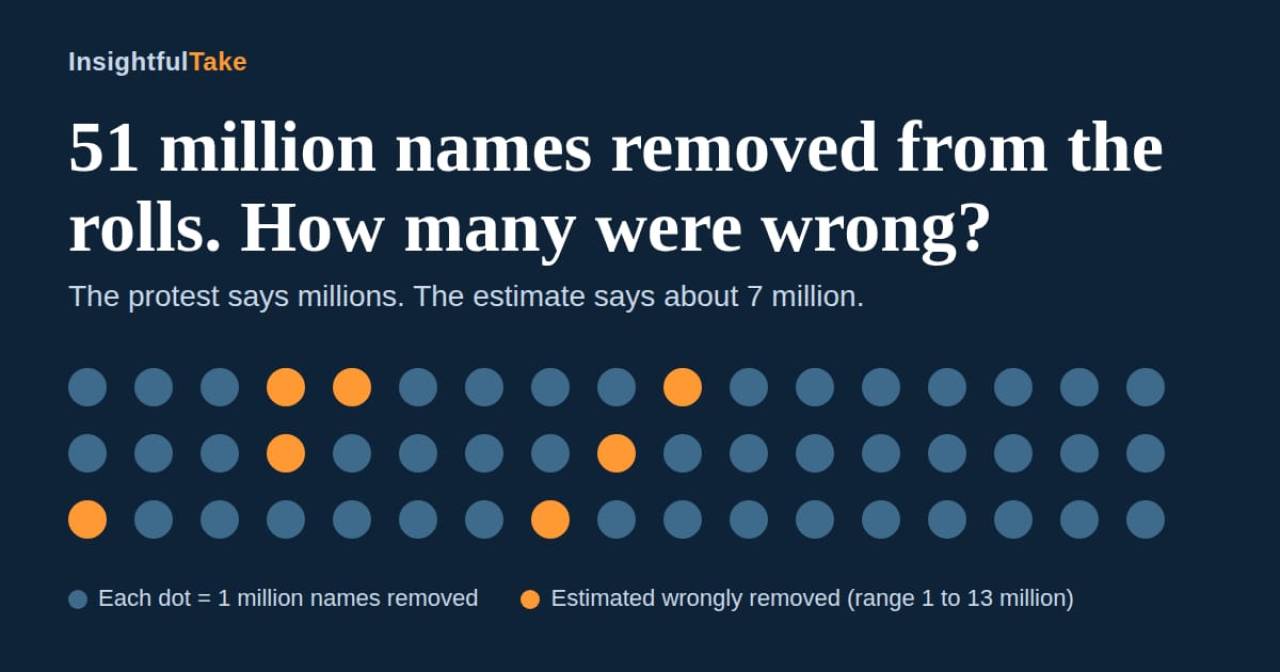
At the centre of the controversy is the reported removal of around 51 million names from electoral rolls across the states covered by the revision. It is a staggering figure, and it has become the emotional centrepiece of the debate.
But context matters. India has roughly 1,008 million adults, which means the reported deletions amount to less than 1 per cent of that population. Many removals may involve deceased voters, duplicate entries and people who have moved away.
One independent analysis estimates that around 7 million eligible voters may have been wrongly removed, although the estimated range is wide, from 1 million to 13 million. These are estimates, not independently audited findings. The uncertainty surrounding the figures is central to the controversy.
The Problem Is Not Just the Numbers. It Is the Silence.
Whether the actual number of wrongly deleted voters is 1 million or 13 million, every affected voter represents a genuine democratic concern. A person wrongly removed from the electoral roll risks losing the opportunity to exercise one of the most fundamental rights in a democracy: the right to vote.
Yet the Election Commission has not provided a sufficiently detailed public breakdown of deletions by reason, state and polling booth to allow citizens and independent researchers to assess the process comprehensively. Without such information, officials can defend the revision as a legitimate exercise, while critics can question its fairness. Neither side can conclusively settle the dispute without verifiable evidence.
The gaps in the available information make the situation more troubling.
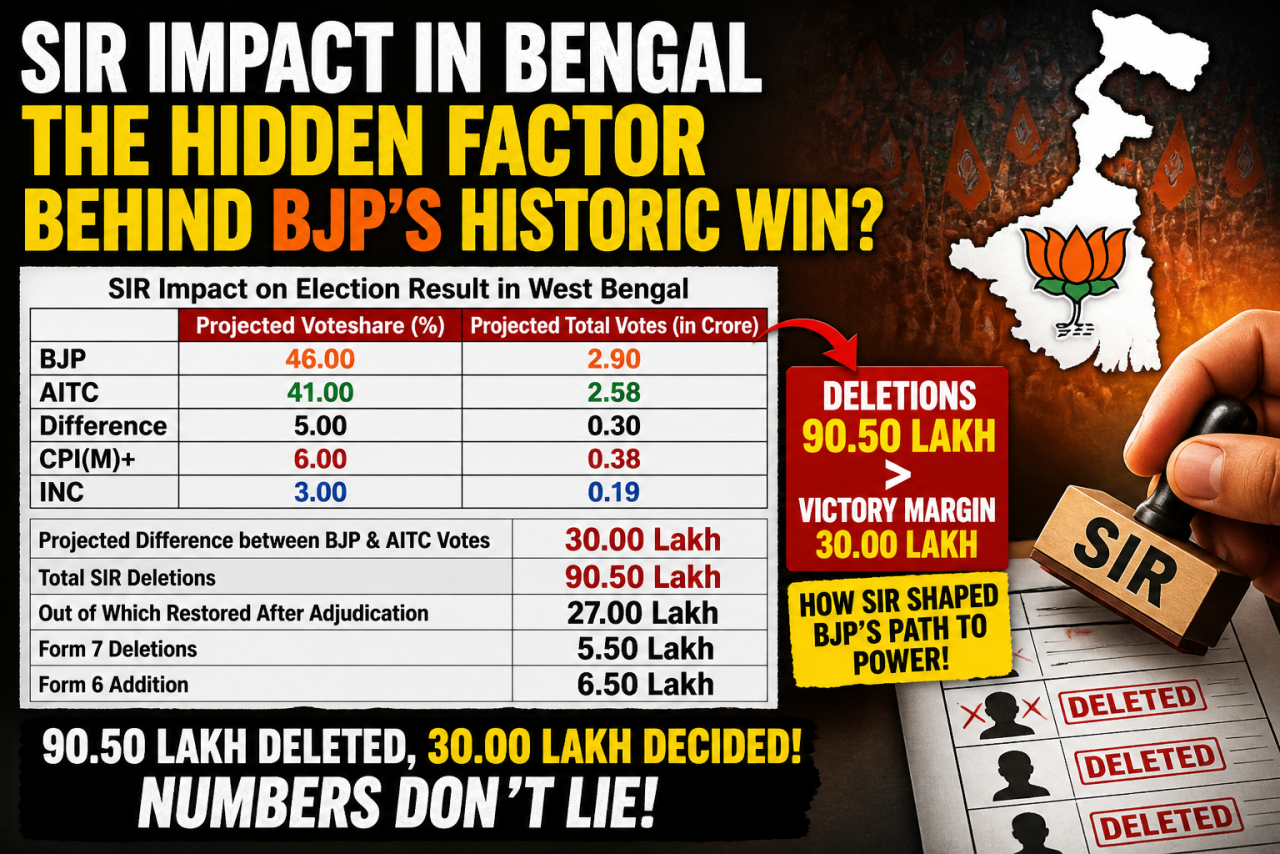
In West Bengal, estimates suggest that millions of names may have been removed, with concerns about inadequate explanations for some deletions. Muslims in districts such as Murshidabad and Malda, as well as Matua Hindus, have featured in reports and complaints about the process. Questions have also been raised about declarations associated with Form 6, used by people applying for inclusion in electoral rolls, and the nature of the verification involved.
These issues require careful examination. Allegations of procedural irregularities, the treatment of applicants and the possibility of disproportionate effects on particular communities deserve scrutiny through transparent data, accessible appeals and independent verification. They should not be dismissed merely because they have become part of a political confrontation.
Why the Demands May Be Working Against the Cause
Here is the uncomfortable question for the protesters: are their demands helping them achieve their stated objective?
Calling for the Chief Election Commissioner’s resignation, a suspension of elections and a return to paper ballots creates a broad, maximalist agenda. Such demands may express the depth of public anger, but they can also make it easier for the authorities to reject the entire movement without addressing its most substantive concerns.
A government can respond to a demand to scrap the entire process with a straightforward refusal. It is much harder to justify withholding detailed information about how millions of names were removed.
The distinction matters. A demand for transparent data, reasoned decisions and effective remedies is specific enough to test the Election Commission’s claims. It also gives citizens a measurable standard against which to judge the institution.
Historical comparisons offer another perspective. Electoral rolls in India have faced problems of accuracy for years. Figures cited in one analysis suggest that, following the 2004 revision, the rolls contained around 28 million more names than the estimated adult population, an excess of approximately 4.4 per cent. In 2014, the estimated excess was around 3.1 per cent.
These comparisons need to be interpreted carefully because population estimates, registration practices and the quality of electoral data can differ across periods. Nevertheless, they raise a relevant question: why should the correction of electoral rolls now generate such intense suspicion, when inflated rolls have also been a longstanding concern?
The answer cannot simply be that every deletion is justified. Nor can it be that every revision is evidence of manipulation. The process must be judged by the quality of its records, the fairness of its procedures and the safeguards available to eligible voters.
There is another irony in this debate. Around one in four Indians aged 18 to 29, or an estimated 73 million young people, was reportedly not registered for the 2024 general election. Voter registration is voluntary, and eligible citizens can apply for inclusion through Form 6.
This presents an opportunity for a movement with a strong youth presence. Alongside protests, young citizens can help eligible people register, check their names on electoral rolls and navigate the correction and appeal process. Public mobilisation can raise awareness, but practical action can help prevent disenfranchisement.
What Would a Credible Demand Look Like?
A more focused set of demands could make the movement harder to ignore and easier to evaluate.
- Publish deletion data: Provide a detailed breakdown of removed names by reason, state and polling booth, subject to appropriate privacy safeguards.
- Resolve appeals promptly: Ensure that eligible voters can challenge deletions through an accessible process, with particular attention to pending cases in West Bengal.
- Enable independent verification: Allow credible scrutiny of the revision process and publish the methodology and evidence used to assess its accuracy.
- Protect every eligible voter: Give people clear information about their status, the documents required and the steps needed to restore wrongly deleted names.
- Establish accountability: Publish timelines for resolving complaints and explain how errors will be identified, corrected and prevented in future revisions.
These demands do not require the movement to abandon its political concerns. They require it to translate those concerns into specific, verifiable outcomes.
They would also place the burden of proof where it belongs: on the institution responsible for maintaining the electoral rolls and ensuring that eligible citizens are not excluded without justification.
The Real Test of Democracy
Democracies do not weaken only when eligible voters are removed from electoral rolls. They also weaken when public trust erodes, whether because institutions fail to explain their decisions or because political accusations move faster than the available evidence.
The Election Commission owes citizens transparency, consistency and an effective mechanism for correcting mistakes. Protesters, political parties and campaigners also have a responsibility to distinguish documented failures from allegations that remain unverified.
If the estimate of 7 million wrongly removed voters is accurate, the problem is serious and demands urgent correction. If the estimate is too high or too low, transparent data should help establish the actual scale of the problem. Either way, the public deserves evidence rather than competing assertions.
The objective should not be to defend every action of the Election Commission or to presume that the entire revision is illegitimate. It should be to ensure that every eligible citizen can exercise the right to vote and that every decision affecting that right can withstand public scrutiny.
The streets have asked their questions. Now the electoral rolls must provide the answers, line by line.
Over the past two weeks, Delhi has witnessed one of its most charged political standoffs in years. More than 2,000 people were detained on October 10 alone. The demands have grown with each rally: the Chief Election Commissioner’s resignation within 48 hours, a freeze on the Special Intensive Revision (SIR) of electoral rolls, a return to the January 2025 electoral rolls, and a shift back to paper ballots.
The anger is real, and so is the right to express it. But a protest of this scale deserves a harder question than “Who is right?” It deserves a more fundamental one: “What exactly are we protesting?”
The Number Everyone Is Shouting About
At the centre of the controversy is the reported removal of around 51 million names from electoral rolls across the states covered by the revision. It is a staggering figure, and it has become the emotional centrepiece of the debate.
But context matters. India has roughly 1,008 million adults, which means the reported deletions amount to less than 1 per cent of that population. Many removals may involve deceased voters, duplicate entries and people who have moved away.
One independent analysis estimates that around 7 million eligible voters may have been wrongly removed, although the estimated range is wide, from 1 million to 13 million. These are estimates, not independently audited findings. The uncertainty surrounding the figures is central to the controversy.
The Problem Is Not Just the Numbers. It Is the Silence.
Whether the actual number of wrongly deleted voters is 1 million or 13 million, every affected voter represents a genuine democratic concern. A person wrongly removed from the electoral roll risks losing the opportunity to exercise one of the most fundamental rights in a democracy: the right to vote.
Yet the Election Commission has not provided a sufficiently detailed public breakdown of deletions by reason, state and polling booth to allow citizens and independent researchers to assess the process comprehensively. Without such information, officials can defend the revision as a legitimate exercise, while critics can question its fairness. Neither side can conclusively settle the dispute without verifiable evidence.
The gaps in the available information make the situation more troubling.
In West Bengal, estimates suggest that millions of names may have been removed, with concerns about inadequate explanations for some deletions. Muslims in districts such as Murshidabad and Malda, as well as Matua Hindus, have featured in reports and complaints about the process. Questions have also been raised about declarations associated with Form 6, used by people applying for inclusion in electoral rolls, and the nature of the verification involved.
These issues require careful examination. Allegations of procedural irregularities, the treatment of applicants and the possibility of disproportionate effects on particular communities deserve scrutiny through transparent data, accessible appeals and independent verification. They should not be dismissed merely because they have become part of a political confrontation.
Why the Demands May Be Working Against the Cause
Here is the uncomfortable question for the protesters: are their demands helping them achieve their stated objective?
Calling for the Chief Election Commissioner’s resignation, a suspension of elections and a return to paper ballots creates a broad, maximalist agenda. Such demands may express the depth of public anger, but they can also make it easier for the authorities to reject the entire movement without addressing its most substantive concerns.
A government can respond to a demand to scrap the entire process with a straightforward refusal. It is much harder to justify withholding detailed information about how millions of names were removed.
The distinction matters. A demand for transparent data, reasoned decisions and effective remedies is specific enough to test the Election Commission’s claims. It also gives citizens a measurable standard against which to judge the institution.
Historical comparisons offer another perspective. Electoral rolls in India have faced problems of accuracy for years. Figures cited in one analysis suggest that, following the 2004 revision, the rolls contained around 28 million more names than the estimated adult population, an excess of approximately 4.4 per cent. In 2014, the estimated excess was around 3.1 per cent.
These comparisons need to be interpreted carefully because population estimates, registration practices and the quality of electoral data can differ across periods. Nevertheless, they raise a relevant question: why should the correction of electoral rolls now generate such intense suspicion, when inflated rolls have also been a longstanding concern?
The answer cannot simply be that every deletion is justified. Nor can it be that every revision is evidence of manipulation. The process must be judged by the quality of its records, the fairness of its procedures and the safeguards available to eligible voters.
There is another irony in this debate. Around one in four Indians aged 18 to 29, or an estimated 73 million young people, was reportedly not registered for the 2024 general election. Voter registration is voluntary, and eligible citizens can apply for inclusion through Form 6.
This presents an opportunity for a movement with a strong youth presence. Alongside protests, young citizens can help eligible people register, check their names on electoral rolls and navigate the correction and appeal process. Public mobilisation can raise awareness, but practical action can help prevent disenfranchisement.
What Would a Credible Demand Look Like?
A more focused set of demands could make the movement harder to ignore and easier to evaluate.
- Publish deletion data: Provide a detailed breakdown of removed names by reason, state and polling booth, subject to appropriate privacy safeguards.
- Resolve appeals promptly: Ensure that eligible voters can challenge deletions through an accessible process, with particular attention to pending cases in West Bengal.
- Enable independent verification: Allow credible scrutiny of the revision process and publish the methodology and evidence used to assess its accuracy.
- Protect every eligible voter: Give people clear information about their status, the documents required and the steps needed to restore wrongly deleted names.
- Establish accountability: Publish timelines for resolving complaints and explain how errors will be identified, corrected and prevented in future revisions.
These demands do not require the movement to abandon its political concerns. They require it to translate those concerns into specific, verifiable outcomes.
They would also place the burden of proof where it belongs: on the institution responsible for maintaining the electoral rolls and ensuring that eligible citizens are not excluded without justification.
The Real Test of Democracy
Democracies do not weaken only when eligible voters are removed from electoral rolls. They also weaken when public trust erodes, whether because institutions fail to explain their decisions or because political accusations move faster than the available evidence.
The Election Commission owes citizens transparency, consistency and an effective mechanism for correcting mistakes. Protesters, political parties and campaigners also have a responsibility to distinguish documented failures from allegations that remain unverified.
If the estimate of 7 million wrongly removed voters is accurate, the problem is serious and demands urgent correction. If the estimate is too high or too low, transparent data should help establish the actual scale of the problem. Either way, the public deserves evidence rather than competing assertions.
The objective should not be to defend every action of the Election Commission or to presume that the entire revision is illegitimate. It should be to ensure that every eligible citizen can exercise the right to vote and that every decision affecting that right can withstand public scrutiny.
The streets have asked their questions. Now the electoral rolls must provide the answers, line by line.













Leave a Comment