
Was Bengal decided at the polling booth, or during the revision of voter lists? The data suggests the answer may lie in between.
The outcome of the recent West Bengal Assembly election, 2026, which has brought the Bharatiya Janata Party (BJP) to power for the first time, will understandably be read through the familiar lenses of campaign strategy, leadership appeal, and voter sentiment. Yet, beneath these visible layers lies a more structural question—whether the Special Intensive Revision (SIR) of electoral rolls played a consequential role in shaping the final verdict.
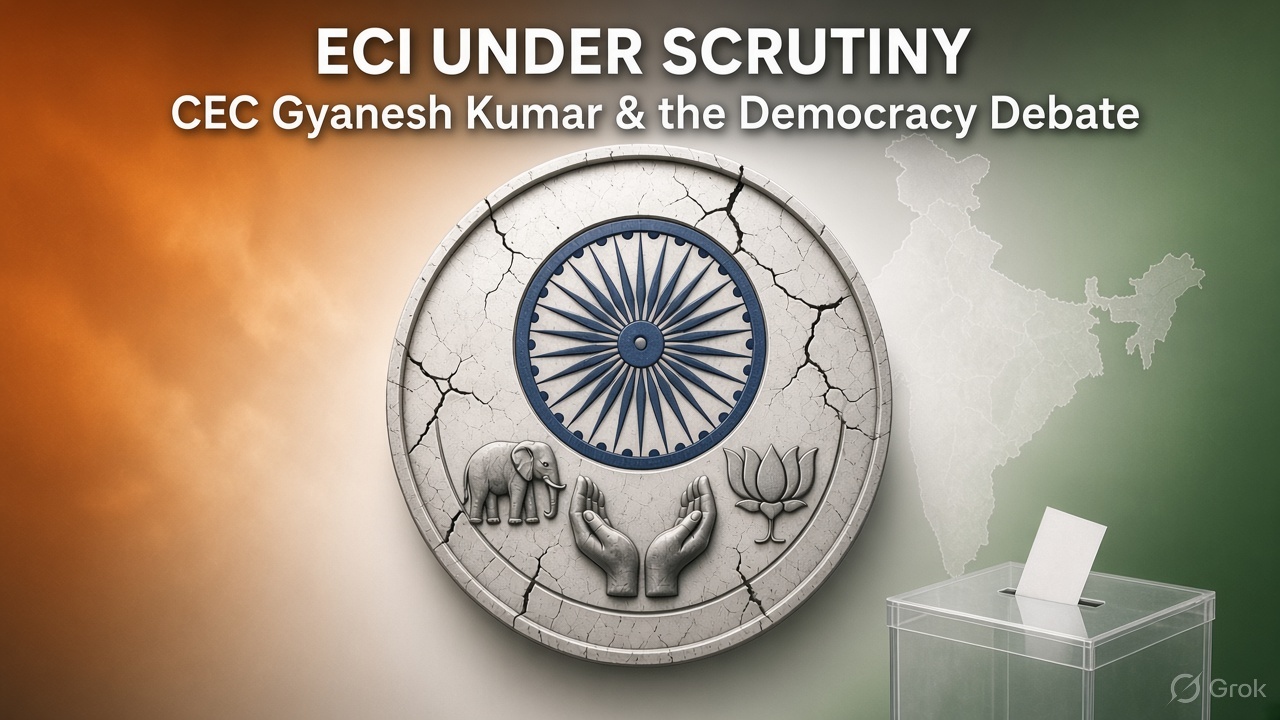
At its core, the SIR exercise undertaken by the Election Commission of India (ECI) is intended to ensure the integrity of electoral rolls by removing ineligible entries and adding new voters. Such periodic revisions are essential to the functioning of a credible democracy. However, when the scale of revision becomes unusually large, its interaction with social and demographic realities demands closer scrutiny.
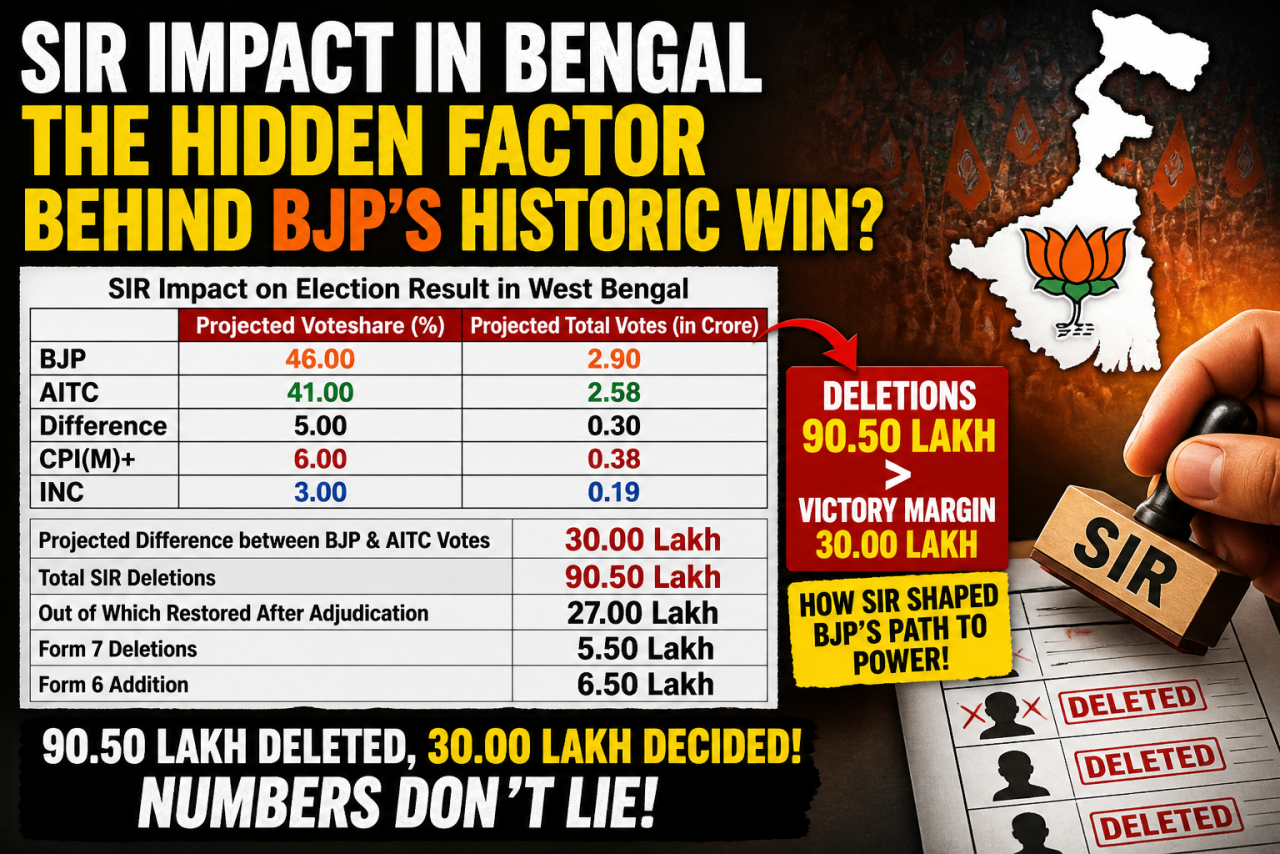
The data emerging from the recent exercise is significant. With projected deletions exceeding 90 lakh names and restorations accounting for only a portion of that figure, the pool of voters affected by the revision appears substantial—far exceeding the eventual margin of victory, estimated at roughly 30 lakh votes between the BJP and the All India Trinamool Congress (AITC). This numerical asymmetry alone does not establish causation, but it does raise a legitimate analytical question: can large-scale revisions, even if procedurally valid, produce uneven electoral effects?
West Bengal’s political demography provides the necessary context. The State’s electorate is characterised by significant concentrations of minority communities, economically vulnerable populations, and migrant labour segments—groups that have historically shown a preference for welfare-oriented politics associated with the AITC. These sections are also, by their very socio-economic condition, more likely to face challenges related to documentation, residential stability, and administrative access.
In contrast, urban and semi-urban voters—who have increasingly formed the backbone of the BJP’s expansion in the State—tend to possess greater institutional access, higher awareness of procedural requirements, and better capacity to respond to administrative changes. This divergence creates what may be described as a structural asymmetry in how electoral roll revisions are experienced across different segments of the population.
The implications of such asymmetry are subtle but significant. If a disproportionate share of deletions occurs among populations less equipped to navigate bureaucratic processes, the immediate effect may not be visible as outright disenfranchisement but rather as reduced electoral participation. Delays in restoration, lack of awareness, or procedural fatigue can translate into lower turnout, particularly in tightly contested constituencies.
In this light, the electoral impact of SIR is better understood not as a direct transfer of votes, but as a reconfiguration of the active electorate. Even a modest contraction in turnout among AITC-leaning demographics, when aggregated across districts, could narrow the competitive space sufficiently to alter outcomes. In closely fought elections, the distinction between vote share and effective vote participation becomes crucial.
It is also pertinent to consider the timing and communication of the revision process. Large-scale exercises conducted proximate to elections place a premium on administrative clarity and voter awareness. Any gaps in this regard, even if unintended, risk amplifying existing inequalities in access and responsiveness. The result is not necessarily a distortion of the electoral process, but a differential capacity among voters to remain within it.
None of this implies that the SIR exercise was inherently flawed or improperly conducted. The ECI’s mandate to maintain accurate electoral rolls is both necessary and constitutionally grounded. However, the West Bengal experience underscores the need to examine how ostensibly neutral administrative processes interact with unequal social realities.
The broader lesson is that electoral outcomes are shaped not only by political mobilisation but also by the architecture of participation. In a competitive polity, where margins are narrow and alignments fluid, even procedural interventions can acquire political significance if their effects are unevenly distributed.
As West Bengal enters a new political phase, the debate over SIR should not be reduced to partisan accusation or defence. Instead, it calls for a more careful institutional reflection: how can electoral integrity be preserved while ensuring that no segment of the electorate is inadvertently disadvantaged? The answer to that question will be central not only to the legitimacy of this verdict but to the credibility of future ones.
The outcome of the recent West Bengal Assembly election, 2026, which has brought the Bharatiya Janata Party (BJP) to power for the first time, will understandably be read through the familiar lenses of campaign strategy, leadership appeal, and voter sentiment. Yet, beneath these visible layers lies a more structural question—whether the Special Intensive Revision (SIR) of electoral rolls played a consequential role in shaping the final verdict.
At its core, the SIR exercise undertaken by the Election Commission of India (ECI) is intended to ensure the integrity of electoral rolls by removing ineligible entries and adding new voters. Such periodic revisions are essential to the functioning of a credible democracy. However, when the scale of revision becomes unusually large, its interaction with social and demographic realities demands closer scrutiny.
The data emerging from the recent exercise is significant. With projected deletions exceeding 90 lakh names and restorations accounting for only a portion of that figure, the pool of voters affected by the revision appears substantial—far exceeding the eventual margin of victory, estimated at roughly 30 lakh votes between the BJP and the All India Trinamool Congress (AITC). This numerical asymmetry alone does not establish causation, but it does raise a legitimate analytical question: can large-scale revisions, even if procedurally valid, produce uneven electoral effects?
West Bengal’s political demography provides the necessary context. The State’s electorate is characterised by significant concentrations of minority communities, economically vulnerable populations, and migrant labour segments—groups that have historically shown a preference for welfare-oriented politics associated with the AITC. These sections are also, by their very socio-economic condition, more likely to face challenges related to documentation, residential stability, and administrative access.
In contrast, urban and semi-urban voters—who have increasingly formed the backbone of the BJP’s expansion in the State—tend to possess greater institutional access, higher awareness of procedural requirements, and better capacity to respond to administrative changes. This divergence creates what may be described as a structural asymmetry in how electoral roll revisions are experienced across different segments of the population.
The implications of such asymmetry are subtle but significant. If a disproportionate share of deletions occurs among populations less equipped to navigate bureaucratic processes, the immediate effect may not be visible as outright disenfranchisement but rather as reduced electoral participation. Delays in restoration, lack of awareness, or procedural fatigue can translate into lower turnout, particularly in tightly contested constituencies.
In this light, the electoral impact of SIR is better understood not as a direct transfer of votes, but as a reconfiguration of the active electorate. Even a modest contraction in turnout among AITC-leaning demographics, when aggregated across districts, could narrow the competitive space sufficiently to alter outcomes. In closely fought elections, the distinction between vote share and effective vote participation becomes crucial.
It is also pertinent to consider the timing and communication of the revision process. Large-scale exercises conducted proximate to elections place a premium on administrative clarity and voter awareness. Any gaps in this regard, even if unintended, risk amplifying existing inequalities in access and responsiveness. The result is not necessarily a distortion of the electoral process, but a differential capacity among voters to remain within it.
None of this implies that the SIR exercise was inherently flawed or improperly conducted. The ECI’s mandate to maintain accurate electoral rolls is both necessary and constitutionally grounded. However, the West Bengal experience underscores the need to examine how ostensibly neutral administrative processes interact with unequal social realities.
The broader lesson is that electoral outcomes are shaped not only by political mobilisation but also by the architecture of participation. In a competitive polity, where margins are narrow and alignments fluid, even procedural interventions can acquire political significance if their effects are unevenly distributed.
As West Bengal enters a new political phase, the debate over SIR should not be reduced to partisan accusation or defence. Instead, it calls for a more careful institutional reflection: how can electoral integrity be preserved while ensuring that no segment of the electorate is inadvertently disadvantaged? The answer to that question will be central not only to the legitimacy of this verdict but to the credibility of future ones.






















Leave a Comment