
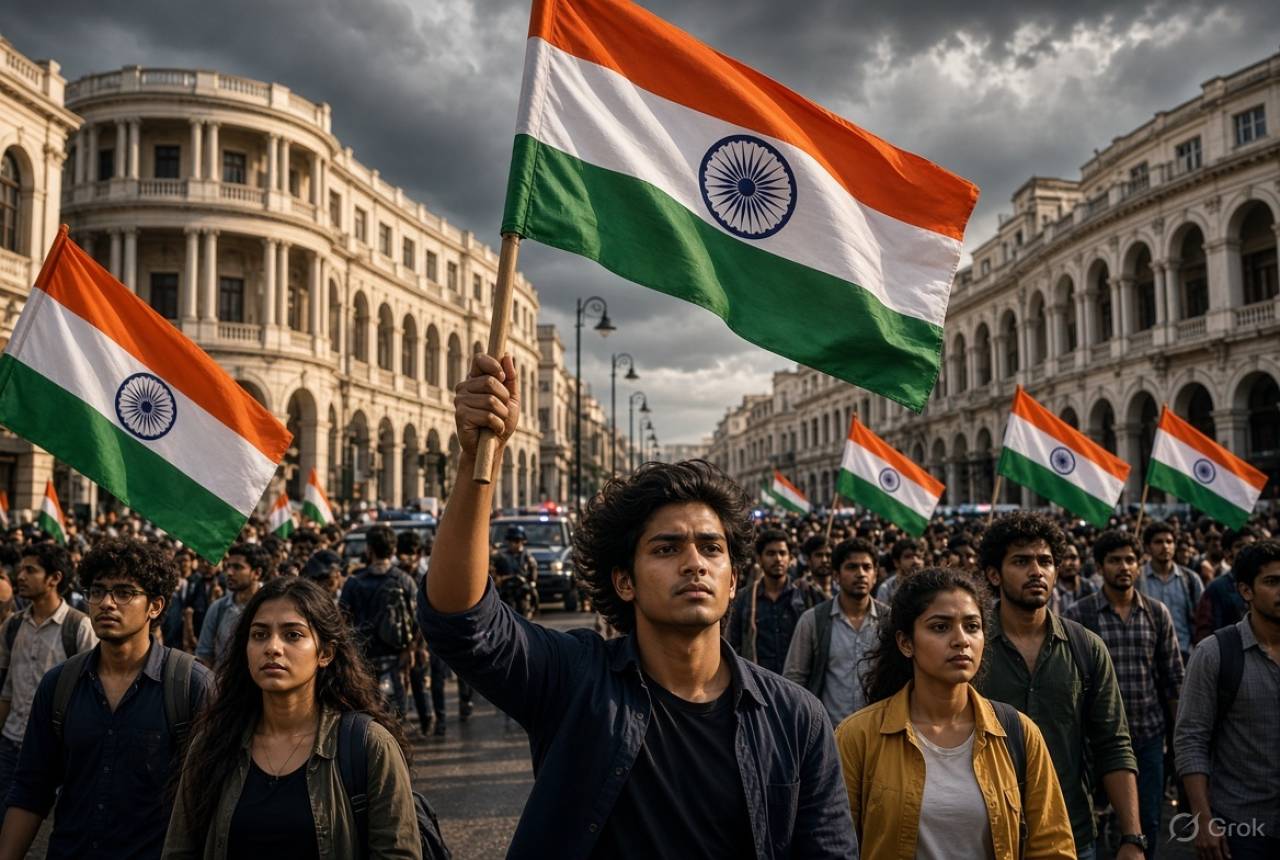
Can carrying the Tiranga on a public street lead to detention? CJP’s Gen Z protest in Delhi raises urgent questions about constitutional freedoms and police powers.
On 16 October 2026, the heart of Delhi witnessed a striking collision between youthful assertion and state authority. Supporters of the Cockroach Janta Party (CJP), a Gen Z-led movement, attempted to hold a “Lehra Do Tiranga” march at Central Park in Connaught Place. Carrying the Indian national flag, raising “Jai Hind” slogans and singing the national anthem, they encountered a heavy police presence. Police detained protesters and dispersed gatherings across Connaught Place, Mandi House and nearby areas. Among those detained were CJP founder Abhijeet Dipke and All India Students’ Association (AISA) president Neha Bora. Roughly 150 people were taken into custody.
Dipke was stopped as he left his temporary residence in Jhandewalan, with the Tiranga in his hand. Video footage showed him questioning police officers about why he was being prevented from simply walking with the national flag. Police had served him notices under prohibitory orders issued under Section 163 of the Bharatiya Nagarik Suraksha Sanhita (BNSS). They cited Connaught Place’s dense commercial activity, traffic concerns, proximity to sensitive institutions and the absence of formal permission from the New Delhi Municipal Council. Officers told him he could not proceed to the area and took him away. CJP later claimed that his whereabouts were initially unclear and that access to lawyers was restricted.
The Constitutional Right to Carry the National Flag
The episode raised a fundamental question about constitutional freedom and the limits of police authority. Congress MP Shashi Tharoor put it pointedly: “Walking on a public street with a tiranga is not a crime, Delhi Police. You do owe an explanation to the nation.”
The Supreme Court had addressed the constitutional position years earlier. In Union of India v. Naveen Jindal (2004), the Court held that the right to fly the national flag is protected under Article 19(1)(a) of the Constitution as an expression of freedom of speech and expression, subject to reasonable restrictions imposed by law.
Carrying the Tiranga on a public street, by itself, does not constitute an offence. However, the right is not absolute. Lawful restrictions relating to public order, the Flag Code of India and other applicable legal provisions may still apply. The crucial question is whether such restrictions are justified, proportionate and applied fairly.
CJP framed its proposed march around this constitutional principle. Earlier in the week, two of its leaders, Saurav Das and Ashutosh Ranka, were arrested and remanded after allegedly entering the denotified Jantar Mantar protest site while waving the national flag and demanding the resignation of Chief Election Commissioner Gyanesh Kumar.
Following those arrests, Dipke called for a peaceful gathering to demonstrate that carrying or displaying the Tiranga should not be treated as a crime in itself. The group maintained that it was not planning a conventional protest with speakers or a stage, but a symbolic expression of constitutional patriotism.
From Online Satire to a Youth Movement
The Cockroach Janta Party is a relatively new political movement. It emerged in May 2026 after Dipke, then a political communications professional, responded to a judicial remark comparing unemployed youth to “cockroaches” with a satirical social media post: “What if all cockroaches come together?”
The phrase went viral. What began as online satire under the name Cockroach Janta Party soon developed into a youth platform addressing unemployment, examination irregularities and concerns about electoral integrity.
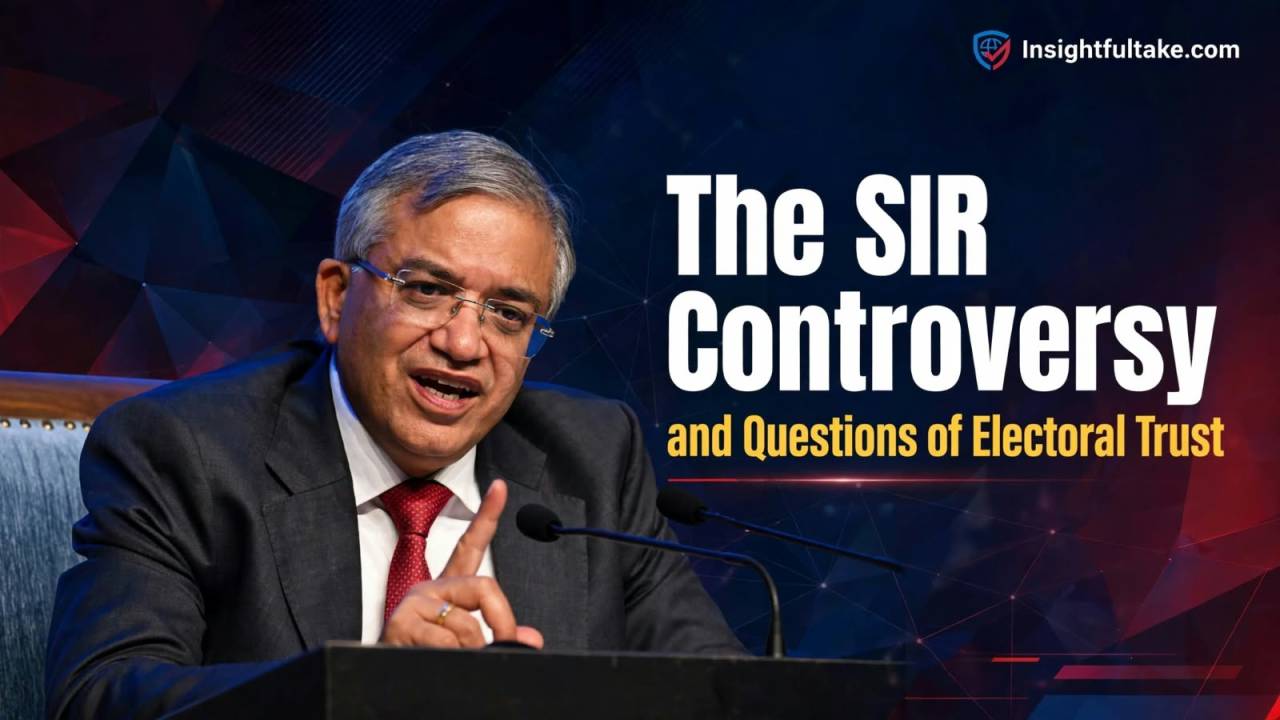
The NEET paper leak controversy became one of the issues that drew attention to the movement. CJP later turned its focus towards the Special Intensive Revision (SIR) of electoral rolls, alleging that the exercise had led to the deletion of millions of voters’ names.
The Election Commission has denied partisan intent and maintained that voters whose names have been wrongly deleted can apply for re-enrolment. CJP has demanded Kumar’s resignation and called for broader electoral reforms.
The movement's appeal lies partly in its ability to connect everyday frustrations among young Indians with questions of accountability. For a generation concerned about jobs, examination systems and democratic representation, satire has become a way to challenge established political institutions.
Police Restrictions and the Politics of Protest
The October detentions are part of a wider confrontation between CJP and the authorities. Earlier detentions of Dipke and other leaders upon their arrival in Delhi, the denotification of Jantar Mantar as a protest site, and the extensive security arrangements around Connaught Place point to the challenges faced by groups seeking to organise demonstrations in the capital.
Opposition leaders, including Rahul Gandhi and Mamata Banerjee, criticised the detentions. The government and BJP, meanwhile, characterised the protests as attempts to create disorder or engineer political change by mobilising young people.
Delhi Police defended its restrictions on public-order grounds. Connaught Place is a busy commercial district, and large gatherings can affect traffic, business activity and access to nearby institutions. Organisers may also be required to follow applicable rules governing public assemblies and the use of designated protest sites.
These concerns cannot simply be dismissed. The police have a responsibility to maintain public order and ensure that public spaces remain accessible. But restrictions must also meet the test of necessity and proportionality. A peaceful gathering should not automatically be treated as a threat merely because its message is politically uncomfortable.
Police also circulated reminders about the Flag Code of India, including rules against allowing the flag to touch the ground, using it as clothing in prohibited ways or displaying it upside down. Such rules are intended to ensure the flag is treated with dignity. Their existence, however, does not mean that carrying the national flag on a public street is inherently unlawful.
The central issue is therefore not whether public-order rules should exist, but whether they are being applied reasonably and consistently.
When Patriotism Becomes a Question of Freedom
The sight of young Indians carrying the national flag, singing the national anthem and being detained has considerable symbolic force. It challenges the assumption that patriotism and dissent must always operate within boundaries defined by those in power.
The Tiranga belongs to every Indian. Its meaning cannot be reduced to support for a government, a political party or a particular ideology. Citizens must be able to express their attachment to the country while questioning its institutions, demanding accountability and exercising their constitutional rights.
That principle is especially important for a younger generation trying to find its place in public life. When peaceful political expression faces repeated restrictions, the resulting frustration can deepen distrust in institutions. At the same time, protest organisers must respect lawful restrictions and ensure that their actions do not endanger others or obstruct essential public services.
The challenge for the authorities is to distinguish between a genuine threat to public order and peaceful political expression. Preventive action should be based on a lawful and proportionate assessment of the circumstances, not merely on the possibility that a gathering may become inconvenient.
CJP has demonstrated an ability to turn online satire into a visible street movement and to return to public spaces despite repeated police action. Whether its demands for electoral accountability gain wider support or remain confined to a relatively small circle will depend on the movement's credibility, its ability to build public support and the response of the authorities.
Dipke’s detention while holding the Tiranga has become a symbol larger than one afternoon in Connaught Place. It raises a question that goes to the heart of Indian democracy: if walking on a public street with the national flag can lead to preventive detention, what specific and lawful grounds justify such action?
The police owe the public an explanation when the exercise of a fundamental right appears to be restricted. The explanation must establish more than administrative inconvenience. It must show that the action was lawful, necessary and proportionate.
The Tiranga represents the republic, not the government of the day. Defending the right to carry it peacefully is therefore not merely a question of respecting a national symbol. It is also a test of how confidently India upholds the constitutional freedoms that give the flag its democratic meaning.
On 16 October 2026, the heart of Delhi witnessed a striking collision between youthful assertion and state authority. Supporters of the Cockroach Janta Party (CJP), a Gen Z-led movement, attempted to hold a “Lehra Do Tiranga” march at Central Park in Connaught Place. Carrying the Indian national flag, raising “Jai Hind” slogans and singing the national anthem, they encountered a heavy police presence. Police detained protesters and dispersed gatherings across Connaught Place, Mandi House and nearby areas. Among those detained were CJP founder Abhijeet Dipke and All India Students’ Association (AISA) president Neha Bora. Roughly 150 people were taken into custody.
Dipke was stopped as he left his temporary residence in Jhandewalan, with the Tiranga in his hand. Video footage showed him questioning police officers about why he was being prevented from simply walking with the national flag. Police had served him notices under prohibitory orders issued under Section 163 of the Bharatiya Nagarik Suraksha Sanhita (BNSS). They cited Connaught Place’s dense commercial activity, traffic concerns, proximity to sensitive institutions and the absence of formal permission from the New Delhi Municipal Council. Officers told him he could not proceed to the area and took him away. CJP later claimed that his whereabouts were initially unclear and that access to lawyers was restricted.
The Constitutional Right to Carry the National Flag
The episode raised a fundamental question about constitutional freedom and the limits of police authority. Congress MP Shashi Tharoor put it pointedly: “Walking on a public street with a tiranga is not a crime, Delhi Police. You do owe an explanation to the nation.”
The Supreme Court had addressed the constitutional position years earlier. In Union of India v. Naveen Jindal (2004), the Court held that the right to fly the national flag is protected under Article 19(1)(a) of the Constitution as an expression of freedom of speech and expression, subject to reasonable restrictions imposed by law.
Carrying the Tiranga on a public street, by itself, does not constitute an offence. However, the right is not absolute. Lawful restrictions relating to public order, the Flag Code of India and other applicable legal provisions may still apply. The crucial question is whether such restrictions are justified, proportionate and applied fairly.
CJP framed its proposed march around this constitutional principle. Earlier in the week, two of its leaders, Saurav Das and Ashutosh Ranka, were arrested and remanded after allegedly entering the denotified Jantar Mantar protest site while waving the national flag and demanding the resignation of Chief Election Commissioner Gyanesh Kumar.
Following those arrests, Dipke called for a peaceful gathering to demonstrate that carrying or displaying the Tiranga should not be treated as a crime in itself. The group maintained that it was not planning a conventional protest with speakers or a stage, but a symbolic expression of constitutional patriotism.
From Online Satire to a Youth Movement
The Cockroach Janta Party is a relatively new political movement. It emerged in May 2026 after Dipke, then a political communications professional, responded to a judicial remark comparing unemployed youth to “cockroaches” with a satirical social media post: “What if all cockroaches come together?”
The phrase went viral. What began as online satire under the name Cockroach Janta Party soon developed into a youth platform addressing unemployment, examination irregularities and concerns about electoral integrity.
The NEET paper leak controversy became one of the issues that drew attention to the movement. CJP later turned its focus towards the Special Intensive Revision (SIR) of electoral rolls, alleging that the exercise had led to the deletion of millions of voters’ names.
The Election Commission has denied partisan intent and maintained that voters whose names have been wrongly deleted can apply for re-enrolment. CJP has demanded Kumar’s resignation and called for broader electoral reforms.
The movement's appeal lies partly in its ability to connect everyday frustrations among young Indians with questions of accountability. For a generation concerned about jobs, examination systems and democratic representation, satire has become a way to challenge established political institutions.
Police Restrictions and the Politics of Protest
The October detentions are part of a wider confrontation between CJP and the authorities. Earlier detentions of Dipke and other leaders upon their arrival in Delhi, the denotification of Jantar Mantar as a protest site, and the extensive security arrangements around Connaught Place point to the challenges faced by groups seeking to organise demonstrations in the capital.
Opposition leaders, including Rahul Gandhi and Mamata Banerjee, criticised the detentions. The government and BJP, meanwhile, characterised the protests as attempts to create disorder or engineer political change by mobilising young people.
Delhi Police defended its restrictions on public-order grounds. Connaught Place is a busy commercial district, and large gatherings can affect traffic, business activity and access to nearby institutions. Organisers may also be required to follow applicable rules governing public assemblies and the use of designated protest sites.
These concerns cannot simply be dismissed. The police have a responsibility to maintain public order and ensure that public spaces remain accessible. But restrictions must also meet the test of necessity and proportionality. A peaceful gathering should not automatically be treated as a threat merely because its message is politically uncomfortable.
Police also circulated reminders about the Flag Code of India, including rules against allowing the flag to touch the ground, using it as clothing in prohibited ways or displaying it upside down. Such rules are intended to ensure the flag is treated with dignity. Their existence, however, does not mean that carrying the national flag on a public street is inherently unlawful.
The central issue is therefore not whether public-order rules should exist, but whether they are being applied reasonably and consistently.
When Patriotism Becomes a Question of Freedom
The sight of young Indians carrying the national flag, singing the national anthem and being detained has considerable symbolic force. It challenges the assumption that patriotism and dissent must always operate within boundaries defined by those in power.
The Tiranga belongs to every Indian. Its meaning cannot be reduced to support for a government, a political party or a particular ideology. Citizens must be able to express their attachment to the country while questioning its institutions, demanding accountability and exercising their constitutional rights.
That principle is especially important for a younger generation trying to find its place in public life. When peaceful political expression faces repeated restrictions, the resulting frustration can deepen distrust in institutions. At the same time, protest organisers must respect lawful restrictions and ensure that their actions do not endanger others or obstruct essential public services.
The challenge for the authorities is to distinguish between a genuine threat to public order and peaceful political expression. Preventive action should be based on a lawful and proportionate assessment of the circumstances, not merely on the possibility that a gathering may become inconvenient.
CJP has demonstrated an ability to turn online satire into a visible street movement and to return to public spaces despite repeated police action. Whether its demands for electoral accountability gain wider support or remain confined to a relatively small circle will depend on the movement's credibility, its ability to build public support and the response of the authorities.
Dipke’s detention while holding the Tiranga has become a symbol larger than one afternoon in Connaught Place. It raises a question that goes to the heart of Indian democracy: if walking on a public street with the national flag can lead to preventive detention, what specific and lawful grounds justify such action?
The police owe the public an explanation when the exercise of a fundamental right appears to be restricted. The explanation must establish more than administrative inconvenience. It must show that the action was lawful, necessary and proportionate.
The Tiranga represents the republic, not the government of the day. Defending the right to carry it peacefully is therefore not merely a question of respecting a national symbol. It is also a test of how confidently India upholds the constitutional freedoms that give the flag its democratic meaning.















Leave a Comment