
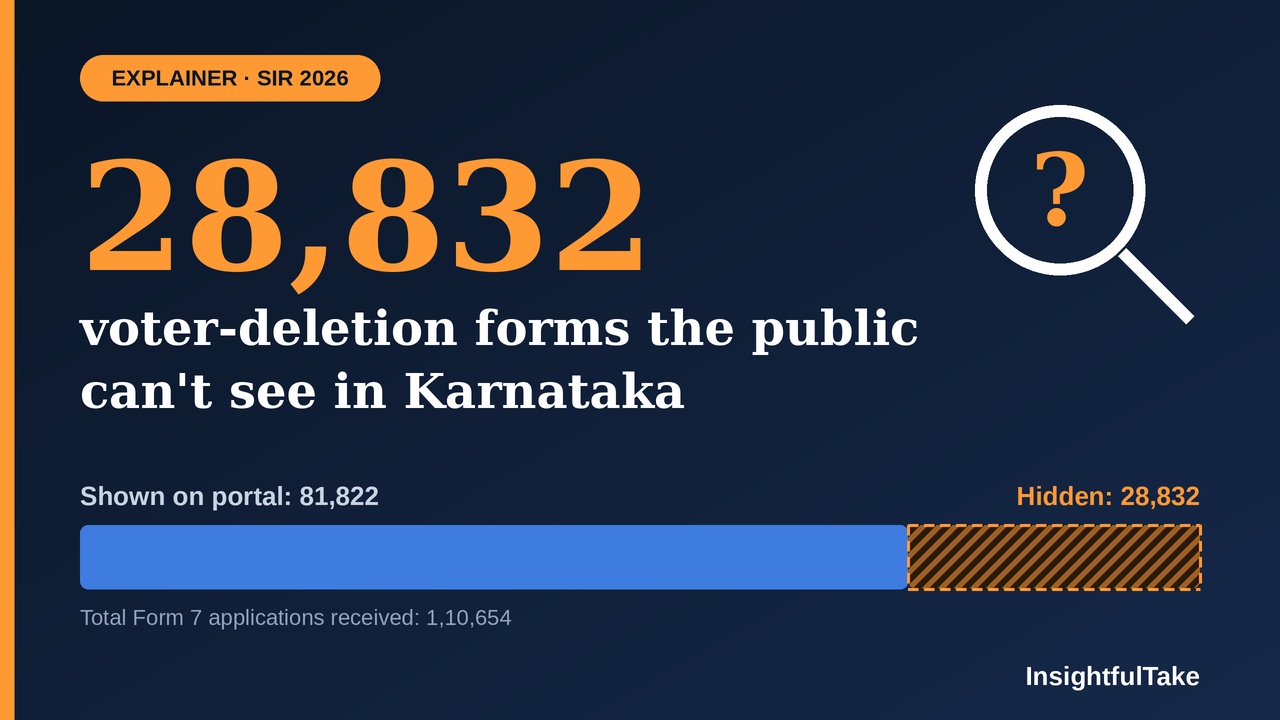
Karnataka reported 1,10,654 voter deletion applications, but 28,832 remain missing from public view. Why don't the official figures match?
Imagine someone asks the election office to remove your name from the voter list. You would want to know who filed the request and why. In Karnataka, that basic question has run into a wall of missing data.
India is in the middle of a Special Intensive Revision (SIR) of its electoral rolls, an exercise intended to remove duplicate entries, names of deceased voters and entries linked to people who have shifted addresses.
Anyone can file a Form 7 application to object to a name on the electoral roll. Since a deletion can cost someone the right to vote, the process requires transparency. Details of who filed an objection and whose name is being challenged are supposed to be available for public scrutiny.
Karnataka's electoral data, however, tells a different story.
The state's Chief Electoral Officer (CEO) said that 1,10,654 Form 7 applications were received between June 16, when the pre-SIR electoral rolls were frozen, and October 8. Yet the public portal displays details of only 81,822 applications. The remaining 28,832, more than a quarter of the reported total, are missing from public view.
Without these records, citizens cannot establish which constituencies the applications came from, who filed them or whose names were targeted.
A deletion request that cannot be seen is difficult to challenge.
The Transparency Promise Remains Unfulfilled
Both the state election office and the Election Commission had said that Form 7 details would be available for public scrutiny. An August statement said lists of claims and objections would be uploaded to the Chief Electoral Officer's website so that citizens could examine them and approach the concerned officer with objections.
Under the process, each constituency is expected to consolidate its daily Form 7 applications in Form 10 and upload the records. When reporters compared these uploads with the official totals, they found significant gaps.
The issue has also triggered a political response. Chief Minister D.K. Shivakumar and his cabinet colleagues protested over the missing data. Following the protest, the CEO directed district election offices to investigate the matter and take action.
The question now is whether the authorities can account for every application received.
The Figures Keep Changing
The discrepancies go beyond missing entries on the public portal. Figures released by the election office itself have also failed to match.
- August 24: An official release reported 67,307 Form 7 applications received between June 16 and August 23.
- September 11: A statement put the total for June 16 to September 9 at 34,631, which was 32,676 fewer than the earlier figure, despite covering a longer period.
- September 17: Another release reported 41,792 applications, still 25,515 below the August figure.
- September 24: A day after the claims-and-objections window closed, the tally stood at 61,130, which was 6,177 below the earlier total.
- October 8: The reported number rose sharply to 1,10,654.
Cumulative figures should normally increase as new applications arrive. When a total falls and later rises sharply, the election office needs to explain what changed and why.
The public portal presents another problem. Between June 16 and August 23, the CEO reported 67,307 applications, but the portal displayed details of only 6,951. That left 60,356 applications unaccounted for in the publicly available records. During some other periods, the portal reportedly displayed more applications than the CEO's own figures.
Asked about the discrepancies, the CEO's office said the claims-and-objections period should be counted only from August 24 to September 23.
Even within that period, however, the portal showed 28,097 applications while the cumulative figure had fallen by 6,177 compared with the earlier release. When the CEO was contacted again, he was unavailable for comment.
These inconsistencies need a clear, documented explanation.
Why This Matters to Ordinary Voters
It is tempting to dismiss the discrepancies as an administrative problem. But electoral rolls determine who can exercise the right to vote.
A mismatch could result from a clerical error, a delay in uploading records or a reporting mistake. None of these possibilities, on its own, establishes deliberate wrongdoing. But without transparent records and a credible explanation, citizens have little basis for distinguishing an honest mistake from possible misuse.
Time is another concern. The window to raise objections is limited, and most voters do not check the electoral roll every day. If a deletion request is missing from the public portal, the affected person may not discover the problem until they check their status or arrive at a polling booth.
The purpose of making these records public is to allow voters to identify errors and challenge them before it is too late. Missing information weakens that safeguard.
What Should Happen Next
The immediate steps are straightforward.
First, publish every Form 7 application. The election authorities should make the complete records available on the public portal, with the details required for scrutiny.
Second, reconcile the official figures. The CEO's office should explain why the totals changed between successive releases and clarify the difference between applications received, applications processed and records uploaded.
Third, provide adequate time for objections. If missing records prevent citizens from checking or challenging proposed deletions, the authorities should consider extending the relevant period after the complete data becomes available.
Electoral rolls are the foundation of every election. Transparency in adding, correcting and removing names is essential to public confidence in the democratic process.
Until the missing 28,832 applications are accounted for, questions about Karnataka's voter list will remain unanswered. Citizens should check their names on the electoral roll and seek clarification from election officials if they find discrepancies.
The right to vote depends not only on accurate records but also on a system that allows people to verify those records and challenge mistakes. When the numbers do not add up, the election authorities owe voters an explanation.
Imagine someone asks the election office to remove your name from the voter list. You would want to know who filed the request and why. In Karnataka, that basic question has run into a wall of missing data.
India is in the middle of a Special Intensive Revision (SIR) of its electoral rolls, an exercise intended to remove duplicate entries, names of deceased voters and entries linked to people who have shifted addresses.
Anyone can file a Form 7 application to object to a name on the electoral roll. Since a deletion can cost someone the right to vote, the process requires transparency. Details of who filed an objection and whose name is being challenged are supposed to be available for public scrutiny.
Karnataka's electoral data, however, tells a different story.
The state's Chief Electoral Officer (CEO) said that 1,10,654 Form 7 applications were received between June 16, when the pre-SIR electoral rolls were frozen, and October 8. Yet the public portal displays details of only 81,822 applications. The remaining 28,832, more than a quarter of the reported total, are missing from public view.
Without these records, citizens cannot establish which constituencies the applications came from, who filed them or whose names were targeted.
A deletion request that cannot be seen is difficult to challenge.
The Transparency Promise Remains Unfulfilled
Both the state election office and the Election Commission had said that Form 7 details would be available for public scrutiny. An August statement said lists of claims and objections would be uploaded to the Chief Electoral Officer's website so that citizens could examine them and approach the concerned officer with objections.
Under the process, each constituency is expected to consolidate its daily Form 7 applications in Form 10 and upload the records. When reporters compared these uploads with the official totals, they found significant gaps.
The issue has also triggered a political response. Chief Minister D.K. Shivakumar and his cabinet colleagues protested over the missing data. Following the protest, the CEO directed district election offices to investigate the matter and take action.
The question now is whether the authorities can account for every application received.
The Figures Keep Changing
The discrepancies go beyond missing entries on the public portal. Figures released by the election office itself have also failed to match.
- August 24: An official release reported 67,307 Form 7 applications received between June 16 and August 23.
- September 11: A statement put the total for June 16 to September 9 at 34,631, which was 32,676 fewer than the earlier figure, despite covering a longer period.
- September 17: Another release reported 41,792 applications, still 25,515 below the August figure.
- September 24: A day after the claims-and-objections window closed, the tally stood at 61,130, which was 6,177 below the earlier total.
- October 8: The reported number rose sharply to 1,10,654.
Cumulative figures should normally increase as new applications arrive. When a total falls and later rises sharply, the election office needs to explain what changed and why.
The public portal presents another problem. Between June 16 and August 23, the CEO reported 67,307 applications, but the portal displayed details of only 6,951. That left 60,356 applications unaccounted for in the publicly available records. During some other periods, the portal reportedly displayed more applications than the CEO's own figures.
Asked about the discrepancies, the CEO's office said the claims-and-objections period should be counted only from August 24 to September 23.
Even within that period, however, the portal showed 28,097 applications while the cumulative figure had fallen by 6,177 compared with the earlier release. When the CEO was contacted again, he was unavailable for comment.
These inconsistencies need a clear, documented explanation.
Why This Matters to Ordinary Voters
It is tempting to dismiss the discrepancies as an administrative problem. But electoral rolls determine who can exercise the right to vote.
A mismatch could result from a clerical error, a delay in uploading records or a reporting mistake. None of these possibilities, on its own, establishes deliberate wrongdoing. But without transparent records and a credible explanation, citizens have little basis for distinguishing an honest mistake from possible misuse.
Time is another concern. The window to raise objections is limited, and most voters do not check the electoral roll every day. If a deletion request is missing from the public portal, the affected person may not discover the problem until they check their status or arrive at a polling booth.
The purpose of making these records public is to allow voters to identify errors and challenge them before it is too late. Missing information weakens that safeguard.
What Should Happen Next
The immediate steps are straightforward.
First, publish every Form 7 application. The election authorities should make the complete records available on the public portal, with the details required for scrutiny.
Second, reconcile the official figures. The CEO's office should explain why the totals changed between successive releases and clarify the difference between applications received, applications processed and records uploaded.
Third, provide adequate time for objections. If missing records prevent citizens from checking or challenging proposed deletions, the authorities should consider extending the relevant period after the complete data becomes available.
Electoral rolls are the foundation of every election. Transparency in adding, correcting and removing names is essential to public confidence in the democratic process.
Until the missing 28,832 applications are accounted for, questions about Karnataka's voter list will remain unanswered. Citizens should check their names on the electoral roll and seek clarification from election officials if they find discrepancies.
The right to vote depends not only on accurate records but also on a system that allows people to verify those records and challenge mistakes. When the numbers do not add up, the election authorities owe voters an explanation.

















Leave a Comment