
Delhi generates nearly 14,000 tonnes of garbage daily, but over 6,000 tonnes remain unprocessed. With landfills overflowing, can new waste plants close the gap?
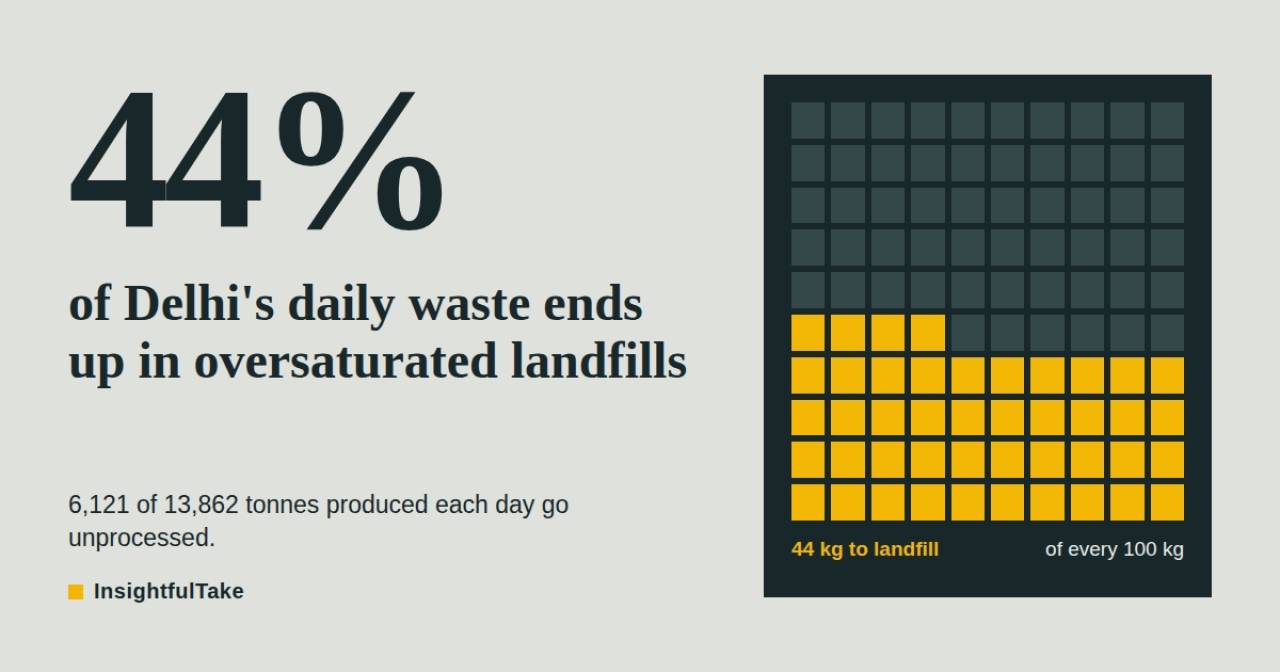
Nearly 44% of the garbage generated in Delhi every day remains unprocessed and ends up at the city's three landfill sites, which are already overflowing. The latest report of the Delhi Pollution Control Committee (DPCC) highlights a widening gap between the waste the capital produces and its capacity to process it.
Delhi generates 13,862 tonnes of waste every day but can process only 7,741 tonnes, or 55.84% of the total. The remaining 6,121 tonnes, accounting for 44.16% of daily waste, is left for the landfills at Okhla, Bhalswa and Ghazipur.
The situation has worsened over the past year. During the corresponding period last year, Delhi was estimated to generate 11,842 tonnes of waste daily, of which 4,534 tonnes remained unprocessed. Daily waste generation has since increased by around 2,000 tonnes, while the unprocessed portion has grown by roughly 1,600 tonnes.
The Municipal Corporation of Delhi (MCD) has struggled to keep pace with this increase. The numbers point to a basic problem. Delhi is generating more garbage faster than it is expanding the capacity needed to manage it.
What Delhi Throws Away
According to the civic body, around 60% of the garbage it collects, or approximately 8,100 tonnes a day, is non-biodegradable. The remaining 5,400 tonnes consists of wet, biodegradable waste.
Waste management experts have long advocated handling wet waste close to where it is generated. Segregation at source, followed by decentralised composting, can reduce the volume of waste transported to processing plants and landfills.
Delhi, however, continues to depend heavily on large-scale processing and incineration. Without effective segregation, recyclable materials and biodegradable waste can become mixed with other garbage, making treatment more difficult and increasing the pressure on existing facilities.
Why the Gap Is Widening
Officials say the increase in recorded waste may partly reflect problems with the handling of mixed garbage. In areas where contracts with private concessionaires have ended, new contractors are only now taking over collection and processing-related work.
During this transition, shortages of resources have affected operations. Sorting and segregation at dhalaos, the designated neighbourhood waste collection points, have also suffered. At several sites, construction and demolition waste is reportedly being mixed with household garbage.
Three of Delhi's 12 administrative zones, Central, South and West, are undergoing this changeover.
The transition between contractors may explain some operational difficulties, but it does not remove the larger challenge. Delhi needs a waste management system that can maintain collection, segregation and processing even when contracts change hands.
Waste-to-Energy Plants Struggle to Deliver
Delhi has four waste-to-energy (WTE) plants with a combined capacity of 6,550 tonnes per day. One of these, a plant near the Ghazipur landfill with a stated capacity of 1,300 tonnes per day, generates 12 MW of electricity.
However, officials acknowledge that the older Ghazipur plant is prone to breakdowns and requires frequent maintenance. The National Green Tribunal (NGT) has also recently pulled up the MCD over the plant's non-operation.
The difficulties extend beyond Ghazipur. A 200-tonne composting plant at Okhla has remained closed for several years. A proposal to upgrade it into a bio-CNG plant has also faced prolonged delays.
These setbacks raise questions about the implementation of Delhi's waste management plans. Building new facilities is important, but existing plants must also operate reliably if the city is to reduce the amount of garbage sent to landfills.
New Plants Planned, but Deadlines Matter
A senior municipal official said the corporation is setting up four new waste-processing plants at Singhola, Narela, Bhalswa and Okhla to manage the growing waste load.
Another civic official said the processing capacities of the Ghazipur and Tehkhand plants would be increased, while two additional waste-to-energy plants are in the pipeline.
According to the official, Delhi expects to achieve a processing capacity of 8,150 tonnes per day by December 2028 through expansion and new facilities at Narela-Bawana, Tehkhand, Okhla and Ghazipur.
The proposed expansion could improve the city's ability to process waste. However, the additional capacity must become operational, and the facilities must work consistently, before Delhi can expect meaningful relief. Until then, the daily shortfall will continue to put pressure on its landfill sites.
The Master Plan 2047 projects that Delhi's daily waste generation could reach 25,000 tonnes by 2047, nearly twice the current estimate of 13,862 tonnes.
That projection makes the present shortfall more concerning. If the city cannot process the waste it generates today, managing a substantially larger volume in the coming decades will require much greater investment, better planning and stricter implementation.
What Needs to Change
Delhi's waste crisis requires action at several levels.
First, segregation of wet and dry waste must improve at the household and neighbourhood levels. Waste collection systems should continue to function efficiently even when contracts change or new operators take over.
Second, decentralised composting needs greater attention. Treating biodegradable waste close to where it is generated can reduce transportation costs, lower the burden on centralised facilities and limit the amount of waste sent to landfills.
Third, the government and civic authorities must ensure that promised processing plants are completed on schedule. Existing facilities also need regular maintenance, reliable operations and transparent reporting of their actual processing performance.
Finally, construction and demolition waste must be handled separately from household garbage. Mixing different waste streams makes segregation harder and places additional pressure on an already strained system.
The landfills at Okhla, Bhalswa and Ghazipur were not designed to absorb an ever-growing volume of untreated waste indefinitely. The consequences extend beyond the sites themselves, affecting nearby residents who face the effects of odour, smoke and other environmental and health risks.
Delhi's waste crisis is no longer simply a problem for the future. With more than 6,000 tonnes of garbage remaining unprocessed every day, it is an immediate challenge for the city's civic administration.
The test is not how many plants Delhi plans to build, but how much waste it can actually process each day. Until collection, segregation and treatment improve together, the capital's overflowing landfills will remain a visible reminder of the gap between its plans and their implementation.
Nearly 44% of the garbage generated in Delhi every day remains unprocessed and ends up at the city's three landfill sites, which are already overflowing. The latest report of the Delhi Pollution Control Committee (DPCC) highlights a widening gap between the waste the capital produces and its capacity to process it.
Delhi generates 13,862 tonnes of waste every day but can process only 7,741 tonnes, or 55.84% of the total. The remaining 6,121 tonnes, accounting for 44.16% of daily waste, is left for the landfills at Okhla, Bhalswa and Ghazipur.
The situation has worsened over the past year. During the corresponding period last year, Delhi was estimated to generate 11,842 tonnes of waste daily, of which 4,534 tonnes remained unprocessed. Daily waste generation has since increased by around 2,000 tonnes, while the unprocessed portion has grown by roughly 1,600 tonnes.
The Municipal Corporation of Delhi (MCD) has struggled to keep pace with this increase. The numbers point to a basic problem. Delhi is generating more garbage faster than it is expanding the capacity needed to manage it.
What Delhi Throws Away
According to the civic body, around 60% of the garbage it collects, or approximately 8,100 tonnes a day, is non-biodegradable. The remaining 5,400 tonnes consists of wet, biodegradable waste.
Waste management experts have long advocated handling wet waste close to where it is generated. Segregation at source, followed by decentralised composting, can reduce the volume of waste transported to processing plants and landfills.
Delhi, however, continues to depend heavily on large-scale processing and incineration. Without effective segregation, recyclable materials and biodegradable waste can become mixed with other garbage, making treatment more difficult and increasing the pressure on existing facilities.
Why the Gap Is Widening
Officials say the increase in recorded waste may partly reflect problems with the handling of mixed garbage. In areas where contracts with private concessionaires have ended, new contractors are only now taking over collection and processing-related work.
During this transition, shortages of resources have affected operations. Sorting and segregation at dhalaos, the designated neighbourhood waste collection points, have also suffered. At several sites, construction and demolition waste is reportedly being mixed with household garbage.
Three of Delhi's 12 administrative zones, Central, South and West, are undergoing this changeover.
The transition between contractors may explain some operational difficulties, but it does not remove the larger challenge. Delhi needs a waste management system that can maintain collection, segregation and processing even when contracts change hands.
Waste-to-Energy Plants Struggle to Deliver
Delhi has four waste-to-energy (WTE) plants with a combined capacity of 6,550 tonnes per day. One of these, a plant near the Ghazipur landfill with a stated capacity of 1,300 tonnes per day, generates 12 MW of electricity.
However, officials acknowledge that the older Ghazipur plant is prone to breakdowns and requires frequent maintenance. The National Green Tribunal (NGT) has also recently pulled up the MCD over the plant's non-operation.
The difficulties extend beyond Ghazipur. A 200-tonne composting plant at Okhla has remained closed for several years. A proposal to upgrade it into a bio-CNG plant has also faced prolonged delays.
These setbacks raise questions about the implementation of Delhi's waste management plans. Building new facilities is important, but existing plants must also operate reliably if the city is to reduce the amount of garbage sent to landfills.
New Plants Planned, but Deadlines Matter
A senior municipal official said the corporation is setting up four new waste-processing plants at Singhola, Narela, Bhalswa and Okhla to manage the growing waste load.
Another civic official said the processing capacities of the Ghazipur and Tehkhand plants would be increased, while two additional waste-to-energy plants are in the pipeline.
According to the official, Delhi expects to achieve a processing capacity of 8,150 tonnes per day by December 2028 through expansion and new facilities at Narela-Bawana, Tehkhand, Okhla and Ghazipur.
The proposed expansion could improve the city's ability to process waste. However, the additional capacity must become operational, and the facilities must work consistently, before Delhi can expect meaningful relief. Until then, the daily shortfall will continue to put pressure on its landfill sites.
The Master Plan 2047 projects that Delhi's daily waste generation could reach 25,000 tonnes by 2047, nearly twice the current estimate of 13,862 tonnes.
That projection makes the present shortfall more concerning. If the city cannot process the waste it generates today, managing a substantially larger volume in the coming decades will require much greater investment, better planning and stricter implementation.
What Needs to Change
Delhi's waste crisis requires action at several levels.
First, segregation of wet and dry waste must improve at the household and neighbourhood levels. Waste collection systems should continue to function efficiently even when contracts change or new operators take over.
Second, decentralised composting needs greater attention. Treating biodegradable waste close to where it is generated can reduce transportation costs, lower the burden on centralised facilities and limit the amount of waste sent to landfills.
Third, the government and civic authorities must ensure that promised processing plants are completed on schedule. Existing facilities also need regular maintenance, reliable operations and transparent reporting of their actual processing performance.
Finally, construction and demolition waste must be handled separately from household garbage. Mixing different waste streams makes segregation harder and places additional pressure on an already strained system.
The landfills at Okhla, Bhalswa and Ghazipur were not designed to absorb an ever-growing volume of untreated waste indefinitely. The consequences extend beyond the sites themselves, affecting nearby residents who face the effects of odour, smoke and other environmental and health risks.
Delhi's waste crisis is no longer simply a problem for the future. With more than 6,000 tonnes of garbage remaining unprocessed every day, it is an immediate challenge for the city's civic administration.
The test is not how many plants Delhi plans to build, but how much waste it can actually process each day. Until collection, segregation and treatment improve together, the capital's overflowing landfills will remain a visible reminder of the gap between its plans and their implementation.






















Leave a Comment