
French students protesting over school conditions have drawn attention to a wider problem faced by young people whose concerns are often heard only after they reach the streets.
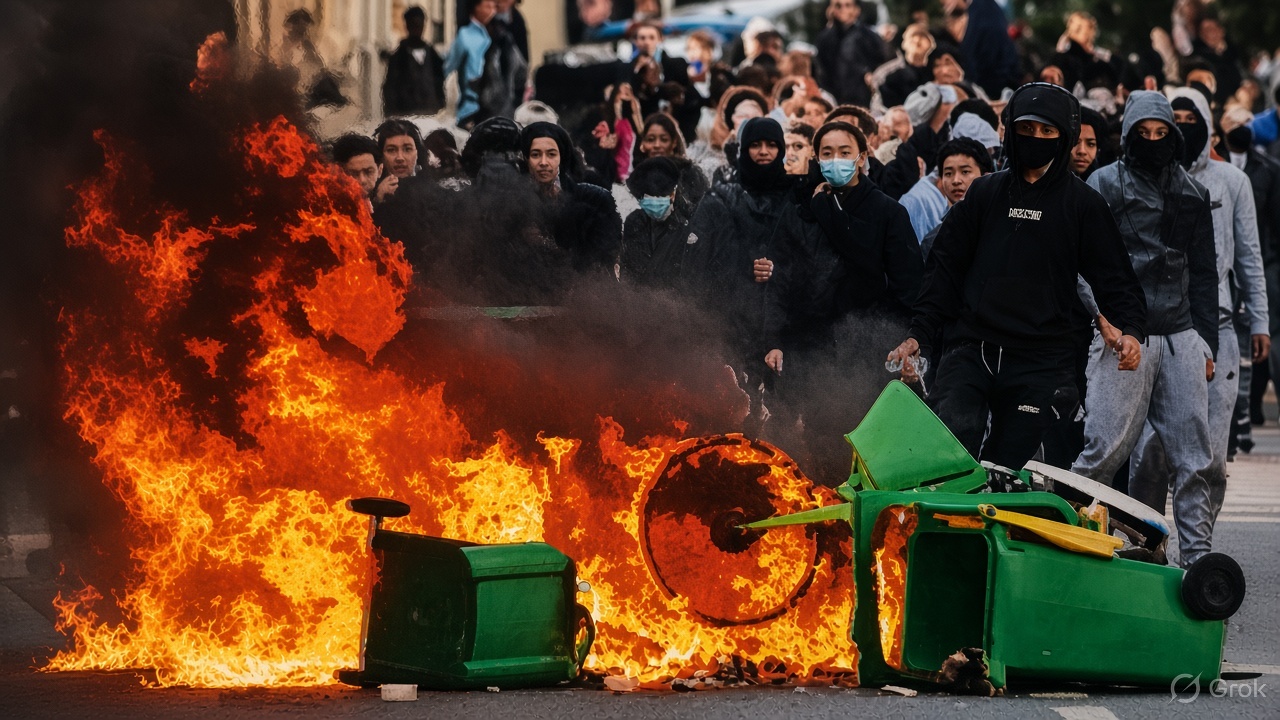
The news coming out of France are difficult to ignore. School students facing police, tear gas filling the streets, burning rubbish bins and damaged school buildings have turned an education dispute into a wider national debate.
High school students across France have been protesting over poor classroom conditions, teacher shortages, overcrowding, long school hours and inadequate facilities. The movement, which began in the Paris region in September, has spread across the country. Hundreds of schools have been disrupted, while more than 250,000 people, including students, teachers, parents and supporters, joined nationwide demonstrations on October 6.
The protests have not remained peaceful everywhere. There have been clashes with police, fires outside schools, arrests and incidents in which protesters attacked officers. Police have used tear gas and other crowd-control measures. The French government has condemned the violence, while rights groups and others have questioned whether the response to young protesters has at times been excessive.
Both issues deserve attention.
Students cannot use their age or grievances as a justification for attacking people, damaging property or putting others at risk. The right to protest does not include a right to violence.
But the violence should not become the only story.
The more important question is why so many students felt the need to take their grievances to the streets in the first place.
Students are citizens too
Young people are often described as the future of a country. It is a familiar phrase, but it can have an unintended meaning: listen to them later.
That is not how democracy should work.
Students may not have the same political power as adults. School students cannot vote, and many college students are financially dependent on their families. Yet they live with the consequences of public decisions every day.
They know whether their classroom has enough chairs. They know when a teacher has been absent for weeks. They know what overcrowding feels like. They experience examination pressure, admission uncertainty and anxiety about what comes after school.
In France, students have spoken about precisely these problems. Reports from the protests describe overcrowded classrooms, teacher shortages, deteriorating buildings and growing academic pressure.
These are not abstract policy questions for a teenager sitting in a classroom. They are part of everyday life.
India has seen the same frustration
The French protests also carry a message for India, where student movements have often become part of larger public debates.
Indian students have protested over examination irregularities, fee increases, recruitment delays, campus restrictions, university policies and employment opportunities. In 2026, youth protests over examination issues again reached Delhi's Jantar Mantar, reflecting how an individual grievance can become a collective demand for accountability.
Student protests have not always been peaceful or free from political influence. Some have been criticised for disruption, violence or the involvement of political organisations. Those concerns cannot simply be dismissed.
But the opposite mistake is equally serious that the treating every student protest as a law-and-order problem.
A democracy becomes weaker when the first response to an uncomfortable question is to silence the questioner.
The helplessness of the young citizen
There is a particular kind of helplessness attached to being young.
A student may know that something is wrong but have no authority to change it. A school student cannot vote. A college student may have little influence over university decisions. A young person preparing for a competitive examination can spend years studying while waiting for recruitment notifications, examinations or results.
When formal systems respond slowly, frustration builds.
And when grievance mechanisms appear ineffective, the street begins to look like the only place where someone might finally notice.
This is where modern democracy faces a real test.
Democracy is not simply the right to vote once every few years. It also depends on institutions through which citizens can question authority, challenge decisions and seek remedies.
For students, these institutions include school managements, grievance committees, student organisations, university authorities, teachers, elected representatives and the media.
If these channels work, a grievance can remain a grievance and be resolved through discussion.
If they fail, the grievance can become anger.
And anger, when ignored for long enough, can become confrontation.
Listening is not the same as agreeing
There is an important distinction that governments and educational institutions must maintain.
Listening to students does not mean accepting every demand.
A government may have financial limitations. A university may have administrative constraints. A school may not be able to solve every problem immediately. Students themselves may sometimes misunderstand a policy or demand something that is difficult to implement.
But none of this removes the need to explain, engage and respond.
A student who receives a reasoned answer may disagree with the decision but still believe that the system has heard them.
A student who receives silence may conclude that speaking does not matter.
That difference is crucial.
Protest also has responsibilities
The right to protest comes with responsibilities.
Students cannot claim democratic freedom while denying the same freedom to others. Burning public property, attacking police officers, damaging schools or intimidating teachers cannot become acceptable simply because the protesters have legitimate grievances.
Violence also weakens the original cause. Once a protest becomes associated mainly with destruction, the public conversation can shift from the problem that triggered the protest to the behaviour of the protesters.
That is what makes peaceful protest so powerful. It keeps the focus on the demand.
The responsibility, however, cannot rest entirely on young people.
Governments have greater institutional power and therefore carry a greater responsibility to create meaningful channels for dialogue. Educational institutions, too, must recognise that students are not merely recipients of rules. They are participants in the educational system.
A democracy should listen before the streets fill
The scenes from France should not be reduced to a simple story of students versus police.
They reveal a deeper problem faced by democracies everywhere: how to give young citizens a meaningful voice before frustration turns into confrontation.
India, with its enormous young population, has an even greater reason to think about this question.
Schools and universities are not only places where students learn mathematics, science, history or literature. They are also places where they learn what citizenship means.
If students are taught to question, reason and debate in the classroom, institutions must be prepared to hear those questions outside it as well.
A democracy does not become stronger merely because it can control a protest.
Its real strength is visible earlier, when a student with a grievance can walk into an office, file a complaint, speak to an authority, join a legitimate student body or write to an elected representative and believe that somebody will actually listen.
Young people should not have to set something on fire to make their concerns visible.
Nor should every young person who takes to the street be treated as a threat.
The real democratic challenge is to create a system in which protest remains a choice, not the last resort of the unheard.
When students take to the streets, democracy does not have to agree with them. But it must listen.
The news coming out of France are difficult to ignore. School students facing police, tear gas filling the streets, burning rubbish bins and damaged school buildings have turned an education dispute into a wider national debate.
High school students across France have been protesting over poor classroom conditions, teacher shortages, overcrowding, long school hours and inadequate facilities. The movement, which began in the Paris region in September, has spread across the country. Hundreds of schools have been disrupted, while more than 250,000 people, including students, teachers, parents and supporters, joined nationwide demonstrations on October 6.
The protests have not remained peaceful everywhere. There have been clashes with police, fires outside schools, arrests and incidents in which protesters attacked officers. Police have used tear gas and other crowd-control measures. The French government has condemned the violence, while rights groups and others have questioned whether the response to young protesters has at times been excessive.
Both issues deserve attention.
Students cannot use their age or grievances as a justification for attacking people, damaging property or putting others at risk. The right to protest does not include a right to violence.
But the violence should not become the only story.
The more important question is why so many students felt the need to take their grievances to the streets in the first place.
Students are citizens too
Young people are often described as the future of a country. It is a familiar phrase, but it can have an unintended meaning: listen to them later.
That is not how democracy should work.
Students may not have the same political power as adults. School students cannot vote, and many college students are financially dependent on their families. Yet they live with the consequences of public decisions every day.
They know whether their classroom has enough chairs. They know when a teacher has been absent for weeks. They know what overcrowding feels like. They experience examination pressure, admission uncertainty and anxiety about what comes after school.
In France, students have spoken about precisely these problems. Reports from the protests describe overcrowded classrooms, teacher shortages, deteriorating buildings and growing academic pressure.
These are not abstract policy questions for a teenager sitting in a classroom. They are part of everyday life.
India has seen the same frustration
The French protests also carry a message for India, where student movements have often become part of larger public debates.
Indian students have protested over examination irregularities, fee increases, recruitment delays, campus restrictions, university policies and employment opportunities. In 2026, youth protests over examination issues again reached Delhi's Jantar Mantar, reflecting how an individual grievance can become a collective demand for accountability.
Student protests have not always been peaceful or free from political influence. Some have been criticised for disruption, violence or the involvement of political organisations. Those concerns cannot simply be dismissed.
But the opposite mistake is equally serious that the treating every student protest as a law-and-order problem.
A democracy becomes weaker when the first response to an uncomfortable question is to silence the questioner.
The helplessness of the young citizen
There is a particular kind of helplessness attached to being young.
A student may know that something is wrong but have no authority to change it. A school student cannot vote. A college student may have little influence over university decisions. A young person preparing for a competitive examination can spend years studying while waiting for recruitment notifications, examinations or results.
When formal systems respond slowly, frustration builds.
And when grievance mechanisms appear ineffective, the street begins to look like the only place where someone might finally notice.
This is where modern democracy faces a real test.
Democracy is not simply the right to vote once every few years. It also depends on institutions through which citizens can question authority, challenge decisions and seek remedies.
For students, these institutions include school managements, grievance committees, student organisations, university authorities, teachers, elected representatives and the media.
If these channels work, a grievance can remain a grievance and be resolved through discussion.
If they fail, the grievance can become anger.
And anger, when ignored for long enough, can become confrontation.
Listening is not the same as agreeing
There is an important distinction that governments and educational institutions must maintain.
Listening to students does not mean accepting every demand.
A government may have financial limitations. A university may have administrative constraints. A school may not be able to solve every problem immediately. Students themselves may sometimes misunderstand a policy or demand something that is difficult to implement.
But none of this removes the need to explain, engage and respond.
A student who receives a reasoned answer may disagree with the decision but still believe that the system has heard them.
A student who receives silence may conclude that speaking does not matter.
That difference is crucial.
Protest also has responsibilities
The right to protest comes with responsibilities.
Students cannot claim democratic freedom while denying the same freedom to others. Burning public property, attacking police officers, damaging schools or intimidating teachers cannot become acceptable simply because the protesters have legitimate grievances.
Violence also weakens the original cause. Once a protest becomes associated mainly with destruction, the public conversation can shift from the problem that triggered the protest to the behaviour of the protesters.
That is what makes peaceful protest so powerful. It keeps the focus on the demand.
The responsibility, however, cannot rest entirely on young people.
Governments have greater institutional power and therefore carry a greater responsibility to create meaningful channels for dialogue. Educational institutions, too, must recognise that students are not merely recipients of rules. They are participants in the educational system.
A democracy should listen before the streets fill
The scenes from France should not be reduced to a simple story of students versus police.
They reveal a deeper problem faced by democracies everywhere: how to give young citizens a meaningful voice before frustration turns into confrontation.
India, with its enormous young population, has an even greater reason to think about this question.
Schools and universities are not only places where students learn mathematics, science, history or literature. They are also places where they learn what citizenship means.
If students are taught to question, reason and debate in the classroom, institutions must be prepared to hear those questions outside it as well.
A democracy does not become stronger merely because it can control a protest.
Its real strength is visible earlier, when a student with a grievance can walk into an office, file a complaint, speak to an authority, join a legitimate student body or write to an elected representative and believe that somebody will actually listen.
Young people should not have to set something on fire to make their concerns visible.
Nor should every young person who takes to the street be treated as a threat.
The real democratic challenge is to create a system in which protest remains a choice, not the last resort of the unheard.
When students take to the streets, democracy does not have to agree with them. But it must listen.





















Leave a Comment