
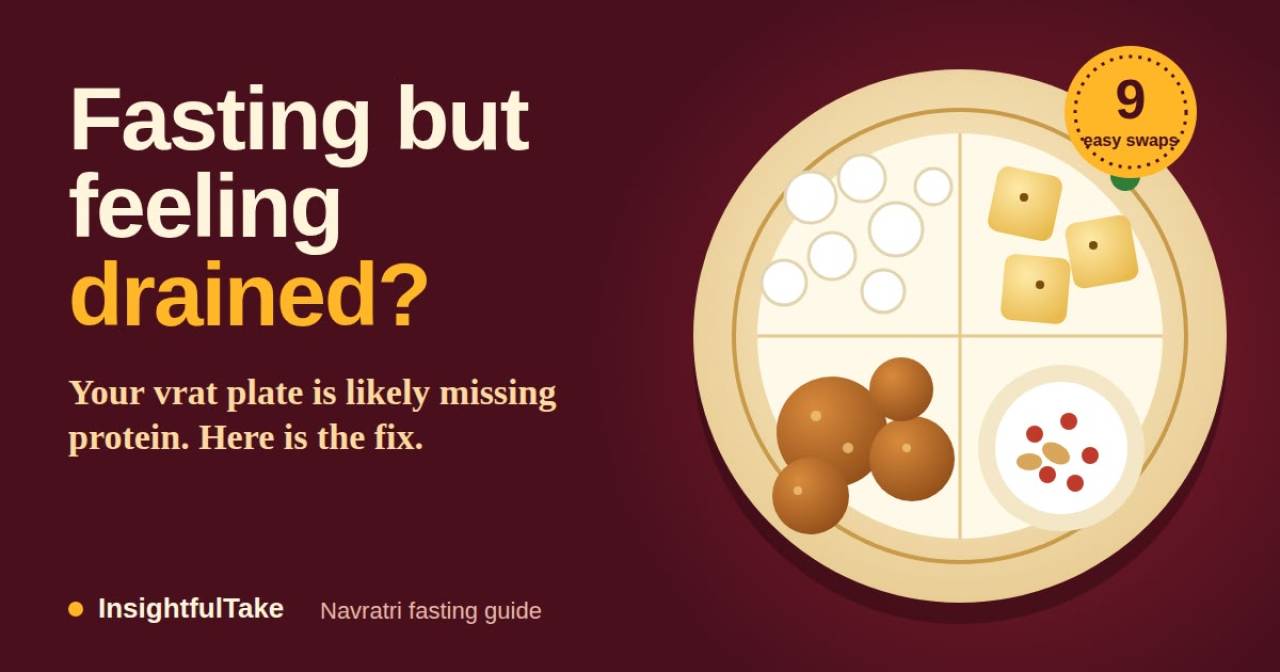
Sabudana and potatoes dominate many Navratri plates. Nine simple food swaps can help you add protein and make your fasting diet more balanced.
By Day 3 of Navratri, many people begin to feel less energetic than they did on the first day. Meals built around sabudana khichdi, potatoes and fried kuttu puris may be satisfying, but they often provide plenty of carbohydrates and relatively little protein.
Fasting itself is not necessarily the problem. The bigger issue may be an unbalanced diet, long gaps between meals, inadequate fluid intake or not eating enough overall.
The good news is that you can make your vrat meals more balanced without giving up traditional foods. A few simple swaps can help you include more protein and maintain your energy throughout the nine days.
Why Navratri Meals Can Leave You Tired
Many traditional fasting meals rely heavily on carbohydrate-rich foods. These provide energy, but a meal containing very little protein may not keep you satisfied for long.
Long gaps between meals, reduced water intake and insufficient sleep can add to the problem, especially during busy festival days.
Protein supports muscle maintenance and helps you feel full after eating. Including a protein-rich food in each main meal, alongside suitable carbohydrates and vegetables, can make your fasting diet more balanced.
The Anchor-and-Add-On Method
A simple way to improve your Navratri diet is to choose one protein-rich food as the foundation of each meal. Add your usual vrat-friendly carbohydrates, fruit or vegetables to complete the plate.
Meal
Protein anchor
What to add
Breakfast
Milk or thick curd
Fruit and a few nuts
Lunch
Paneer
Kuttu or rajgira roti with sautéed bottle gourd or pumpkin
Evening snack
Roasted makhana or peanuts
Fruit or buttermilk
Dinner
Paneer or curd
Samak rice or rajgira khichdi with suitable vegetables
Adjust the portions to your appetite and nutritional needs. Fasting rules differ across families and regions, so check which ingredients are permitted in your tradition.
Which Vrat Foods Provide More Protein?
The following figures are approximate and can vary by variety, processing and preparation. Values for dry ingredients should not be compared directly with those of cooked foods because cooking changes their water content.
Food
Approximate protein
Roasted peanuts
25–26 g per 100 g
Almonds
20–21 g per 100 g
Paneer
14–20 g per 100 g
Rajgira (amaranth), dry
13–14 g per 100 g
Kuttu (buckwheat) flour
12–13 g per 100 g
Makhana, dry
9–10 g per 100 g
Thick or hung curd
8–10 g per 100 g
Samak rice, dry
Approximately 6–10 g per 100 g
Milk
Approximately 3–3.5 g per 100 ml
Potato
Approximately 2 g per 100 g
Sabudana, dry
Generally less than 1 g per 100 g
These are indicative values, not laboratory-verified figures for every product. Check reliable food-composition data and product labels before publication.
Sabudana is particularly low in protein. It can still be part of your vrat, but pairing it with curd, peanuts or another permitted protein source makes the meal more balanced.
Nine Easy Food Swaps for Nine Days
You do not need to change your entire fasting menu. Start with these practical alternatives.
1. Sabudana khichdi to rajgira-based meals
Try rajgira khichdi or rajgira rotis with curd. Rajgira provides more protein than sabudana, although the final nutritional value depends on the recipe and portion size.
2. Potato-only sabzi to paneer and vegetables
Combine paneer with bottle gourd, pumpkin or other vegetables permitted during your fast. Keep potatoes as part of the meal rather than making them the main ingredient.
3. Fried kuttu puris to kuttu roti or chilla
Choose less-oily preparations when possible. Kuttu provides some protein, but its contribution depends on how much flour you use and what accompanies it.
4. Packaged vrat chips to roasted makhana
Roasted makhana offers a convenient snack. For additional protein, pair it with curd or a small portion of peanuts if your fasting tradition permits them.
5. Sweet lassi to salted buttermilk
Unsweetened chaas can contribute fluid and some electrolytes. It is not a substitute for adequate water, particularly in hot weather.
6. Plain curd to curd with nuts
Add crushed almonds or other permitted nuts to curd. This provides a simple way to increase the meal's protein and energy content.
7. Tea on an empty stomach to milk or a fruit-and-curd bowl
If tea leaves you hungry, try milk or a bowl of curd with fruit. Choose the option that suits your appetite and dietary restrictions.
8. One large meal to smaller, regular meals
Instead of leaving very long gaps between meals, try three moderate meals and one or two snacks, depending on your fasting routine. This may help you avoid intense hunger and low energy.
9. Sugary sweets to more balanced desserts
Try a small serving of makhana kheer or dates with nuts. These are still sources of sugar and energy, so portion size matters. They should complement rather than replace protein-rich meals.
Protein Is Not the Only Answer to Fatigue
If you continue to feel weak despite improving your meals, consider other factors.
Water intake: People sometimes drink less during fasting. Drink water regularly during the hours when fluids are permitted. Buttermilk and coconut water can also contribute to fluid intake.
Total food intake: Eating too little overall can cause tiredness even when your meals contain adequate protein. Do not assume that a fasting diet is balanced simply because it includes paneer or nuts.
Caffeine: A sudden reduction in tea or coffee consumption can cause headaches and fatigue in regular caffeine users.
Sleep: Late-night prayers, early mornings and festival preparations can reduce sleep. Try to maintain a consistent sleep schedule wherever possible.
Persistent weakness may have other causes, including an underlying health condition. Do not automatically attribute every symptom to fasting.
Who Should Be Careful During Navratri Fasting?
A prolonged fast may not be suitable for everyone. People with diabetes, kidney disease, blood pressure problems or other medical conditions should consult a healthcare professional before making major changes to their diet.
Pregnant or breastfeeding women, older adults at risk of dehydration and people taking medicines that require food or careful monitoring should also seek individual medical advice.
If you experience dizziness, fainting, confusion or severe weakness, stop fasting and seek appropriate medical help. Do not push through symptoms simply to complete all nine days.
Frequently Asked Questions
How much protein do I need during Navratri?
A commonly used reference for healthy adults is approximately 0.8 grams of protein per kilogram of body weight per day. Individual needs vary with age, activity, health and other factors. Spread protein intake across meals rather than relying on a single large serving.
Which vrat foods are relatively high in protein?
Paneer, peanuts, almonds, rajgira, kuttu, curd and makhana can contribute protein to a fasting diet. Peanuts and nuts are energy-dense, so moderate portions may be more practical than large servings.
Why do I feel weak during Navratri fasting?
Possible reasons include inadequate food intake, meals dominated by carbohydrates, long gaps between meals, dehydration, poor sleep and caffeine withdrawal. Persistent or severe symptoms need medical attention.
Can I eat paneer during Navratri?
Dairy products such as paneer, milk and curd are permitted in many fasting traditions. However, practices differ by family, region and religious observance.
Final Take
You do not have to abandon traditional vrat foods to eat more thoughtfully during Navratri. The key is to balance carbohydrate-rich staples with protein sources, eat enough overall and stay hydrated.
Small changes, such as pairing sabudana with curd or adding paneer to a vegetable dish, can improve the nutritional balance of your meals.
Fasting should not mean ignoring your body's needs. A balanced approach can help you observe your traditions while taking care of your health.
By Day 3 of Navratri, many people begin to feel less energetic than they did on the first day. Meals built around sabudana khichdi, potatoes and fried kuttu puris may be satisfying, but they often provide plenty of carbohydrates and relatively little protein.
Fasting itself is not necessarily the problem. The bigger issue may be an unbalanced diet, long gaps between meals, inadequate fluid intake or not eating enough overall.
The good news is that you can make your vrat meals more balanced without giving up traditional foods. A few simple swaps can help you include more protein and maintain your energy throughout the nine days.
Why Navratri Meals Can Leave You Tired
Many traditional fasting meals rely heavily on carbohydrate-rich foods. These provide energy, but a meal containing very little protein may not keep you satisfied for long.
Long gaps between meals, reduced water intake and insufficient sleep can add to the problem, especially during busy festival days.
Protein supports muscle maintenance and helps you feel full after eating. Including a protein-rich food in each main meal, alongside suitable carbohydrates and vegetables, can make your fasting diet more balanced.
The Anchor-and-Add-On Method
A simple way to improve your Navratri diet is to choose one protein-rich food as the foundation of each meal. Add your usual vrat-friendly carbohydrates, fruit or vegetables to complete the plate.
|
Meal |
Protein anchor |
What to add |
|
Breakfast |
Milk or thick curd |
Fruit and a few nuts |
|
Lunch |
Paneer |
Kuttu or rajgira roti with sautéed bottle gourd or pumpkin |
|
Evening snack |
Roasted makhana or peanuts |
Fruit or buttermilk |
|
Dinner |
Paneer or curd |
Samak rice or rajgira khichdi with suitable vegetables |
Adjust the portions to your appetite and nutritional needs. Fasting rules differ across families and regions, so check which ingredients are permitted in your tradition.
Which Vrat Foods Provide More Protein?
The following figures are approximate and can vary by variety, processing and preparation. Values for dry ingredients should not be compared directly with those of cooked foods because cooking changes their water content.
|
Food |
Approximate protein |
|
Roasted peanuts |
25–26 g per 100 g |
|
Almonds |
20–21 g per 100 g |
|
Paneer |
14–20 g per 100 g |
|
Rajgira (amaranth), dry |
13–14 g per 100 g |
|
Kuttu (buckwheat) flour |
12–13 g per 100 g |
|
Makhana, dry |
9–10 g per 100 g |
|
Thick or hung curd |
8–10 g per 100 g |
|
Samak rice, dry |
Approximately 6–10 g per 100 g |
|
Milk |
Approximately 3–3.5 g per 100 ml |
|
Potato |
Approximately 2 g per 100 g |
|
Sabudana, dry |
Generally less than 1 g per 100 g |
These are indicative values, not laboratory-verified figures for every product. Check reliable food-composition data and product labels before publication.
Sabudana is particularly low in protein. It can still be part of your vrat, but pairing it with curd, peanuts or another permitted protein source makes the meal more balanced.
Nine Easy Food Swaps for Nine Days
You do not need to change your entire fasting menu. Start with these practical alternatives.
1. Sabudana khichdi to rajgira-based meals
Try rajgira khichdi or rajgira rotis with curd. Rajgira provides more protein than sabudana, although the final nutritional value depends on the recipe and portion size.
2. Potato-only sabzi to paneer and vegetables
Combine paneer with bottle gourd, pumpkin or other vegetables permitted during your fast. Keep potatoes as part of the meal rather than making them the main ingredient.
3. Fried kuttu puris to kuttu roti or chilla
Choose less-oily preparations when possible. Kuttu provides some protein, but its contribution depends on how much flour you use and what accompanies it.
4. Packaged vrat chips to roasted makhana
Roasted makhana offers a convenient snack. For additional protein, pair it with curd or a small portion of peanuts if your fasting tradition permits them.
5. Sweet lassi to salted buttermilk
Unsweetened chaas can contribute fluid and some electrolytes. It is not a substitute for adequate water, particularly in hot weather.
6. Plain curd to curd with nuts
Add crushed almonds or other permitted nuts to curd. This provides a simple way to increase the meal's protein and energy content.
7. Tea on an empty stomach to milk or a fruit-and-curd bowl
If tea leaves you hungry, try milk or a bowl of curd with fruit. Choose the option that suits your appetite and dietary restrictions.
8. One large meal to smaller, regular meals
Instead of leaving very long gaps between meals, try three moderate meals and one or two snacks, depending on your fasting routine. This may help you avoid intense hunger and low energy.
9. Sugary sweets to more balanced desserts
Try a small serving of makhana kheer or dates with nuts. These are still sources of sugar and energy, so portion size matters. They should complement rather than replace protein-rich meals.
Protein Is Not the Only Answer to Fatigue
If you continue to feel weak despite improving your meals, consider other factors.
Water intake: People sometimes drink less during fasting. Drink water regularly during the hours when fluids are permitted. Buttermilk and coconut water can also contribute to fluid intake.
Total food intake: Eating too little overall can cause tiredness even when your meals contain adequate protein. Do not assume that a fasting diet is balanced simply because it includes paneer or nuts.
Caffeine: A sudden reduction in tea or coffee consumption can cause headaches and fatigue in regular caffeine users.
Sleep: Late-night prayers, early mornings and festival preparations can reduce sleep. Try to maintain a consistent sleep schedule wherever possible.
Persistent weakness may have other causes, including an underlying health condition. Do not automatically attribute every symptom to fasting.
Who Should Be Careful During Navratri Fasting?
A prolonged fast may not be suitable for everyone. People with diabetes, kidney disease, blood pressure problems or other medical conditions should consult a healthcare professional before making major changes to their diet.
Pregnant or breastfeeding women, older adults at risk of dehydration and people taking medicines that require food or careful monitoring should also seek individual medical advice.
If you experience dizziness, fainting, confusion or severe weakness, stop fasting and seek appropriate medical help. Do not push through symptoms simply to complete all nine days.
Frequently Asked Questions
How much protein do I need during Navratri?
A commonly used reference for healthy adults is approximately 0.8 grams of protein per kilogram of body weight per day. Individual needs vary with age, activity, health and other factors. Spread protein intake across meals rather than relying on a single large serving.
Which vrat foods are relatively high in protein?
Paneer, peanuts, almonds, rajgira, kuttu, curd and makhana can contribute protein to a fasting diet. Peanuts and nuts are energy-dense, so moderate portions may be more practical than large servings.
Why do I feel weak during Navratri fasting?
Possible reasons include inadequate food intake, meals dominated by carbohydrates, long gaps between meals, dehydration, poor sleep and caffeine withdrawal. Persistent or severe symptoms need medical attention.
Can I eat paneer during Navratri?
Dairy products such as paneer, milk and curd are permitted in many fasting traditions. However, practices differ by family, region and religious observance.
Final Take
You do not have to abandon traditional vrat foods to eat more thoughtfully during Navratri. The key is to balance carbohydrate-rich staples with protein sources, eat enough overall and stay hydrated.
Small changes, such as pairing sabudana with curd or adding paneer to a vegetable dish, can improve the nutritional balance of your meals.
Fasting should not mean ignoring your body's needs. A balanced approach can help you observe your traditions while taking care of your health.





















Leave a Comment