
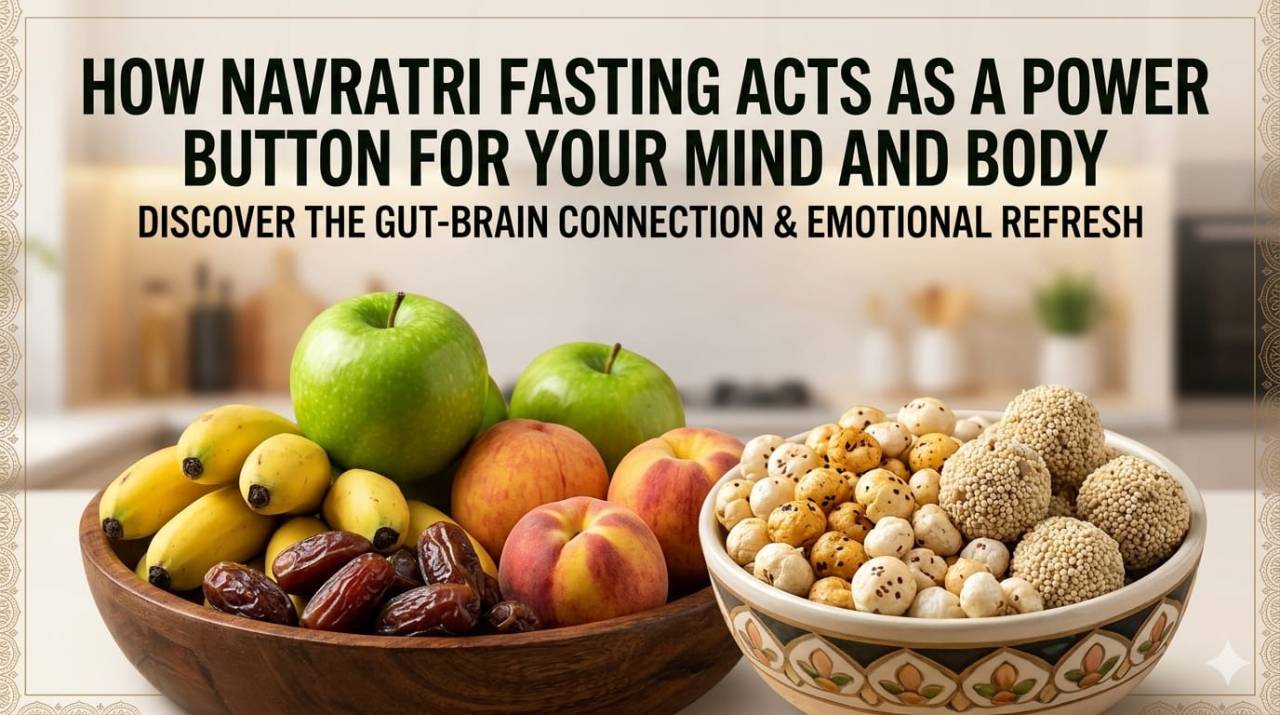
Navratri fasting is more than a ritual. It is a natural reset that sharpens the mind, heals the gut, and restores balance to the body.
For many people, Navratri is a deeply spiritual time filled with devotion, music, and tradition. However, beyond the religious significance, there is a growing body of scientific and psychological evidence suggesting that the way we eat during these nine days can act as a total "reset" for our mental health. While the practice is rooted in ancient faith, modern experts are now highlighting how this seasonal shift in diet can lead to better emotional balance, sharper focus, and even improved sleep.
The Science of a Seasonal Reset
The two main Navratri periods—Chaitra in the spring and Sharad in the autumn—happen exactly when the seasons are changing. According to Ayurvedic principles, our digestive fire, or Agni, is most sensitive during these transitions. By shifting to a "Sattvic" or pure diet, we are essentially giving our internal systems a break when they need it most.
A Sattvic diet involves moving away from heavy grains like wheat and rice, as well as processed foods, onions, and garlic. Instead, people focus on fruits, dairy, and light, nutrient-dense flours like kuttu (buckwheat) and singhara (water chestnut). This change helps reduce the buildup of metabolic toxins, known as Ama. When the body isn't struggling to digest heavy, complex meals, it can divert that energy toward cellular repair and immune support. This physical "lightness" often translates directly into a feeling of mental clarity.
The Gut-Brain Connection
One of the most fascinating aspects of Navratri fasting is its impact on the "gut-brain axis." Medical professionals point out that our digestive system and our brain are in constant communication. When we practice intermittent fasting—which many devotees do naturally by restricting their eating to an 8 to 12-hour window—we give our gut time to recover.
A healthy gut produces essential neurotransmitters, which are chemicals that influence our mood. Research, including a 2025 study on intermittent fasting, suggests that a disciplined diet can rebalance the bacteria in our gut. This balance has been linked to lower levels of anxiety and a reduction in symptoms of depression. Furthermore, fasting promotes the production of a specific protein called Brain-Derived Neurotrophic Factor (BDNF). Think of BDNF as "fertilizer" for your brain; it helps improve memory, learning, and overall cognitive function.
Discipline and Emotional Regulation
Psychologically, the structure of Navratri brings a sense of discipline that many of us lack in our daily lives. Arpita Kohli, a psychologist, explains that controlling what and when we eat allows us to become more in tune with our thoughts and emotional triggers. By resisting certain cravings, we practice self-awareness. This discipline helps clear "mental clutter," leading to better emotional regulation. Instead of reacting impulsively to stress, a person who is practicing mindful fasting often finds themselves in a calmer, more balanced state of mind.
Better Sleep and Brighter Mornings
Surprisingly, what you eat during the day significantly impacts how you sleep at night. Nutritionists note that Navratri diets typically involve a massive reduction in caffeine, processed sugars, and oily packaged snacks. Because the body is processing fewer stimulants, the nervous system can relax more easily.
This shift helps regulate the body’s "sleep-wake" cycle. With a lighter digestive load, the body can produce melatonin (the sleep hormone) more effectively at night and manage cortisol (the stress hormone) better during the day. People often find that they wake up feeling more refreshed and experience fewer "afternoon slumps," leading to sharper thinking and better concentration throughout the day.
A Word of Caution
While the benefits are numerous, experts remind us that fasting is not one-size-fits-all. People with pre-existing conditions like diabetes, severe acidity, or specific gastrointestinal disorders should be very careful. It is always important to listen to your body and consult a healthcare professional before making drastic changes to your diet. The goal of Navratri is to nourish the soul and body, not to cause physical distress.
Ultimately, Navratri fasting is a holistic approach to wellbeing. By simplifying our plates, we simplify our minds, proving that sometimes, less really is more when it comes to mental health.
























Leave a Comment