
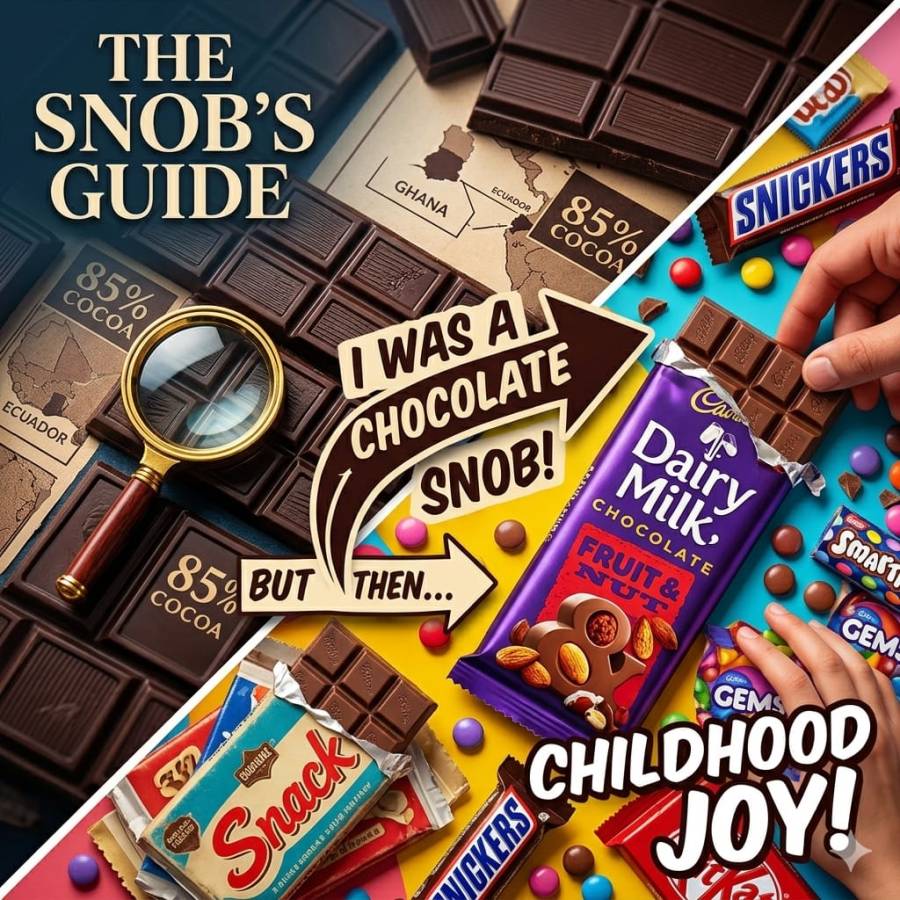
Chocolate was never meant to feel like a test of taste—so why did we start treating it like one?
For years, chocolate has been treated like a test of taste. The higher the cocoa percentage, the more “serious” it was considered. Dark, bitter bars became a badge of refinement, while anything sweet, creamy, or playful was quietly pushed into the category of a guilty pleasure. But that divide is starting to look shaky. Chefs, food writers, and everyday consumers are beginning to question whether the pursuit of “pure” chocolate has stripped away something essential: enjoyment.
The Myth of European Superiority
Much of chocolate’s prestige rests on branding that doesn’t hold up under scrutiny. Labels like “Swiss” or “Belgian” carry an air of authority, as if geography alone guarantees quality. But unlike wine, where grapes are grown and processed in the same region, chocolate tells a different story. Cocoa beans are largely cultivated in countries across West Africa and South America, then exported to Europe for processing.
What gets marketed as luxury is often a story of distance rather than origin. The craftsmanship may be real, but the narrative can be misleading. As consumers become more aware of supply chains and sourcing, the automatic reverence for European labels is fading. In its place, there’s growing respect for chocolates that are honest about what they are—whether premium or mass-produced.
Rethinking the Candy Bar
The long-standing dismissal of candy bars as “inferior” ignores how well they are actually designed. A wafer coated in chocolate, a caramel center wrapped in a thin shell, or a crisp sugar coating over a soft core—these are not accidents. They are carefully engineered combinations of texture and flavor.
In many cases, chocolate isn’t the main event; it’s the element that ties everything together. It adds snap, melt, and contrast. A simple chocolate-coated biscuit delivers crunch and sweetness in a way that a plain dark bar often cannot. These products succeed not because they are complex, but because they are balanced.
Calling them low-quality misses the point. They are built for pleasure, and they deliver it consistently.
The Case for Everyday Chocolate
One of chocolate’s most interesting qualities is how accessible it is. Unlike wine or specialty coffee, where cheaper options can be harsh or unpleasant, even an inexpensive chocolate bar offers a satisfying experience. It may not have tasting notes of fruit or spice, but it doesn’t need them.
For most people, chocolate is not about analysis. It’s about comfort, habit, and small moments of reward. A chocolate bar picked up at a roadside shop or a supermarket checkout carries a familiarity that expensive, experimental varieties often lack.
This doesn’t make premium chocolate irrelevant. There is value in craftsmanship and exploration. But the idea that enjoyment increases with price or bitterness is losing ground. Many people are rediscovering that sweetness and simplicity have their own appeal.
A Shift in Taste
There’s a noticeable change happening in how chocolate is approached. High-end kitchens are no longer avoiding milk chocolate or playful combinations. Instead, they are embracing them, sometimes pairing them with salty, crunchy, or even savory elements.
This shift reflects a broader change in food culture. The focus is moving away from proving sophistication and toward creating satisfying experiences. Chocolate is being treated less like a status symbol and more like what it has always been: a source of pleasure.
Back to What Matters
Chocolate doesn’t need to be defended or justified. It doesn’t have to be dark, rare, or expensive to be meaningful. The appeal of a simple candy bar—its sweetness, its texture, the way it melts—remains as strong as ever.
What’s changing is not the chocolate itself, but how we think about it. The rigid divide between “good” and “bad” chocolate is giving way to something more practical: if it tastes good, it works.
And in many cases, the joy found in a familiar, affordable bar is exactly what more elaborate versions are trying to recreate.
For years, chocolate has been treated like a test of taste. The higher the cocoa percentage, the more “serious” it was considered. Dark, bitter bars became a badge of refinement, while anything sweet, creamy, or playful was quietly pushed into the category of a guilty pleasure. But that divide is starting to look shaky. Chefs, food writers, and everyday consumers are beginning to question whether the pursuit of “pure” chocolate has stripped away something essential: enjoyment.
The Myth of European Superiority
Much of chocolate’s prestige rests on branding that doesn’t hold up under scrutiny. Labels like “Swiss” or “Belgian” carry an air of authority, as if geography alone guarantees quality. But unlike wine, where grapes are grown and processed in the same region, chocolate tells a different story. Cocoa beans are largely cultivated in countries across West Africa and South America, then exported to Europe for processing.
What gets marketed as luxury is often a story of distance rather than origin. The craftsmanship may be real, but the narrative can be misleading. As consumers become more aware of supply chains and sourcing, the automatic reverence for European labels is fading. In its place, there’s growing respect for chocolates that are honest about what they are—whether premium or mass-produced.
Rethinking the Candy Bar
The long-standing dismissal of candy bars as “inferior” ignores how well they are actually designed. A wafer coated in chocolate, a caramel center wrapped in a thin shell, or a crisp sugar coating over a soft core—these are not accidents. They are carefully engineered combinations of texture and flavor.
In many cases, chocolate isn’t the main event; it’s the element that ties everything together. It adds snap, melt, and contrast. A simple chocolate-coated biscuit delivers crunch and sweetness in a way that a plain dark bar often cannot. These products succeed not because they are complex, but because they are balanced.
Calling them low-quality misses the point. They are built for pleasure, and they deliver it consistently.
The Case for Everyday Chocolate
One of chocolate’s most interesting qualities is how accessible it is. Unlike wine or specialty coffee, where cheaper options can be harsh or unpleasant, even an inexpensive chocolate bar offers a satisfying experience. It may not have tasting notes of fruit or spice, but it doesn’t need them.
For most people, chocolate is not about analysis. It’s about comfort, habit, and small moments of reward. A chocolate bar picked up at a roadside shop or a supermarket checkout carries a familiarity that expensive, experimental varieties often lack.
This doesn’t make premium chocolate irrelevant. There is value in craftsmanship and exploration. But the idea that enjoyment increases with price or bitterness is losing ground. Many people are rediscovering that sweetness and simplicity have their own appeal.
A Shift in Taste
There’s a noticeable change happening in how chocolate is approached. High-end kitchens are no longer avoiding milk chocolate or playful combinations. Instead, they are embracing them, sometimes pairing them with salty, crunchy, or even savory elements.
This shift reflects a broader change in food culture. The focus is moving away from proving sophistication and toward creating satisfying experiences. Chocolate is being treated less like a status symbol and more like what it has always been: a source of pleasure.
Back to What Matters
Chocolate doesn’t need to be defended or justified. It doesn’t have to be dark, rare, or expensive to be meaningful. The appeal of a simple candy bar—its sweetness, its texture, the way it melts—remains as strong as ever.
What’s changing is not the chocolate itself, but how we think about it. The rigid divide between “good” and “bad” chocolate is giving way to something more practical: if it tastes good, it works.
And in many cases, the joy found in a familiar, affordable bar is exactly what more elaborate versions are trying to recreate.






















Leave a Comment