
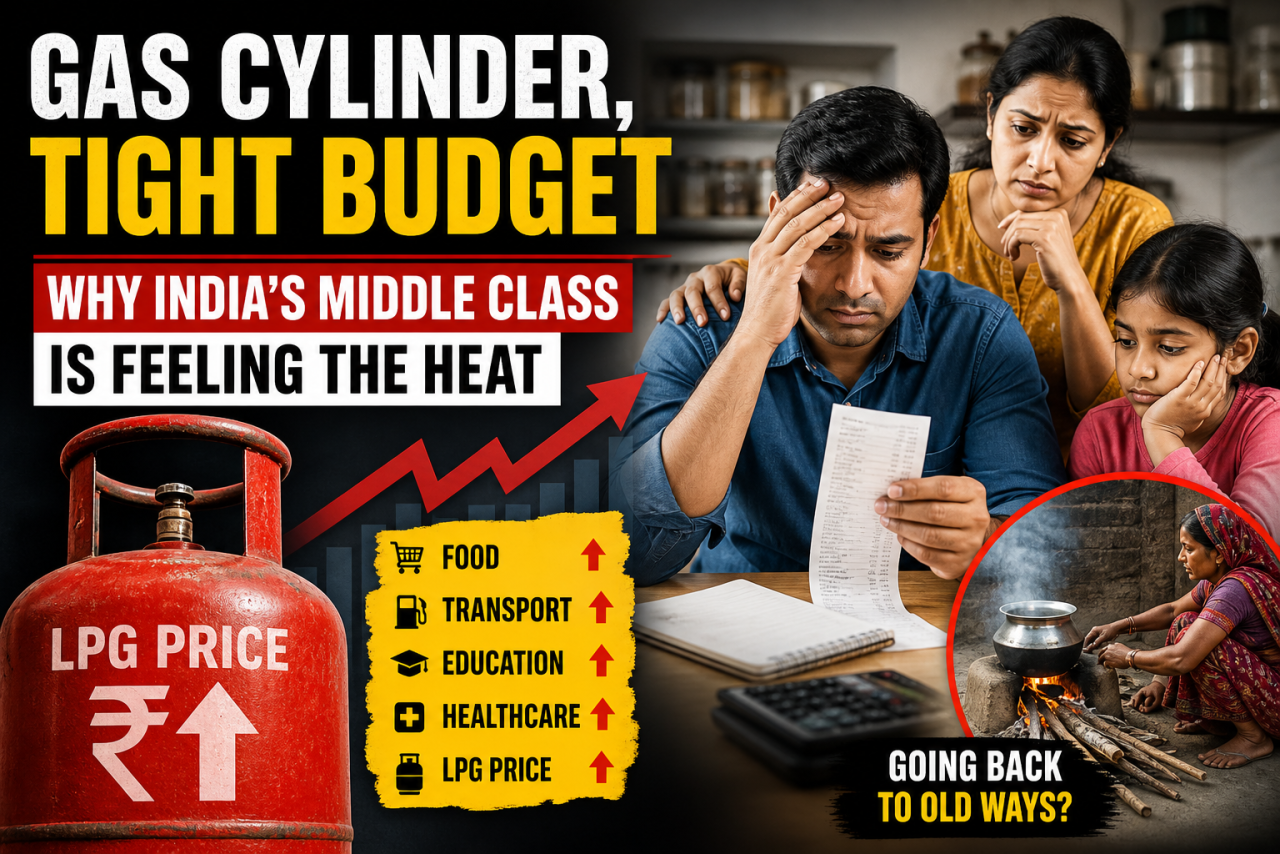
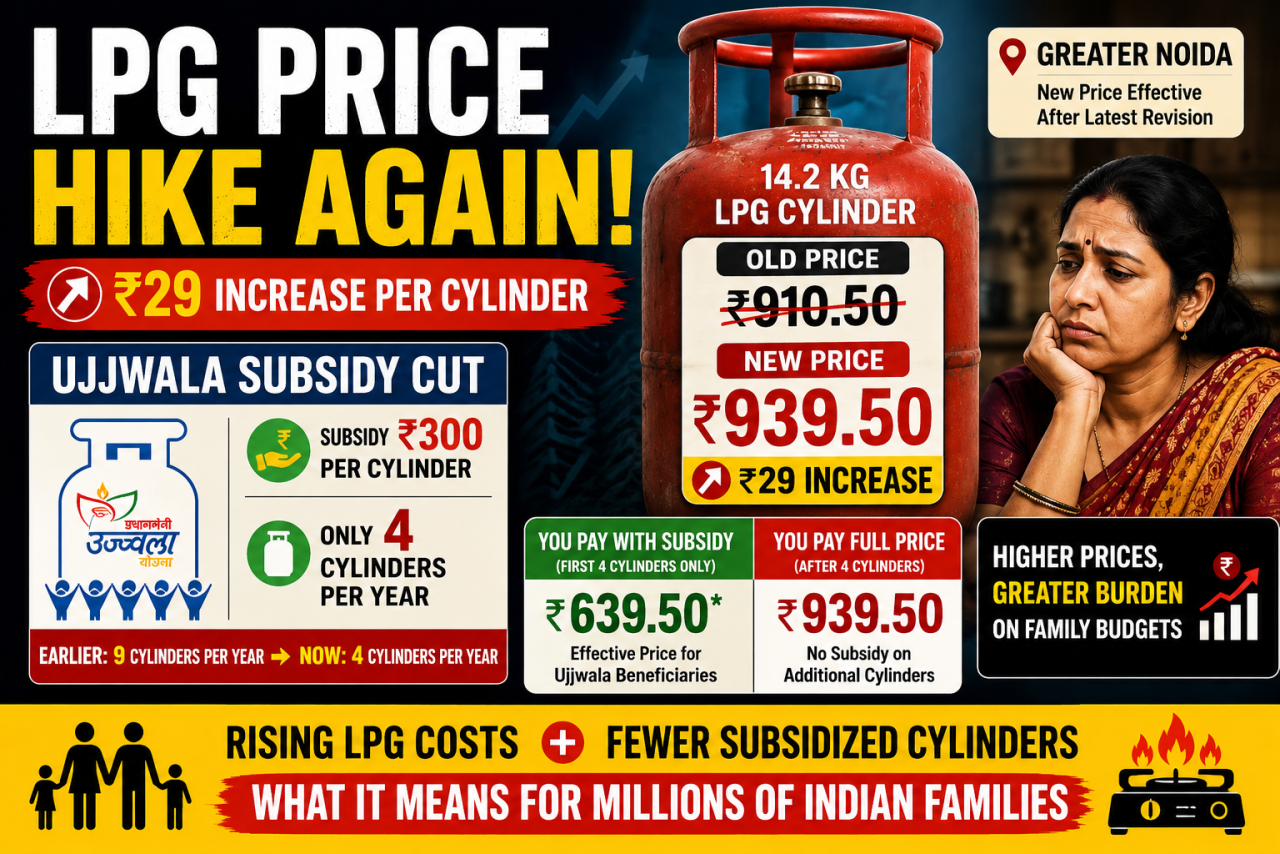
Cooking a simple meal is no longer simple. As LPG prices rise, India’s middle class is being forced to rethink daily expenses, revealing a deeper cost-of-living crisis.
A small headline tucked inside a city newspaper rarely captures national attention. But sometimes, it reflects a much larger truth. The recent report on rising LPG prices quietly exposing distress in migrant households is one such story—one that goes far beyond a single community and speaks directly to the changing economic reality of India’s middle class.
At first glance, the issue may seem limited to low-income or migrant families. But that assumption would be misleading. The middle class—often seen as economically stable—is increasingly finding itself caught in the same cycle of rising costs and shrinking affordability.
The Hidden Impact of Rising LPG Prices
Liquefied Petroleum Gas (LPG), once considered a basic household necessity, is slowly becoming a financial burden. For years, LPG symbolized clean energy access and upward mobility. Today, for many families, it represents a monthly dilemma: convenience versus cost.
As prices rise, families are quietly adjusting. Some are reducing usage, others are switching to cheaper and more polluting alternatives like firewood or coal. While this shift is more visible in migrant settlements, its early signs are emerging within middle-class homes as well—just in subtler ways.
Instead of abandoning LPG entirely, middle-class households are:
- Stretching cylinder usage longer than before
- Cutting down on cooking-intensive meals
- Becoming more conscious of daily consumption
This is not a collapse—but it is a clear sign of economic strain.
Inflation Without Relief
The LPG price rise is not happening in isolation. It is part of a broader inflationary pattern affecting essential goods—food, transport, education, and healthcare. For the middle class, whose income growth has remained relatively stagnant, this creates a dangerous imbalance.
Unlike the economically weaker sections, the middle class often does not receive direct subsidies or government support. At the same time, they lack the financial cushioning of the wealthy. This places them in a uniquely vulnerable position—absorbing rising costs without meaningful relief.
The result? A gradual erosion of savings and a constant need to reprioritize expenses.
The Lifestyle Adjustment Nobody Talks About
Economic stress in the middle class rarely appears dramatic. There are no visible protests or immediate breakdowns. Instead, the adjustment happens quietly:
- Eating out becomes less frequent
- Branded goods are replaced with cheaper alternatives
- Travel plans are postponed
- Household help or services may be reduced
And now, even cooking—a daily necessity—is entering that zone of compromise.
What makes this shift concerning is its cumulative effect. Each small compromise may seem manageable, but together they redefine the quality of life.
The Ripple Effect on the Economy
When a large segment like the middle class starts cutting back, the impact goes beyond individual households. Consumption slows down. Local businesses—from grocery stores to restaurants—begin to feel the pinch.
The newspaper report also mentions restaurants warning of pricier menus and possible job losses. This is a direct chain reaction:
Higher fuel costs → Higher operational expenses → Increased prices → Reduced demand → Employment pressure.
In other words, what begins as a household issue quickly becomes an economic concern.
Energy Access vs Affordability
India has made significant progress in expanding access to clean cooking fuel. Schemes aimed at increasing LPG penetration have been widely praised. But access alone is not enough—sustained affordability is equally important.
If families begin reverting to traditional fuels due to cost pressures, it risks undoing years of progress in public health and environmental protection.
For the middle class, the challenge is slightly different. They are unlikely to fully abandon LPG, but rising costs will continue to strain their budgets, forcing trade-offs in other areas.
A Wake-Up Call for Policy and Perception
This situation highlights an important gap in economic policy discussions. The middle class is often treated as a stable, self-sufficient group. But in reality, it is far more sensitive to inflation than commonly assumed.
Rising LPG prices serve as a reminder that economic stress does not always appear in extreme forms. Sometimes, it shows up in everyday decisions—like how often you cook, what you cook, and how much you spend on a basic necessity.
Final Take
This is not just a story about LPG. It is about the changing economics of living in India.
When essentials start feeling expensive, it signals a deeper imbalance between income growth and cost of living. And when the middle class begins to feel that pressure, it becomes a broader societal issue—not just an isolated concern.
The quiet crisis unfolding in migrant homes today may well be the early warning sign for a wider middle-class squeeze tomorrow.
Ignoring it would be easy. Understanding it is necessary.
A small headline tucked inside a city newspaper rarely captures national attention. But sometimes, it reflects a much larger truth. The recent report on rising LPG prices quietly exposing distress in migrant households is one such story—one that goes far beyond a single community and speaks directly to the changing economic reality of India’s middle class.
At first glance, the issue may seem limited to low-income or migrant families. But that assumption would be misleading. The middle class—often seen as economically stable—is increasingly finding itself caught in the same cycle of rising costs and shrinking affordability.
The Hidden Impact of Rising LPG Prices
Liquefied Petroleum Gas (LPG), once considered a basic household necessity, is slowly becoming a financial burden. For years, LPG symbolized clean energy access and upward mobility. Today, for many families, it represents a monthly dilemma: convenience versus cost.
As prices rise, families are quietly adjusting. Some are reducing usage, others are switching to cheaper and more polluting alternatives like firewood or coal. While this shift is more visible in migrant settlements, its early signs are emerging within middle-class homes as well—just in subtler ways.
Instead of abandoning LPG entirely, middle-class households are:
- Stretching cylinder usage longer than before
- Cutting down on cooking-intensive meals
- Becoming more conscious of daily consumption
This is not a collapse—but it is a clear sign of economic strain.
Inflation Without Relief
The LPG price rise is not happening in isolation. It is part of a broader inflationary pattern affecting essential goods—food, transport, education, and healthcare. For the middle class, whose income growth has remained relatively stagnant, this creates a dangerous imbalance.
Unlike the economically weaker sections, the middle class often does not receive direct subsidies or government support. At the same time, they lack the financial cushioning of the wealthy. This places them in a uniquely vulnerable position—absorbing rising costs without meaningful relief.
The result? A gradual erosion of savings and a constant need to reprioritize expenses.
The Lifestyle Adjustment Nobody Talks About
Economic stress in the middle class rarely appears dramatic. There are no visible protests or immediate breakdowns. Instead, the adjustment happens quietly:
- Eating out becomes less frequent
- Branded goods are replaced with cheaper alternatives
- Travel plans are postponed
- Household help or services may be reduced
And now, even cooking—a daily necessity—is entering that zone of compromise.
What makes this shift concerning is its cumulative effect. Each small compromise may seem manageable, but together they redefine the quality of life.
The Ripple Effect on the Economy
When a large segment like the middle class starts cutting back, the impact goes beyond individual households. Consumption slows down. Local businesses—from grocery stores to restaurants—begin to feel the pinch.
The newspaper report also mentions restaurants warning of pricier menus and possible job losses. This is a direct chain reaction:
Higher fuel costs → Higher operational expenses → Increased prices → Reduced demand → Employment pressure.
In other words, what begins as a household issue quickly becomes an economic concern.
Energy Access vs Affordability
India has made significant progress in expanding access to clean cooking fuel. Schemes aimed at increasing LPG penetration have been widely praised. But access alone is not enough—sustained affordability is equally important.
If families begin reverting to traditional fuels due to cost pressures, it risks undoing years of progress in public health and environmental protection.
For the middle class, the challenge is slightly different. They are unlikely to fully abandon LPG, but rising costs will continue to strain their budgets, forcing trade-offs in other areas.
A Wake-Up Call for Policy and Perception
This situation highlights an important gap in economic policy discussions. The middle class is often treated as a stable, self-sufficient group. But in reality, it is far more sensitive to inflation than commonly assumed.
Rising LPG prices serve as a reminder that economic stress does not always appear in extreme forms. Sometimes, it shows up in everyday decisions—like how often you cook, what you cook, and how much you spend on a basic necessity.
Final Take
This is not just a story about LPG. It is about the changing economics of living in India.
When essentials start feeling expensive, it signals a deeper imbalance between income growth and cost of living. And when the middle class begins to feel that pressure, it becomes a broader societal issue—not just an isolated concern.
The quiet crisis unfolding in migrant homes today may well be the early warning sign for a wider middle-class squeeze tomorrow.
Ignoring it would be easy. Understanding it is necessary.












Leave a Comment