
A rare dip in India’s booming aviation sector signals deeper turbulence ahead—rising fuel costs, global conflict, and shifting travel demand are reshaping the skies faster than airlines can adjust.
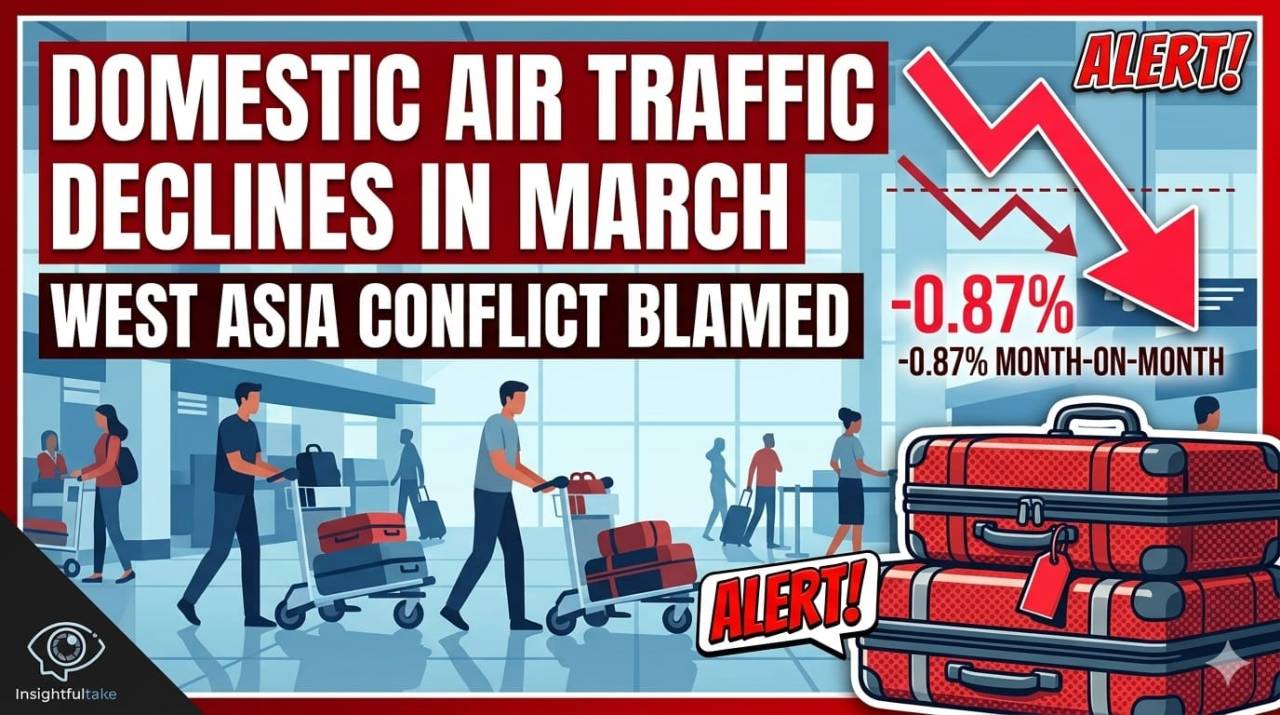
The busy sound of Indian airports grew a little quieter this past March. According to new data from the Directorate General of Civil Aviation (DGCA), domestic air passenger traffic saw a surprising dip. Airlines carried 14.4 million passengers during the month. This is a slight drop from the 14.5 million passengers who traveled in March 2025.
While a small decrease might not seem like a big deal, it marks a rare moment for the Indian aviation industry. In fact, this is only the second time in over four years that monthly traffic has declined compared to the previous year.
The Global Conflict Connection
You might wonder why a local flight from Delhi to Mumbai would be affected by international events. The primary reason for the slowdown is the ongoing West Asia conflict. This conflict began on February 28 and has created a ripple effect across the globe.
Because of the tension in that region, Indian carriers have had to make big changes. They have cut their operations to West Asia by nearly 80%. Furthermore, pilots are now flying much longer routes to stay away from dangerous airspace. These longer flights require more fuel, and higher fuel costs make it harder for airlines to keep ticket prices low.
A Look at the Numbers
Even though March was a slow month, the overall start to the year was still positive. For the entire January-March quarter, domestic traffic actually rose by 1.23%. This means about 43.73 million people flew in the first three months of the year.
However, when we look at the month-on-month change, the struggle is more visible. Traffic fell by 0.87% from February to March. This shows that the momentum from the beginning of the year is starting to fade.
Market Leaders and Passenger Problems
The report also gives us a clear picture of which airlines are winning the race for passengers. IndiGo remains the king of the Indian skies. Its market share grew to 63.3% in March. On the other hand, the Air India group saw its share slip slightly to 26.2%. Akasa Air showed growth by reaching 5.4%, while SpiceJet fell to 3.8%.
Despite these high numbers, passengers faced several challenges:
- Complaints: The DGCA received 7,398 complaints in March. Most of these were about baggage issues and flight problems.
- Delays: Nearly 1% of flights were delayed by more than two hours.
- Cancellations: Airlines had to pay out over ₹3 crore to help passengers who were stuck due to delays and cancellations.
The Future of Flying
The Federation of Indian Airlines (FIA) is worried. This group represents major airlines like Air India and IndiGo. They recently wrote a letter to the government. They warned that they might have to stop some operations if fuel costs keep rising. They are asking the government to help with the high price of Aviation Turbine Fuel (ATF).
For now, IndiGo is leading the way in being on time. They had an 88.7% on-time performance rate across ten major airports. This shows that while the industry is facing big financial hurdles, the top airlines are still trying their best to keep their schedules.
The next few months will be very important. If fuel prices stay high and global conflicts continue, flying might become more expensive for all of us. Travelers and airline workers alike are hoping for a smoother journey ahead.
The busy sound of Indian airports grew a little quieter this past March. According to new data from the Directorate General of Civil Aviation (DGCA), domestic air passenger traffic saw a surprising dip. Airlines carried 14.4 million passengers during the month. This is a slight drop from the 14.5 million passengers who traveled in March 2025.
While a small decrease might not seem like a big deal, it marks a rare moment for the Indian aviation industry. In fact, this is only the second time in over four years that monthly traffic has declined compared to the previous year.
The Global Conflict Connection
You might wonder why a local flight from Delhi to Mumbai would be affected by international events. The primary reason for the slowdown is the ongoing West Asia conflict. This conflict began on February 28 and has created a ripple effect across the globe.
Because of the tension in that region, Indian carriers have had to make big changes. They have cut their operations to West Asia by nearly 80%. Furthermore, pilots are now flying much longer routes to stay away from dangerous airspace. These longer flights require more fuel, and higher fuel costs make it harder for airlines to keep ticket prices low.
A Look at the Numbers
Even though March was a slow month, the overall start to the year was still positive. For the entire January-March quarter, domestic traffic actually rose by 1.23%. This means about 43.73 million people flew in the first three months of the year.
However, when we look at the month-on-month change, the struggle is more visible. Traffic fell by 0.87% from February to March. This shows that the momentum from the beginning of the year is starting to fade.
Market Leaders and Passenger Problems
The report also gives us a clear picture of which airlines are winning the race for passengers. IndiGo remains the king of the Indian skies. Its market share grew to 63.3% in March. On the other hand, the Air India group saw its share slip slightly to 26.2%. Akasa Air showed growth by reaching 5.4%, while SpiceJet fell to 3.8%.
Despite these high numbers, passengers faced several challenges:
- Complaints: The DGCA received 7,398 complaints in March. Most of these were about baggage issues and flight problems.
- Delays: Nearly 1% of flights were delayed by more than two hours.
- Cancellations: Airlines had to pay out over ₹3 crore to help passengers who were stuck due to delays and cancellations.
The Future of Flying
The Federation of Indian Airlines (FIA) is worried. This group represents major airlines like Air India and IndiGo. They recently wrote a letter to the government. They warned that they might have to stop some operations if fuel costs keep rising. They are asking the government to help with the high price of Aviation Turbine Fuel (ATF).
For now, IndiGo is leading the way in being on time. They had an 88.7% on-time performance rate across ten major airports. This shows that while the industry is facing big financial hurdles, the top airlines are still trying their best to keep their schedules.
The next few months will be very important. If fuel prices stay high and global conflicts continue, flying might become more expensive for all of us. Travelers and airline workers alike are hoping for a smoother journey ahead.

















Leave a Comment