
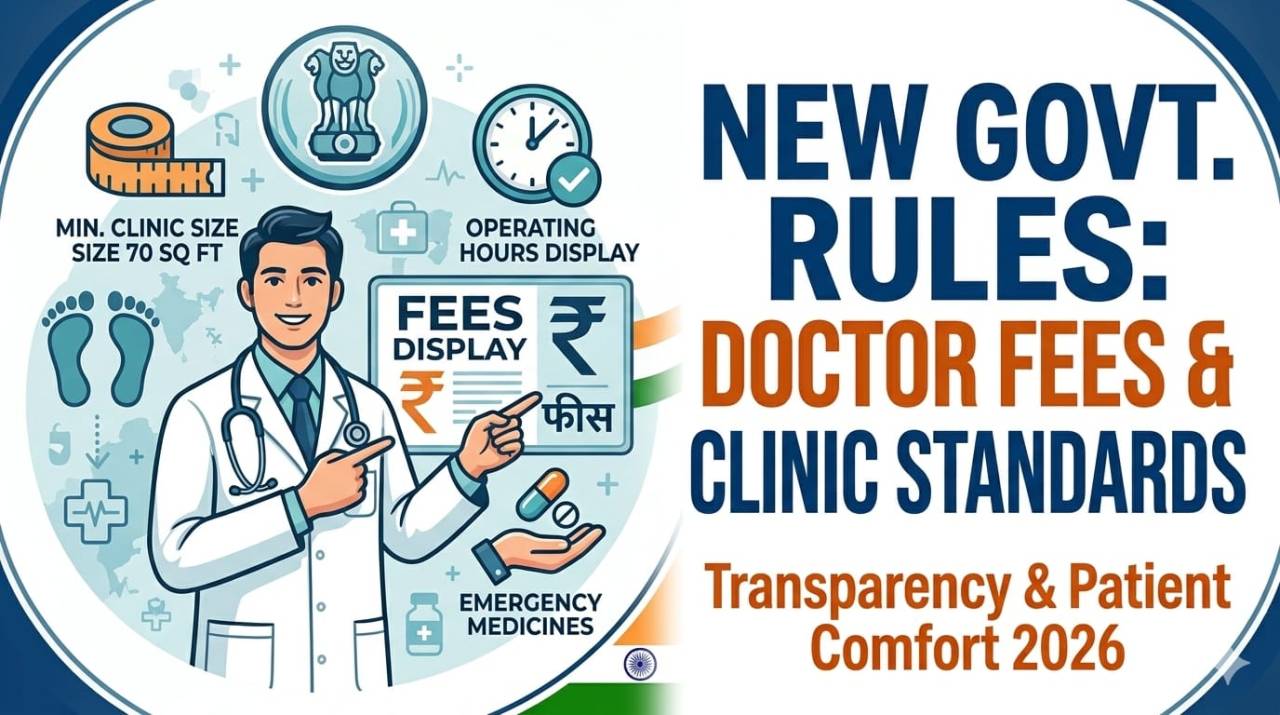
Doctor visits in India may soon come without billing surprises or unclear standards, as the 2026 clinic rules push for transparency, accountability, and uniform care.
The Government of India is introducing a new set of regulations aimed at improving the healthcare experience for every citizen. These updates are part of the Clinical Establishments (Central Government) Amendment Rules, 2026.
The primary goal is simple, when you visit a doctor, you should know exactly what you are paying for—and receive care in a safe, clean, and professional environment.
By streamlining how clinics operate, the government aims to reduce confusion for patients and establish a consistent standard of medical care across the country. Below is a clear, structured breakdown of the proposed changes.
Transparency in Fees and Qualifications
One of the most significant changes is the mandatory display of consultation fees. In the past, patients often remained unsure about costs until they reached the billing counter.
- Public Display of Fees: Doctors and specialists must prominently display their consultation charges where patients can easily see them.
- Language Accessibility: Fee boards must be written in both English and the local regional language to ensure clarity.
- Doctor Verification: Clinics must display doctors’ official qualifications along with their government registration numbers.
- Service Information: Every clinic or polyclinic must clearly list working hours and services offered at the entrance.
New Standards for Clinic Space and Comfort
To address overcrowding and poor infrastructure, the new rules introduce minimum space requirements:
- Consultation Rooms: Minimum 70 sq. ft. to ensure comfortable interaction between doctor and patient.
- Waiting Areas: At least 35 sq. ft. for reception and waiting spaces to reduce congestion.
- Short-Stay Facilities: Clinics observing patients (up to 8 hours) must provide 65 sq. ft. per bed.
- Safe Environment: Clinics must be free from dampness, pests, and termites, and include proper ventilation, lighting, non-slippery floors, and clean drinking water.
Emergency Readiness and Medical Equipment
Even small clinics will need to be prepared for emergencies:
- Essential Medicines: Clinics must stock life-saving drugs such as aspirin, isosorbide dinitrate, adrenaline, diazepam, and dexamethasone.
- Basic Equipment: Mandatory tools include stethoscopes, non-mercury thermometers, blood pressure monitors, and needle destroyers.
- Qualified Dispensing: Any on-site pharmacy must be managed by a registered pharmacist.
Rules for Diagnostic Centers and Mortuaries
The regulations also extend to supporting healthcare services:
- Sample Collection Standards: Proper handling and safe transport of blood, urine, and other samples must be ensured.
- Mortuary Location: Must be on the ground floor, away from waste disposal areas and main patient zones.
- Temperature Control: Bodies must be preserved at 4°C to 8°C.
- Dignity Protocols: Strict guidelines ensure respectful handling of the deceased.
Why These Rules Matter
India currently has over 1.3 million doctors and more than 43,000 private healthcare facilities. With such a vast system, these rules aim to bring uniformity and accountability.
They strengthen:
- Patient rights to transparent information
- Standardization of clinic infrastructure
- Emergency preparedness across facilities
- Dignified healthcare practices
The Government of India is currently inviting feedback from stakeholders—including doctors, hospital administrators, and the general public—before final implementation.
The Government of India is introducing a new set of regulations aimed at improving the healthcare experience for every citizen. These updates are part of the Clinical Establishments (Central Government) Amendment Rules, 2026.
The primary goal is simple, when you visit a doctor, you should know exactly what you are paying for—and receive care in a safe, clean, and professional environment.
By streamlining how clinics operate, the government aims to reduce confusion for patients and establish a consistent standard of medical care across the country. Below is a clear, structured breakdown of the proposed changes.
Transparency in Fees and Qualifications
One of the most significant changes is the mandatory display of consultation fees. In the past, patients often remained unsure about costs until they reached the billing counter.
- Public Display of Fees: Doctors and specialists must prominently display their consultation charges where patients can easily see them.
- Language Accessibility: Fee boards must be written in both English and the local regional language to ensure clarity.
- Doctor Verification: Clinics must display doctors’ official qualifications along with their government registration numbers.
- Service Information: Every clinic or polyclinic must clearly list working hours and services offered at the entrance.
New Standards for Clinic Space and Comfort
To address overcrowding and poor infrastructure, the new rules introduce minimum space requirements:
- Consultation Rooms: Minimum 70 sq. ft. to ensure comfortable interaction between doctor and patient.
- Waiting Areas: At least 35 sq. ft. for reception and waiting spaces to reduce congestion.
- Short-Stay Facilities: Clinics observing patients (up to 8 hours) must provide 65 sq. ft. per bed.
- Safe Environment: Clinics must be free from dampness, pests, and termites, and include proper ventilation, lighting, non-slippery floors, and clean drinking water.
Emergency Readiness and Medical Equipment
Even small clinics will need to be prepared for emergencies:
- Essential Medicines: Clinics must stock life-saving drugs such as aspirin, isosorbide dinitrate, adrenaline, diazepam, and dexamethasone.
- Basic Equipment: Mandatory tools include stethoscopes, non-mercury thermometers, blood pressure monitors, and needle destroyers.
- Qualified Dispensing: Any on-site pharmacy must be managed by a registered pharmacist.
Rules for Diagnostic Centers and Mortuaries
The regulations also extend to supporting healthcare services:
- Sample Collection Standards: Proper handling and safe transport of blood, urine, and other samples must be ensured.
- Mortuary Location: Must be on the ground floor, away from waste disposal areas and main patient zones.
- Temperature Control: Bodies must be preserved at 4°C to 8°C.
- Dignity Protocols: Strict guidelines ensure respectful handling of the deceased.
Why These Rules Matter
India currently has over 1.3 million doctors and more than 43,000 private healthcare facilities. With such a vast system, these rules aim to bring uniformity and accountability.
They strengthen:
- Patient rights to transparent information
- Standardization of clinic infrastructure
- Emergency preparedness across facilities
- Dignified healthcare practices
The Government of India is currently inviting feedback from stakeholders—including doctors, hospital administrators, and the general public—before final implementation.





















Leave a Comment