
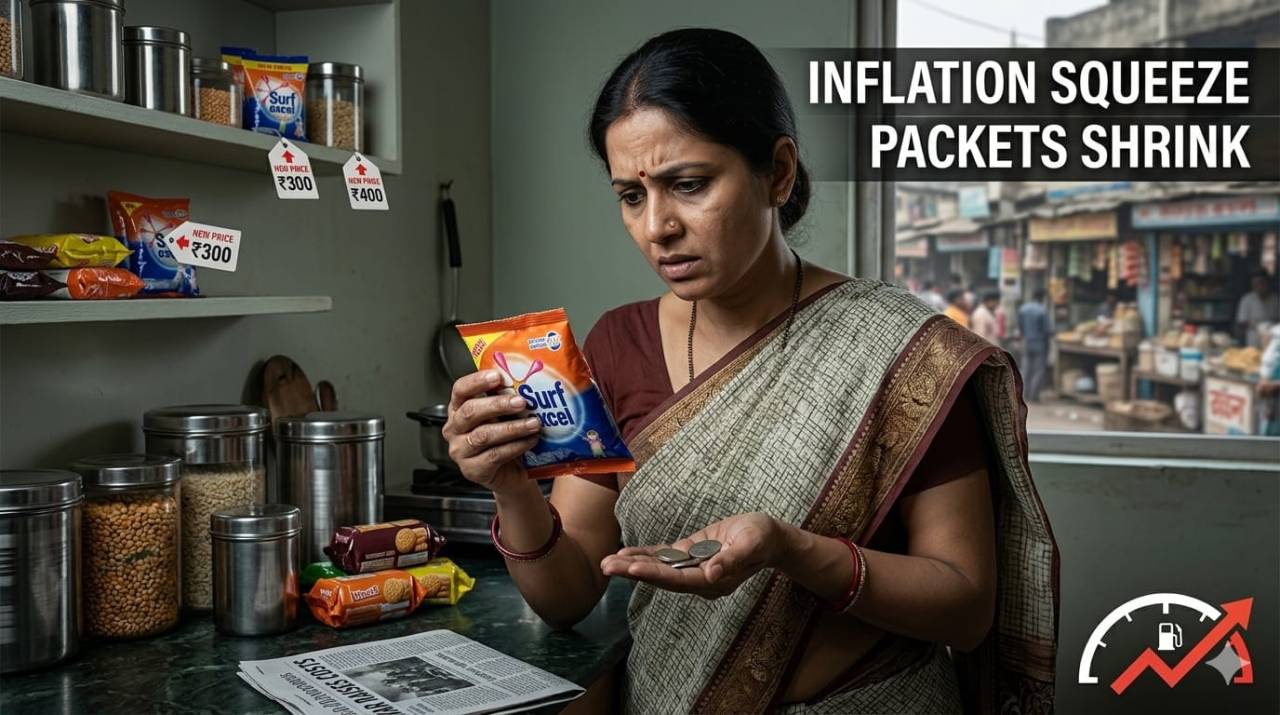
Every grocery trip now feels heavier on the pocket—even when your shopping bag looks the same. Hidden price hikes and shrinking pack sizes are quietly reshaping how Indian families spend, save, and survive.
New financial reports from top consumer goods companies show a tough road ahead for Indian families. Big names like Hindustan Unilever (HUL) and Nestle India are raising prices. They are also reducing the size of their product packets. These changes come because of global wars and rising costs of raw materials. This news deeply affects the daily life and savings of the common person in India.
Why Prices Are Rising
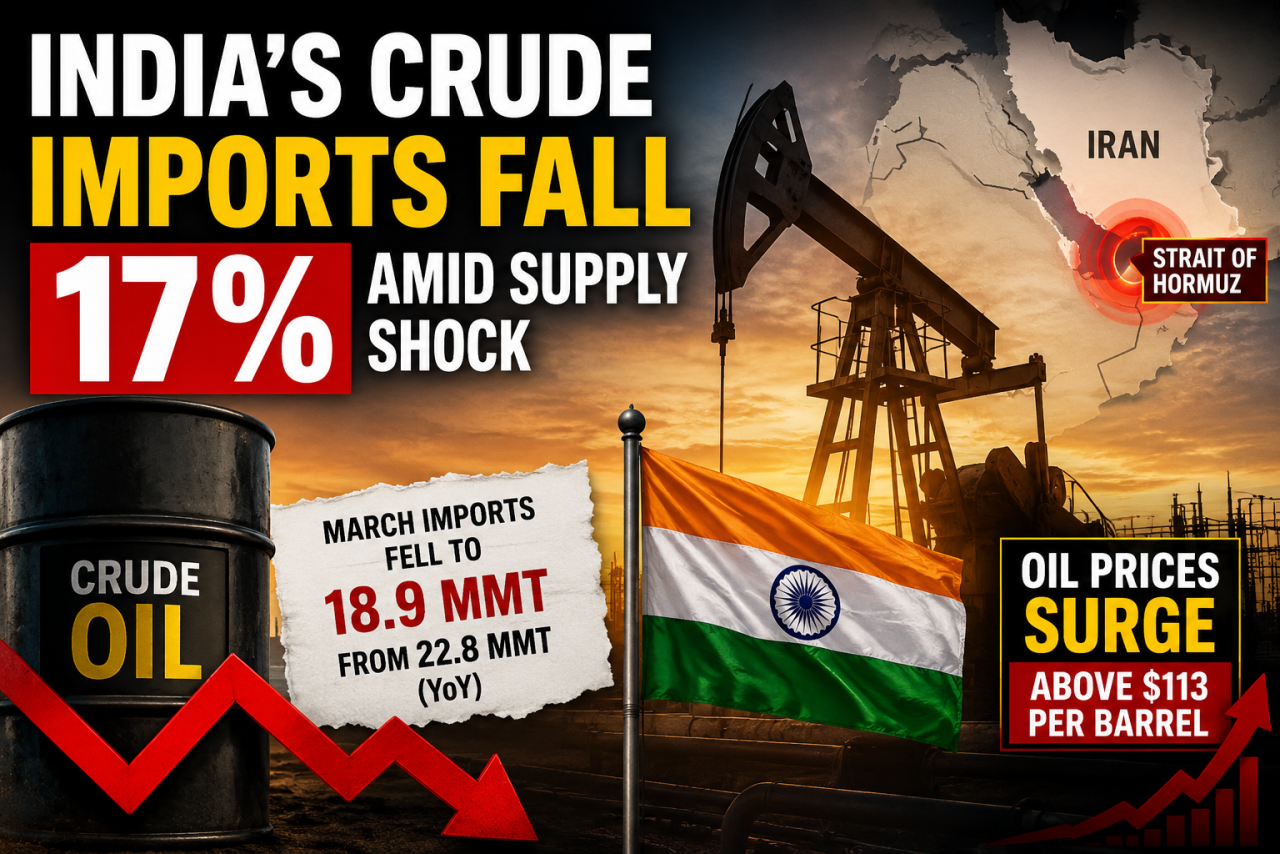
Global conflicts have disrupted the supply of important goods. Specifically, the war in the Middle East has made shipping and fuel much more expensive. Crude oil prices affect the cost of plastic packaging. This makes it harder for companies to sell products at old prices.
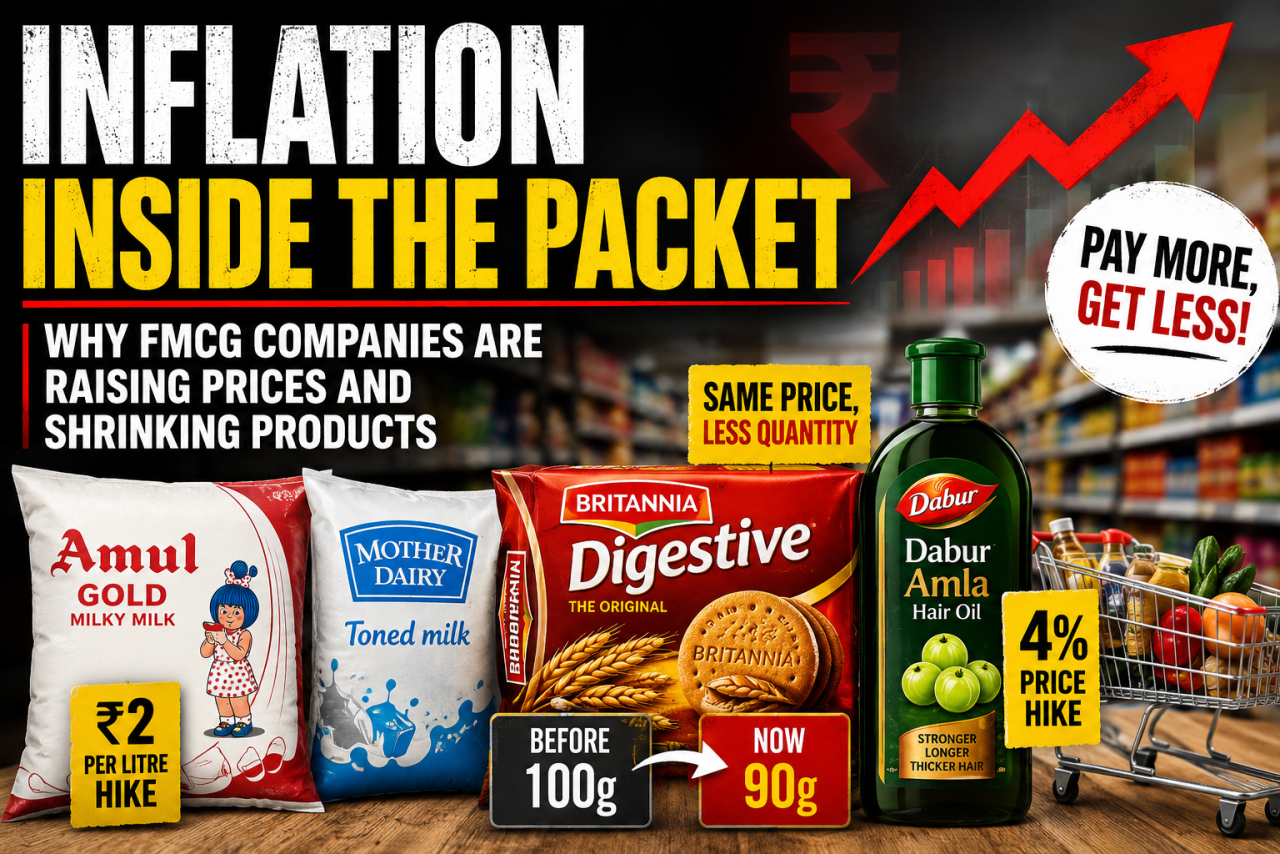
Companies like HUL have already increased prices for soaps. They are planning more hikes for home care and beauty products. These price increases usually range from 2% to 5%. While this sounds small, it adds up quickly for a family buying many items every month.
The Rise of Shrinkflation
Another major worry for consumers is "shrinkflation." This happens when a company keeps the price the same but puts less product inside the pack. For example, a packet of detergent might stay at ₹10 but weigh 10 grams less than before.
This is a hidden tax on the poor and middle class. People often look at the price tag first. They do not always notice that the quantity has dropped. This practice helps companies protect their profits, but it forces families to buy more frequently.
Impact on Rural and Middle-Class India
The economic status of most Indian people makes them very sensitive to these changes.
- Rural Families: People in villages often live on a tight daily budget. Even a small price hike can force them to stop buying certain items. They often switch to cheaper, local brands or smaller sachets.
- Middle-Class Families: These households are feeling a "double squeeze." Their salaries are not rising as fast as the cost of living. They spend a large part of their income on food and household essentials. When these costs go up, they have less money left for education or healthcare.
Changing Shopping Habits
The news suggests that Indians are already changing how they shop. Many people are moving away from premium brands. They are looking for "value for money" options. Instead of buying a large bottle of shampoo, they might buy single-use packets.
Experts say that essentials like biscuits and cleaning products will see "trade-down" behavior. This means a customer who used to buy an expensive brand will now buy a cheaper one. This shift shows that the average person is struggling to maintain their standard of living.
Final Take
The combination of war-led inflation and shrinkflation is a serious challenge. For the average Indian, these are not just business headlines. They are daily struggles at the grocery store. As global tensions continue, the pressure on the Indian kitchen budget will likely remain high. Families will need to be very careful with their spending in the coming months.
New financial reports from top consumer goods companies show a tough road ahead for Indian families. Big names like Hindustan Unilever (HUL) and Nestle India are raising prices. They are also reducing the size of their product packets. These changes come because of global wars and rising costs of raw materials. This news deeply affects the daily life and savings of the common person in India.
Why Prices Are Rising
Global conflicts have disrupted the supply of important goods. Specifically, the war in the Middle East has made shipping and fuel much more expensive. Crude oil prices affect the cost of plastic packaging. This makes it harder for companies to sell products at old prices.
Companies like HUL have already increased prices for soaps. They are planning more hikes for home care and beauty products. These price increases usually range from 2% to 5%. While this sounds small, it adds up quickly for a family buying many items every month.
The Rise of Shrinkflation
Another major worry for consumers is "shrinkflation." This happens when a company keeps the price the same but puts less product inside the pack. For example, a packet of detergent might stay at ₹10 but weigh 10 grams less than before.
This is a hidden tax on the poor and middle class. People often look at the price tag first. They do not always notice that the quantity has dropped. This practice helps companies protect their profits, but it forces families to buy more frequently.
Impact on Rural and Middle-Class India
The economic status of most Indian people makes them very sensitive to these changes.
- Rural Families: People in villages often live on a tight daily budget. Even a small price hike can force them to stop buying certain items. They often switch to cheaper, local brands or smaller sachets.
- Middle-Class Families: These households are feeling a "double squeeze." Their salaries are not rising as fast as the cost of living. They spend a large part of their income on food and household essentials. When these costs go up, they have less money left for education or healthcare.
Changing Shopping Habits
The news suggests that Indians are already changing how they shop. Many people are moving away from premium brands. They are looking for "value for money" options. Instead of buying a large bottle of shampoo, they might buy single-use packets.
Experts say that essentials like biscuits and cleaning products will see "trade-down" behavior. This means a customer who used to buy an expensive brand will now buy a cheaper one. This shift shows that the average person is struggling to maintain their standard of living.
Final Take
The combination of war-led inflation and shrinkflation is a serious challenge. For the average Indian, these are not just business headlines. They are daily struggles at the grocery store. As global tensions continue, the pressure on the Indian kitchen budget will likely remain high. Families will need to be very careful with their spending in the coming months.














Leave a Comment