
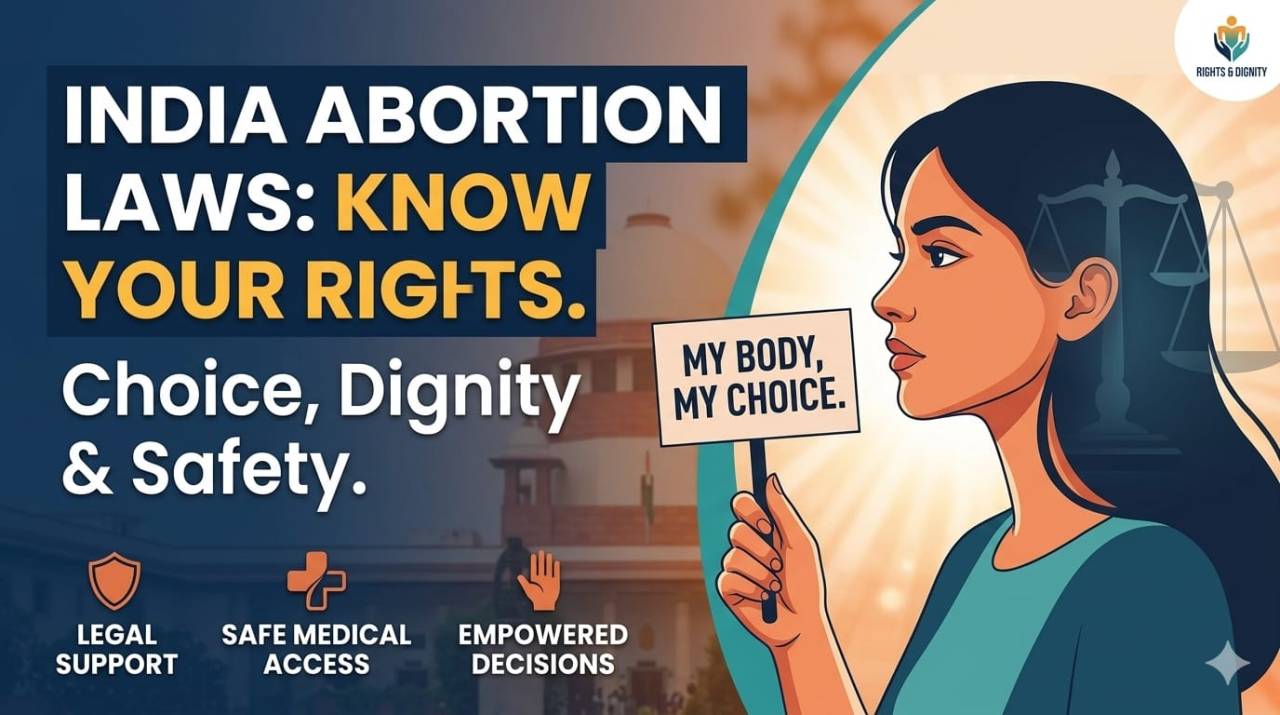
A 30-week abortion allowed by the Supreme Court of India has reignited a crucial question—are legal deadlines more important than a woman’s dignity and choice?
A recent decision by the Supreme Court of India has once again pushed India’s abortion laws into the national spotlight. In a sensitive case involving a 15-year-old survivor, the Court allowed termination of pregnancy at 30 weeks—well beyond the usual legal limit.
The ruling does more than resolve one case. It reinforces a larger constitutional idea: a woman’s right over her body is deeply connected to her dignity, autonomy, and personal liberty.
For many young readers, terms like the “MTP Act” may sound technical or distant. But in reality, these laws directly affect rights, healthcare access, and decision-making.
The Law in Focus: What Does the MTP Act Say?
Abortion in India is governed by the Medical Termination of Pregnancy Act. Compared to many parts of the world, India’s legal framework is relatively progressive. Instead of outright bans, it focuses on regulated access and medical safety.
At its core, the law tries to balance two things: protecting the woman’s health and setting medical guidelines for termination.
The Timeline That Defines Access
The law structures abortion rights around the duration of pregnancy:
- Up to 20 weeks: A woman can legally terminate her pregnancy with the opinion of one registered doctor.
- 20 to 24 weeks: This window is reserved for specific categories—such as rape survivors, minors, differently-abled women, or those facing sudden changes in marital status. Here, approval from two doctors is required.
- Beyond 24 weeks: Termination is usually restricted, except in cases involving serious foetal abnormalities or when the woman’s life is at risk, often requiring a Medical Board’s approval.
These timelines are meant to ensure safety, but recent developments show that they are not always treated as rigid barriers.
When Courts Step In: Dignity Over Deadlines
In the recent case, the Court made it clear that law cannot be blind to human suffering. Justice Surya Kant emphasized that procedural limits should not force individuals—especially minors—to endure avoidable trauma.
This reflects an evolving judicial approach where:
- Autonomy is central: The individual’s choice carries significant weight.
- Mental health matters: Psychological trauma is recognized as a valid ground for abortion.
- Flexibility is necessary: Legal timelines cannot override fundamental rights in exceptional cases.
The message is clear—laws exist for people, not the other way around.
Breaking Myths: What the Law Actually Guarantees
Despite legal clarity, misinformation around abortion remains widespread. Here are key facts every citizen should know:
- Consent is personal: If you are above 18, only your consent is needed. No approval from family, spouse, or partner is legally required.
- Equal rights for unmarried women: The Supreme Court of India has affirmed that marital status does not limit reproductive rights.
- Right to privacy: Medical professionals must protect patient confidentiality. Violating this can lead to legal consequences.
- Safe procedures only: Abortions must be conducted by registered practitioners in approved medical facilities. Unsafe alternatives are illegal and life-threatening.
These provisions highlight that the law is not just about permission—it is about safe, dignified access.
Why This Debate Matters Now
India continues to grapple with complex realities—teen pregnancies, sexual violence, social stigma, and gaps in healthcare access. In such a context, abortion laws are not just legal rules; they are tools of social justice.
Forcing someone to carry an unwanted pregnancy can result in long-term emotional, physical, and economic consequences. The Court’s recent stance signals a shift toward a more humane interpretation of the law—one that prioritizes lived realities over rigid frameworks.
It also strengthens a broader constitutional principle: reproductive choice is an essential part of personal freedom.
Final Take
India’s abortion laws are evolving. While the Medical Termination of Pregnancy Act provides the framework, the judiciary is increasingly ensuring that this framework remains compassionate and relevant.
For young citizens, the takeaway is simple: understanding these rights is not optional—it is empowering. Awareness ensures better decisions, safer outcomes, and stronger voices in public discourse.
--------------------------------------------------------------------------------------------------------------------------------------
Important Note: If you or someone you know is considering abortion, consult a qualified doctor at a registered medical facility. Seeking help early—preferably before 20 weeks—makes the process legally simpler and medically safer.
A recent decision by the Supreme Court of India has once again pushed India’s abortion laws into the national spotlight. In a sensitive case involving a 15-year-old survivor, the Court allowed termination of pregnancy at 30 weeks—well beyond the usual legal limit.
The ruling does more than resolve one case. It reinforces a larger constitutional idea: a woman’s right over her body is deeply connected to her dignity, autonomy, and personal liberty.
For many young readers, terms like the “MTP Act” may sound technical or distant. But in reality, these laws directly affect rights, healthcare access, and decision-making.
The Law in Focus: What Does the MTP Act Say?
Abortion in India is governed by the Medical Termination of Pregnancy Act. Compared to many parts of the world, India’s legal framework is relatively progressive. Instead of outright bans, it focuses on regulated access and medical safety.
At its core, the law tries to balance two things: protecting the woman’s health and setting medical guidelines for termination.
The Timeline That Defines Access
The law structures abortion rights around the duration of pregnancy:
- Up to 20 weeks: A woman can legally terminate her pregnancy with the opinion of one registered doctor.
- 20 to 24 weeks: This window is reserved for specific categories—such as rape survivors, minors, differently-abled women, or those facing sudden changes in marital status. Here, approval from two doctors is required.
- Beyond 24 weeks: Termination is usually restricted, except in cases involving serious foetal abnormalities or when the woman’s life is at risk, often requiring a Medical Board’s approval.
These timelines are meant to ensure safety, but recent developments show that they are not always treated as rigid barriers.
When Courts Step In: Dignity Over Deadlines
In the recent case, the Court made it clear that law cannot be blind to human suffering. Justice Surya Kant emphasized that procedural limits should not force individuals—especially minors—to endure avoidable trauma.
This reflects an evolving judicial approach where:
- Autonomy is central: The individual’s choice carries significant weight.
- Mental health matters: Psychological trauma is recognized as a valid ground for abortion.
- Flexibility is necessary: Legal timelines cannot override fundamental rights in exceptional cases.
The message is clear—laws exist for people, not the other way around.
Breaking Myths: What the Law Actually Guarantees
Despite legal clarity, misinformation around abortion remains widespread. Here are key facts every citizen should know:
- Consent is personal: If you are above 18, only your consent is needed. No approval from family, spouse, or partner is legally required.
- Equal rights for unmarried women: The Supreme Court of India has affirmed that marital status does not limit reproductive rights.
- Right to privacy: Medical professionals must protect patient confidentiality. Violating this can lead to legal consequences.
- Safe procedures only: Abortions must be conducted by registered practitioners in approved medical facilities. Unsafe alternatives are illegal and life-threatening.
These provisions highlight that the law is not just about permission—it is about safe, dignified access.
Why This Debate Matters Now
India continues to grapple with complex realities—teen pregnancies, sexual violence, social stigma, and gaps in healthcare access. In such a context, abortion laws are not just legal rules; they are tools of social justice.
Forcing someone to carry an unwanted pregnancy can result in long-term emotional, physical, and economic consequences. The Court’s recent stance signals a shift toward a more humane interpretation of the law—one that prioritizes lived realities over rigid frameworks.
It also strengthens a broader constitutional principle: reproductive choice is an essential part of personal freedom.
Final Take
India’s abortion laws are evolving. While the Medical Termination of Pregnancy Act provides the framework, the judiciary is increasingly ensuring that this framework remains compassionate and relevant.
For young citizens, the takeaway is simple: understanding these rights is not optional—it is empowering. Awareness ensures better decisions, safer outcomes, and stronger voices in public discourse.
--------------------------------------------------------------------------------------------------------------------------------------
Important Note: If you or someone you know is considering abortion, consult a qualified doctor at a registered medical facility. Seeking help early—preferably before 20 weeks—makes the process legally simpler and medically safer.


























Leave a Comment