
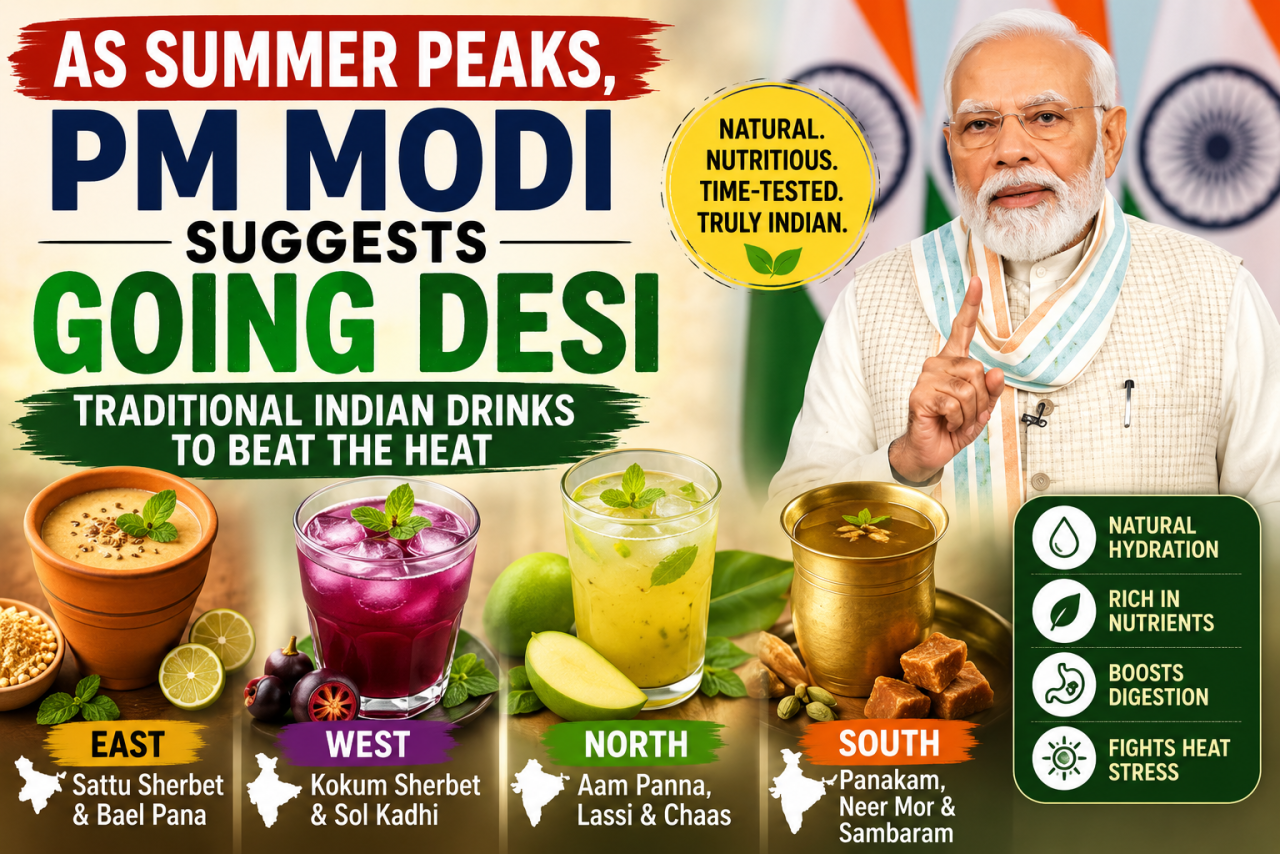
As India battles soaring temperatures and recurring heatwaves, Prime Minister Narendra Modi is urging citizens to rediscover a centuries-old solution: traditional regional drinks that naturally cool, nourish, and hydrate.
As record-breaking heatwaves sweep across India, the Prime Minister highlights how centuries-old regional beverages offer natural hydration, nutrition, and relief from extreme temperatures.
As large parts of India continue to endure intense summer heat and recurring heatwave conditions, Prime Minister Narendra Modi has drawn national attention to the country's rich tradition of indigenous summer beverages. In a recent episode of Mann Ki Baat, the Prime Minister encouraged citizens to “go desi” and embrace traditional drinks that have long been part of India's seasonal dietary wisdom.
Highlighting a diverse range of regional refreshments, Modi emphasized that these beverages were developed through generations of practical experience and are specifically designed to help the body cope with extreme temperatures. Made from locally available ingredients, these drinks not only provide hydration but also replenish essential nutrients lost through excessive sweating.
Nutrition experts agree that many traditional Indian summer drinks are naturally rich in electrolytes, probiotics, vitamins, minerals, and antioxidants, making them effective alternatives to sugary soft drinks and artificially flavored beverages.
Eastern India: The Power of Sattu and Bael Pana
In eastern states such as Bihar, Jharkhand, and parts of Uttar Pradesh, Sattu Sherbet remains one of the most popular summer beverages. Prime Minister Modi described it as a drink that “fills the stomach and provides strength.”
Prepared from roasted gram flour, sattu is rich in plant-based protein, dietary fiber, iron, and essential minerals. Nutritionists note that its low glycemic index helps maintain stable energy levels while supporting digestion during hot weather.
Another traditional favorite is Odisha’s Bael Pana, made from the pulp of wood apple (bael). Known for its cooling properties, bael has long been valued in traditional Indian diets for promoting digestive health and helping prevent heat-related stomach ailments.
Quick Recipe: Sattu Sherbet
- 2–3 tablespoons roasted gram flour (sattu)
- 1 glass chilled water
- Juice of half a lemon
- Roasted cumin powder
- Salt or jaggery to taste
Mix all ingredients thoroughly and serve chilled.
Western India: Kokum Sherbet and Sol Kadhi
From the Konkan coast and Goa comes another summer staple—Kokum Sherbet. Prime Minister Modi highlighted the drink as an integral part of western India's culinary heritage.
Kokum (Garcinia indica), a fruit native to the Western Ghats, is rich in antioxidants and widely recognized for its cooling effect on the body. It is commonly consumed as a refreshing sherbet or as Sol Kadhi, a traditional beverage prepared with kokum extract and coconut milk.
Sol Kadhi is known for aiding digestion, reducing acidity, and providing relief from heat-induced discomfort after meals.
Quick Recipe: Kokum Sherbet
- Dried kokum rinds
- Water
- Sugar or jaggery
- Roasted cumin powder
- A pinch of salt
Soak kokum rinds in warm water, extract the juice, strain, and mix with the remaining ingredients before serving chilled.
Northern India: Aam Panna, Lassi, and Chaas
In northern and western regions where hot, dry winds (loo) are common during summer, Aam Panna remains a trusted seasonal remedy.
Made from raw mangoes, the drink is rich in Vitamin C and electrolytes such as sodium and potassium, which help replenish minerals lost through perspiration. Health experts often recommend Aam Panna as a natural way to combat dehydration, fatigue, and heat exhaustion.
Equally popular are dairy-based beverages such as Lassi and Chaas (spiced buttermilk), both of which contribute to hydration while supporting gut health through naturally occurring probiotics.
Quick Recipe: Classic Aam Panna
- 2 raw mangoes
- Water
- Rock salt
- Roasted cumin powder
- Fresh mint leaves
Boil or roast the mangoes until soft, extract the pulp, blend with water, and season with salt, cumin, and mint.
Southern India: Panakam, Neer Mor, and Sambaram
Across South India, traditional summer hydration often revolves around buttermilk-based beverages and jaggery-infused drinks. In his address, the Prime Minister highlighted Panakam, Neer Mor, and Sambaram as enduring examples of India's seasonal food wisdom.
Panakam, a simple drink made from jaggery, water, dry ginger, and cardamom, is valued for providing quick energy while aiding digestion. Neer Mor, a diluted and lightly spiced buttermilk, offers probiotics and cooling benefits that help regulate body temperature.
Similarly, Sambaram, a Kerala-style spiced buttermilk drink, remains a staple during the hottest months of the year.
Quick Recipe: South Indian Panakam
- 2 tablespoons jaggery
- 1 glass cold water
- Dry ginger powder
- Crushed cardamom
- Lemon juice
Dissolve jaggery in water and mix with the remaining ingredients before serving.
A Timely Return to India's Seasonal Wisdom
At a time when heatwaves are becoming more frequent and intense, the Prime Minister's message serves as a reminder that India's traditional food culture offers practical and sustainable solutions for seasonal wellness.
Long before the emergence of commercial energy drinks and packaged refreshments, communities across the country had already developed region-specific beverages tailored to local climates and nutritional needs. These drinks continue to provide a natural, affordable, and scientifically sensible way to stay hydrated and healthy during the summer months.
As India confronts rising temperatures, revisiting these traditional beverages may prove to be one of the simplest and healthiest ways to beat the heat.
As record-breaking heatwaves sweep across India, the Prime Minister highlights how centuries-old regional beverages offer natural hydration, nutrition, and relief from extreme temperatures.
As large parts of India continue to endure intense summer heat and recurring heatwave conditions, Prime Minister Narendra Modi has drawn national attention to the country's rich tradition of indigenous summer beverages. In a recent episode of Mann Ki Baat, the Prime Minister encouraged citizens to “go desi” and embrace traditional drinks that have long been part of India's seasonal dietary wisdom.
Highlighting a diverse range of regional refreshments, Modi emphasized that these beverages were developed through generations of practical experience and are specifically designed to help the body cope with extreme temperatures. Made from locally available ingredients, these drinks not only provide hydration but also replenish essential nutrients lost through excessive sweating.
Nutrition experts agree that many traditional Indian summer drinks are naturally rich in electrolytes, probiotics, vitamins, minerals, and antioxidants, making them effective alternatives to sugary soft drinks and artificially flavored beverages.
Eastern India: The Power of Sattu and Bael Pana
In eastern states such as Bihar, Jharkhand, and parts of Uttar Pradesh, Sattu Sherbet remains one of the most popular summer beverages. Prime Minister Modi described it as a drink that “fills the stomach and provides strength.”
Prepared from roasted gram flour, sattu is rich in plant-based protein, dietary fiber, iron, and essential minerals. Nutritionists note that its low glycemic index helps maintain stable energy levels while supporting digestion during hot weather.
Another traditional favorite is Odisha’s Bael Pana, made from the pulp of wood apple (bael). Known for its cooling properties, bael has long been valued in traditional Indian diets for promoting digestive health and helping prevent heat-related stomach ailments.
Quick Recipe: Sattu Sherbet
- 2–3 tablespoons roasted gram flour (sattu)
- 1 glass chilled water
- Juice of half a lemon
- Roasted cumin powder
- Salt or jaggery to taste
Mix all ingredients thoroughly and serve chilled.
Western India: Kokum Sherbet and Sol Kadhi
From the Konkan coast and Goa comes another summer staple—Kokum Sherbet. Prime Minister Modi highlighted the drink as an integral part of western India's culinary heritage.
Kokum (Garcinia indica), a fruit native to the Western Ghats, is rich in antioxidants and widely recognized for its cooling effect on the body. It is commonly consumed as a refreshing sherbet or as Sol Kadhi, a traditional beverage prepared with kokum extract and coconut milk.
Sol Kadhi is known for aiding digestion, reducing acidity, and providing relief from heat-induced discomfort after meals.
Quick Recipe: Kokum Sherbet
- Dried kokum rinds
- Water
- Sugar or jaggery
- Roasted cumin powder
- A pinch of salt
Soak kokum rinds in warm water, extract the juice, strain, and mix with the remaining ingredients before serving chilled.
Northern India: Aam Panna, Lassi, and Chaas
In northern and western regions where hot, dry winds (loo) are common during summer, Aam Panna remains a trusted seasonal remedy.
Made from raw mangoes, the drink is rich in Vitamin C and electrolytes such as sodium and potassium, which help replenish minerals lost through perspiration. Health experts often recommend Aam Panna as a natural way to combat dehydration, fatigue, and heat exhaustion.
Equally popular are dairy-based beverages such as Lassi and Chaas (spiced buttermilk), both of which contribute to hydration while supporting gut health through naturally occurring probiotics.
Quick Recipe: Classic Aam Panna
- 2 raw mangoes
- Water
- Rock salt
- Roasted cumin powder
- Fresh mint leaves
Boil or roast the mangoes until soft, extract the pulp, blend with water, and season with salt, cumin, and mint.
Southern India: Panakam, Neer Mor, and Sambaram
Across South India, traditional summer hydration often revolves around buttermilk-based beverages and jaggery-infused drinks. In his address, the Prime Minister highlighted Panakam, Neer Mor, and Sambaram as enduring examples of India's seasonal food wisdom.
Panakam, a simple drink made from jaggery, water, dry ginger, and cardamom, is valued for providing quick energy while aiding digestion. Neer Mor, a diluted and lightly spiced buttermilk, offers probiotics and cooling benefits that help regulate body temperature.
Similarly, Sambaram, a Kerala-style spiced buttermilk drink, remains a staple during the hottest months of the year.
Quick Recipe: South Indian Panakam
- 2 tablespoons jaggery
- 1 glass cold water
- Dry ginger powder
- Crushed cardamom
- Lemon juice
Dissolve jaggery in water and mix with the remaining ingredients before serving.
A Timely Return to India's Seasonal Wisdom
At a time when heatwaves are becoming more frequent and intense, the Prime Minister's message serves as a reminder that India's traditional food culture offers practical and sustainable solutions for seasonal wellness.
Long before the emergence of commercial energy drinks and packaged refreshments, communities across the country had already developed region-specific beverages tailored to local climates and nutritional needs. These drinks continue to provide a natural, affordable, and scientifically sensible way to stay hydrated and healthy during the summer months.
As India confronts rising temperatures, revisiting these traditional beverages may prove to be one of the simplest and healthiest ways to beat the heat.
























Leave a Comment