
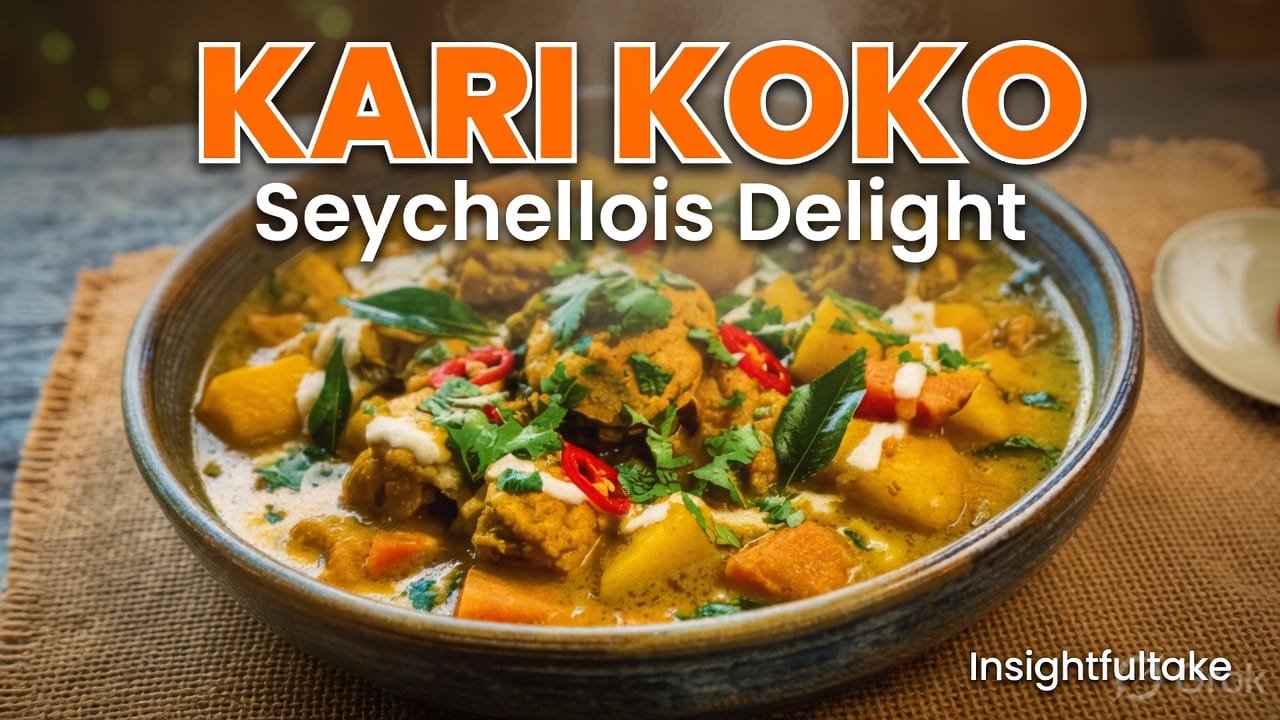
A single mention of Kari Koko in PM Narendra Modi's Seychelles speech sparked widespread curiosity. Here's the story behind the traditional coconut curry and its cultural significance.
Food has a strange way of showing up in diplomacy when words alone feel insufficient. That's more or less what happened when Prime Minister Narendra Modi stood before the National Assembly of Seychelles this week and, instead of reeling off statistics on trade or defence cooperation, reached for something far more intimate: a curry.
Modi told the assembly that the cultural connections between India and Seychelles are visible in everyday life when the island nation celebrates its heritage. He said these connections can be felt in the flavours of Kari Koko, samosa, and chutney, as well as in the celebrations of Deepavali, Thai Pongal, and the Garba dance during Navratri. He described all of it as part of a shared Creole spirit.
It's the kind of line that could easily have been dismissed as a rhetorical flourish, except that it sent many people searching for what exactly Kari Koko is. National Assembly speeches do not usually leave food lovers with homework, but this one certainly did.
So, what is Kari Koko?
Kari Koko is essentially a Seychellois take on coconut curry. It is typically prepared with fish, chicken, or octopus simmered slowly in coconut milk until the sauce becomes thick and aromatic. The spice base feels familiar to anyone accustomed to Indian cooking, with garlic, ginger, coriander, cumin, and turmeric forming the foundation. Black pepper and cinnamon add another layer of warmth, creating flavours that sit somewhere between South Indian coastal cuisine and East African cooking.
That combination is no coincidence. Seychellois Creole cuisine reflects centuries of Indian, African, and French culinary influences blending together. This layered heritage is precisely why Modi chose to reference the dish. No two households in Seychelles prepare Kari Koko in exactly the same way. Some recipes use more coconut milk, others rely on extra chilli for heat, while the choice of fish, chicken, or octopus often depends on the day's catch.
The timing of the reference was equally significant. This year marks 50 years of diplomatic relations between India and Seychelles, and Modi used the occasion to remind lawmakers that the relationship stretches back far beyond formal diplomacy. He recalled that in August 1770, five Indians arrived on the island of Saint Anne aboard the ship Thelemaque, becoming part of the story that eventually shaped modern Seychelles.
Seen through that historical lens, Kari Koko becomes more than a traditional dish. It serves as a reminder that the relationship between the two nations has been built not only through diplomacy and trade agreements, but also through migration, shared traditions, family ties, festivals, and food passed from one generation to the next.
The speech also produced an unexpected ripple effect. After Modi's remarks began circulating, Kari Koko started appearing across Indian food pages on social media. People who had never heard of the dish began discussing it, while home cooks experimented with their own versions using locally available fish or chicken. A brief mention in a diplomatic address unexpectedly sparked curiosity about a cuisine that had previously remained unfamiliar to many Indians.
Whether Kari Koko ever earns the widespread popularity in India enjoyed by dishes such as butter chicken or biryani is uncertain, and perhaps beside the point. What the moment ultimately demonstrated is that the ties between India and the small island nation of roughly 120,000 people extend beyond maritime cooperation and strategic partnerships. Sometimes, the simplest way to express decades of friendship is through the food shared across cultures and, in this case, through a humble bowl of coconut curry.
Food has a strange way of showing up in diplomacy when words alone feel insufficient. That's more or less what happened when Prime Minister Narendra Modi stood before the National Assembly of Seychelles this week and, instead of reeling off statistics on trade or defence cooperation, reached for something far more intimate: a curry.
Modi told the assembly that the cultural connections between India and Seychelles are visible in everyday life when the island nation celebrates its heritage. He said these connections can be felt in the flavours of Kari Koko, samosa, and chutney, as well as in the celebrations of Deepavali, Thai Pongal, and the Garba dance during Navratri. He described all of it as part of a shared Creole spirit.
It's the kind of line that could easily have been dismissed as a rhetorical flourish, except that it sent many people searching for what exactly Kari Koko is. National Assembly speeches do not usually leave food lovers with homework, but this one certainly did.
So, what is Kari Koko?
Kari Koko is essentially a Seychellois take on coconut curry. It is typically prepared with fish, chicken, or octopus simmered slowly in coconut milk until the sauce becomes thick and aromatic. The spice base feels familiar to anyone accustomed to Indian cooking, with garlic, ginger, coriander, cumin, and turmeric forming the foundation. Black pepper and cinnamon add another layer of warmth, creating flavours that sit somewhere between South Indian coastal cuisine and East African cooking.
That combination is no coincidence. Seychellois Creole cuisine reflects centuries of Indian, African, and French culinary influences blending together. This layered heritage is precisely why Modi chose to reference the dish. No two households in Seychelles prepare Kari Koko in exactly the same way. Some recipes use more coconut milk, others rely on extra chilli for heat, while the choice of fish, chicken, or octopus often depends on the day's catch.
The timing of the reference was equally significant. This year marks 50 years of diplomatic relations between India and Seychelles, and Modi used the occasion to remind lawmakers that the relationship stretches back far beyond formal diplomacy. He recalled that in August 1770, five Indians arrived on the island of Saint Anne aboard the ship Thelemaque, becoming part of the story that eventually shaped modern Seychelles.
Seen through that historical lens, Kari Koko becomes more than a traditional dish. It serves as a reminder that the relationship between the two nations has been built not only through diplomacy and trade agreements, but also through migration, shared traditions, family ties, festivals, and food passed from one generation to the next.
The speech also produced an unexpected ripple effect. After Modi's remarks began circulating, Kari Koko started appearing across Indian food pages on social media. People who had never heard of the dish began discussing it, while home cooks experimented with their own versions using locally available fish or chicken. A brief mention in a diplomatic address unexpectedly sparked curiosity about a cuisine that had previously remained unfamiliar to many Indians.
Whether Kari Koko ever earns the widespread popularity in India enjoyed by dishes such as butter chicken or biryani is uncertain, and perhaps beside the point. What the moment ultimately demonstrated is that the ties between India and the small island nation of roughly 120,000 people extend beyond maritime cooperation and strategic partnerships. Sometimes, the simplest way to express decades of friendship is through the food shared across cultures and, in this case, through a humble bowl of coconut curry.


















Leave a Comment