
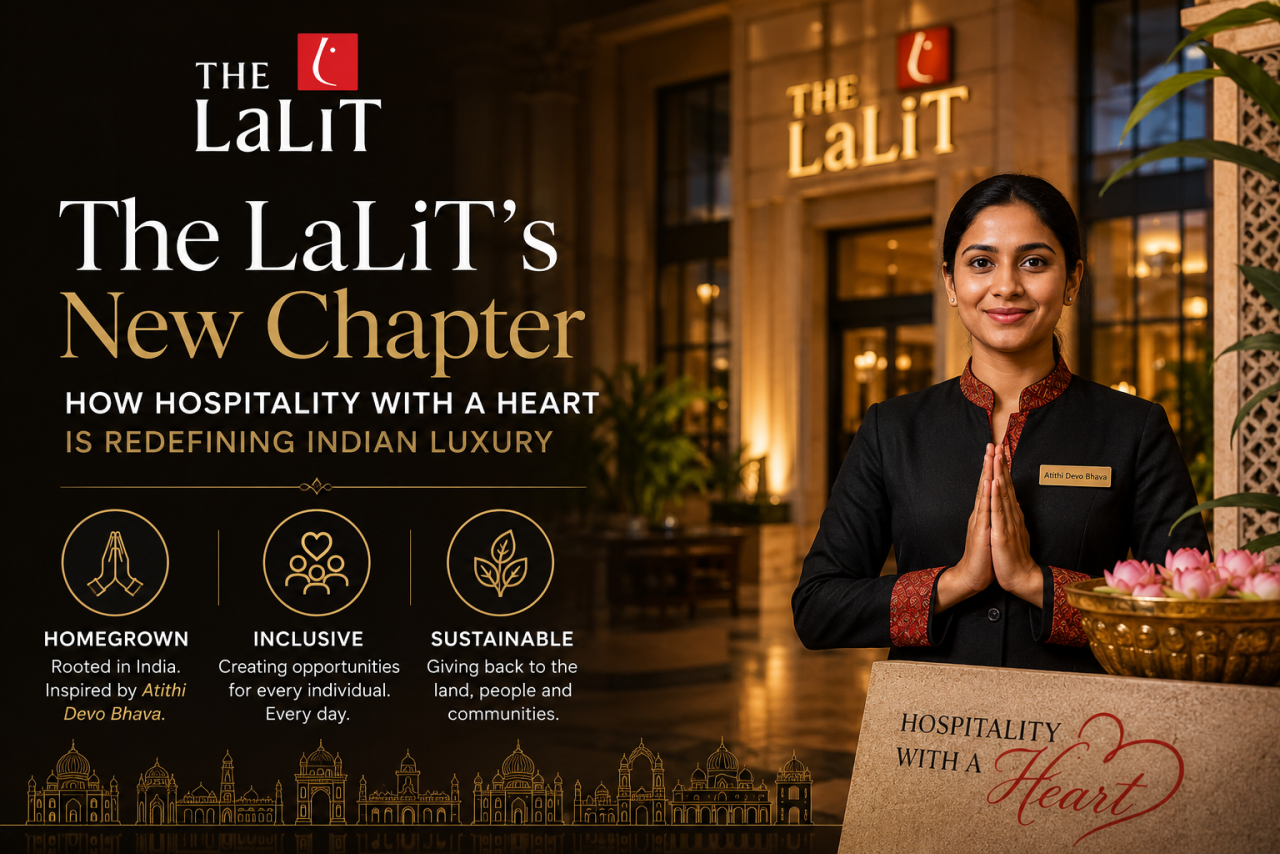
Can luxury be more than lavish stays? The LaLiT's #HospitalityWithAHeart campaign redefines Indian hospitality through inclusion, sustainability and the enduring spirit of Atithi Devo Bhava.
The LaLiT Suri Hospitality Group has unveiled #HospitalityWithAHeart, a new brand campaign that brings together three principles that have long shaped one of India's most recognisable homegrown hospitality brands: Indian identity, workplace inclusion and sustainable hospitality.
Announced by Dr Jyotsna Suri, Chairperson and Managing Director of the group, the campaign marks a renewed articulation of values that have guided The LaLiT since its inception more than three decades ago. Rather than introducing a new direction, it presents a clearer expression of the philosophy the company says has always defined its approach to hospitality.
The LaLiT's story began with The LaLiT New Delhi, established by Dr Jyotsna Suri and her late husband, Lalit Suri. Their ambition extended beyond building a luxury hotel. They sought to create an Indian hospitality company capable of standing confidently on the global stage while remaining rooted in the country's traditions and culture. The original company name, Bharat Hotels, reflected that vision and underscored the belief that Indian hospitality could build its own global identity without relying on international templates.
That founding philosophy continues to shape the group's latest campaign.
At the heart of the initiative is the idea of being homegrown. Drawing inspiration from the Indian principle of Atithi Devo Bhava, which regards guests with the highest respect, The LaLiT says every property is designed to reflect the character of its destination rather than follow a standardised template. Whether in New Delhi, Goa, Kolkata or other cities, the hotels seek to showcase local architecture, regional cuisine, traditional craftsmanship and cultural heritage, giving guests a more authentic sense of place. Even a traditional Namaskar at check-in is intended to represent that spirit of warmth and welcome.
The campaign's second pillar, inclusion, is where The LaLiT distinguishes itself within India's hospitality sector. Through the Keshav Suri Foundation and its own employment initiatives, the company says it has created skilling and job opportunities for more than 2,000 members of the LGBTQIA+ community. It has also expanded employment opportunities for acid attack survivors, persons with disabilities and neurodivergent individuals, communities that continue to face significant barriers in India's formal workforce.
Dr Suri describes inclusion not as a corporate social responsibility initiative but as an everyday practice reflected in recruitment, workplace culture and guest interactions.
The third pillar focuses on sustainability, which the company presents as an extension of its responsibility towards the destinations that host its hotels. According to The LaLiT, it has undertaken large-scale tree plantation initiatives while incorporating environmentally conscious practices such as waste management systems and zero-waste kitchens across its operations. Rather than treating sustainability as a regulatory requirement, the company positions it as an expression of gratitude towards the land, people and culture that make each destination unique.
For Dr Suri, the campaign is also an opportunity to reflect on the company's journey. Looking back over more than three decades, she identifies a consistent purpose running through every milestone: making people feel welcomed, respected and valued, whether they are guests, employees or members of the surrounding community. #HospitalityWithAHeart seeks to make that commitment more visible to the public.
The campaign arrives at a time when luxury hospitality brands are increasingly competing on more than premium locations and high-end amenities. Today's travellers, particularly younger and globally aware guests, often consider a hotel's environmental practices, workplace diversity and connection with local communities before making travel decisions. As a result, sustainability, inclusion and authentic cultural experiences have become important differentiators across the hospitality industry.
Against this backdrop, The LaLiT's decision to consolidate its identity around these three pillars reflects a broader shift in how hospitality brands communicate their values. Rather than presenting them as separate initiatives, the company has chosen to position them as the foundation of its brand identity.
Whether #HospitalityWithAHeart ultimately strengthens guest loyalty or expands recognition of the company's inclusion and sustainability initiatives will depend on how consistently those values are experienced across its properties. If translated effectively into everyday guest experiences, the campaign has the potential to reinforce The LaLiT's position as one of India's most distinctive homegrown luxury hospitality brands.
More than a rebranding exercise, the campaign serves as a reminder of the vision on which the company was built: that genuine hospitality is measured not only by the comfort offered to guests but also by the respect shown to employees, communities and the places that make every journey meaningful.
The LaLiT Suri Hospitality Group has unveiled #HospitalityWithAHeart, a new brand campaign that brings together three principles that have long shaped one of India's most recognisable homegrown hospitality brands: Indian identity, workplace inclusion and sustainable hospitality.
Announced by Dr Jyotsna Suri, Chairperson and Managing Director of the group, the campaign marks a renewed articulation of values that have guided The LaLiT since its inception more than three decades ago. Rather than introducing a new direction, it presents a clearer expression of the philosophy the company says has always defined its approach to hospitality.
The LaLiT's story began with The LaLiT New Delhi, established by Dr Jyotsna Suri and her late husband, Lalit Suri. Their ambition extended beyond building a luxury hotel. They sought to create an Indian hospitality company capable of standing confidently on the global stage while remaining rooted in the country's traditions and culture. The original company name, Bharat Hotels, reflected that vision and underscored the belief that Indian hospitality could build its own global identity without relying on international templates.
That founding philosophy continues to shape the group's latest campaign.
At the heart of the initiative is the idea of being homegrown. Drawing inspiration from the Indian principle of Atithi Devo Bhava, which regards guests with the highest respect, The LaLiT says every property is designed to reflect the character of its destination rather than follow a standardised template. Whether in New Delhi, Goa, Kolkata or other cities, the hotels seek to showcase local architecture, regional cuisine, traditional craftsmanship and cultural heritage, giving guests a more authentic sense of place. Even a traditional Namaskar at check-in is intended to represent that spirit of warmth and welcome.
The campaign's second pillar, inclusion, is where The LaLiT distinguishes itself within India's hospitality sector. Through the Keshav Suri Foundation and its own employment initiatives, the company says it has created skilling and job opportunities for more than 2,000 members of the LGBTQIA+ community. It has also expanded employment opportunities for acid attack survivors, persons with disabilities and neurodivergent individuals, communities that continue to face significant barriers in India's formal workforce.
Dr Suri describes inclusion not as a corporate social responsibility initiative but as an everyday practice reflected in recruitment, workplace culture and guest interactions.
The third pillar focuses on sustainability, which the company presents as an extension of its responsibility towards the destinations that host its hotels. According to The LaLiT, it has undertaken large-scale tree plantation initiatives while incorporating environmentally conscious practices such as waste management systems and zero-waste kitchens across its operations. Rather than treating sustainability as a regulatory requirement, the company positions it as an expression of gratitude towards the land, people and culture that make each destination unique.
For Dr Suri, the campaign is also an opportunity to reflect on the company's journey. Looking back over more than three decades, she identifies a consistent purpose running through every milestone: making people feel welcomed, respected and valued, whether they are guests, employees or members of the surrounding community. #HospitalityWithAHeart seeks to make that commitment more visible to the public.
The campaign arrives at a time when luxury hospitality brands are increasingly competing on more than premium locations and high-end amenities. Today's travellers, particularly younger and globally aware guests, often consider a hotel's environmental practices, workplace diversity and connection with local communities before making travel decisions. As a result, sustainability, inclusion and authentic cultural experiences have become important differentiators across the hospitality industry.
Against this backdrop, The LaLiT's decision to consolidate its identity around these three pillars reflects a broader shift in how hospitality brands communicate their values. Rather than presenting them as separate initiatives, the company has chosen to position them as the foundation of its brand identity.
Whether #HospitalityWithAHeart ultimately strengthens guest loyalty or expands recognition of the company's inclusion and sustainability initiatives will depend on how consistently those values are experienced across its properties. If translated effectively into everyday guest experiences, the campaign has the potential to reinforce The LaLiT's position as one of India's most distinctive homegrown luxury hospitality brands.
More than a rebranding exercise, the campaign serves as a reminder of the vision on which the company was built: that genuine hospitality is measured not only by the comfort offered to guests but also by the respect shown to employees, communities and the places that make every journey meaningful.



























Leave a Comment