
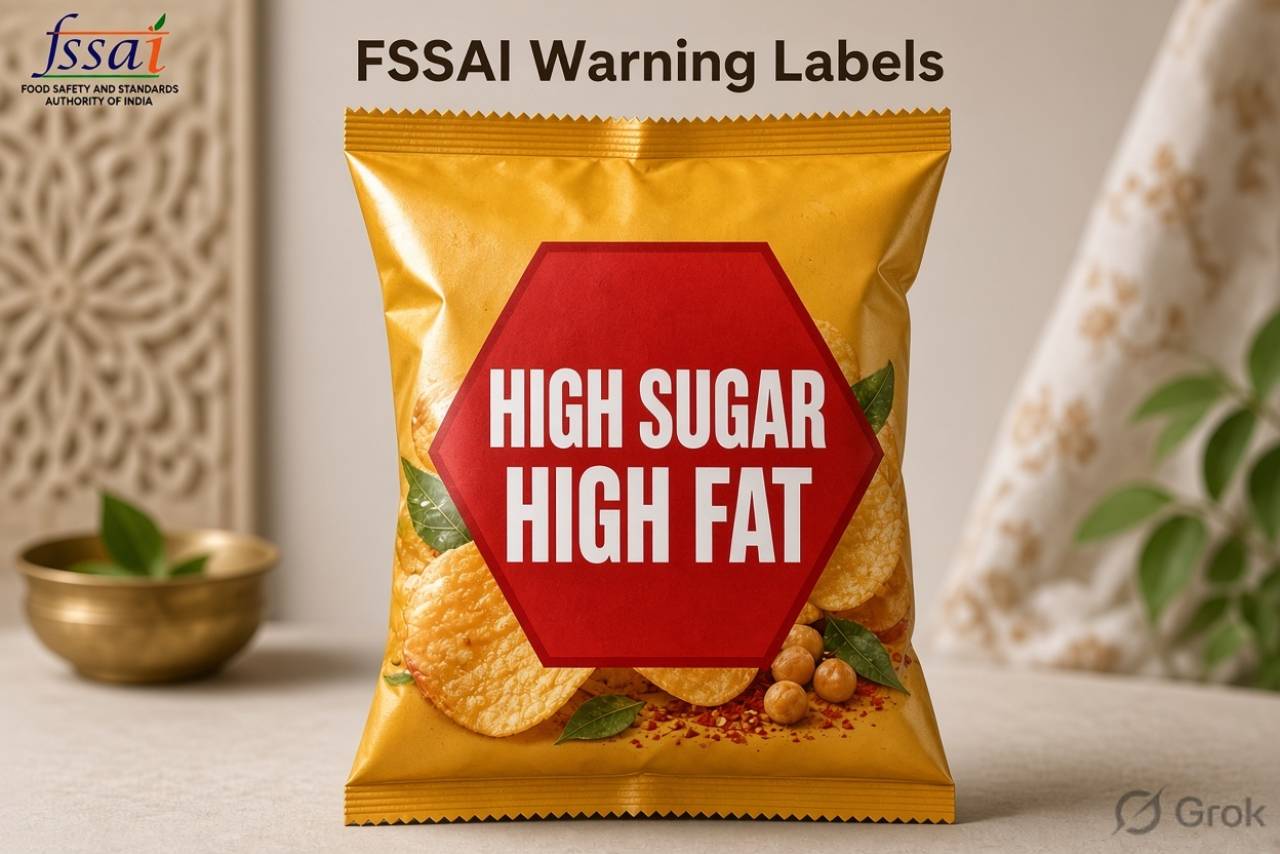
India is putting bold warning labels on packaged foods high in sugar, salt and fat.
For years, important nutrition information on packaged food has remained buried in small print on the back of the packet. Now, India may be moving toward a system that puts the most important warnings where consumers can see them before making a purchase.
The Food Safety and Standards Authority of India (FSSAI) has proposed prominent front-of-pack warning labels for packaged foods that contain high levels of fat, sugar or salt. The move comes amid growing concerns over obesity, diabetes and other non-communicable diseases, particularly among children and young people.
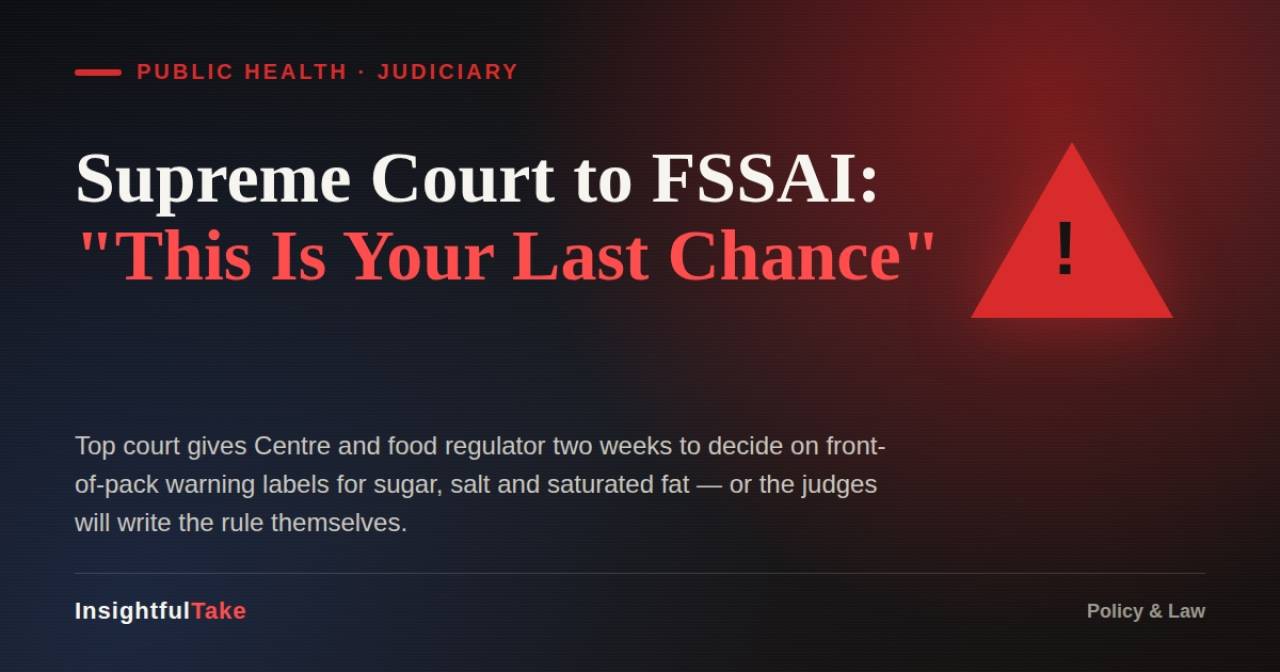
The proposal was submitted by FSSAI through an affidavit before the Supreme Court in late August 2026. It followed the Court's direction on August 13, when it gave the Centre and the food regulator two weeks to take a decision on front-of-pack labelling.
A bench comprising Justices J.B. Pardiwala and K. Vinod Chandran had expressed dissatisfaction with the authorities' earlier responses. The Court raised questions about whether regulators were doing enough to protect public health, especially the health of growing children. It also indicated that it could issue directions itself if the authorities failed to act.
What Will the Warning Labels Look Like?
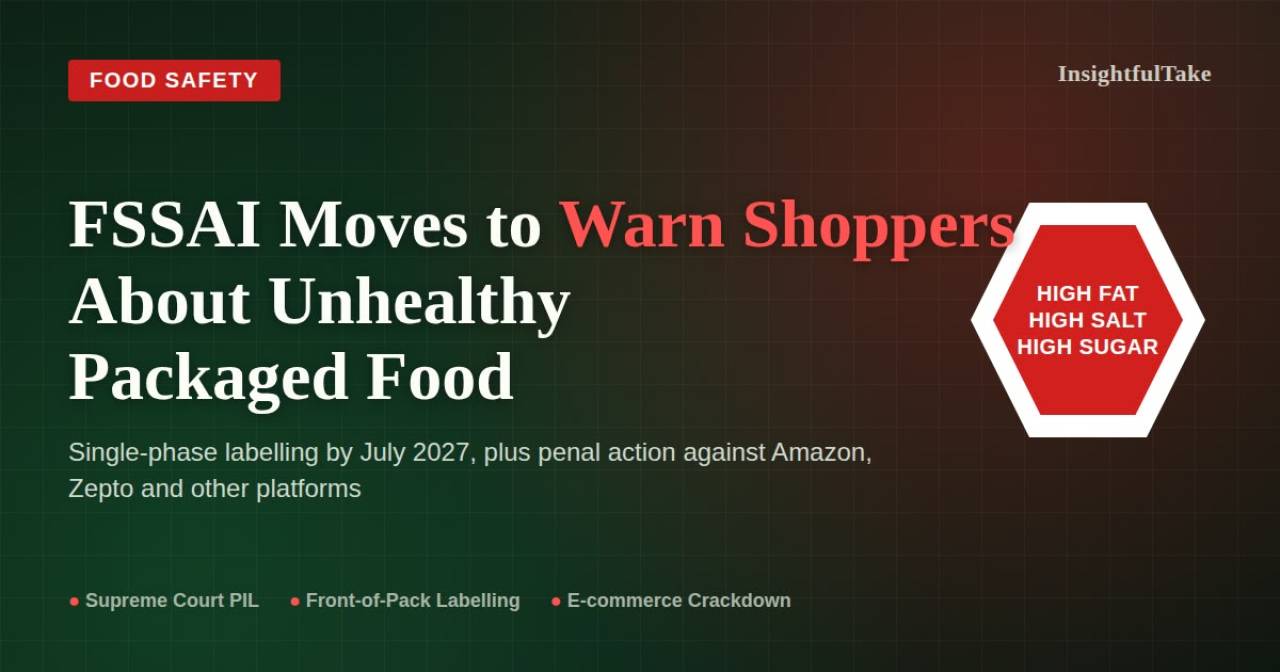
Under the proposed system, packaged foods that cross specified limits for added fat, added sugar or salt would carry prominent red, hexagonal warning symbols on the front of the packet.
The warnings would use simple language such as:
- HIGH FAT
- HIGH SUGAR
- HIGH SALT
If a product crosses the limits for two nutrients, the warnings could appear together, such as HIGH FAT HIGH SALT or HIGH FAT HIGH SUGAR.
For certain sweetened beverages, FSSAI has proposed a separate warning stating HIGHLY SWEETENED BEVERAGE.
The warning text would be printed in a font one point larger than the nutrition information table on the back of the package. The idea is straightforward. Consumers should be able to understand the basic nutritional risk of a product without having to study a detailed table.
Based on India’s Dietary Guidelines
The proposed thresholds would be based on the Dietary Guidelines for Indians, 2024, issued by the Indian Council of Medical Research and the National Institute of Nutrition (ICMR-NIN).
This is important because the proposed system is not simply about displaying more information. It is intended to make that information easier to understand.
A consumer standing in a supermarket may not have the time or knowledge to compare grams of sugar, fat and salt across several products. A prominent warning on the front could make that decision much simpler.
This could be particularly relevant for parents choosing snacks, breakfast cereals, packaged drinks and other processed foods for children.
The System Will Be Introduced in Phases
FSSAI has proposed a phased implementation.
During Phase I, warnings would apply to products that are high in two or more specified nutrients. Certain sweetened beverages would also come under the warning system.
In Phase II, the requirement would be expanded to products that are high in even one of the specified nutrients.
The phased approach is intended to give manufacturers time to reformulate their products and adjust their packaging and production processes.
But it also raises an important question. If a product is high in only one nutrient that is linked to health risks, how long should consumers have to wait before they are clearly warned about it?
Which Foods Would Be Exempt?
Not every food that naturally contains fat, sugar or salt would receive a warning.
Single-ingredient foods and certain naturally high-fat, high-sugar or high-salt products, including ghee, edible oil, salt, sugar, jaggery and honey, would be exempt under the proposal.
These products would continue to follow existing food safety and labelling requirements.
The distinction matters because the proposed system is primarily aimed at helping consumers identify packaged products where excessive levels of these nutrients may be less obvious.
Why Has This Issue Taken So Long?
The debate over front-of-pack warning labels in India has been going on for years.
A public interest litigation filed by the Kerala-based organisation 3S and Our Health Society sought mandatory warnings on packaged foods containing high levels of salt, sugar and saturated fats.
The government and food regulator considered different approaches, including the Indian Nutrition Rating system, which would use star ratings to communicate the nutritional quality of food products.
However, the process faced delays and disagreements among stakeholders.
One concern with numerical nutrition tables is that consumers have to interpret the figures themselves. They may have to compare the amount of a nutrient in a product with recommended daily limits before deciding whether the product is healthy.
Warning labels take a different approach. Instead of asking consumers to calculate, they provide a direct signal.
Why Front-of-Pack Warnings Matter
The central argument behind warning labels is visibility.
Nutrition information already exists on most packaged foods. The problem is that it is often difficult to understand and easy to overlook.
A simple warning on the front of a packet can communicate a message within seconds.
Research from countries that have adopted front-of-pack warning systems has suggested that clear warnings can help consumers identify products high in nutrients such as sugar, salt and fat more easily than complicated nutritional information.
The Supreme Court has also connected the issue with the constitutional right to health under Article 21.
The Court has noted that several developing countries have adopted similar measures and has stressed the need for affirmative action to protect public health.
The Bigger Impact Could Be on Food Companies
The proposed labels may affect more than consumer choices.
If manufacturers know that a product will carry a prominent HIGH SUGAR or HIGH SALT warning, they may have an incentive to change the product itself.
That could mean reducing sugar, salt or fat, changing recipes or introducing healthier alternatives.
This is one of the potential long-term benefits of front-of-pack labelling. The policy does not simply inform consumers. It can also create pressure on manufacturers to make their products healthier.
For parents, the change could make everyday decisions easier. A brightly packaged snack may look attractive, but a prominent warning could provide information that advertising does not.
Challenges Will Remain
The proposal is significant, but implementation will not be easy.
India has a vast and diverse food industry, ranging from large multinational companies to small manufacturers. Ensuring that every eligible product follows the same rules will require strong monitoring and enforcement.
The government will also have to settle precise nutrient thresholds and ensure that exemptions do not weaken the overall purpose of the policy.
The phased approach may give the industry time to adjust, but regulators will need to ensure that the transition does not become an excuse for prolonged delay.
A Small Label With a Larger Purpose
The larger issue is not whether consumers can read a nutrition table. It is whether they can understand the health implications of what they are buying.
For decades, much of the responsibility has rested on consumers to read small numbers, understand nutritional terms and make calculations before purchasing food.
Front-of-pack warnings could change that balance.
Instead of hiding important information in the fine print, the proposed system would put it directly in front of the buyer.
In a country where packaged and processed foods are becoming increasingly common in everyday diets, particularly among younger consumers, that transparency matters.
The Supreme Court's intervention and FSSAI's proposal point to a simple principle. Consumers cannot make informed choices about food if important information is difficult to see or understand.
Whether the new system succeeds will depend on how well the rules are designed, implemented and enforced. But if done properly, a simple warning on the front of a packet could become an important tool in India's fight against obesity, diabetes and other lifestyle-related diseases.
For years, important nutrition information on packaged food has remained buried in small print on the back of the packet. Now, India may be moving toward a system that puts the most important warnings where consumers can see them before making a purchase.
The Food Safety and Standards Authority of India (FSSAI) has proposed prominent front-of-pack warning labels for packaged foods that contain high levels of fat, sugar or salt. The move comes amid growing concerns over obesity, diabetes and other non-communicable diseases, particularly among children and young people.
The proposal was submitted by FSSAI through an affidavit before the Supreme Court in late August 2026. It followed the Court's direction on August 13, when it gave the Centre and the food regulator two weeks to take a decision on front-of-pack labelling.
A bench comprising Justices J.B. Pardiwala and K. Vinod Chandran had expressed dissatisfaction with the authorities' earlier responses. The Court raised questions about whether regulators were doing enough to protect public health, especially the health of growing children. It also indicated that it could issue directions itself if the authorities failed to act.
What Will the Warning Labels Look Like?
Under the proposed system, packaged foods that cross specified limits for added fat, added sugar or salt would carry prominent red, hexagonal warning symbols on the front of the packet.
The warnings would use simple language such as:
- HIGH FAT
- HIGH SUGAR
- HIGH SALT
If a product crosses the limits for two nutrients, the warnings could appear together, such as HIGH FAT HIGH SALT or HIGH FAT HIGH SUGAR.
For certain sweetened beverages, FSSAI has proposed a separate warning stating HIGHLY SWEETENED BEVERAGE.
The warning text would be printed in a font one point larger than the nutrition information table on the back of the package. The idea is straightforward. Consumers should be able to understand the basic nutritional risk of a product without having to study a detailed table.
Based on India’s Dietary Guidelines
The proposed thresholds would be based on the Dietary Guidelines for Indians, 2024, issued by the Indian Council of Medical Research and the National Institute of Nutrition (ICMR-NIN).
This is important because the proposed system is not simply about displaying more information. It is intended to make that information easier to understand.
A consumer standing in a supermarket may not have the time or knowledge to compare grams of sugar, fat and salt across several products. A prominent warning on the front could make that decision much simpler.
This could be particularly relevant for parents choosing snacks, breakfast cereals, packaged drinks and other processed foods for children.
The System Will Be Introduced in Phases
FSSAI has proposed a phased implementation.
During Phase I, warnings would apply to products that are high in two or more specified nutrients. Certain sweetened beverages would also come under the warning system.
In Phase II, the requirement would be expanded to products that are high in even one of the specified nutrients.
The phased approach is intended to give manufacturers time to reformulate their products and adjust their packaging and production processes.
But it also raises an important question. If a product is high in only one nutrient that is linked to health risks, how long should consumers have to wait before they are clearly warned about it?
Which Foods Would Be Exempt?
Not every food that naturally contains fat, sugar or salt would receive a warning.
Single-ingredient foods and certain naturally high-fat, high-sugar or high-salt products, including ghee, edible oil, salt, sugar, jaggery and honey, would be exempt under the proposal.
These products would continue to follow existing food safety and labelling requirements.
The distinction matters because the proposed system is primarily aimed at helping consumers identify packaged products where excessive levels of these nutrients may be less obvious.
Why Has This Issue Taken So Long?
The debate over front-of-pack warning labels in India has been going on for years.
A public interest litigation filed by the Kerala-based organisation 3S and Our Health Society sought mandatory warnings on packaged foods containing high levels of salt, sugar and saturated fats.
The government and food regulator considered different approaches, including the Indian Nutrition Rating system, which would use star ratings to communicate the nutritional quality of food products.
However, the process faced delays and disagreements among stakeholders.
One concern with numerical nutrition tables is that consumers have to interpret the figures themselves. They may have to compare the amount of a nutrient in a product with recommended daily limits before deciding whether the product is healthy.
Warning labels take a different approach. Instead of asking consumers to calculate, they provide a direct signal.
Why Front-of-Pack Warnings Matter
The central argument behind warning labels is visibility.
Nutrition information already exists on most packaged foods. The problem is that it is often difficult to understand and easy to overlook.
A simple warning on the front of a packet can communicate a message within seconds.
Research from countries that have adopted front-of-pack warning systems has suggested that clear warnings can help consumers identify products high in nutrients such as sugar, salt and fat more easily than complicated nutritional information.
The Supreme Court has also connected the issue with the constitutional right to health under Article 21.
The Court has noted that several developing countries have adopted similar measures and has stressed the need for affirmative action to protect public health.
The Bigger Impact Could Be on Food Companies
The proposed labels may affect more than consumer choices.
If manufacturers know that a product will carry a prominent HIGH SUGAR or HIGH SALT warning, they may have an incentive to change the product itself.
That could mean reducing sugar, salt or fat, changing recipes or introducing healthier alternatives.
This is one of the potential long-term benefits of front-of-pack labelling. The policy does not simply inform consumers. It can also create pressure on manufacturers to make their products healthier.
For parents, the change could make everyday decisions easier. A brightly packaged snack may look attractive, but a prominent warning could provide information that advertising does not.
Challenges Will Remain
The proposal is significant, but implementation will not be easy.
India has a vast and diverse food industry, ranging from large multinational companies to small manufacturers. Ensuring that every eligible product follows the same rules will require strong monitoring and enforcement.
The government will also have to settle precise nutrient thresholds and ensure that exemptions do not weaken the overall purpose of the policy.
The phased approach may give the industry time to adjust, but regulators will need to ensure that the transition does not become an excuse for prolonged delay.
A Small Label With a Larger Purpose
The larger issue is not whether consumers can read a nutrition table. It is whether they can understand the health implications of what they are buying.
For decades, much of the responsibility has rested on consumers to read small numbers, understand nutritional terms and make calculations before purchasing food.
Front-of-pack warnings could change that balance.
Instead of hiding important information in the fine print, the proposed system would put it directly in front of the buyer.
In a country where packaged and processed foods are becoming increasingly common in everyday diets, particularly among younger consumers, that transparency matters.
The Supreme Court's intervention and FSSAI's proposal point to a simple principle. Consumers cannot make informed choices about food if important information is difficult to see or understand.
Whether the new system succeeds will depend on how well the rules are designed, implemented and enforced. But if done properly, a simple warning on the front of a packet could become an important tool in India's fight against obesity, diabetes and other lifestyle-related diseases.























Leave a Comment