
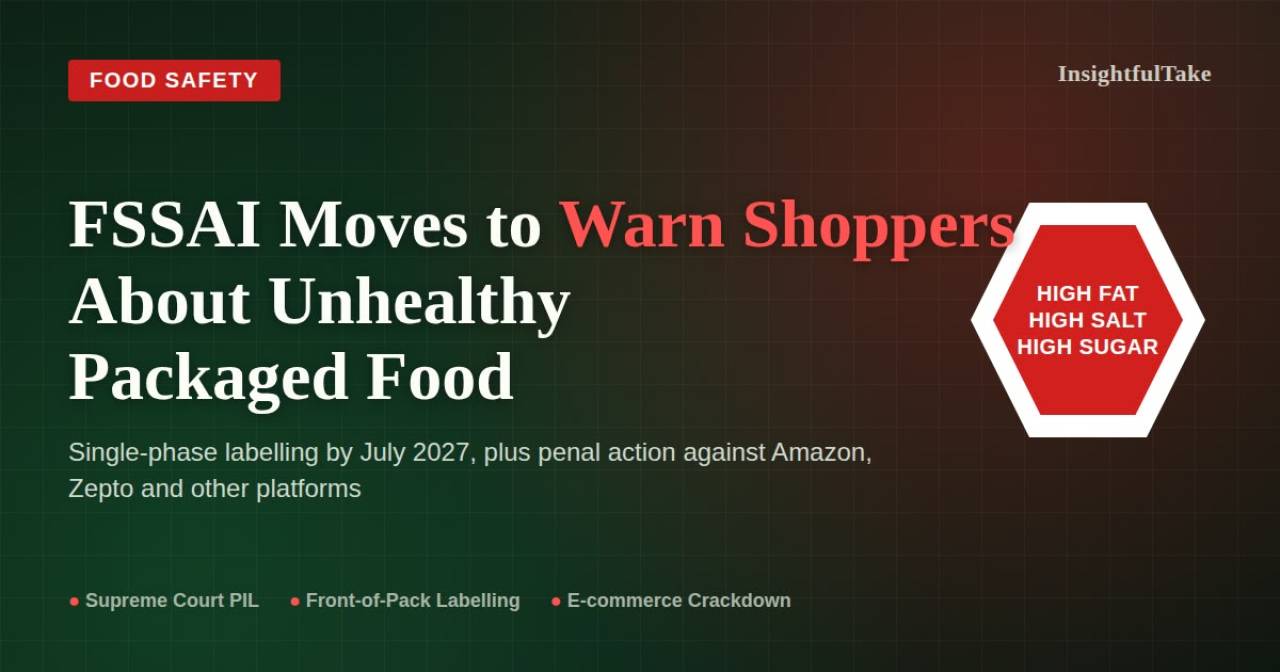
India may soon see clearer warning labels on packaged foods high in fat, salt or sugar, while FSSAI steps up enforcement against online food sellers.
India’s food safety regulator is moving ahead with a long-pending proposal to put clear warning labels on packaged foods high in fat, salt or sugar.
The Food Safety and Standards Authority of India (FSSAI) told the Supreme Court this week that it plans to introduce its Front-of-Pack Nutrition Labelling rules in a single phase, instead of implementing them in two stages as previously proposed.
The development follows a September 10 Supreme Court order in which a bench of Justices J B Pardiwala and K Vinod Chandran asked FSSAI to explain how it would determine the size, colour, placement and implementation timeline of the proposed warning labels.
The court was hearing a public interest case filed by the 3S and Our Health Society, which has sought front-of-pack warning labels similar to those adopted in several other countries. The objective is to make it easier for consumers, particularly parents and children, to identify products with high levels of nutrients associated with health risks when consumed excessively.
What the New Warning Labels Could Look Like
Under FSSAI’s proposed approach, packaged food products that are high in fat, salt or sugar, including products high in more than one of these, would have to carry a prominent warning on the front of the package.
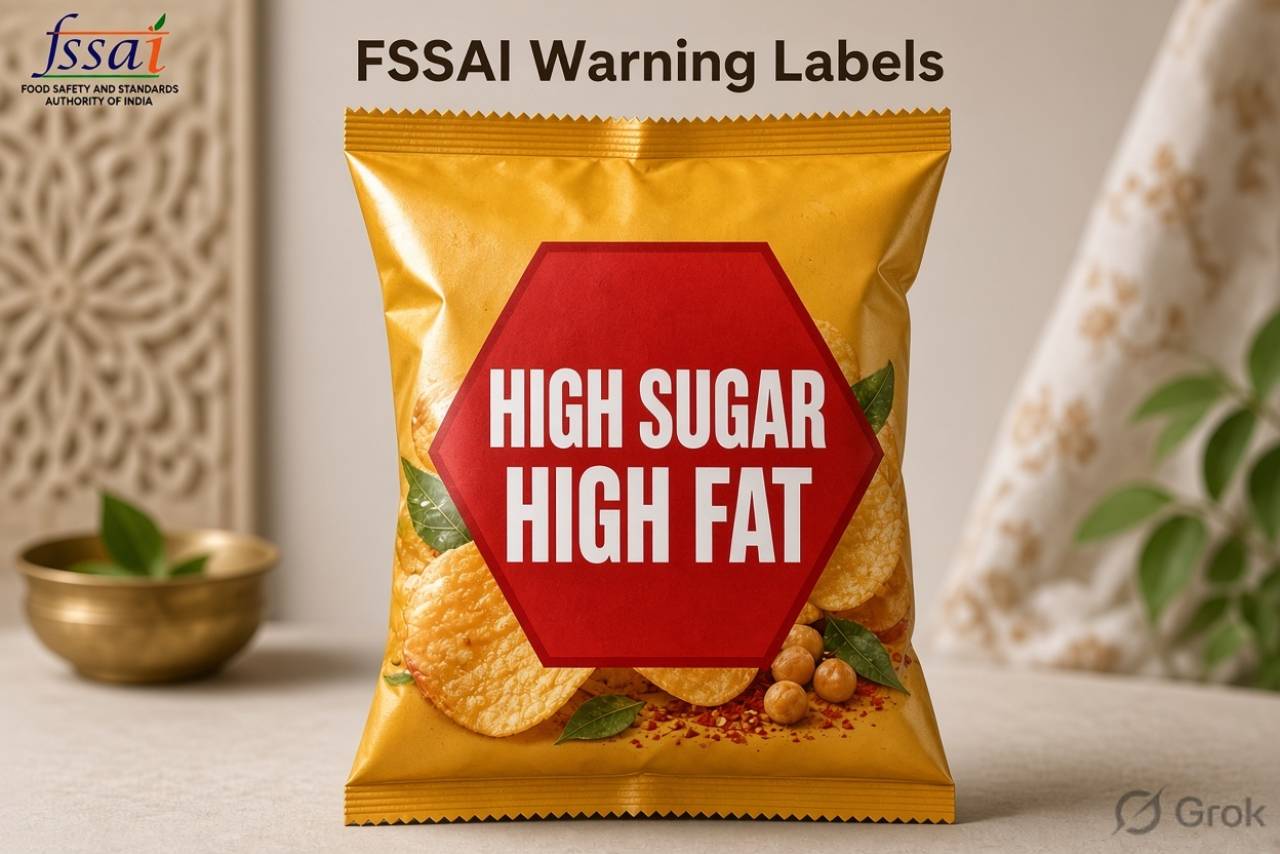
FSSAI has proposed a red hexagon inside a white square for the warning. The design is different from the regulator’s earlier proposal of using a standalone red hexagon.
The proposed format is intended to make the warning visible before consumers have to examine the detailed nutrition information printed elsewhere on the package.
Food Companies Could Get 365 Days to Comply
FSSAI has sought four months from the Supreme Court to finalise the draft regulations.
Once the rules are formally notified, food manufacturers would get 365 days to change their packaging to comply with the new requirements.
The regulator has said the transition period is necessary because companies already have packaging material printed in large quantities. An immediate change could leave manufacturers with significant quantities of unusable packaging.
However, the proposed timeline is not yet final. The draft rules will also have to go through public consultation before they are notified.
If the process proceeds according to the proposed schedule, the new labelling requirements could potentially take effect around July next year.
Why Front-of-Pack Warnings Matter
Millions of Indian consumers buy packaged snacks, biscuits, namkeens and ready-to-eat foods every day. Nutrition information is already required on food packaging, but detailed ingredient and nutrition tables can be difficult to interpret quickly while shopping.
A prominent symbol on the front of a package is intended to provide an immediate indication that a product contains high levels of fat, salt or sugar.
That could be particularly relevant for parents choosing food for children, who may be more influenced by packaging and product presentation than by detailed nutritional information.
The proposed system is therefore not intended to replace existing nutrition information. Instead, it would make certain information more visible at the point of purchase.
FSSAI Also Takes Action Against Online Food Sellers
The labelling proposal comes alongside a separate enforcement action by FSSAI against food products being sold through major e-commerce and quick-commerce platforms.
In a statement issued the same day, the regulator said it had initiated penal action over alleged misbranding, misleading claims and other food-safety violations.
The platforms named by FSSAI include Amazon, Swiggy Instamart, Bigbasket, Flipkart India and Zepto.
According to the regulator, the products identified during its checks included Happilo premium date bites, datura fruits and seeds, and three Milky Mist dairy products: low-fat cream, farm-fresh curd and Greek yoghurt.
FSSAI said the action has been initiated under the Food Safety and Standards Act, 2006, along with other applicable regulations.
The regulator also said it has been conducting regular quality checks and surprise inspections in recent months to examine food products sold through online platforms.
Why E-Commerce Platforms Are Also Under the Scanner
The action reflects a broader expansion of food-safety enforcement beyond manufacturers and traditional retailers.
FSSAI Chief Executive Rajit Punhani had earlier indicated that the regulator intended to extend its enforcement efforts to e-commerce platforms because these services effectively provide the digital shelf through which food products reach consumers.
That creates an additional layer of responsibility when products carrying misleading information or failing to meet food-safety requirements are offered for sale online.
A Two-Sided Push on Food Safety
The two developments address different points in the food-buying process.
Front-of-pack labelling is aimed at giving consumers clearer information before they buy a product, while action against online sellers focuses on ensuring that products offered through digital marketplaces comply with food-safety and labelling requirements.
For consumers, the larger issue is straightforward: having clearer information about what a packaged food contains and stronger checks on whether the product being sold meets regulatory requirements.
The proposed warning labels are still at the draft stage, and their final design, implementation timeline and legal requirements will depend on the regulatory process that follows.
India’s food safety regulator is moving ahead with a long-pending proposal to put clear warning labels on packaged foods high in fat, salt or sugar.
The Food Safety and Standards Authority of India (FSSAI) told the Supreme Court this week that it plans to introduce its Front-of-Pack Nutrition Labelling rules in a single phase, instead of implementing them in two stages as previously proposed.
The development follows a September 10 Supreme Court order in which a bench of Justices J B Pardiwala and K Vinod Chandran asked FSSAI to explain how it would determine the size, colour, placement and implementation timeline of the proposed warning labels.
The court was hearing a public interest case filed by the 3S and Our Health Society, which has sought front-of-pack warning labels similar to those adopted in several other countries. The objective is to make it easier for consumers, particularly parents and children, to identify products with high levels of nutrients associated with health risks when consumed excessively.
What the New Warning Labels Could Look Like
Under FSSAI’s proposed approach, packaged food products that are high in fat, salt or sugar, including products high in more than one of these, would have to carry a prominent warning on the front of the package.
FSSAI has proposed a red hexagon inside a white square for the warning. The design is different from the regulator’s earlier proposal of using a standalone red hexagon.
The proposed format is intended to make the warning visible before consumers have to examine the detailed nutrition information printed elsewhere on the package.
Food Companies Could Get 365 Days to Comply
FSSAI has sought four months from the Supreme Court to finalise the draft regulations.
Once the rules are formally notified, food manufacturers would get 365 days to change their packaging to comply with the new requirements.
The regulator has said the transition period is necessary because companies already have packaging material printed in large quantities. An immediate change could leave manufacturers with significant quantities of unusable packaging.
However, the proposed timeline is not yet final. The draft rules will also have to go through public consultation before they are notified.
If the process proceeds according to the proposed schedule, the new labelling requirements could potentially take effect around July next year.
Why Front-of-Pack Warnings Matter
Millions of Indian consumers buy packaged snacks, biscuits, namkeens and ready-to-eat foods every day. Nutrition information is already required on food packaging, but detailed ingredient and nutrition tables can be difficult to interpret quickly while shopping.
A prominent symbol on the front of a package is intended to provide an immediate indication that a product contains high levels of fat, salt or sugar.
That could be particularly relevant for parents choosing food for children, who may be more influenced by packaging and product presentation than by detailed nutritional information.
The proposed system is therefore not intended to replace existing nutrition information. Instead, it would make certain information more visible at the point of purchase.
FSSAI Also Takes Action Against Online Food Sellers
The labelling proposal comes alongside a separate enforcement action by FSSAI against food products being sold through major e-commerce and quick-commerce platforms.
In a statement issued the same day, the regulator said it had initiated penal action over alleged misbranding, misleading claims and other food-safety violations.
The platforms named by FSSAI include Amazon, Swiggy Instamart, Bigbasket, Flipkart India and Zepto.
According to the regulator, the products identified during its checks included Happilo premium date bites, datura fruits and seeds, and three Milky Mist dairy products: low-fat cream, farm-fresh curd and Greek yoghurt.
FSSAI said the action has been initiated under the Food Safety and Standards Act, 2006, along with other applicable regulations.
The regulator also said it has been conducting regular quality checks and surprise inspections in recent months to examine food products sold through online platforms.
Why E-Commerce Platforms Are Also Under the Scanner
The action reflects a broader expansion of food-safety enforcement beyond manufacturers and traditional retailers.
FSSAI Chief Executive Rajit Punhani had earlier indicated that the regulator intended to extend its enforcement efforts to e-commerce platforms because these services effectively provide the digital shelf through which food products reach consumers.
That creates an additional layer of responsibility when products carrying misleading information or failing to meet food-safety requirements are offered for sale online.
A Two-Sided Push on Food Safety
The two developments address different points in the food-buying process.
Front-of-pack labelling is aimed at giving consumers clearer information before they buy a product, while action against online sellers focuses on ensuring that products offered through digital marketplaces comply with food-safety and labelling requirements.
For consumers, the larger issue is straightforward: having clearer information about what a packaged food contains and stronger checks on whether the product being sold meets regulatory requirements.
The proposed warning labels are still at the draft stage, and their final design, implementation timeline and legal requirements will depend on the regulatory process that follows.


























Leave a Comment