
Whey is getting costlier, and India’s food companies are looking for another answer. Fermented yeast is emerging as the new protein bet.
For years, protein supplements in India were closely associated with tubs of whey powder on gym shelves. This trend is changing now. As whey becomes more expensive and harder to source, food and nutrition companies are looking at other ways to meet the country's growing demand for protein. Fermented yeast is emerging as one of the most promising alternatives.
Hindustan Unilever is the latest major company to enter the space with Horlicks Protein, available as both a powder and a ready-to-drink product. Horlicks has traditionally been positioned as a children's nutrition brand, but the new range is aimed at a much wider consumer base.
The strategy is to make protein part of everyday consumption rather than a product associated mainly with athletes and bodybuilders.
A serving of the powder costs about ₹83, while the ready-to-drink shake is priced at ₹120. Rajneet Kohli, who heads HUL's foods business, acknowledged that the company was entering the protein market relatively late. But he also pointed to the size of the opportunity. According to him, only about 3 percent of Indian households currently buy protein products.
For HUL, that means the bigger challenge is not just gaining market share. It is expanding the market itself.
Why whey is becoming expensive
The shift towards yeast protein is closely linked to the rising cost of whey.
Whey is a by-product of cheese-making. India produces large quantities of milk but has a relatively small cheese industry. As a result, supplement companies depend heavily on overseas suppliers for whey protein. Any disruption in global supply or increase in international prices quickly affects the Indian market.
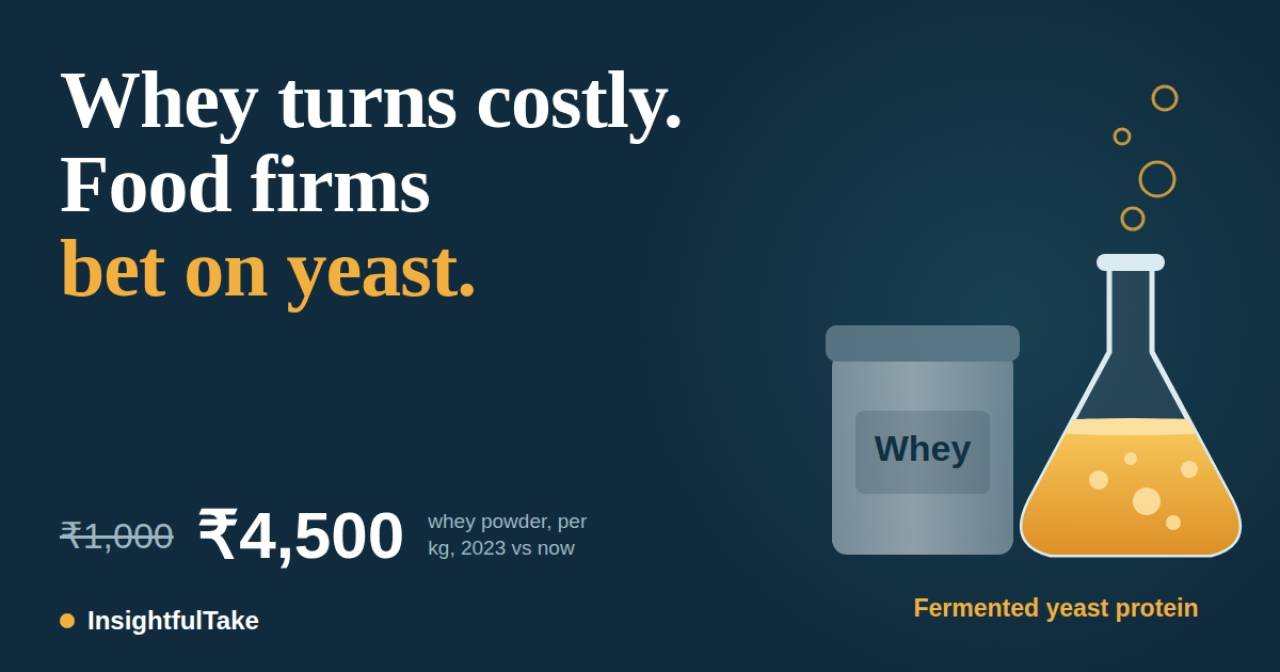
Industry executives say whey protein powder now costs more than ₹4,500 a kg, compared with around ₹1,000 in 2023.
The increase in the underlying raw material has been even sharper. Supplement-grade whey concentrate has reportedly risen from around ₹4.5 lakh a tonne in mid-2023 to nearly ₹30 lakh a tonne.
That makes whey a difficult ingredient for companies trying to sell protein products at prices affordable to a mass Indian market.
Yeast offers another option
Cost is only part of the argument.
Whey comes from milk, which makes it unsuitable for people who are lactose intolerant or prefer to avoid dairy. Fermented yeast protein offers companies a non-dairy alternative.
It also sits somewhere between traditional plant proteins and whey in terms of nutritional positioning. Companies developing yeast-based products say it can provide a good protein profile while offering better digestibility for some consumers.
That combination is what attracted HUL.
Kohli said the company was looking for a protein source that could deliver the nutritional quality it wanted while also working for a broader consumer market. Yeast fitted those requirements.
The timing also makes commercial sense.
According to an India Brand Equity Foundation report, India's protein supplements market was valued at ₹7,461 crore in 2024 and could reach ₹13,186 crore by 2033.
At the same time, protein intake remains a concern. The average Indian consumes about 47 grams of protein a day, compared with the 60 grams recommended by the Indian Council of Medical Research.
Affordability remains one of the biggest barriers. Imported protein supplements can be expensive for ordinary households, limiting their reach beyond fitness enthusiasts and higher-income consumers.
A more affordable protein source could therefore have implications beyond the supplement industry.
Marico and Cosmix are already betting on yeast
HUL is not the first major company to spot the opportunity.
Marico's Cosmix initially built its business around plant-based supplements before moving into fermented yeast protein. In January 2025, it launched a combination of plant and yeast proteins. It has since developed a dedicated yeast-protein range based on its own fermentation process, Fermagut.
Marico's investment reflects its confidence in the category. In February, it acquired a 60 percent stake in Cosmix Wellness for ₹226 crore, valuing the company at around ₹375 crore.
Another early entrant is SuperYou, the protein brand backed by actor Ranveer Singh.
The company entered the market when whey dominated the protein-supplement category. It has since expanded into yeast-based products, including biscuits containing yeast protein.
SuperYou co-founder Nikunj Biyani said the idea is to offer consumers different protein options rather than push a single source. The company is also developing products combining yeast and whey.
Biyani said SuperYou's yeast-protein products have recorded repeat purchase rates of more than 60 percent and now contribute meaningfully to the company's revenue, although he did not disclose specific numbers.
Yeast has a cost problem of its own
Yeast protein, however, is not immune to the same pressures affecting whey.
Biyani said yeast protein prices have increased by around 20 percent in the past six months. That suggests the ingredient could also become more expensive as more companies enter the category and demand rises.
For manufacturers, that could become the next challenge: keeping yeast protein affordable while scaling production.
A new protein market is taking shape
The rise of yeast protein started partly as a response to the rising cost of whey. It is now becoming something bigger.
HUL's entry gives the category the backing of one of India's largest consumer companies. Marico has already invested in the segment, while newer brands such as SuperYou are experimenting with formats ranging from shakes to biscuits.
The real test will be whether these products can move beyond gyms and fitness stores and become part of regular household consumption.
India's protein gap is large, but so is the price sensitivity of its consumers. If fermented yeast can offer a combination of nutrition, affordability and convenience, it could give food companies a way to reach consumers who have so far stayed outside the protein-supplement market.
For Indian consumers, that could mean that the next protein shake may not necessarily come from milk.
For years, protein supplements in India were closely associated with tubs of whey powder on gym shelves. This trend is changing now. As whey becomes more expensive and harder to source, food and nutrition companies are looking at other ways to meet the country's growing demand for protein. Fermented yeast is emerging as one of the most promising alternatives.
Hindustan Unilever is the latest major company to enter the space with Horlicks Protein, available as both a powder and a ready-to-drink product. Horlicks has traditionally been positioned as a children's nutrition brand, but the new range is aimed at a much wider consumer base.
The strategy is to make protein part of everyday consumption rather than a product associated mainly with athletes and bodybuilders.
A serving of the powder costs about ₹83, while the ready-to-drink shake is priced at ₹120. Rajneet Kohli, who heads HUL's foods business, acknowledged that the company was entering the protein market relatively late. But he also pointed to the size of the opportunity. According to him, only about 3 percent of Indian households currently buy protein products.
For HUL, that means the bigger challenge is not just gaining market share. It is expanding the market itself.
Why whey is becoming expensive
The shift towards yeast protein is closely linked to the rising cost of whey.
Whey is a by-product of cheese-making. India produces large quantities of milk but has a relatively small cheese industry. As a result, supplement companies depend heavily on overseas suppliers for whey protein. Any disruption in global supply or increase in international prices quickly affects the Indian market.
Industry executives say whey protein powder now costs more than ₹4,500 a kg, compared with around ₹1,000 in 2023.
The increase in the underlying raw material has been even sharper. Supplement-grade whey concentrate has reportedly risen from around ₹4.5 lakh a tonne in mid-2023 to nearly ₹30 lakh a tonne.
That makes whey a difficult ingredient for companies trying to sell protein products at prices affordable to a mass Indian market.
Yeast offers another option
Cost is only part of the argument.
Whey comes from milk, which makes it unsuitable for people who are lactose intolerant or prefer to avoid dairy. Fermented yeast protein offers companies a non-dairy alternative.
It also sits somewhere between traditional plant proteins and whey in terms of nutritional positioning. Companies developing yeast-based products say it can provide a good protein profile while offering better digestibility for some consumers.
That combination is what attracted HUL.
Kohli said the company was looking for a protein source that could deliver the nutritional quality it wanted while also working for a broader consumer market. Yeast fitted those requirements.
The timing also makes commercial sense.
According to an India Brand Equity Foundation report, India's protein supplements market was valued at ₹7,461 crore in 2024 and could reach ₹13,186 crore by 2033.
At the same time, protein intake remains a concern. The average Indian consumes about 47 grams of protein a day, compared with the 60 grams recommended by the Indian Council of Medical Research.
Affordability remains one of the biggest barriers. Imported protein supplements can be expensive for ordinary households, limiting their reach beyond fitness enthusiasts and higher-income consumers.
A more affordable protein source could therefore have implications beyond the supplement industry.
Marico and Cosmix are already betting on yeast
HUL is not the first major company to spot the opportunity.
Marico's Cosmix initially built its business around plant-based supplements before moving into fermented yeast protein. In January 2025, it launched a combination of plant and yeast proteins. It has since developed a dedicated yeast-protein range based on its own fermentation process, Fermagut.
Marico's investment reflects its confidence in the category. In February, it acquired a 60 percent stake in Cosmix Wellness for ₹226 crore, valuing the company at around ₹375 crore.
Another early entrant is SuperYou, the protein brand backed by actor Ranveer Singh.
The company entered the market when whey dominated the protein-supplement category. It has since expanded into yeast-based products, including biscuits containing yeast protein.
SuperYou co-founder Nikunj Biyani said the idea is to offer consumers different protein options rather than push a single source. The company is also developing products combining yeast and whey.
Biyani said SuperYou's yeast-protein products have recorded repeat purchase rates of more than 60 percent and now contribute meaningfully to the company's revenue, although he did not disclose specific numbers.
Yeast has a cost problem of its own
Yeast protein, however, is not immune to the same pressures affecting whey.
Biyani said yeast protein prices have increased by around 20 percent in the past six months. That suggests the ingredient could also become more expensive as more companies enter the category and demand rises.
For manufacturers, that could become the next challenge: keeping yeast protein affordable while scaling production.
A new protein market is taking shape
The rise of yeast protein started partly as a response to the rising cost of whey. It is now becoming something bigger.
HUL's entry gives the category the backing of one of India's largest consumer companies. Marico has already invested in the segment, while newer brands such as SuperYou are experimenting with formats ranging from shakes to biscuits.
The real test will be whether these products can move beyond gyms and fitness stores and become part of regular household consumption.
India's protein gap is large, but so is the price sensitivity of its consumers. If fermented yeast can offer a combination of nutrition, affordability and convenience, it could give food companies a way to reach consumers who have so far stayed outside the protein-supplement market.
For Indian consumers, that could mean that the next protein shake may not necessarily come from milk.


























Leave a Comment