

India’s men’s hockey team defended its Asian Games crown with a 5-1 win over Malaysia, securing gold and a ticket to the Los Angeles 2028 Olympics.
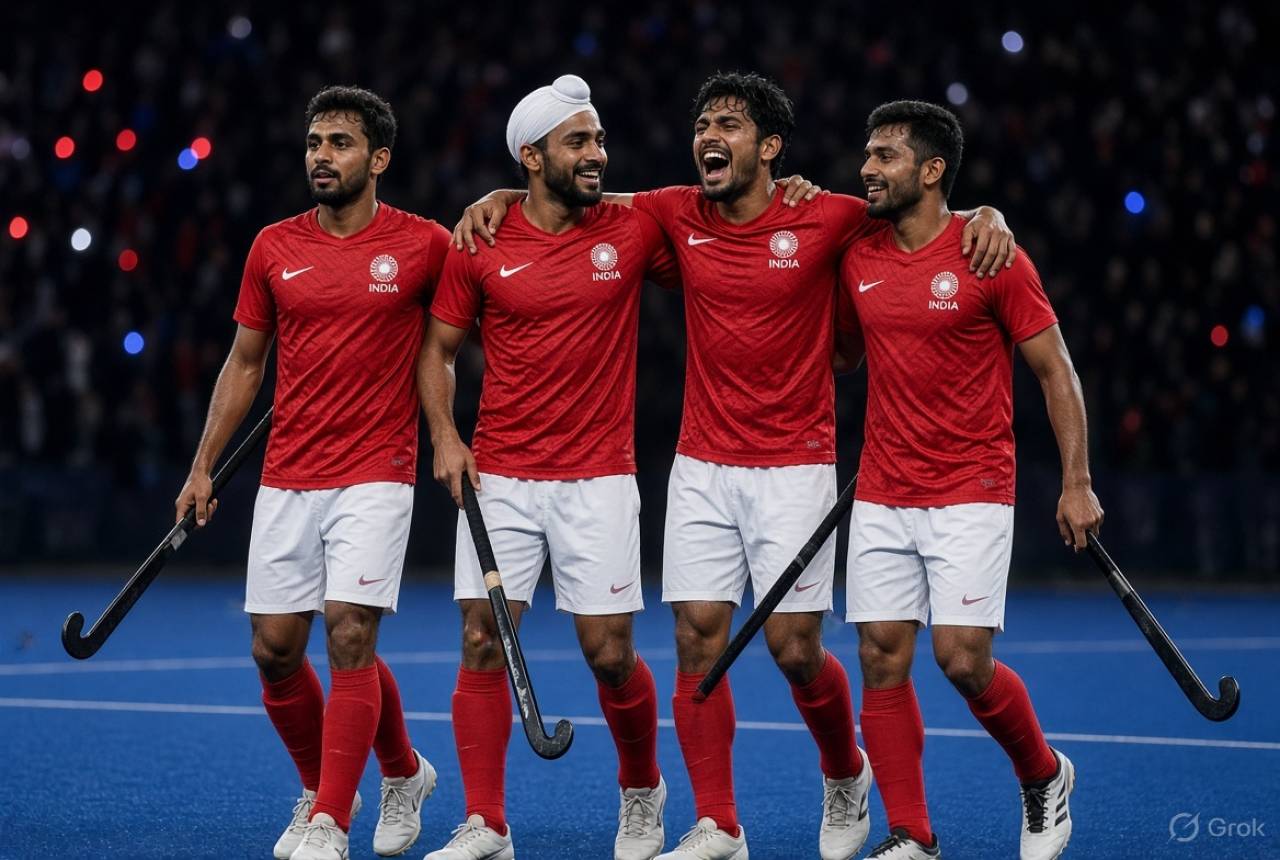
On a cool evening in Kakamigahara, Japan, the final hooter sounded and the Indian men’s hockey team gathered on the blue turf. A 5-1 win over Malaysia had given them more than another Asian Games gold. It had also secured India’s place in the men’s hockey competition at the 2028 Los Angeles Olympics.
The players hugged, raised their sticks and smiled through the exhaustion. It was a controlled victory from a team that has learned to handle the expectations that come with wearing the India jersey.
India took control early. Abhishek’s sharp circle entry in the 11th minute earned the first penalty corner. The initial attempt did not come off, but the second opportunity was converted by Harmanpreet Singh, whose powerful drag-flick found the net.
India 1-0 Malaysia.
Malaysia tried to respond, but India’s defence remained organised. Harmanpreet, leading from the back, helped win possession and quickly turned defence into attack.
The second quarter was more measured. India did not rush, and their patience produced another opportunity. A stick check on Shilanand Lakra resulted in another penalty corner. Jugraj Singh stepped up and sent a low, powerful flick past the Malaysian defence.
2-0.
Malaysia had experienced players on the field, but India’s structure made it difficult for them to create clear openings. The team coached by Craig Fulton continued to maintain its shape while looking for opportunities to attack.
After the interval, India increased the pressure.
Sanjay began controlling the game from deep, using long aerial passes to stretch the Malaysian defence. India’s third goal came through a well-worked move. Abhishek drove forward from the right before cutting the ball back towards Sukhjeet Singh. The pass reached Shilanand Lakra in front of goal, and he made no mistake.
3-0.
Malaysia eventually found a response, but India did not allow the momentum to shift.
The fourth quarter belonged to the defending champions. Another penalty corner gave Harmanpreet the opportunity to strike again, and he converted to make it 4-1. India added a fifth before the final hooter to complete a convincing 5-1 victory.
There were no cards during the match. The contest was physical and competitive, but both teams maintained discipline.
For India, the result carried significance beyond the scoreline.
For the first time, both Indian hockey teams returned from the Asian Games with gold medals. The women’s team had ended a 44-year wait for the Asian Games title by defeating China in the final. The men then successfully defended their crown and secured the Olympic qualification that came with it.
The double gold also means both Indian teams have booked their places at the Los Angeles 2028 Olympics.
Harmanpreet once again stood at the centre of India’s performance. His influence extended beyond penalty corners. His passing helped connect defence with attack, while his experience gave the younger players around him room to play with confidence.
That balance has become one of India’s strengths.
Fulton also understood the opposition well. He had previously played alongside Malaysia coach Brendon Carolan, giving him an insight into the Malaysian approach. But the decisive factor was what India did on the pitch. They remained compact when Malaysia pressed high and attacked quickly whenever space appeared.
There was no need for desperation or last-minute heroics.
India had control.
The gold medal also provides a strong starting point for the next Olympic cycle. Los Angeles is still some distance away, but qualification removes one major hurdle and gives the team time to focus on building a side capable of competing at the highest level.
The final picture from Kakamigahara was fitting. Indian players walked off the turf together, sticks in hand, with the scoreboard behind them reading 5-1.
The gold was secured. The Olympic ticket was booked.
For Indian hockey, the road to Los Angeles has begun.
On a cool evening in Kakamigahara, Japan, the final hooter sounded and the Indian men’s hockey team gathered on the blue turf. A 5-1 win over Malaysia had given them more than another Asian Games gold. It had also secured India’s place in the men’s hockey competition at the 2028 Los Angeles Olympics.
The players hugged, raised their sticks and smiled through the exhaustion. It was a controlled victory from a team that has learned to handle the expectations that come with wearing the India jersey.
India took control early. Abhishek’s sharp circle entry in the 11th minute earned the first penalty corner. The initial attempt did not come off, but the second opportunity was converted by Harmanpreet Singh, whose powerful drag-flick found the net.
India 1-0 Malaysia.
Malaysia tried to respond, but India’s defence remained organised. Harmanpreet, leading from the back, helped win possession and quickly turned defence into attack.
The second quarter was more measured. India did not rush, and their patience produced another opportunity. A stick check on Shilanand Lakra resulted in another penalty corner. Jugraj Singh stepped up and sent a low, powerful flick past the Malaysian defence.
2-0.
Malaysia had experienced players on the field, but India’s structure made it difficult for them to create clear openings. The team coached by Craig Fulton continued to maintain its shape while looking for opportunities to attack.
After the interval, India increased the pressure.
Sanjay began controlling the game from deep, using long aerial passes to stretch the Malaysian defence. India’s third goal came through a well-worked move. Abhishek drove forward from the right before cutting the ball back towards Sukhjeet Singh. The pass reached Shilanand Lakra in front of goal, and he made no mistake.
3-0.
Malaysia eventually found a response, but India did not allow the momentum to shift.
The fourth quarter belonged to the defending champions. Another penalty corner gave Harmanpreet the opportunity to strike again, and he converted to make it 4-1. India added a fifth before the final hooter to complete a convincing 5-1 victory.
There were no cards during the match. The contest was physical and competitive, but both teams maintained discipline.
For India, the result carried significance beyond the scoreline.
For the first time, both Indian hockey teams returned from the Asian Games with gold medals. The women’s team had ended a 44-year wait for the Asian Games title by defeating China in the final. The men then successfully defended their crown and secured the Olympic qualification that came with it.
The double gold also means both Indian teams have booked their places at the Los Angeles 2028 Olympics.
Harmanpreet once again stood at the centre of India’s performance. His influence extended beyond penalty corners. His passing helped connect defence with attack, while his experience gave the younger players around him room to play with confidence.
That balance has become one of India’s strengths.
Fulton also understood the opposition well. He had previously played alongside Malaysia coach Brendon Carolan, giving him an insight into the Malaysian approach. But the decisive factor was what India did on the pitch. They remained compact when Malaysia pressed high and attacked quickly whenever space appeared.
There was no need for desperation or last-minute heroics.
India had control.
The gold medal also provides a strong starting point for the next Olympic cycle. Los Angeles is still some distance away, but qualification removes one major hurdle and gives the team time to focus on building a side capable of competing at the highest level.
The final picture from Kakamigahara was fitting. Indian players walked off the turf together, sticks in hand, with the scoreboard behind them reading 5-1.
The gold was secured. The Olympic ticket was booked.
For Indian hockey, the road to Los Angeles has begun.




















Leave a Comment