
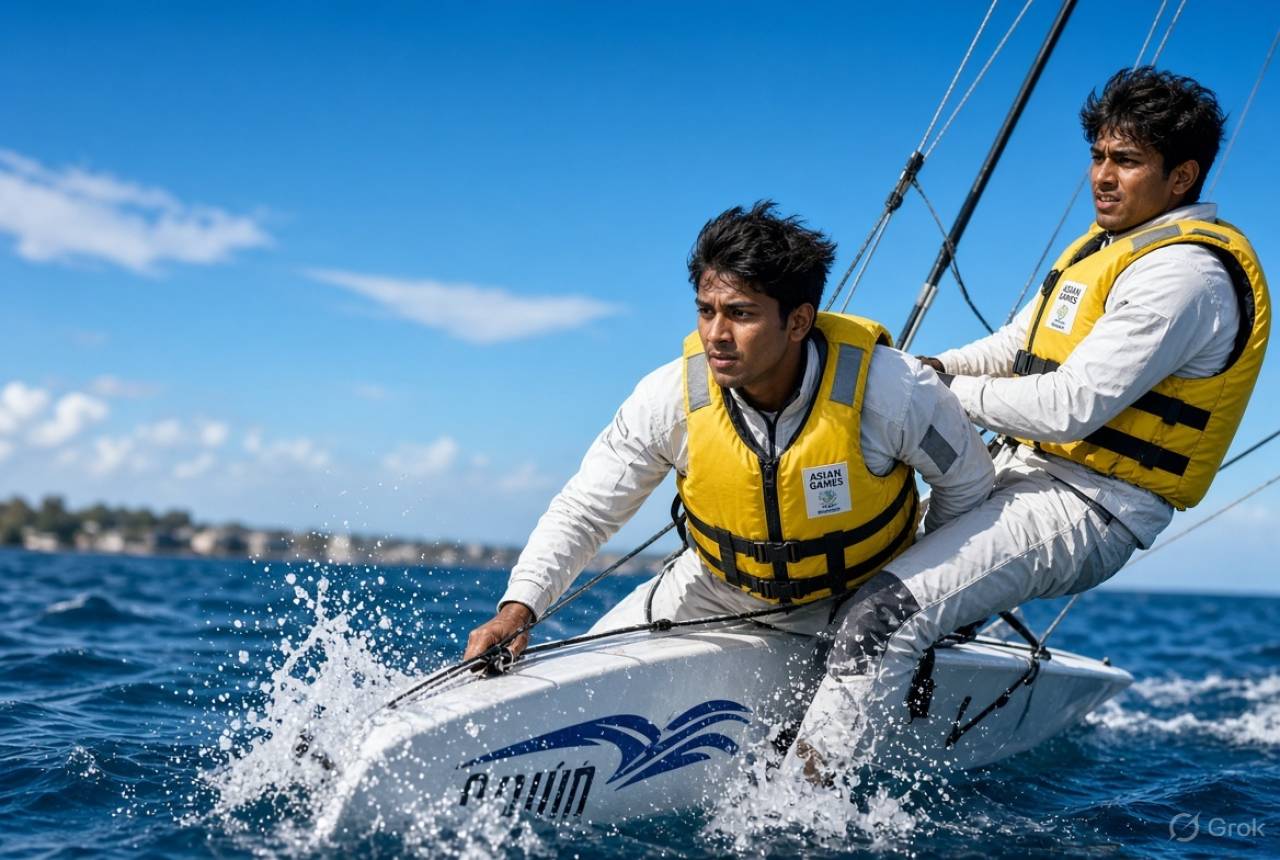
Two cousins from Kochi turned childhood fun into a sailing partnership that carried them to Asian Games silver and closer to their Olympic dream.
The medal table says Manu Francis and Prince Kurisinkal Noble finished second in the men’s skiff. The real story is how two cousins from Kochi turned childhood boredom into a sailing partnership strong enough to carry them through rain, typhoon warnings and the pressure of their first Asian Games.
Francis and Noble did not grow up dreaming of Olympic cycles or Army sports quotas. In late 2008, they were simply two boys looking for something to do by the water.
“We didn’t know much about sailing. We were only looking for some entertainment,” Francis recalled with a laugh.
Entertainment became habit. Habit became partnership.
By 2017, they had settled into the 49er class because, as Francis put it, “we felt like we had the correct weight.” More importantly, they already knew each other’s rhythms. They had shared the same childhood, the same Malayalam jokes and the same family gatherings.
That familiarity became particularly valuable on the water.
When they speak during a race, coach Sandeep Jain often cannot follow a word. He does not mind.
“It’s their way of communicating with each other,” he says.
In a sport where split-second decisions can decide medals, that unspoken fluency is an advantage no training manual can manufacture.
A Race Against the Conditions
The conditions in Aichi tested every calculation.
There was rain one day, near-still air the next, followed by high winds and the constant shadow of typhoon warnings. The cousins arrived in Japan almost two weeks early after a three-month training block in Europe, a preparation phase Jain believes “helped them a lot.”
Even with that preparation, the pressure of a first Asian Games was difficult to ignore.
Francis and Noble had led after Wednesday. Gold was within reach.
Thursday brought silver instead.
Francis remained measured about the result.
“I am very happy and proud to have won a medal for India,” he said.
The words reflected satisfaction, but the medal carried a much deeper personal meaning for Noble.
A Medal Carrying a Father's Memory
Prince Noble’s father was a fisherman. He died during the devastating Kerala floods of 2018.
The loss remains part of the story behind the silver medal.
“With the silver medal today, I have done more than what my father had wanted,” Noble said.
After the floods, his mother became the steady centre of his support system. Francis’s mother, her sister, became another important part of that quiet family backbone.
The cousins see their families for only around 15 to 20 days a year. Neither has ever been made to feel guilty about the long absences.
That emotional freedom matters.
Competitive sailing demands months away from home, long training blocks and constant adjustment between athlete and boat. Having families that understand those demands can become an advantage, even if it never appears in a results sheet.
The Partnership Behind the Boat
Their coach, Sandeep Jain, is a former sailor who once competed in the same class. He began working with the cousins at the Army Yachting Node in Mumbai in 2021.
Jain's role is technical.
The cousins' partnership is something different.
The Army recruitment that brought both men from Kerala to Mumbai gave them structure, facilities and a professional sporting environment. Their European training block exposed them to stronger international competition.
But the foundation of their partnership had been built much earlier.
They had grown up together. They knew when to joke, when to argue and when to correct each other. They could communicate quickly without allowing disagreement to disrupt their concentration.
And they could do much of it in a language their coach himself did not understand.
That detail says more about their partnership than any medal statistic.
In a 49er skiff, where two sailors have to make rapid decisions while managing a highly responsive boat, trust is not an abstract quality. It can determine whether a decision works or costs valuable seconds.
For Francis and Noble, that trust was built over years rather than manufactured in a training programme.
India's Sailing Story Is Growing
There was another Indian success in the skiff events on the same day.
Harshita Tomar and Shital Verma won bronze in the women's event, adding another medal to India's sailing campaign.
Indian sailing is no longer a solitary pursuit on the Asian stage.
For Francis and Noble, however, the men's silver carries a particular emotional weight because it combines sporting achievement with a deeply personal history.
The cousins were already twice bronze medallists at the Asian Championships. The Asian Games silver now gives them another reason to believe they can compete at an even higher level.
The next target is no longer distant.
The 2028 Los Angeles Olympics are firmly in their sights.
“This gives huge confidence,” Francis said. “We were competing with some good sailors and Olympians. If we keep improving, we are confident of qualification.”
More Than a Silver Medal
Sports readers already know that India won a silver medal.
What they may not have felt is the texture of the achievement.
Two cousins from Kochi began sailing simply because they were looking for something to do. One of them lost his father in the Kerala floods. Both left home for long periods to pursue a demanding sporting career. Under pressure, they communicate in a private language shaped by childhood familiarity.
Now they carry an Asian Games silver medal.
The scoreboard records their position. Their story explains why it mattered.
In skiff sailing, where boats are light, decisions are fast and partnership is everything, Francis and Noble have shown that sophisticated equipment and professional preparation are only part of the equation.
Sometimes, the most valuable advantage is the person beside you who has known you since childhood.
That is the part no medal table can capture.
The medal table says Manu Francis and Prince Kurisinkal Noble finished second in the men’s skiff. The real story is how two cousins from Kochi turned childhood boredom into a sailing partnership strong enough to carry them through rain, typhoon warnings and the pressure of their first Asian Games.
Francis and Noble did not grow up dreaming of Olympic cycles or Army sports quotas. In late 2008, they were simply two boys looking for something to do by the water.
“We didn’t know much about sailing. We were only looking for some entertainment,” Francis recalled with a laugh.
Entertainment became habit. Habit became partnership.
By 2017, they had settled into the 49er class because, as Francis put it, “we felt like we had the correct weight.” More importantly, they already knew each other’s rhythms. They had shared the same childhood, the same Malayalam jokes and the same family gatherings.
That familiarity became particularly valuable on the water.
When they speak during a race, coach Sandeep Jain often cannot follow a word. He does not mind.
“It’s their way of communicating with each other,” he says.
In a sport where split-second decisions can decide medals, that unspoken fluency is an advantage no training manual can manufacture.
A Race Against the Conditions
The conditions in Aichi tested every calculation.
There was rain one day, near-still air the next, followed by high winds and the constant shadow of typhoon warnings. The cousins arrived in Japan almost two weeks early after a three-month training block in Europe, a preparation phase Jain believes “helped them a lot.”
Even with that preparation, the pressure of a first Asian Games was difficult to ignore.
Francis and Noble had led after Wednesday. Gold was within reach.
Thursday brought silver instead.
Francis remained measured about the result.
“I am very happy and proud to have won a medal for India,” he said.
The words reflected satisfaction, but the medal carried a much deeper personal meaning for Noble.
A Medal Carrying a Father's Memory
Prince Noble’s father was a fisherman. He died during the devastating Kerala floods of 2018.
The loss remains part of the story behind the silver medal.
“With the silver medal today, I have done more than what my father had wanted,” Noble said.
After the floods, his mother became the steady centre of his support system. Francis’s mother, her sister, became another important part of that quiet family backbone.
The cousins see their families for only around 15 to 20 days a year. Neither has ever been made to feel guilty about the long absences.
That emotional freedom matters.
Competitive sailing demands months away from home, long training blocks and constant adjustment between athlete and boat. Having families that understand those demands can become an advantage, even if it never appears in a results sheet.
The Partnership Behind the Boat
Their coach, Sandeep Jain, is a former sailor who once competed in the same class. He began working with the cousins at the Army Yachting Node in Mumbai in 2021.
Jain's role is technical.
The cousins' partnership is something different.
The Army recruitment that brought both men from Kerala to Mumbai gave them structure, facilities and a professional sporting environment. Their European training block exposed them to stronger international competition.
But the foundation of their partnership had been built much earlier.
They had grown up together. They knew when to joke, when to argue and when to correct each other. They could communicate quickly without allowing disagreement to disrupt their concentration.
And they could do much of it in a language their coach himself did not understand.
That detail says more about their partnership than any medal statistic.
In a 49er skiff, where two sailors have to make rapid decisions while managing a highly responsive boat, trust is not an abstract quality. It can determine whether a decision works or costs valuable seconds.
For Francis and Noble, that trust was built over years rather than manufactured in a training programme.
India's Sailing Story Is Growing
There was another Indian success in the skiff events on the same day.
Harshita Tomar and Shital Verma won bronze in the women's event, adding another medal to India's sailing campaign.
Indian sailing is no longer a solitary pursuit on the Asian stage.
For Francis and Noble, however, the men's silver carries a particular emotional weight because it combines sporting achievement with a deeply personal history.
The cousins were already twice bronze medallists at the Asian Championships. The Asian Games silver now gives them another reason to believe they can compete at an even higher level.
The next target is no longer distant.
The 2028 Los Angeles Olympics are firmly in their sights.
“This gives huge confidence,” Francis said. “We were competing with some good sailors and Olympians. If we keep improving, we are confident of qualification.”
More Than a Silver Medal
Sports readers already know that India won a silver medal.
What they may not have felt is the texture of the achievement.
Two cousins from Kochi began sailing simply because they were looking for something to do. One of them lost his father in the Kerala floods. Both left home for long periods to pursue a demanding sporting career. Under pressure, they communicate in a private language shaped by childhood familiarity.
Now they carry an Asian Games silver medal.
The scoreboard records their position. Their story explains why it mattered.
In skiff sailing, where boats are light, decisions are fast and partnership is everything, Francis and Noble have shown that sophisticated equipment and professional preparation are only part of the equation.
Sometimes, the most valuable advantage is the person beside you who has known you since childhood.
That is the part no medal table can capture.
















Leave a Comment