
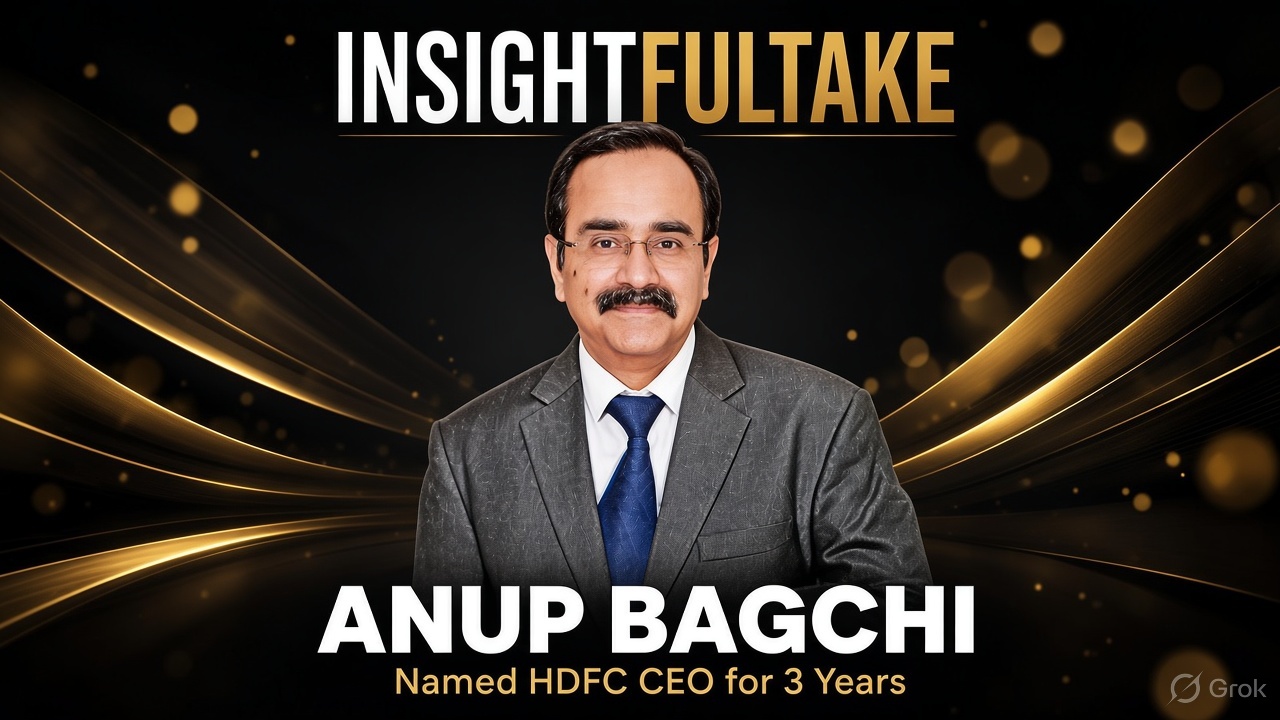
Anup Bagchi did not follow a straight career path. From chemical engineering to banking, insurance and now HDFC Bank, his journey offers lessons in building a long-term career.
Anup Bagchi’s appointment as the next chief executive of HDFC Bank is more than a leadership change at India’s largest private sector lender. His career offers a useful lesson for professionals who may not follow a straight line from their education to the top of their field.
The Reserve Bank of India has approved Bagchi as Chief Executive Officer of HDFC Bank for a three-year term beginning October 27. At 56, he takes charge after more than three decades across banking and financial services.
His journey began far from the corner office of a major bank.
From Chemical Engineering to Banking
Bagchi studied chemical engineering at IIT Kanpur before completing a management degree from IIM Bangalore. But he did not pursue a career in engineering.
In 1992, he joined ICICI and moved into banking. Over the next three decades, he built experience across several parts of the financial services business.
That first career shift is perhaps the simplest lesson from his journey. A professional's degree can open the first door, but it does not have to determine the rest of the career.
Learning How the Whole Business Works
Bagchi's experience was not limited to one banking function. During his years at ICICI, he worked across wholesale banking, transaction banking, retail banking, treasury, investment banking, and payment and settlement systems.
That breadth matters at the top of a large financial institution. A CEO has to understand how different parts of a business connect, rather than knowing only one department in depth.
His varied experience eventually made him a strong contender for the HDFC Bank role.
Taking on Bigger Responsibilities
Bagchi's leadership journey developed gradually.
In 2011, he moved from executive director to chief executive of ICICI Securities, the group's brokerage business. He led the company from May 2011 to October 2016.
He then moved to another group entity before returning to ICICI Bank as an executive director in February 2017.
Each transition brought a different business challenge and a larger leadership responsibility. There was no single promotion that transformed his career. The progression came through repeated moves into roles that expanded his understanding of the business.
Turning GST Data Into a Lending Opportunity
One of Bagchi's notable contributions at ICICI Bank involved lending to small businesses.
For banks, assessing the financial health of small businesses has often been difficult. Traditional records do not always provide a complete picture of cash flows. A former colleague recalled that bank staff sometimes had to observe customer footfall at shops to estimate business activity.
The introduction of the Goods and Services Tax changed the availability of business data.
Once businesses began filing GST returns, banks had access to another source of information about their sales and financial activity. Under Bagchi's leadership, ICICI Bank developed lending based on GST return data for small businesses.
The larger career lesson goes beyond the product itself. Bagchi recognised that a policy change had created a new pool of useful data and saw how that data could solve an existing business problem.
For professionals, that is an important habit: watch for changes in your industry, understand what new information or technology they create, and think about how that change can solve a real customer problem.
Technical Skills Are Not Enough
Former colleagues have described Bagchi as an intelligent executive who is also effective at working with people and getting decisions moving.
That combination becomes increasingly important as professionals move into senior management.
Technical knowledge may help someone become an expert, but leadership requires the ability to communicate, build relationships, persuade teams and turn ideas into execution.
Bagchi's career illustrates that progression from specialist knowledge to organisational leadership.
A Detour Into Insurance
Bagchi's career also shows why professionals should not necessarily view a change of sector as a setback.
After his years at ICICI Bank, he spent around three years in the insurance business. His return to banking now puts him among senior executives who have moved between the two sectors.
In 2019, Amitabh Chaudhry moved from HDFC Life Insurance to become CEO of Axis Bank. Bagchi's own move into insurance and subsequent return to banking followed a different path but carried a similar lesson.
A career does not always have to move vertically. Sometimes a move sideways can add experience that becomes valuable later.
The Challenge Ahead at HDFC Bank
Bagchi succeeds Sashidhar Jagdishan, who decided not to seek a third term as HDFC Bank's CEO.
The appointment comes at a time when the bank has faced scrutiny and controversies, giving the new chief executive significant challenges from the outset. His immediate task will be to lead a very large organisation while maintaining growth, customer confidence and operational discipline.
The speculation over the lender's next chief executive now ends with a leader whose career has been built across multiple areas of financial services.
What Professionals Can Learn From Bagchi
Bagchi's career offers several practical lessons for Indian professionals.
Do not restrict yourself to one function. Understanding different parts of a business can become a major advantage when you take on leadership roles.
Look for real customer problems. His work around GST-based lending was connected to a practical difficulty faced by small businesses.
Pay attention to changes around you. Policy changes, technology and new sources of data can create opportunities that did not exist earlier.
Do not be afraid to change direction. Bagchi moved from chemical engineering to banking and later into insurance before returning to banking.
Develop people skills alongside technical expertise. Senior leadership depends as much on influencing and working with people as it does on subject knowledge.
Most importantly, Bagchi's rise did not happen through one dramatic career jump. It was built over more than 30 years through new responsibilities, different businesses and repeated opportunities to learn.
For professionals who feel stuck because their current role does not resemble the career they originally imagined, his journey offers a glimpse - a career can change direction without losing momentum. Sometimes the longest route is the one that prepares you best for the top.
Anup Bagchi’s appointment as the next chief executive of HDFC Bank is more than a leadership change at India’s largest private sector lender. His career offers a useful lesson for professionals who may not follow a straight line from their education to the top of their field.
The Reserve Bank of India has approved Bagchi as Chief Executive Officer of HDFC Bank for a three-year term beginning October 27. At 56, he takes charge after more than three decades across banking and financial services.
His journey began far from the corner office of a major bank.
From Chemical Engineering to Banking
Bagchi studied chemical engineering at IIT Kanpur before completing a management degree from IIM Bangalore. But he did not pursue a career in engineering.
In 1992, he joined ICICI and moved into banking. Over the next three decades, he built experience across several parts of the financial services business.
That first career shift is perhaps the simplest lesson from his journey. A professional's degree can open the first door, but it does not have to determine the rest of the career.
Learning How the Whole Business Works
Bagchi's experience was not limited to one banking function. During his years at ICICI, he worked across wholesale banking, transaction banking, retail banking, treasury, investment banking, and payment and settlement systems.
That breadth matters at the top of a large financial institution. A CEO has to understand how different parts of a business connect, rather than knowing only one department in depth.
His varied experience eventually made him a strong contender for the HDFC Bank role.
Taking on Bigger Responsibilities
Bagchi's leadership journey developed gradually.
In 2011, he moved from executive director to chief executive of ICICI Securities, the group's brokerage business. He led the company from May 2011 to October 2016.
He then moved to another group entity before returning to ICICI Bank as an executive director in February 2017.
Each transition brought a different business challenge and a larger leadership responsibility. There was no single promotion that transformed his career. The progression came through repeated moves into roles that expanded his understanding of the business.
Turning GST Data Into a Lending Opportunity
One of Bagchi's notable contributions at ICICI Bank involved lending to small businesses.
For banks, assessing the financial health of small businesses has often been difficult. Traditional records do not always provide a complete picture of cash flows. A former colleague recalled that bank staff sometimes had to observe customer footfall at shops to estimate business activity.
The introduction of the Goods and Services Tax changed the availability of business data.
Once businesses began filing GST returns, banks had access to another source of information about their sales and financial activity. Under Bagchi's leadership, ICICI Bank developed lending based on GST return data for small businesses.
The larger career lesson goes beyond the product itself. Bagchi recognised that a policy change had created a new pool of useful data and saw how that data could solve an existing business problem.
For professionals, that is an important habit: watch for changes in your industry, understand what new information or technology they create, and think about how that change can solve a real customer problem.
Technical Skills Are Not Enough
Former colleagues have described Bagchi as an intelligent executive who is also effective at working with people and getting decisions moving.
That combination becomes increasingly important as professionals move into senior management.
Technical knowledge may help someone become an expert, but leadership requires the ability to communicate, build relationships, persuade teams and turn ideas into execution.
Bagchi's career illustrates that progression from specialist knowledge to organisational leadership.
A Detour Into Insurance
Bagchi's career also shows why professionals should not necessarily view a change of sector as a setback.
After his years at ICICI Bank, he spent around three years in the insurance business. His return to banking now puts him among senior executives who have moved between the two sectors.
In 2019, Amitabh Chaudhry moved from HDFC Life Insurance to become CEO of Axis Bank. Bagchi's own move into insurance and subsequent return to banking followed a different path but carried a similar lesson.
A career does not always have to move vertically. Sometimes a move sideways can add experience that becomes valuable later.
The Challenge Ahead at HDFC Bank
Bagchi succeeds Sashidhar Jagdishan, who decided not to seek a third term as HDFC Bank's CEO.
The appointment comes at a time when the bank has faced scrutiny and controversies, giving the new chief executive significant challenges from the outset. His immediate task will be to lead a very large organisation while maintaining growth, customer confidence and operational discipline.
The speculation over the lender's next chief executive now ends with a leader whose career has been built across multiple areas of financial services.
What Professionals Can Learn From Bagchi
Bagchi's career offers several practical lessons for Indian professionals.
Do not restrict yourself to one function. Understanding different parts of a business can become a major advantage when you take on leadership roles.
Look for real customer problems. His work around GST-based lending was connected to a practical difficulty faced by small businesses.
Pay attention to changes around you. Policy changes, technology and new sources of data can create opportunities that did not exist earlier.
Do not be afraid to change direction. Bagchi moved from chemical engineering to banking and later into insurance before returning to banking.
Develop people skills alongside technical expertise. Senior leadership depends as much on influencing and working with people as it does on subject knowledge.
Most importantly, Bagchi's rise did not happen through one dramatic career jump. It was built over more than 30 years through new responsibilities, different businesses and repeated opportunities to learn.
For professionals who feel stuck because their current role does not resemble the career they originally imagined, his journey offers a glimpse - a career can change direction without losing momentum. Sometimes the longest route is the one that prepares you best for the top.

















Leave a Comment