
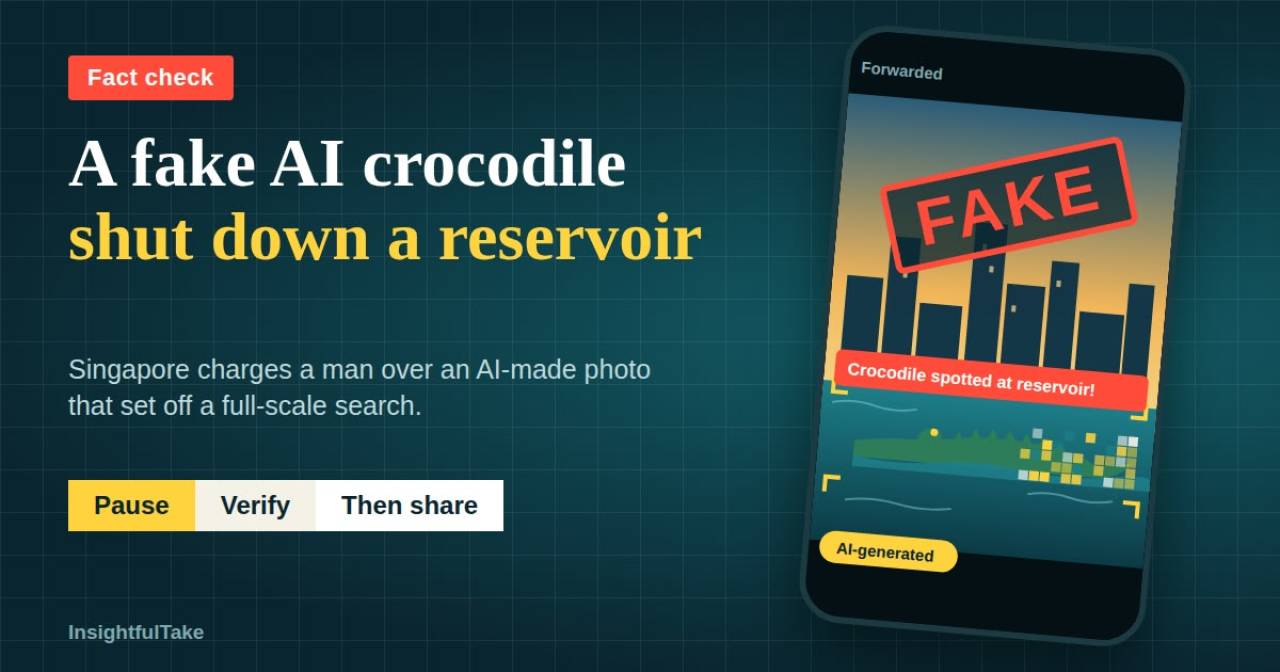
A fake crocodile never entered the water, but an AI-generated image was enough to trigger a real search operation in Singapore.
Imagine jogging beside a lake early in the morning when someone shows you a photo of a huge crocodile lurking nearby. Would you stop to check whether it was real, or would you simply run?
Something similar happened recently in Singapore. A fake image of a saltwater crocodile triggered a real search operation at a public reservoir and has now led to criminal charges against the man accused of creating and sharing it using artificial intelligence.
What Happened
According to a report by Agence France-Presse, Singapore police have charged a 30-year-old Myanmar national identified as Ye Lin.
Police allege that he used an AI tool to create a realistic image of a saltwater crocodile and sent it to a colleague. The image was presented as a crocodile sighting at Pandan Reservoir, a popular location for jogging and kayaking in western Singapore.
The image spread, and authorities were alerted.
A Fake Image Triggers a Real Response
The response was swift.
Fearing that a dangerous predator might be present, authorities launched a search operation and suspended activities at the reservoir. Public resources, manpower and time were used to investigate a threat that did not actually exist.
Investigators later determined that the photograph was fake and referred the matter to the police.
According to the police, Ye Lin subsequently deleted both the image and the application used to create it. Investigators allege that this was an attempt to conceal his role in creating the false image.
The Legal Consequences
Ye Lin has been charged with communicating a false message and obstructing the course of justice.
He told the court through an interpreter that he intends to plead guilty.
If convicted of communicating a false message, he could face up to three years in prison, a fine of up to S$10,000, or both. The obstruction charge carries a separate penalty of up to seven years in prison, a fine, or both.
The case now sits at the intersection of technology, public safety and criminal responsibility.
Why This Matters Beyond Singapore
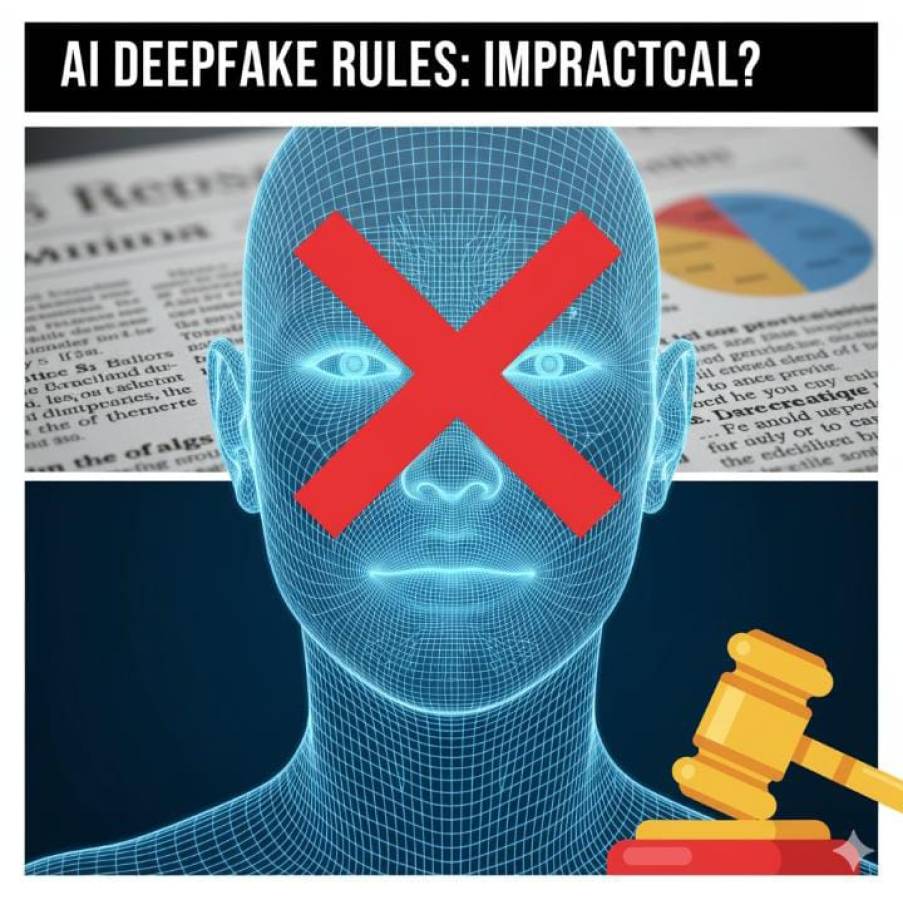
The incident is not simply about one fake photograph. It shows how quickly an AI-generated image can turn fiction into a real-world response.
Misinformation generally refers to false information shared without an intention to deceive. Disinformation involves the deliberate spread of false information. The distinction matters when examining intent, but the public consequences can overlap.
A false image can create fear, trigger official action and consume public resources even before anyone has had time to establish whether it is genuine.
For years, photographs carried a strong sense of credibility. A picture was often treated as evidence that something had actually happened. AI has changed that equation.
Today, realistic images can be created within seconds, often with little technical knowledge. A convincing photograph is no longer enough to establish that an event actually took place.
India Has Its Own Warning Signs
India is already familiar with the speed at which rumours can travel.
A message about a wild animal, a kidnapping gang, a missing child or a communal incident can move through WhatsApp groups and social media platforms within minutes. In some cases, rumours have led to public panic and violence.
AI-generated images add another layer to the problem.
A fabricated image can make an unverified claim appear more believable. When people receive such content from someone they know, they may be even less likely to question it before forwarding it.
That is why digital literacy is becoming a public-safety issue, not just a technology issue.
What Can You Do?
Pause before sharing. Fear and anger can make people react quickly. Take a moment before forwarding emotionally charged content.
Check the source. Find out who first posted the image. Look for confirmation from reliable news organisations, government agencies or other official sources.
Look closely. AI-generated images can contain distorted text, unnatural shadows, strange backgrounds or other visual inconsistencies. These clues are useful, although increasingly sophisticated AI images may not contain obvious errors.
Search for the image. A reverse image search can help determine whether a photograph is old, edited or being used in a misleading context.
Do not assume a joke is harmless. A fabricated image may seem funny to the person who creates it. But if others believe it, the consequences can include panic, financial loss, public disruption and legal action.
Report false content. Use the reporting tools provided by social media platforms. In India, suspected cybercrime can also be reported through the official cybercrime reporting system or by calling the cybercrime helpline at 1930.
Final Take
The crocodile never existed. The panic did.
A single AI-generated image was enough to trigger a search operation and disrupt activities at an entire reservoir. That is the real lesson of the Singapore case.
AI itself is not the problem. The bigger challenge is how people create, share and respond to information produced with the technology.
The old habit of believing a photograph simply because it looks real is no longer safe.
In the age of AI, responsible digital behaviour begins with a simple rule: verify first, share later.
Imagine jogging beside a lake early in the morning when someone shows you a photo of a huge crocodile lurking nearby. Would you stop to check whether it was real, or would you simply run?
Something similar happened recently in Singapore. A fake image of a saltwater crocodile triggered a real search operation at a public reservoir and has now led to criminal charges against the man accused of creating and sharing it using artificial intelligence.
What Happened
According to a report by Agence France-Presse, Singapore police have charged a 30-year-old Myanmar national identified as Ye Lin.
Police allege that he used an AI tool to create a realistic image of a saltwater crocodile and sent it to a colleague. The image was presented as a crocodile sighting at Pandan Reservoir, a popular location for jogging and kayaking in western Singapore.
The image spread, and authorities were alerted.
A Fake Image Triggers a Real Response
The response was swift.
Fearing that a dangerous predator might be present, authorities launched a search operation and suspended activities at the reservoir. Public resources, manpower and time were used to investigate a threat that did not actually exist.
Investigators later determined that the photograph was fake and referred the matter to the police.
According to the police, Ye Lin subsequently deleted both the image and the application used to create it. Investigators allege that this was an attempt to conceal his role in creating the false image.
The Legal Consequences
Ye Lin has been charged with communicating a false message and obstructing the course of justice.
He told the court through an interpreter that he intends to plead guilty.
If convicted of communicating a false message, he could face up to three years in prison, a fine of up to S$10,000, or both. The obstruction charge carries a separate penalty of up to seven years in prison, a fine, or both.
The case now sits at the intersection of technology, public safety and criminal responsibility.
Why This Matters Beyond Singapore
The incident is not simply about one fake photograph. It shows how quickly an AI-generated image can turn fiction into a real-world response.
Misinformation generally refers to false information shared without an intention to deceive. Disinformation involves the deliberate spread of false information. The distinction matters when examining intent, but the public consequences can overlap.
A false image can create fear, trigger official action and consume public resources even before anyone has had time to establish whether it is genuine.
For years, photographs carried a strong sense of credibility. A picture was often treated as evidence that something had actually happened. AI has changed that equation.
Today, realistic images can be created within seconds, often with little technical knowledge. A convincing photograph is no longer enough to establish that an event actually took place.
India Has Its Own Warning Signs
India is already familiar with the speed at which rumours can travel.
A message about a wild animal, a kidnapping gang, a missing child or a communal incident can move through WhatsApp groups and social media platforms within minutes. In some cases, rumours have led to public panic and violence.
AI-generated images add another layer to the problem.
A fabricated image can make an unverified claim appear more believable. When people receive such content from someone they know, they may be even less likely to question it before forwarding it.
That is why digital literacy is becoming a public-safety issue, not just a technology issue.
What Can You Do?
Pause before sharing. Fear and anger can make people react quickly. Take a moment before forwarding emotionally charged content.
Check the source. Find out who first posted the image. Look for confirmation from reliable news organisations, government agencies or other official sources.
Look closely. AI-generated images can contain distorted text, unnatural shadows, strange backgrounds or other visual inconsistencies. These clues are useful, although increasingly sophisticated AI images may not contain obvious errors.
Search for the image. A reverse image search can help determine whether a photograph is old, edited or being used in a misleading context.
Do not assume a joke is harmless. A fabricated image may seem funny to the person who creates it. But if others believe it, the consequences can include panic, financial loss, public disruption and legal action.
Report false content. Use the reporting tools provided by social media platforms. In India, suspected cybercrime can also be reported through the official cybercrime reporting system or by calling the cybercrime helpline at 1930.
Final Take
The crocodile never existed. The panic did.
A single AI-generated image was enough to trigger a search operation and disrupt activities at an entire reservoir. That is the real lesson of the Singapore case.
AI itself is not the problem. The bigger challenge is how people create, share and respond to information produced with the technology.
The old habit of believing a photograph simply because it looks real is no longer safe.
In the age of AI, responsible digital behaviour begins with a simple rule: verify first, share later.












Leave a Comment