
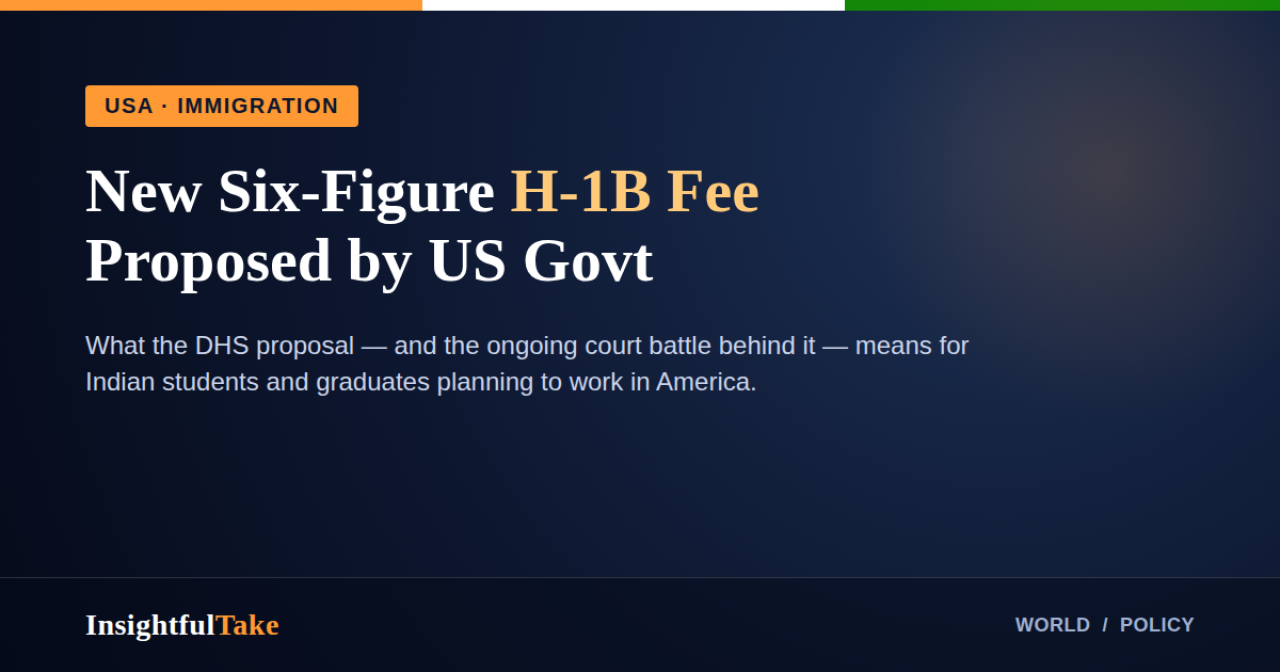
The American dream may now come with a six-figure price tag for employers hiring foreign graduates.
The United States is moving to permanently overhaul the cost of hiring foreign professionals through the H-1B visa programme. The proposed price tag is striking: $103,265 per petition.
For Indian students planning to study, work and eventually settle into professional careers in the United States, the number matters. But the fine print matters even more.
The Department of Homeland Security (DHS) published its proposed rule on August 25, 2026. If finalised, it could significantly alter the economics of H-1B sponsorship and make the transition from an American degree to a US job more uncertain for thousands of international graduates.
What DHS Has Actually Proposed
Under the draft rule, every H-1B petition filed under the annual statutory cap would attract the new fee, on top of existing charges such as the base filing fee, the ACWIA fee, the fraud-prevention fee and the Asylum Program Fee.
The proposal covers both major H-1B cap categories: the regular 65,000 visas and the additional 20,000 slots reserved for applicants with a US master's degree or higher. That second category is particularly important for Indian students, many of whom pursue postgraduate degrees in the United States before entering the H-1B system.
There is, however, an important exception. Cap-exempt employers, including universities, government research organisations and certain affiliated non-profit institutions, would not be subject to the new charge.
DHS describes the proposed fee as a cost-recovery measure intended to fund immigration-related administration across agencies including USCIS, the Department of Labor, the Department of State, ICE and the immigration courts.
The calculation itself is attracting attention. DHS arrived at the figure by dividing projected costs of about $8.8 billion by an assumed 85,000 annual petitions and then rounding the result. Critics argue that this makes the fee look less like a conventional processing charge and more like a number calculated backwards from a revenue target.
Why This Is Different From Last Year's $100,000 Fee
Indian students may remember the shock of September 2025, when President Trump's Proclamation 10973 imposed a $100,000 entry fee on certain H-1B holders arriving from outside the United States.
That measure was challenged in court. In June 2026, a federal judge in Massachusetts ruled that the charge amounted to an unconstitutional tax that could only be imposed by Congress, not through executive action. The administration subsequently sought a stay, but the First Circuit Court of Appeals rejected that request in July 2026. The legal battle, however, continues.
The proposed $103,265 fee is different in form. Instead of relying on a presidential proclamation, DHS is attempting to establish the charge through federal rulemaking. More importantly, the proposal would apply to covered petitions rather than simply functioning as an entry charge on H-1B holders arriving from abroad.
That distinction could become central to the legal battle.
Legal experts quoted in US media have already raised questions about whether the administration is attempting to achieve through immigration rulemaking what could not withstand constitutional scrutiny when imposed through executive action. If the proposal becomes a final rule, litigation appears highly likely.
The Timeline Students Need to Watch
The proposal is not yet law.
DHS must first allow a 30-day public-comment period, consider the submissions and then decide whether to issue a final rule. A final rule would also specify its own effective date. That process can take months rather than weeks.
There is another important date to watch.
The original $100,000 proclamation is currently scheduled to expire on September 21, 2026, unless it is renewed or otherwise extended. That creates the possibility, at least temporarily, of overlapping financial obligations if the earlier measure is revived before the proposed rule takes effect.
Another unanswered question concerns refunds. The current proposal does not clearly resolve how the new fee would be treated if an H-1B petition is denied or withdrawn. For employers, that detail could materially affect the financial risk of sponsoring a candidate.
Why Indian Students Should Pay Close Attention
India supplies the largest share of H-1B beneficiaries, making any major change to the programme particularly significant for Indian professionals and students.
A large number of Indian graduates also enter the US employment pipeline through a familiar sequence: F-1 student visa → graduation → OPT → employment → H-1B sponsorship.
A fee exceeding $100,000 would technically be an employer-side cost rather than a bill handed directly to the visa holder. But that distinction offers little comfort if employers decide that sponsoring international graduates has become too expensive.
The potential impact is therefore less about who writes the cheque and more about who gets hired in the first place.
DHS's own analysis indicates that the earlier $100,000 charge was followed by a dramatic decline in filings, reportedly approaching 90 percent almost overnight. If employers respond similarly to a permanent six-figure sponsorship cost, the consequences could be significant for international graduates relying on H-1B sponsorship as the next step after completing a US degree.
There is another potential pressure point.
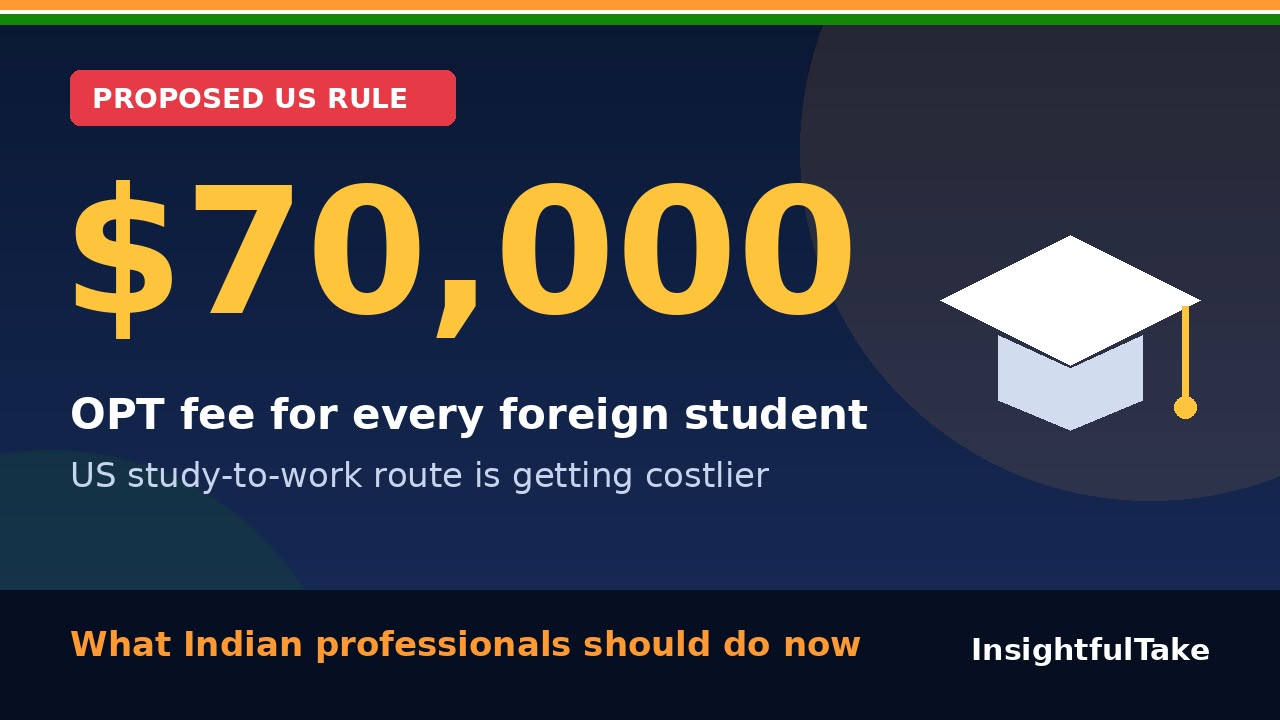
Reports indicate that DHS is separately considering a fee related to Optional Practical Training (OPT), the work-authorisation route used by many international students after graduation and before an H-1B petition is filed.
If that proposal moves forward, the financial burden would begin even earlier in the student-to-worker pipeline.
What This Means for Students Planning for 2027
For Indian students already studying in the United States, as well as those considering the 2027 intake, the message is not panic. It is preparation.
The H-1B route is becoming more expensive and potentially more uncertain. Students should therefore look beyond university rankings and tuition fees when choosing where and what to study.
They should also consider questions such as:
- Does the prospective employer regularly sponsor H-1B visas?
- How many international graduates does the company typically retain?
- Would the employer be willing to absorb a six-figure sponsorship cost?
- What alternatives exist if an H-1B petition is not selected or approved?
- How might changes to OPT affect the post-graduation work period?
For students already in the US, understanding their OPT timeline and maintaining valid immigration status will become even more important.
The Bigger Question
The proposed $103,265 fee is ultimately about more than one visa programme.
For decades, the United States has relied on international students and skilled immigrants to replenish its technology, research, healthcare and professional workforce. Indian students have been among the biggest beneficiaries of that system.
But the economics are changing.
If the cost of sponsoring a foreign graduate rises beyond what many employers consider commercially reasonable, the traditional promise of an American education followed by an American career could become less predictable.
The proposed rule still has to survive public scrutiny, administrative review and, potentially, the courts. The legal battle over the earlier $100,000 measure is far from finished, with its outcome likely to influence how enforceable any new version of the charge ultimately becomes.
For Indian students, therefore, the right response is neither alarm nor complacency.
The American dream is still open. But the price of entering its professional pipeline may be changing.
The United States is moving to permanently overhaul the cost of hiring foreign professionals through the H-1B visa programme. The proposed price tag is striking: $103,265 per petition.
For Indian students planning to study, work and eventually settle into professional careers in the United States, the number matters. But the fine print matters even more.
The Department of Homeland Security (DHS) published its proposed rule on August 25, 2026. If finalised, it could significantly alter the economics of H-1B sponsorship and make the transition from an American degree to a US job more uncertain for thousands of international graduates.
What DHS Has Actually Proposed
Under the draft rule, every H-1B petition filed under the annual statutory cap would attract the new fee, on top of existing charges such as the base filing fee, the ACWIA fee, the fraud-prevention fee and the Asylum Program Fee.
The proposal covers both major H-1B cap categories: the regular 65,000 visas and the additional 20,000 slots reserved for applicants with a US master's degree or higher. That second category is particularly important for Indian students, many of whom pursue postgraduate degrees in the United States before entering the H-1B system.
There is, however, an important exception. Cap-exempt employers, including universities, government research organisations and certain affiliated non-profit institutions, would not be subject to the new charge.
DHS describes the proposed fee as a cost-recovery measure intended to fund immigration-related administration across agencies including USCIS, the Department of Labor, the Department of State, ICE and the immigration courts.
The calculation itself is attracting attention. DHS arrived at the figure by dividing projected costs of about $8.8 billion by an assumed 85,000 annual petitions and then rounding the result. Critics argue that this makes the fee look less like a conventional processing charge and more like a number calculated backwards from a revenue target.
Why This Is Different From Last Year's $100,000 Fee
Indian students may remember the shock of September 2025, when President Trump's Proclamation 10973 imposed a $100,000 entry fee on certain H-1B holders arriving from outside the United States.
That measure was challenged in court. In June 2026, a federal judge in Massachusetts ruled that the charge amounted to an unconstitutional tax that could only be imposed by Congress, not through executive action. The administration subsequently sought a stay, but the First Circuit Court of Appeals rejected that request in July 2026. The legal battle, however, continues.
The proposed $103,265 fee is different in form. Instead of relying on a presidential proclamation, DHS is attempting to establish the charge through federal rulemaking. More importantly, the proposal would apply to covered petitions rather than simply functioning as an entry charge on H-1B holders arriving from abroad.
That distinction could become central to the legal battle.
Legal experts quoted in US media have already raised questions about whether the administration is attempting to achieve through immigration rulemaking what could not withstand constitutional scrutiny when imposed through executive action. If the proposal becomes a final rule, litigation appears highly likely.
The Timeline Students Need to Watch
The proposal is not yet law.
DHS must first allow a 30-day public-comment period, consider the submissions and then decide whether to issue a final rule. A final rule would also specify its own effective date. That process can take months rather than weeks.
There is another important date to watch.
The original $100,000 proclamation is currently scheduled to expire on September 21, 2026, unless it is renewed or otherwise extended. That creates the possibility, at least temporarily, of overlapping financial obligations if the earlier measure is revived before the proposed rule takes effect.
Another unanswered question concerns refunds. The current proposal does not clearly resolve how the new fee would be treated if an H-1B petition is denied or withdrawn. For employers, that detail could materially affect the financial risk of sponsoring a candidate.
Why Indian Students Should Pay Close Attention
India supplies the largest share of H-1B beneficiaries, making any major change to the programme particularly significant for Indian professionals and students.
A large number of Indian graduates also enter the US employment pipeline through a familiar sequence: F-1 student visa → graduation → OPT → employment → H-1B sponsorship.
A fee exceeding $100,000 would technically be an employer-side cost rather than a bill handed directly to the visa holder. But that distinction offers little comfort if employers decide that sponsoring international graduates has become too expensive.
The potential impact is therefore less about who writes the cheque and more about who gets hired in the first place.
DHS's own analysis indicates that the earlier $100,000 charge was followed by a dramatic decline in filings, reportedly approaching 90 percent almost overnight. If employers respond similarly to a permanent six-figure sponsorship cost, the consequences could be significant for international graduates relying on H-1B sponsorship as the next step after completing a US degree.
There is another potential pressure point.
Reports indicate that DHS is separately considering a fee related to Optional Practical Training (OPT), the work-authorisation route used by many international students after graduation and before an H-1B petition is filed.
If that proposal moves forward, the financial burden would begin even earlier in the student-to-worker pipeline.
What This Means for Students Planning for 2027
For Indian students already studying in the United States, as well as those considering the 2027 intake, the message is not panic. It is preparation.
The H-1B route is becoming more expensive and potentially more uncertain. Students should therefore look beyond university rankings and tuition fees when choosing where and what to study.
They should also consider questions such as:
- Does the prospective employer regularly sponsor H-1B visas?
- How many international graduates does the company typically retain?
- Would the employer be willing to absorb a six-figure sponsorship cost?
- What alternatives exist if an H-1B petition is not selected or approved?
- How might changes to OPT affect the post-graduation work period?
For students already in the US, understanding their OPT timeline and maintaining valid immigration status will become even more important.
The Bigger Question
The proposed $103,265 fee is ultimately about more than one visa programme.
For decades, the United States has relied on international students and skilled immigrants to replenish its technology, research, healthcare and professional workforce. Indian students have been among the biggest beneficiaries of that system.
But the economics are changing.
If the cost of sponsoring a foreign graduate rises beyond what many employers consider commercially reasonable, the traditional promise of an American education followed by an American career could become less predictable.
The proposed rule still has to survive public scrutiny, administrative review and, potentially, the courts. The legal battle over the earlier $100,000 measure is far from finished, with its outcome likely to influence how enforceable any new version of the charge ultimately becomes.
For Indian students, therefore, the right response is neither alarm nor complacency.
The American dream is still open. But the price of entering its professional pipeline may be changing.
















Leave a Comment