
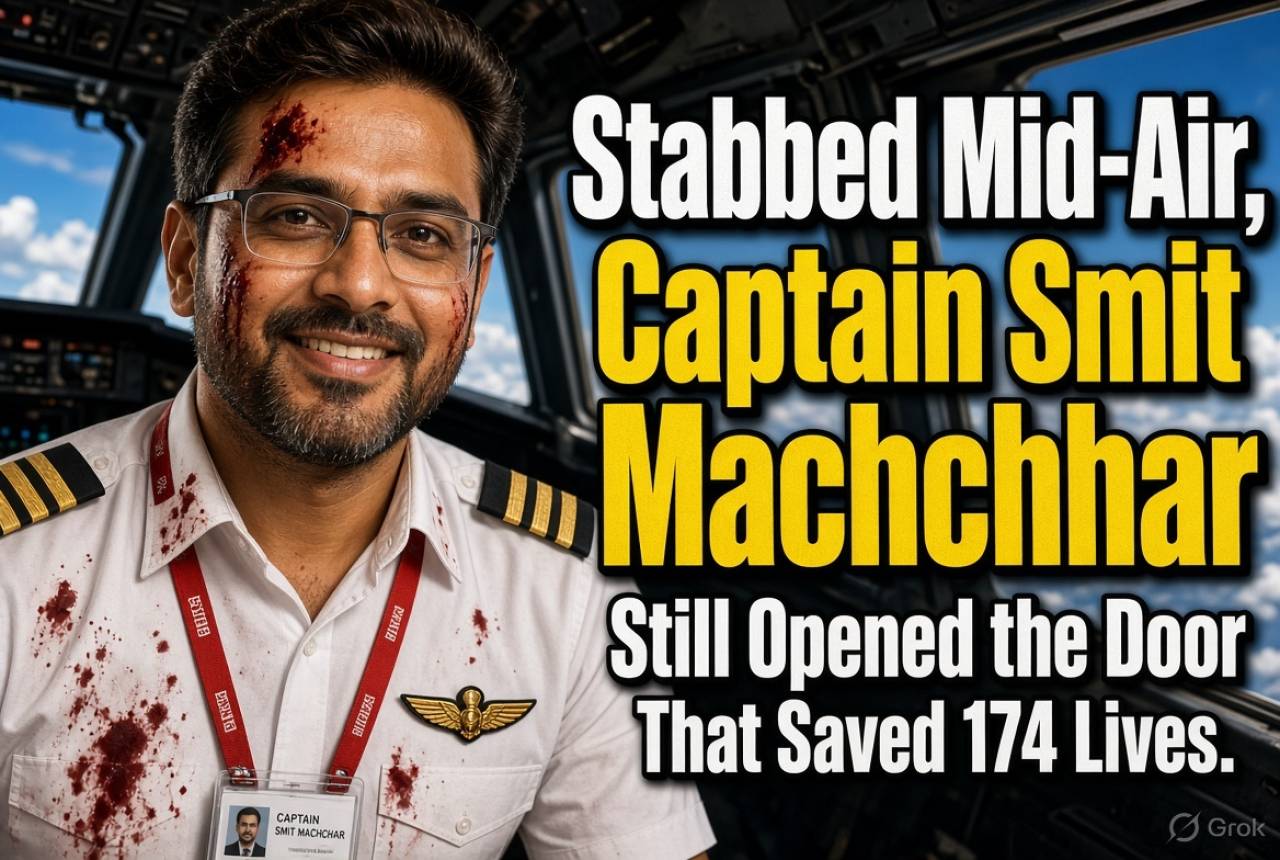
An Indian pilot was stabbed inside a flying aircraft, but one decision from the cockpit helped prevent a disaster involving 174 people.
Flydubai Flight FZ1073 left Dubai for Tel Aviv on September 30, 2026, carrying 174 passengers. What began as a routine flight quickly turned into a life-threatening emergency when the captain was attacked inside the cockpit.
The captain was Indian pilot Smit Machchhar. Despite suffering multiple stab wounds, he managed to open the cockpit door, allowing passengers and crew to enter and restrain the attacker. Two other pilots who were travelling as passengers then helped bring the aircraft under control before it made an emergency landing in Tabuk, Saudi Arabia.
The incident has since drawn international attention, with Indian Prime Minister Narendra Modi and Israeli Prime Minister Benjamin Netanyahu among those who publicly praised Machchhar's actions.
Who is Captain Smit Machchhar?
Machchhar is an Indian commercial pilot with more than 13 years of aviation experience. Reports say he previously worked with SpiceJet before joining Flydubai in 2022. He trained to fly Boeing 737 aircraft and is based professionally in the UAE.
Friends and former colleagues have described him as calm, cheerful and helpful. His brother is also a pilot with Flydubai, according to media reports.
Until September 30, Machchhar's career had largely been about getting passengers safely from one destination to another. That routine changed dramatically in the cockpit of FZ1073.
What happened inside the cockpit?
According to Israeli officials and reports from passengers, the co-pilot attacked Machchhar during the flight. The captain was stabbed several times and the aircraft went into a rapid descent.
The plane reportedly lost nearly 14,000 feet in less than 30 seconds, creating a terrifying situation for everyone on board. Passengers had little idea of what was happening inside the cockpit, but they could see that something was seriously wrong with the aircraft.
The precise motive behind the attack remains under investigation. UAE authorities have opened an investigation, including into whether there was any terrorist intent. That means claims about why the co-pilot acted should be treated as allegations until investigators establish the facts.
The cockpit door that changed the situation
Modern cockpit doors are designed to keep unauthorised people out. That security measure became a major challenge during the emergency because the people who could help were trapped outside.
Machchhar, despite his injuries, managed to activate the cockpit door release.
That single action gave passengers and crew a way into the cockpit.
In his conversation with Prime Minister Narendra Modi on October 2, Machchhar described how he opened the door after being attacked. Reuters reported that he told Modi he could not let everyone else die.
Once the door opened, passengers and crew moved into the cockpit and helped restrain the attacker.
An Israeli passenger, Yaniv Hayoun, has also been credited with helping overpower the co-pilot. Other passengers and crew members joined the effort.
Two pilots were travelling as passengers
Another factor proved critical.
Two Flydubai pilots were travelling on the aircraft as passengers. After the cockpit was secured, they were able to help take control of the aircraft.
The plane was eventually diverted to Tabuk in north-western Saudi Arabia, where it landed safely.
The sequence shows how several actions came together in a matter of minutes. Machchhar opened the cockpit door. Passengers and crew restrained the attacker. The additional pilots helped stabilise and land the aircraft.
The survival of everyone aboard depended on that chain of events.
Captain Machchhar was taken to hospital
Machchhar was taken for medical treatment after the emergency landing. Reports said he underwent surgery and was in stable condition.
By October 2, he was speaking to Prime Minister Modi from his hospital bed in Abu Dhabi. Modi praised his courage and quick thinking during the crisis.
The Indian authorities have also remained in contact with his family.
Leaders praise the pilot
Israeli Prime Minister Benjamin Netanyahu publicly praised Machchhar after the incident and called him a true hero. Indian Prime Minister Narendra Modi also spoke directly with him and praised his actions.
The international attention has focused not only on Machchhar but also on the passengers and crew members who responded once the cockpit door opened.
The incident was ultimately prevented from becoming an aviation disaster through the actions of several people working together under extreme pressure.
Questions about aviation security
The incident has also raised questions that go beyond the actions of one pilot.
How was the attacker able to launch an assault inside a secured cockpit? Were existing procedures sufficient to deal with an internal threat? Should airlines reconsider how cockpit crews are screened and monitored?
These questions are now part of the wider investigation.
Flydubai suspended its Israel flights after the incident, while Israeli authorities said they would review the vetting of pilots flying into the country. Aviation security experts have also pointed to the difficult balance between protecting the cockpit from outside threats and dealing with threats that may come from inside the flight deck.
The answers will depend on the findings of the ongoing investigations.
More than one person helped save the flight
It is easy to tell this story as the story of one hero. Captain Smit Machchhar's actions were central to what happened, particularly his decision to open the cockpit door despite his injuries.
But the full story is bigger.
Passengers entered the cockpit and helped restrain the attacker. Crew members responded to the emergency. Two off-duty pilots helped take control of the aircraft. Together, their actions helped bring the plane safely to the ground.
That is what makes the incident worth remembering beyond the headlines.
A crisis inside a cockpit became a test of courage, quick thinking and teamwork.
A moment that will stay with 174 passengers
Captain Smit Machchhar was badly injured while doing his job. In the middle of that crisis, he had to make a decision that affected everyone behind the cockpit door.
He opened it.
That action gave others a chance to intervene, and the aircraft eventually landed safely in Saudi Arabia.
The investigation will determine exactly how the attack began, what motivated it and whether aviation procedures need to change.
But one fact is already established: on September 30, when Flight FZ1073 was in serious danger, the actions of Captain Smit Machchhar, the passengers, crew and the additional pilots helped prevent a far greater tragedy.
Flydubai Flight FZ1073 left Dubai for Tel Aviv on September 30, 2026, carrying 174 passengers. What began as a routine flight quickly turned into a life-threatening emergency when the captain was attacked inside the cockpit.
The captain was Indian pilot Smit Machchhar. Despite suffering multiple stab wounds, he managed to open the cockpit door, allowing passengers and crew to enter and restrain the attacker. Two other pilots who were travelling as passengers then helped bring the aircraft under control before it made an emergency landing in Tabuk, Saudi Arabia.
The incident has since drawn international attention, with Indian Prime Minister Narendra Modi and Israeli Prime Minister Benjamin Netanyahu among those who publicly praised Machchhar's actions.
Who is Captain Smit Machchhar?
Machchhar is an Indian commercial pilot with more than 13 years of aviation experience. Reports say he previously worked with SpiceJet before joining Flydubai in 2022. He trained to fly Boeing 737 aircraft and is based professionally in the UAE.
Friends and former colleagues have described him as calm, cheerful and helpful. His brother is also a pilot with Flydubai, according to media reports.
Until September 30, Machchhar's career had largely been about getting passengers safely from one destination to another. That routine changed dramatically in the cockpit of FZ1073.
What happened inside the cockpit?
According to Israeli officials and reports from passengers, the co-pilot attacked Machchhar during the flight. The captain was stabbed several times and the aircraft went into a rapid descent.
The plane reportedly lost nearly 14,000 feet in less than 30 seconds, creating a terrifying situation for everyone on board. Passengers had little idea of what was happening inside the cockpit, but they could see that something was seriously wrong with the aircraft.
The precise motive behind the attack remains under investigation. UAE authorities have opened an investigation, including into whether there was any terrorist intent. That means claims about why the co-pilot acted should be treated as allegations until investigators establish the facts.
The cockpit door that changed the situation
Modern cockpit doors are designed to keep unauthorised people out. That security measure became a major challenge during the emergency because the people who could help were trapped outside.
Machchhar, despite his injuries, managed to activate the cockpit door release.
That single action gave passengers and crew a way into the cockpit.
In his conversation with Prime Minister Narendra Modi on October 2, Machchhar described how he opened the door after being attacked. Reuters reported that he told Modi he could not let everyone else die.
Once the door opened, passengers and crew moved into the cockpit and helped restrain the attacker.
An Israeli passenger, Yaniv Hayoun, has also been credited with helping overpower the co-pilot. Other passengers and crew members joined the effort.
Two pilots were travelling as passengers
Another factor proved critical.
Two Flydubai pilots were travelling on the aircraft as passengers. After the cockpit was secured, they were able to help take control of the aircraft.
The plane was eventually diverted to Tabuk in north-western Saudi Arabia, where it landed safely.
The sequence shows how several actions came together in a matter of minutes. Machchhar opened the cockpit door. Passengers and crew restrained the attacker. The additional pilots helped stabilise and land the aircraft.
The survival of everyone aboard depended on that chain of events.
Captain Machchhar was taken to hospital
Machchhar was taken for medical treatment after the emergency landing. Reports said he underwent surgery and was in stable condition.
By October 2, he was speaking to Prime Minister Modi from his hospital bed in Abu Dhabi. Modi praised his courage and quick thinking during the crisis.
The Indian authorities have also remained in contact with his family.
Leaders praise the pilot
Israeli Prime Minister Benjamin Netanyahu publicly praised Machchhar after the incident and called him a true hero. Indian Prime Minister Narendra Modi also spoke directly with him and praised his actions.
The international attention has focused not only on Machchhar but also on the passengers and crew members who responded once the cockpit door opened.
The incident was ultimately prevented from becoming an aviation disaster through the actions of several people working together under extreme pressure.
Questions about aviation security
The incident has also raised questions that go beyond the actions of one pilot.
How was the attacker able to launch an assault inside a secured cockpit? Were existing procedures sufficient to deal with an internal threat? Should airlines reconsider how cockpit crews are screened and monitored?
These questions are now part of the wider investigation.
Flydubai suspended its Israel flights after the incident, while Israeli authorities said they would review the vetting of pilots flying into the country. Aviation security experts have also pointed to the difficult balance between protecting the cockpit from outside threats and dealing with threats that may come from inside the flight deck.
The answers will depend on the findings of the ongoing investigations.
More than one person helped save the flight
It is easy to tell this story as the story of one hero. Captain Smit Machchhar's actions were central to what happened, particularly his decision to open the cockpit door despite his injuries.
But the full story is bigger.
Passengers entered the cockpit and helped restrain the attacker. Crew members responded to the emergency. Two off-duty pilots helped take control of the aircraft. Together, their actions helped bring the plane safely to the ground.
That is what makes the incident worth remembering beyond the headlines.
A crisis inside a cockpit became a test of courage, quick thinking and teamwork.
A moment that will stay with 174 passengers
Captain Smit Machchhar was badly injured while doing his job. In the middle of that crisis, he had to make a decision that affected everyone behind the cockpit door.
He opened it.
That action gave others a chance to intervene, and the aircraft eventually landed safely in Saudi Arabia.
The investigation will determine exactly how the attack began, what motivated it and whether aviation procedures need to change.
But one fact is already established: on September 30, when Flight FZ1073 was in serious danger, the actions of Captain Smit Machchhar, the passengers, crew and the additional pilots helped prevent a far greater tragedy.























Leave a Comment