
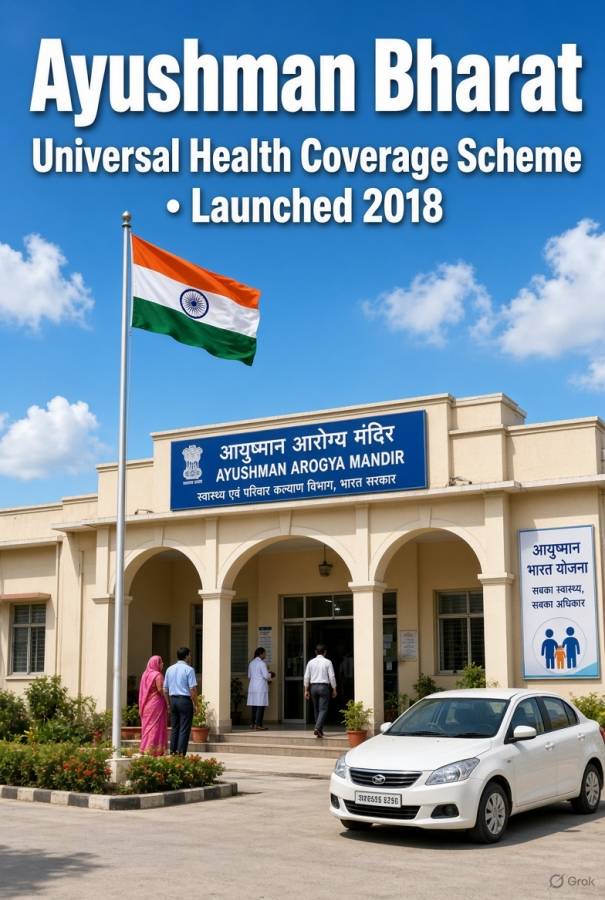
Eight years on, Ayushman Bharat has moved beyond millions of cards to a much bigger question: how much financial protection has it actually delivered to Indian families?
When a government health scheme completes eight years, the easiest response is to list the numbers and call it a success story. But the latest data on Ayushman Bharat deserves a closer look because behind the figures lies a problem India has struggled with for years: the fear that a serious illness can wipe out a family’s savings.
Eight years after its launch, more than 60 crore people have access to health cover of up to ₹5 lakh a year under Ayushman Bharat Pradhan Mantri Jan Arogya Yojana, or AB-PMJAY. More than 48.5 crore Ayushman Cards have been created. Government data also shows that around 13.25 crore hospital admissions have been funded, involving treatment worth about ₹2.03 lakh crore. The network now includes more than 38,000 empanelled public and private hospitals.
These are not simply numbers on a government dashboard. They represent millions of people who have actually used the scheme for hospital treatment. For many families, such treatment could otherwise have meant postponing care, borrowing money or using savings meant for education, housing or other basic needs.
The basic idea behind AB-PMJAY is straightforward. The scheme provides cashless hospitalisation cover of up to ₹5 lakh per family per year for secondary and tertiary care at empanelled hospitals. It was designed to remove several barriers that can make hospital treatment unaffordable for low-income families. The scheme also allows portability, meaning beneficiaries can use the facility outside their home state. This is particularly important for migrant workers who may need healthcare far from the place where their entitlement was originally registered.
The scale is one of the most notable features of the programme. The government describes AB-PMJAY as the world's largest publicly funded health assurance scheme. It is part of the broader Ayushman Bharat framework, which also includes Ayushman Arogya Mandirs for primary healthcare, the Ayushman Bharat Digital Mission and the Pradhan Mantri Ayushman Bharat Health Infrastructure Mission.
The real question, however, is not how many cards have been issued. It is how many people have been able to use them when they actually needed medical care.
That distinction matters. A health card sitting unused in someone's wallet tells us that coverage exists. A hospital admission funded through the scheme tells us that the coverage has been used. With more than 13 crore hospital admissions funded so far, the latest figures show that the programme has moved well beyond the stage of simply creating beneficiary records.
The financial protection aspect is equally important. Medical expenses remain a major source of financial pressure for Indian households. A serious illness can force families to use savings, sell assets or borrow heavily. By providing cashless hospitalisation for covered procedures, AB-PMJAY was designed to reduce that immediate financial shock.
Health Minister J.P. Nadda, while marking the scheme's eight-year milestone, stressed that the importance of the numbers goes beyond statistics. He pointed to families protected from medical expenses and patients receiving treatment without the same fear of financial hardship.
But a serious assessment of the scheme also needs to look at the problems that remain.
The success of a publicly funded health assurance programme depends not only on the number of beneficiaries but also on the willingness of hospitals to participate, the adequacy of package rates and the speed with which hospitals are reimbursed. Private hospitals form an important part of the network, particularly for beneficiaries who may not have access to suitable government facilities nearby.
Concerns over reimbursement delays and treatment package rates have therefore remained part of the wider discussion around the scheme. If hospitals find that the cost of delivering treatment is consistently higher than the amount reimbursed, or if payments take too long, participation can become difficult to sustain.
This is where the next phase of Ayushman Bharat becomes important.
The government has continued to expand the programme. AB-PMJAY is now operational across all 36 States and Union Territories, while the scheme has also been extended to all citizens aged 70 and above, irrespective of their socio-economic status.
The expansion increases the importance of getting the delivery system right. More beneficiaries mean greater pressure on hospitals, claims processing, treatment packages and the administrative systems that connect patients with providers.
The broader Ayushman Bharat framework is also moving beyond hospital insurance. Ayushman Arogya Mandirs have recorded more than 500 crore visits, according to the Prime Minister's Office, bringing primary healthcare closer to communities.
That combination matters. Health protection cannot depend only on what happens after a person reaches a hospital. Prevention, primary healthcare, digital records, infrastructure and financial protection all have a role to play.
Eight years, therefore, provide enough evidence to see both the scale of the achievement and the work that remains.
The numbers show that Ayushman Bharat has created a large health assurance network and that millions have used it for hospital treatment. At the same time, the next test is less about issuing more cards and more about ensuring that the card delivers when a patient reaches a hospital.
For now, the gain is measurable: more than 60 crore people have access to the scheme, over 13 crore hospital admissions have been funded, and treatment worth more than ₹2 lakh crore has been covered.
The larger question for the coming years is whether this safety net can become stronger, more efficient and easier to use.
The card may open the door to treatment. The real measure of Ayushman Bharat will be what happens after that door opens.
When a government health scheme completes eight years, the easiest response is to list the numbers and call it a success story. But the latest data on Ayushman Bharat deserves a closer look because behind the figures lies a problem India has struggled with for years: the fear that a serious illness can wipe out a family’s savings.
Eight years after its launch, more than 60 crore people have access to health cover of up to ₹5 lakh a year under Ayushman Bharat Pradhan Mantri Jan Arogya Yojana, or AB-PMJAY. More than 48.5 crore Ayushman Cards have been created. Government data also shows that around 13.25 crore hospital admissions have been funded, involving treatment worth about ₹2.03 lakh crore. The network now includes more than 38,000 empanelled public and private hospitals.
These are not simply numbers on a government dashboard. They represent millions of people who have actually used the scheme for hospital treatment. For many families, such treatment could otherwise have meant postponing care, borrowing money or using savings meant for education, housing or other basic needs.
The basic idea behind AB-PMJAY is straightforward. The scheme provides cashless hospitalisation cover of up to ₹5 lakh per family per year for secondary and tertiary care at empanelled hospitals. It was designed to remove several barriers that can make hospital treatment unaffordable for low-income families. The scheme also allows portability, meaning beneficiaries can use the facility outside their home state. This is particularly important for migrant workers who may need healthcare far from the place where their entitlement was originally registered.
The scale is one of the most notable features of the programme. The government describes AB-PMJAY as the world's largest publicly funded health assurance scheme. It is part of the broader Ayushman Bharat framework, which also includes Ayushman Arogya Mandirs for primary healthcare, the Ayushman Bharat Digital Mission and the Pradhan Mantri Ayushman Bharat Health Infrastructure Mission.
The real question, however, is not how many cards have been issued. It is how many people have been able to use them when they actually needed medical care.
That distinction matters. A health card sitting unused in someone's wallet tells us that coverage exists. A hospital admission funded through the scheme tells us that the coverage has been used. With more than 13 crore hospital admissions funded so far, the latest figures show that the programme has moved well beyond the stage of simply creating beneficiary records.
The financial protection aspect is equally important. Medical expenses remain a major source of financial pressure for Indian households. A serious illness can force families to use savings, sell assets or borrow heavily. By providing cashless hospitalisation for covered procedures, AB-PMJAY was designed to reduce that immediate financial shock.
Health Minister J.P. Nadda, while marking the scheme's eight-year milestone, stressed that the importance of the numbers goes beyond statistics. He pointed to families protected from medical expenses and patients receiving treatment without the same fear of financial hardship.
But a serious assessment of the scheme also needs to look at the problems that remain.
The success of a publicly funded health assurance programme depends not only on the number of beneficiaries but also on the willingness of hospitals to participate, the adequacy of package rates and the speed with which hospitals are reimbursed. Private hospitals form an important part of the network, particularly for beneficiaries who may not have access to suitable government facilities nearby.
Concerns over reimbursement delays and treatment package rates have therefore remained part of the wider discussion around the scheme. If hospitals find that the cost of delivering treatment is consistently higher than the amount reimbursed, or if payments take too long, participation can become difficult to sustain.
This is where the next phase of Ayushman Bharat becomes important.
The government has continued to expand the programme. AB-PMJAY is now operational across all 36 States and Union Territories, while the scheme has also been extended to all citizens aged 70 and above, irrespective of their socio-economic status.
The expansion increases the importance of getting the delivery system right. More beneficiaries mean greater pressure on hospitals, claims processing, treatment packages and the administrative systems that connect patients with providers.
The broader Ayushman Bharat framework is also moving beyond hospital insurance. Ayushman Arogya Mandirs have recorded more than 500 crore visits, according to the Prime Minister's Office, bringing primary healthcare closer to communities.
That combination matters. Health protection cannot depend only on what happens after a person reaches a hospital. Prevention, primary healthcare, digital records, infrastructure and financial protection all have a role to play.
Eight years, therefore, provide enough evidence to see both the scale of the achievement and the work that remains.
The numbers show that Ayushman Bharat has created a large health assurance network and that millions have used it for hospital treatment. At the same time, the next test is less about issuing more cards and more about ensuring that the card delivers when a patient reaches a hospital.
For now, the gain is measurable: more than 60 crore people have access to the scheme, over 13 crore hospital admissions have been funded, and treatment worth more than ₹2 lakh crore has been covered.
The larger question for the coming years is whether this safety net can become stronger, more efficient and easier to use.
The card may open the door to treatment. The real measure of Ayushman Bharat will be what happens after that door opens.


















Leave a Comment