
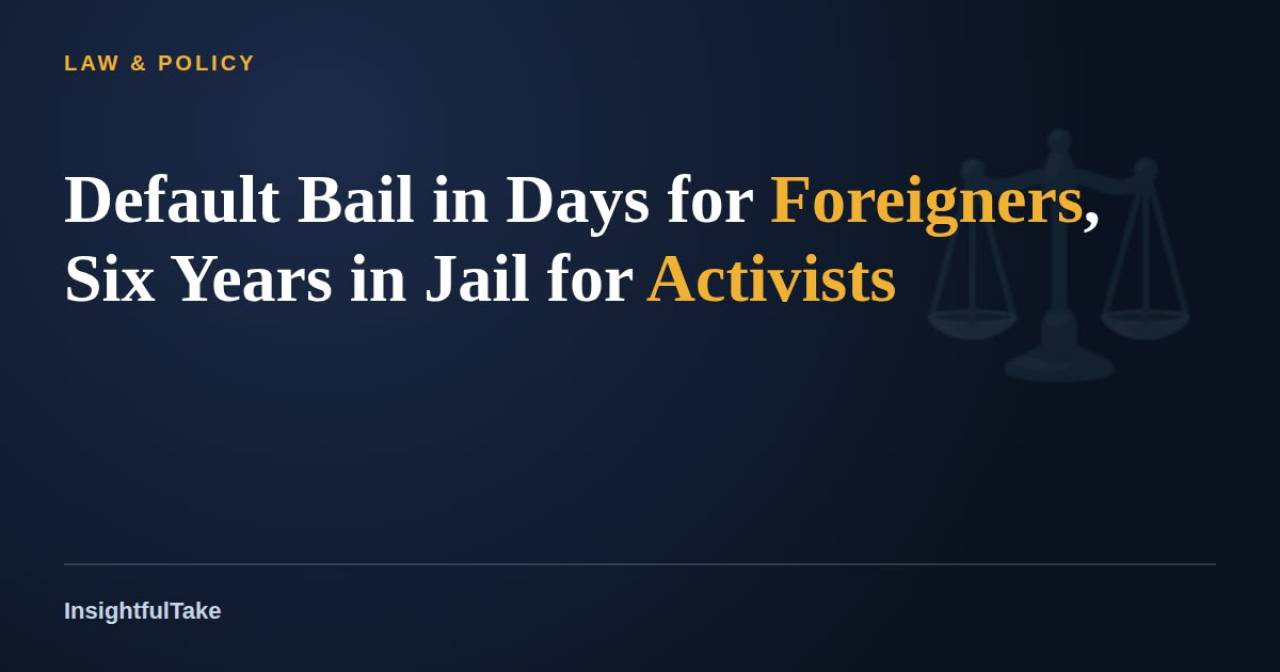
Six foreign nationals secured default bail after the NIA missed the statutory route for UAPA charges. Others have spent years in custody under the same stringent law.
A Delhi court has granted default bail to six Ukrainian nationals months after the National Investigation Agency (NIA) arrested them on allegations of training ethnic armed groups in Myanmar in drone warfare.
Special Judge Prashant Sharma of the Rouse Avenue Courts also discharged the six under Sections 21 and 23 of the Immigration and Foreigners Act, 2025, which deal with unauthorised entry and visa violations. The accused paid a penalty of Rs 5.5 lakh through the Foreigners Regional Registration Office and were released on a cash bond of Rs 1 lakh each.
The order came a week after the same court granted default bail to Matthew Aaron VanDyke, an American national arrested in the same case.
The court observed that the NIA's chargesheet was "piecemeal". It covered the immigration offences but did not include the Unlawful Activities (Prevention) Act, or UAPA, under which all seven foreign nationals had originally been investigated.
Justice Sharma noted that with the UAPA investigation still continuing, it could not be concluded that the accused were ineligible for default bail. The six Ukrainians remain subject to travel restrictions that confine them to the city. VanDyke's surety bond was later waived after his counsel told the court that he had no one in India who could stand as his surety.
The case has drawn attention not simply because of the nationality of those granted bail, but because of the legal route through which they obtained it.
What Default Bail Actually Means
Default bail under the Bharatiya Nagarik Suraksha Sanhita is not the same as regular bail. It is a statutory right that arises when an investigating agency fails to file its chargesheet within the prescribed period.
For serious offences covered by special laws such as the UAPA, investigators can get up to 180 days to complete the investigation, subject to the statutory requirements. If that period expires without a valid chargesheet, the accused becomes entitled to default bail if the necessary conditions are met.
In the case involving the seven foreign nationals, the NIA had the extended period available to investigate the allegations. The court's observations indicate that the agency ultimately filed charges relating to immigration offences without filing UAPA charges against the accused within the relevant period.
That distinction matters.
Default bail does not mean that a court has found an accused innocent. Nor does it mean that the allegations have been disproved. It means that the investigating agency did not complete the prosecution process within the legally prescribed period.
The Different Reality Under UAPA
The contrast becomes more striking when viewed alongside the prolonged detention of Indian citizens facing UAPA charges.
Former JNU scholar Umar Khalid has remained in judicial custody since September 2020 in connection with the investigation into the alleged conspiracy behind the north-east Delhi riots of 2020.
His regular bail proceedings have continued through different stages of the judicial system, with hearings taking place before the trial court, the Delhi High Court and the Supreme Court. He has also received limited periods of interim bail on specific occasions, including for family and medical reasons, but has not been granted regular bail.
Sharjeel Imam, another accused in cases involving allegations linked to speeches during the anti-CAA protests, has also spent years in custody while facing UAPA proceedings.
The legal distinction between these cases is important.
Default bail is linked to the investigating agency's failure to complete its case within the statutory timeframe. Regular bail in a UAPA case operates under a much more restrictive framework. Under Section 43D(5) of the UAPA, the court must consider whether the accusation appears prima facie true before granting bail.
This creates a substantially different legal threshold.
As a result, an accused person can remain in custody for a long period while the trial itself has yet to determine guilt or innocence.
The Question of Charging Practice
The Ukrainian nationals and VanDyke did not receive default bail simply because they were foreigners. Their relief followed from the procedural circumstances of their case and the charges that the investigating agency had filed within the statutory period.
That distinction should not be overlooked.
At the same time, the comparison with Indian activists facing prolonged UAPA detention raises questions about how different cases are investigated and charged.
Why did the NIA, in this particular case, ultimately proceed with immigration-related charges within the relevant period while the UAPA investigation remained incomplete?
And why have other accused persons facing UAPA allegations remained in custody for years while their trials have continued?
These questions cannot be answered simply by comparing the length of custody or the nationality of the accused. The allegations, evidence, procedural history and charges in each case are different.
But the contrast does highlight a larger concern within India's criminal justice system. When stringent laws such as the UAPA are invoked, the distinction between investigation, prosecution and punishment can become difficult for ordinary citizens to understand. An accused person may remain behind bars for years without a final determination of guilt.
That is why the principle behind default bail matters. The statutory deadline is designed to place a limit on investigative delay and protect the accused from indefinite detention without a completed prosecution case.
The larger question is whether those safeguards operate with the same practical force across cases.
The answer ultimately depends on the evidence, investigative record and judicial findings in each individual case. But the sharply different timelines in these cases provide enough ground for a broader public discussion about charging decisions, investigative priorities and the prolonged pre-trial detention of people accused under stringent laws.
A Delhi court has granted default bail to six Ukrainian nationals months after the National Investigation Agency (NIA) arrested them on allegations of training ethnic armed groups in Myanmar in drone warfare.
Special Judge Prashant Sharma of the Rouse Avenue Courts also discharged the six under Sections 21 and 23 of the Immigration and Foreigners Act, 2025, which deal with unauthorised entry and visa violations. The accused paid a penalty of Rs 5.5 lakh through the Foreigners Regional Registration Office and were released on a cash bond of Rs 1 lakh each.
The order came a week after the same court granted default bail to Matthew Aaron VanDyke, an American national arrested in the same case.
The court observed that the NIA's chargesheet was "piecemeal". It covered the immigration offences but did not include the Unlawful Activities (Prevention) Act, or UAPA, under which all seven foreign nationals had originally been investigated.
Justice Sharma noted that with the UAPA investigation still continuing, it could not be concluded that the accused were ineligible for default bail. The six Ukrainians remain subject to travel restrictions that confine them to the city. VanDyke's surety bond was later waived after his counsel told the court that he had no one in India who could stand as his surety.
The case has drawn attention not simply because of the nationality of those granted bail, but because of the legal route through which they obtained it.
What Default Bail Actually Means
Default bail under the Bharatiya Nagarik Suraksha Sanhita is not the same as regular bail. It is a statutory right that arises when an investigating agency fails to file its chargesheet within the prescribed period.
For serious offences covered by special laws such as the UAPA, investigators can get up to 180 days to complete the investigation, subject to the statutory requirements. If that period expires without a valid chargesheet, the accused becomes entitled to default bail if the necessary conditions are met.
In the case involving the seven foreign nationals, the NIA had the extended period available to investigate the allegations. The court's observations indicate that the agency ultimately filed charges relating to immigration offences without filing UAPA charges against the accused within the relevant period.
That distinction matters.
Default bail does not mean that a court has found an accused innocent. Nor does it mean that the allegations have been disproved. It means that the investigating agency did not complete the prosecution process within the legally prescribed period.
The Different Reality Under UAPA
The contrast becomes more striking when viewed alongside the prolonged detention of Indian citizens facing UAPA charges.
Former JNU scholar Umar Khalid has remained in judicial custody since September 2020 in connection with the investigation into the alleged conspiracy behind the north-east Delhi riots of 2020.
His regular bail proceedings have continued through different stages of the judicial system, with hearings taking place before the trial court, the Delhi High Court and the Supreme Court. He has also received limited periods of interim bail on specific occasions, including for family and medical reasons, but has not been granted regular bail.
Sharjeel Imam, another accused in cases involving allegations linked to speeches during the anti-CAA protests, has also spent years in custody while facing UAPA proceedings.
The legal distinction between these cases is important.
Default bail is linked to the investigating agency's failure to complete its case within the statutory timeframe. Regular bail in a UAPA case operates under a much more restrictive framework. Under Section 43D(5) of the UAPA, the court must consider whether the accusation appears prima facie true before granting bail.
This creates a substantially different legal threshold.
As a result, an accused person can remain in custody for a long period while the trial itself has yet to determine guilt or innocence.
The Question of Charging Practice
The Ukrainian nationals and VanDyke did not receive default bail simply because they were foreigners. Their relief followed from the procedural circumstances of their case and the charges that the investigating agency had filed within the statutory period.
That distinction should not be overlooked.
At the same time, the comparison with Indian activists facing prolonged UAPA detention raises questions about how different cases are investigated and charged.
Why did the NIA, in this particular case, ultimately proceed with immigration-related charges within the relevant period while the UAPA investigation remained incomplete?
And why have other accused persons facing UAPA allegations remained in custody for years while their trials have continued?
These questions cannot be answered simply by comparing the length of custody or the nationality of the accused. The allegations, evidence, procedural history and charges in each case are different.
But the contrast does highlight a larger concern within India's criminal justice system. When stringent laws such as the UAPA are invoked, the distinction between investigation, prosecution and punishment can become difficult for ordinary citizens to understand. An accused person may remain behind bars for years without a final determination of guilt.
That is why the principle behind default bail matters. The statutory deadline is designed to place a limit on investigative delay and protect the accused from indefinite detention without a completed prosecution case.
The larger question is whether those safeguards operate with the same practical force across cases.
The answer ultimately depends on the evidence, investigative record and judicial findings in each individual case. But the sharply different timelines in these cases provide enough ground for a broader public discussion about charging decisions, investigative priorities and the prolonged pre-trial detention of people accused under stringent laws.




















Leave a Comment