
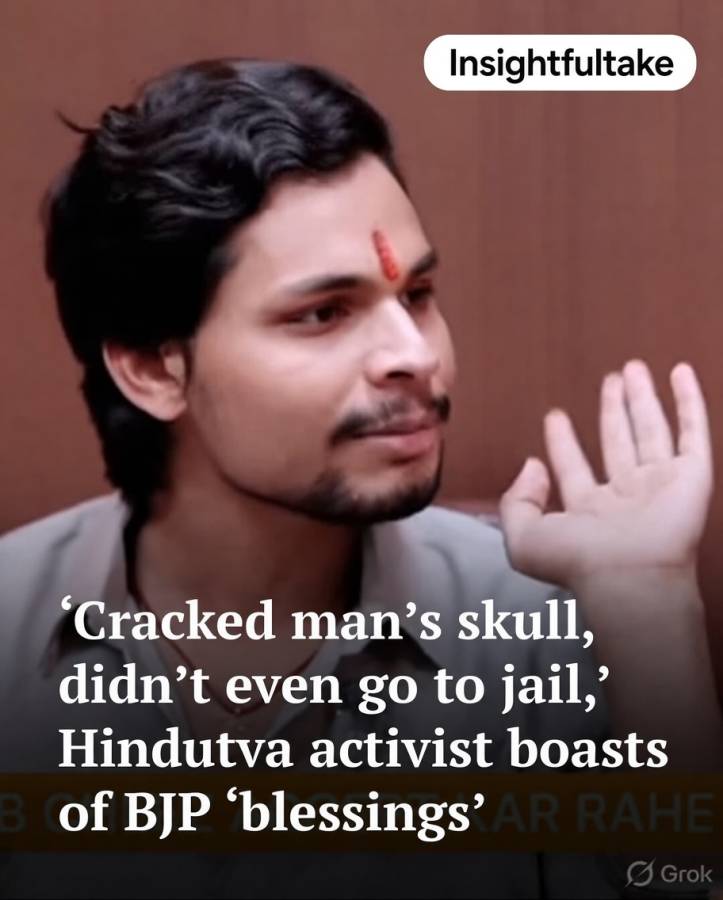
“I Didn’t Even Go to Jail” — A podcast boast has reopened uncomfortable questions about political influence, police action and accountability at Delhi’s Jantar Mantar.
A podcast appearance meant to showcase bravado has placed self-described Hindutva activist Swatantra Bhardwaj at the centre of a fresh political controversy.
In a Hindi-language podcast uploaded to YouTube, Bhardwaj allegedly described his involvement in an assault on Sanjay, the father of a protester identified as Nishu, during a student-led demonstration at Delhi’s Jantar Mantar on July 20.
According to Bhardwaj’s own account, the injured man suffered a serious head wound that required around five dozen stitches. Bhardwaj further claimed that Sanjay was in critical condition by the time he reached an ambulance.
Yet, in the podcast, Bhardwaj said he did not spend time in jail and claimed his release reflected the influence of senior political figures.
Political Connections Claimed on Air
During the conversation, Bhardwaj referred to several prominent political figures, including Delhi BJP leader Kapil Mishra, whom he described in familial, elder-brother-like terms.
He also invoked Prime Minister Narendra Modi while speaking about the political backing he claimed to enjoy.
Bhardwaj additionally claimed that he was carrying police-issued equipment during the protest. The statement has raised further questions about the relationship between plainclothes personnel, alleged private actors and the police presence at the demonstration.
It is important to note that Bhardwaj’s claims about political protection and his access to police equipment are allegations made by him on the podcast and do not, by themselves, establish that any political leader intervened on his behalf.
Protesters Allege Police Failed to Act
The podcast clip quickly became a new point of contention for members of the Cockroach Janta Party (CJP), which had organised the demonstration.
CJP leader Saurav Das alleged on social media that Delhi Police had failed to invoke stronger criminal charges against Bhardwaj despite the seriousness of the injuries.
Das argued that the circumstances should have warranted consideration of an attempted-murder charge under Section 307 of the Indian Penal Code, while also alleging that activists seeking a grievous-hurt charge under Section 326 were told by senior police officials to approach a court.
Das further alleged that other people accused of participating in the assault had not been identified. According to his claims, some of these individuals later posted celebratory videos and allegedly threatened the victim’s minor daughter.
CJP colleague Ashutosh Ranka also publicly referred to the exchanges with police and challenged Delhi Police to substantiate an earlier assertion that Bhardwaj had been detained.
Congress leader Supriya Shrinate subsequently amplified the podcast clip, highlighting what she described as the stark contrast between the injuries reported and the alleged lack of consequences for the attacker.
None of these allegations, however, should be treated as established facts without independent verification or findings by a competent authority.
Delhi Police Reject Allegations of Political Interference
Delhi Police have rejected allegations that plainclothes personnel were deployed as unofficial enforcers or that political considerations influenced their actions.
In an affidavit submitted before the Supreme Court, Deputy Commissioner of Police Sachin Sharma described plainclothes personnel carrying batons as “spotters” drawn from specialised units, including the Special Branch, Special Cell and Crime Branch.
The police have maintained that deploying personnel without uniforms during large gatherings is routine and have compared the practice with security arrangements used during major national events such as Independence Day and Republic Day.
The explanation has nevertheless failed to settle questions surrounding videos and eyewitness accounts that appeared to show people in civilian clothes carrying police-style batons during the confrontation.
What Happened at Jantar Mantar?
The July 20 demonstration was part of a larger “Sansad Chalo” march organised by the CJP along with activist Sonam Wangchuk.
Thousands of protesters attempted to march towards Parliament before the situation escalated into confrontations with police.
Police used lathi charges and tear gas during the clashes, while some accounts also alleged the use of pellet guns. Videos and eyewitness accounts circulated after the incident appeared to show some plainclothes individuals carrying batons and confronting protesters.
That led to allegations that unofficial actors had been allowed to operate alongside uniformed police personnel.
The Delhi High Court subsequently directed authorities to preserve video evidence from the day, adding a judicial dimension to the controversy over what happened at the protest site.
Supreme Court Quashes FIRs Against Protesters
The broader dispute took a significant legal turn on September 1, when a Supreme Court bench headed by Chief Justice Surya Kant exercised its special powers under Article 142 to quash FIRs registered against protesters in connection with the July 20 events.
The order followed assurances from the Centre and the Delhi government that no further cases would be pursued against the protesters.
The Supreme Court proceedings also recorded the Union government's commitment to formulate a nationwide compensation framework for students who died by suicide in connection with alleged irregularities surrounding the NEET-UG 2026 examination, the issue that had helped trigger the student protests.
The decision effectively brought one chapter of the protest-related legal battle to a close, but questions surrounding the conduct of individuals at the demonstration remain politically charged.
A Podcast Clip, and a Larger Question
Bhardwaj’s remarks have now added a new dimension to the controversy.
If his statements accurately describe what happened, they could raise questions about whether an individual accused of seriously injuring a protester’s family member received preferential treatment. If his claims about political connections are exaggerated or inaccurate, they too warrant scrutiny because they invoke the names of senior political figures and suggest influence that may not have existed.
The central issue, therefore, goes beyond one podcast or one alleged assault.
It is about accountability during public protests, the role of plainclothes personnel, the boundary between political activism and law enforcement, and whether individuals outside the formal police structure were allowed to exercise force against demonstrators.
For now, Bhardwaj’s on-air account remains a claim requiring independent verification. But the controversy it has reignited is unlikely to disappear merely because the FIRs against protesters have been quashed.
The unanswered question is simple but consequential: who was accountable for what happened on the streets of Delhi that day?
A podcast appearance meant to showcase bravado has placed self-described Hindutva activist Swatantra Bhardwaj at the centre of a fresh political controversy.
In a Hindi-language podcast uploaded to YouTube, Bhardwaj allegedly described his involvement in an assault on Sanjay, the father of a protester identified as Nishu, during a student-led demonstration at Delhi’s Jantar Mantar on July 20.
According to Bhardwaj’s own account, the injured man suffered a serious head wound that required around five dozen stitches. Bhardwaj further claimed that Sanjay was in critical condition by the time he reached an ambulance.
Yet, in the podcast, Bhardwaj said he did not spend time in jail and claimed his release reflected the influence of senior political figures.
Political Connections Claimed on Air
During the conversation, Bhardwaj referred to several prominent political figures, including Delhi BJP leader Kapil Mishra, whom he described in familial, elder-brother-like terms.
He also invoked Prime Minister Narendra Modi while speaking about the political backing he claimed to enjoy.
Bhardwaj additionally claimed that he was carrying police-issued equipment during the protest. The statement has raised further questions about the relationship between plainclothes personnel, alleged private actors and the police presence at the demonstration.
It is important to note that Bhardwaj’s claims about political protection and his access to police equipment are allegations made by him on the podcast and do not, by themselves, establish that any political leader intervened on his behalf.
Protesters Allege Police Failed to Act
The podcast clip quickly became a new point of contention for members of the Cockroach Janta Party (CJP), which had organised the demonstration.
CJP leader Saurav Das alleged on social media that Delhi Police had failed to invoke stronger criminal charges against Bhardwaj despite the seriousness of the injuries.
Das argued that the circumstances should have warranted consideration of an attempted-murder charge under Section 307 of the Indian Penal Code, while also alleging that activists seeking a grievous-hurt charge under Section 326 were told by senior police officials to approach a court.
Das further alleged that other people accused of participating in the assault had not been identified. According to his claims, some of these individuals later posted celebratory videos and allegedly threatened the victim’s minor daughter.
CJP colleague Ashutosh Ranka also publicly referred to the exchanges with police and challenged Delhi Police to substantiate an earlier assertion that Bhardwaj had been detained.
Congress leader Supriya Shrinate subsequently amplified the podcast clip, highlighting what she described as the stark contrast between the injuries reported and the alleged lack of consequences for the attacker.
None of these allegations, however, should be treated as established facts without independent verification or findings by a competent authority.
Delhi Police Reject Allegations of Political Interference
Delhi Police have rejected allegations that plainclothes personnel were deployed as unofficial enforcers or that political considerations influenced their actions.
In an affidavit submitted before the Supreme Court, Deputy Commissioner of Police Sachin Sharma described plainclothes personnel carrying batons as “spotters” drawn from specialised units, including the Special Branch, Special Cell and Crime Branch.
The police have maintained that deploying personnel without uniforms during large gatherings is routine and have compared the practice with security arrangements used during major national events such as Independence Day and Republic Day.
The explanation has nevertheless failed to settle questions surrounding videos and eyewitness accounts that appeared to show people in civilian clothes carrying police-style batons during the confrontation.
What Happened at Jantar Mantar?
The July 20 demonstration was part of a larger “Sansad Chalo” march organised by the CJP along with activist Sonam Wangchuk.
Thousands of protesters attempted to march towards Parliament before the situation escalated into confrontations with police.
Police used lathi charges and tear gas during the clashes, while some accounts also alleged the use of pellet guns. Videos and eyewitness accounts circulated after the incident appeared to show some plainclothes individuals carrying batons and confronting protesters.
That led to allegations that unofficial actors had been allowed to operate alongside uniformed police personnel.
The Delhi High Court subsequently directed authorities to preserve video evidence from the day, adding a judicial dimension to the controversy over what happened at the protest site.
Supreme Court Quashes FIRs Against Protesters
The broader dispute took a significant legal turn on September 1, when a Supreme Court bench headed by Chief Justice Surya Kant exercised its special powers under Article 142 to quash FIRs registered against protesters in connection with the July 20 events.
The order followed assurances from the Centre and the Delhi government that no further cases would be pursued against the protesters.
The Supreme Court proceedings also recorded the Union government's commitment to formulate a nationwide compensation framework for students who died by suicide in connection with alleged irregularities surrounding the NEET-UG 2026 examination, the issue that had helped trigger the student protests.
The decision effectively brought one chapter of the protest-related legal battle to a close, but questions surrounding the conduct of individuals at the demonstration remain politically charged.
A Podcast Clip, and a Larger Question
Bhardwaj’s remarks have now added a new dimension to the controversy.
If his statements accurately describe what happened, they could raise questions about whether an individual accused of seriously injuring a protester’s family member received preferential treatment. If his claims about political connections are exaggerated or inaccurate, they too warrant scrutiny because they invoke the names of senior political figures and suggest influence that may not have existed.
The central issue, therefore, goes beyond one podcast or one alleged assault.
It is about accountability during public protests, the role of plainclothes personnel, the boundary between political activism and law enforcement, and whether individuals outside the formal police structure were allowed to exercise force against demonstrators.
For now, Bhardwaj’s on-air account remains a claim requiring independent verification. But the controversy it has reignited is unlikely to disappear merely because the FIRs against protesters have been quashed.
The unanswered question is simple but consequential: who was accountable for what happened on the streets of Delhi that day?












Leave a Comment