
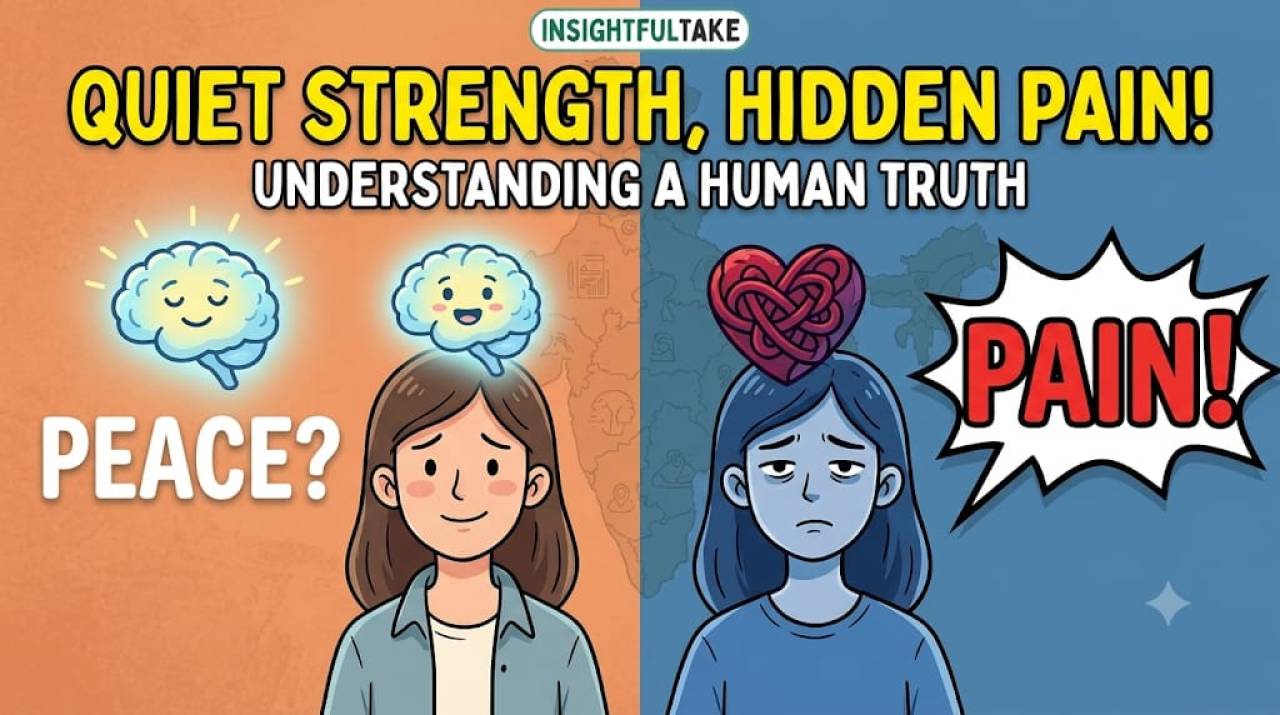
Some people carry their pain so gently that the world mistakes their silence for peace. Understanding their struggles begins with looking beyond appearances.
Human life is a complex tapestry woven with joy, responsibilities, and silent struggles. In our everyday interactions, we often meet people who appear calm, composed, and polite. They listen patiently, offer help whenever needed, and rarely lose their temper. To a casual observer, such individuals may seem to live in complete inner peace. Yet, beneath their quiet exterior, many carry deep personal pain. Some people carry their pain so gently that others mistake it for peace.
Understanding this reality requires us to look beyond outward behaviour and explore human emotions through both spiritual values and social science.
The Spiritual Strength of Silent Endurance
From a spiritual perspective, the ability to bear personal suffering without spreading bitterness to others is considered a noble virtue. Ancient Indian traditions and the teachings of saints emphasise patience, emotional discipline, compassion, and selfless service.
A person who practises these values learns to process personal suffering rather than project anger or grief onto others. In spiritual terms, this quiet endurance can become a fire that refines human character. Instead of allowing sorrow to turn into hatred, such individuals transform their experiences into empathy and kindness.
Their gentle behaviour does not necessarily mean they are free from pain. It may reflect a conscious effort not to make others suffer because of their own struggles. Their strength lies in their ability to remain considerate even when life becomes difficult.
However, it is equally important to understand that enduring pain silently is not always a sign of spiritual maturity. True inner strength also includes recognising one's emotional needs and having the courage to seek support when necessary.
The Social Science Behind Hidden Emotions
A social science perspective helps explain the psychological and societal factors that influence this behaviour. Human beings often adjust their emotions and actions to meet social expectations. In many families and communities, individuals feel responsible for maintaining harmony, avoiding conflict, and fulfilling their duties regardless of their personal circumstances.
As a result, they may engage in what social scientists call emotional labour. They suppress sadness, anxiety, or frustration to keep their families comfortable or perform their professional responsibilities effectively.
For example, a parent struggling with financial uncertainty may continue to reassure their children that everything will be fine. An employee dealing with personal loss may maintain a professional attitude at work. A friend experiencing loneliness may continue listening to everyone else's problems without sharing their own.
In each case, the person manages outward emotions while carrying an inner burden. Over time, this gap between what someone feels and what they express can become emotionally exhausting.
When Society Mistakes Silence for Strength
Society often reinforces this behaviour by praising people who never complain. A student who performs well despite personal troubles or a parent who continues working through illness may be celebrated as strong, responsible, and dependable.
Resilience is undoubtedly valuable. However, society frequently overlooks the emotional cost of constantly appearing strong.
When people do not show obvious signs of distress, such as crying, arguing, or withdrawing from their responsibilities, friends, colleagues, and family members may assume that everything is fine. Their ability to function normally conceals their suffering, making it difficult for others to recognise when they need help.
This creates a troubling contradiction. The more effectively someone hides their pain, the less likely others may be to offer support.
Over time, the expectation to remain strong can turn into a burden. Individuals may begin to believe that expressing vulnerability would disappoint others or weaken the image they have carefully maintained. They may continue supporting everyone around them while gradually neglecting their own emotional well-being.
The Difference Between Inner Peace and Suppressed Pain
One of the most important challenges is distinguishing genuine inner peace from suppressed emotional suffering.
Genuine peace does not mean that a person never experiences sadness, disappointment, or fear. Rather, it involves the ability to acknowledge these emotions, understand them, and respond to life's difficulties without being completely overwhelmed by them.
Suppressed pain, on the other hand, may remain hidden beneath a composed exterior. A person may continue fulfilling daily responsibilities while experiencing loneliness, emotional exhaustion, or a sense of helplessness.
The distinction is not always obvious. A quiet person may genuinely feel peaceful, while another may be struggling internally. Neither appearance nor silence alone can tell us what someone is experiencing.
Prolonged emotional strain can affect both mental and physical well-being. When people feel unable to discuss their struggles, they may become increasingly isolated and exhausted. What appears to be admirable self-control from the outside may sometimes be a sign that someone has been carrying too much for too long.
Recognising this possibility does not mean treating every quiet person as unhappy. It means approaching others with sensitivity rather than making assumptions about their inner lives.
Why Listening Matters More Than Asking
Building a compassionate society requires more than routinely asking people how they are doing. It requires creating the space for an honest answer.
In everyday conversations, we often ask this question as a social formality. We expect a quick response and move on without considering whether the person might want to share something deeper.
Genuine care begins when we listen without rushing to offer advice, judge someone's choices, or compare their difficulties with our own experiences. Sometimes, people do not need immediate solutions. They simply need to feel that their emotions are acknowledged and that they will not be judged for expressing them.
Families, workplaces, schools, and communities all have a role to play in creating such an environment. Checking on a friend who always appears composed can be just as important as supporting someone who is visibly distressed.
A simple conversation, a patient listener, or a sincere expression of concern can help someone feel less alone. We may not always be able to solve another person's problems, but we can make it easier for them to speak about those problems without fear or embarrassment.
The Importance of Self-Compassion
While society must become more attentive to hidden suffering, individuals who carry heavy emotional burdens also need to recognise the importance of self-compassion.
Caring for others should not require neglecting one's own emotional needs. Being responsible does not mean accepting every burden without complaint, and being kind does not mean remaining silent about personal difficulties.
Asking for help is not a sign of weakness or a failure of spiritual strength. It is an acknowledgement of our shared humanity. Every person, regardless of their apparent resilience, needs understanding, companionship, and support at different stages of life.
Self-compassion begins with accepting that personal pain deserves attention, too. It may involve speaking honestly with a trusted friend, setting healthy boundaries, allowing oneself to rest, or seeking professional support when emotional distress becomes difficult to manage.
A tree needs healthy roots and sufficient water to provide shade to others. Similarly, people need to nurture their own well-being if they wish to continue supporting those around them. Strength becomes more sustainable when it includes the freedom to acknowledge vulnerability.
Look Beyond the Calm Exterior
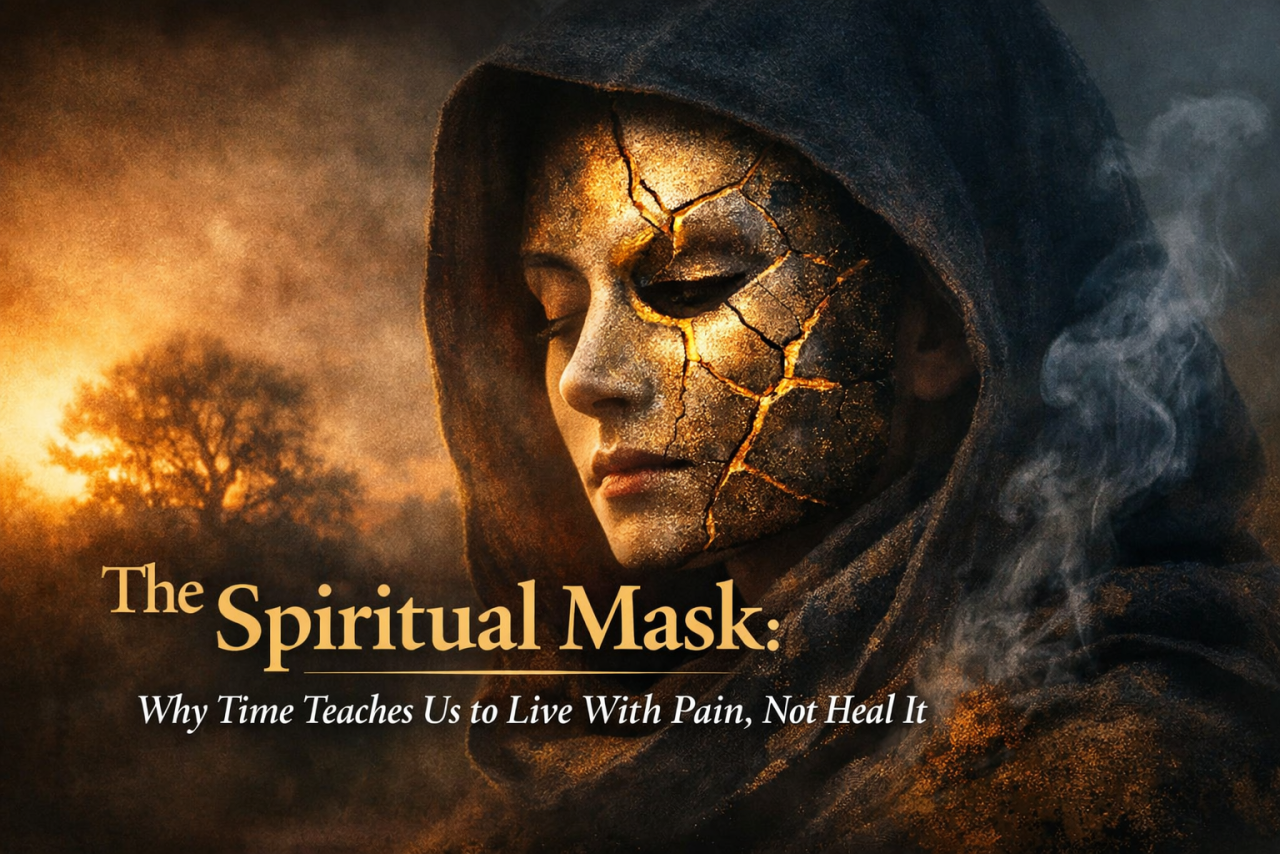
The quiet gentleness with which some people carry their pain can reflect human dignity, patience, and consideration for others. It can reveal the remarkable ability to remain kind even when life is difficult. Yet, that gentleness should never become a reason to overlook their suffering.
A compassionate society must learn to look beyond appearances and recognise that strength and vulnerability can exist together. Spiritual traditions remind us of the value of empathy and selflessness, while social science helps us understand the emotional pressures that encourage people to conceal their struggles.
Together, these perspectives offer an important lesson: we should not measure someone's well-being solely by their ability to remain calm or fulfil their responsibilities.
Perhaps the greatest expression of kindness is not simply admiring those who endure pain silently, but helping them understand that they do not always have to endure it alone. A society becomes more humane when people feel safe enough to express their struggles and receive the same care they so readily offer others.
Sometimes, the gentlest people are not those who have known the least pain, but those who have chosen not to let their pain define how they treat others. They, too, deserve a place where they can set their burdens down.
Human life is a complex tapestry woven with joy, responsibilities, and silent struggles. In our everyday interactions, we often meet people who appear calm, composed, and polite. They listen patiently, offer help whenever needed, and rarely lose their temper. To a casual observer, such individuals may seem to live in complete inner peace. Yet, beneath their quiet exterior, many carry deep personal pain. Some people carry their pain so gently that others mistake it for peace.
Understanding this reality requires us to look beyond outward behaviour and explore human emotions through both spiritual values and social science.
The Spiritual Strength of Silent Endurance
From a spiritual perspective, the ability to bear personal suffering without spreading bitterness to others is considered a noble virtue. Ancient Indian traditions and the teachings of saints emphasise patience, emotional discipline, compassion, and selfless service.
A person who practises these values learns to process personal suffering rather than project anger or grief onto others. In spiritual terms, this quiet endurance can become a fire that refines human character. Instead of allowing sorrow to turn into hatred, such individuals transform their experiences into empathy and kindness.
Their gentle behaviour does not necessarily mean they are free from pain. It may reflect a conscious effort not to make others suffer because of their own struggles. Their strength lies in their ability to remain considerate even when life becomes difficult.
However, it is equally important to understand that enduring pain silently is not always a sign of spiritual maturity. True inner strength also includes recognising one's emotional needs and having the courage to seek support when necessary.
The Social Science Behind Hidden Emotions
A social science perspective helps explain the psychological and societal factors that influence this behaviour. Human beings often adjust their emotions and actions to meet social expectations. In many families and communities, individuals feel responsible for maintaining harmony, avoiding conflict, and fulfilling their duties regardless of their personal circumstances.
As a result, they may engage in what social scientists call emotional labour. They suppress sadness, anxiety, or frustration to keep their families comfortable or perform their professional responsibilities effectively.
For example, a parent struggling with financial uncertainty may continue to reassure their children that everything will be fine. An employee dealing with personal loss may maintain a professional attitude at work. A friend experiencing loneliness may continue listening to everyone else's problems without sharing their own.
In each case, the person manages outward emotions while carrying an inner burden. Over time, this gap between what someone feels and what they express can become emotionally exhausting.
When Society Mistakes Silence for Strength
Society often reinforces this behaviour by praising people who never complain. A student who performs well despite personal troubles or a parent who continues working through illness may be celebrated as strong, responsible, and dependable.
Resilience is undoubtedly valuable. However, society frequently overlooks the emotional cost of constantly appearing strong.
When people do not show obvious signs of distress, such as crying, arguing, or withdrawing from their responsibilities, friends, colleagues, and family members may assume that everything is fine. Their ability to function normally conceals their suffering, making it difficult for others to recognise when they need help.
This creates a troubling contradiction. The more effectively someone hides their pain, the less likely others may be to offer support.
Over time, the expectation to remain strong can turn into a burden. Individuals may begin to believe that expressing vulnerability would disappoint others or weaken the image they have carefully maintained. They may continue supporting everyone around them while gradually neglecting their own emotional well-being.
The Difference Between Inner Peace and Suppressed Pain
One of the most important challenges is distinguishing genuine inner peace from suppressed emotional suffering.
Genuine peace does not mean that a person never experiences sadness, disappointment, or fear. Rather, it involves the ability to acknowledge these emotions, understand them, and respond to life's difficulties without being completely overwhelmed by them.
Suppressed pain, on the other hand, may remain hidden beneath a composed exterior. A person may continue fulfilling daily responsibilities while experiencing loneliness, emotional exhaustion, or a sense of helplessness.
The distinction is not always obvious. A quiet person may genuinely feel peaceful, while another may be struggling internally. Neither appearance nor silence alone can tell us what someone is experiencing.
Prolonged emotional strain can affect both mental and physical well-being. When people feel unable to discuss their struggles, they may become increasingly isolated and exhausted. What appears to be admirable self-control from the outside may sometimes be a sign that someone has been carrying too much for too long.
Recognising this possibility does not mean treating every quiet person as unhappy. It means approaching others with sensitivity rather than making assumptions about their inner lives.
Why Listening Matters More Than Asking
Building a compassionate society requires more than routinely asking people how they are doing. It requires creating the space for an honest answer.
In everyday conversations, we often ask this question as a social formality. We expect a quick response and move on without considering whether the person might want to share something deeper.
Genuine care begins when we listen without rushing to offer advice, judge someone's choices, or compare their difficulties with our own experiences. Sometimes, people do not need immediate solutions. They simply need to feel that their emotions are acknowledged and that they will not be judged for expressing them.
Families, workplaces, schools, and communities all have a role to play in creating such an environment. Checking on a friend who always appears composed can be just as important as supporting someone who is visibly distressed.
A simple conversation, a patient listener, or a sincere expression of concern can help someone feel less alone. We may not always be able to solve another person's problems, but we can make it easier for them to speak about those problems without fear or embarrassment.
The Importance of Self-Compassion
While society must become more attentive to hidden suffering, individuals who carry heavy emotional burdens also need to recognise the importance of self-compassion.
Caring for others should not require neglecting one's own emotional needs. Being responsible does not mean accepting every burden without complaint, and being kind does not mean remaining silent about personal difficulties.
Asking for help is not a sign of weakness or a failure of spiritual strength. It is an acknowledgement of our shared humanity. Every person, regardless of their apparent resilience, needs understanding, companionship, and support at different stages of life.
Self-compassion begins with accepting that personal pain deserves attention, too. It may involve speaking honestly with a trusted friend, setting healthy boundaries, allowing oneself to rest, or seeking professional support when emotional distress becomes difficult to manage.
A tree needs healthy roots and sufficient water to provide shade to others. Similarly, people need to nurture their own well-being if they wish to continue supporting those around them. Strength becomes more sustainable when it includes the freedom to acknowledge vulnerability.
Look Beyond the Calm Exterior
The quiet gentleness with which some people carry their pain can reflect human dignity, patience, and consideration for others. It can reveal the remarkable ability to remain kind even when life is difficult. Yet, that gentleness should never become a reason to overlook their suffering.
A compassionate society must learn to look beyond appearances and recognise that strength and vulnerability can exist together. Spiritual traditions remind us of the value of empathy and selflessness, while social science helps us understand the emotional pressures that encourage people to conceal their struggles.
Together, these perspectives offer an important lesson: we should not measure someone's well-being solely by their ability to remain calm or fulfil their responsibilities.
Perhaps the greatest expression of kindness is not simply admiring those who endure pain silently, but helping them understand that they do not always have to endure it alone. A society becomes more humane when people feel safe enough to express their struggles and receive the same care they so readily offer others.
Sometimes, the gentlest people are not those who have known the least pain, but those who have chosen not to let their pain define how they treat others. They, too, deserve a place where they can set their burdens down.

















Leave a Comment